What You Should and Shouldn’t Do After Receiving a US Green Card
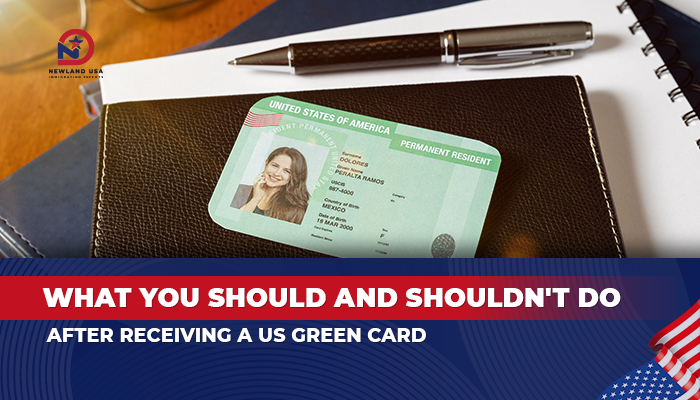
Owning a US green card is the dream of millions of people around the world, marking a crucial turning point in the journey of settling in the US. However, becoming a legal permanent resident in the US not only brings tremendous privileges but also comes with strict legal responsibilities. Many fortunate people who receive a green card don’t fully understand the regulations they must follow, leading to the unfortunate risk of losing their permanent resident status. This article from Newland USA will provide comprehensive guidance on what you need to pay attention to after you officially become the holder of a US green card, helping you protect your rights and build a solid future in the land of opportunity.
1. Understanding the Value and Responsibilities of a US Green Card
The US green card (Green Card), also known as a Permanent Resident Card, is a document confirming permanent resident status in the US. This card is not simply an identification document but also a symbol of opportunities for comprehensive development in one of the world’s leading economies.
Green card holders have the right to live, work, and study legally in any state within US territory, and they are also protected under US law. However, these privileges require permanent residents to strictly comply with legal regulations to maintain their legal status.
Understanding the basic principles of rights and obligations will help you avoid unnecessary mistakes in the process of settling in the US. This is especially important for the Vietnamese community, who are gradually integrating and building new lives in America.

2. Things You Should NOT Do After Receiving a US Green Card
2.1. Avoid Leaving the US for Extended Periods
One of the most common mistakes that US green card holders make is being absent from US territory for too long. US immigration law is very clear on this matter, and non-compliance can lead to serious consequences.
When you’re absent for less than six months, you typically won’t face major issues. However, customs officers still have the right to question your true intentions when you return. Therefore, maintaining evidence of your life in the US such as rental agreements, pay stubs, active bank accounts, and family relationships is extremely necessary.
Absences from six months to less than a year will subject you to more thorough scrutiny upon entry. You’ll need to prove that your trip was only temporary with legitimate reasons such as caring for sick relatives, short-term business, or studies.
Particularly critical is being absent for more than one year without a Re-entry Permit. This is considered a “red line” that any permanent resident should note. Without this permit, you will almost certainly be considered to have abandoned your resident status. To apply for a Re-entry Permit, you need to file Form I-131 before leaving the US, and this permit is valid for up to two years.
Important advice is to always plan carefully for any trips abroad. If you know you’ll be absent for a long time, proactively apply for the necessary permits and maintain close ties with the US.
2.2. Do Not Violate Any Laws
Complying with the law is a mandatory obligation for all residents in the US, and for green card holders, any violation can have serious consequences for permanent resident status.
Even minor violations such as traffic violations can negatively affect your record. Although these violations typically don’t directly lead to green card revocation, accumulating multiple violations will affect the naturalization process, especially regarding the “good moral character” criterion.
More serious criminal offenses such as violence, financial fraud, drug trafficking, theft, or driving under the influence (DUI) can all become grounds for reviewing permanent resident status. The severity of the crime will determine the legal consequences. Some particularly serious crimes (aggravated felonies) can even lead to permanent deportation from the US.
Therefore, understanding federal law as well as the law of the state where you live is extremely important. If you unfortunately encounter legal trouble, contact a lawyer immediately for consultation to protect your rights.
2.3. Avoid Fraud in All Administrative Procedures
Honesty and transparency are fundamental in all dealings with the US government. Providing false information or concealing the truth during the green card application process or related procedures can lead to serious consequences.
Immigration fraud can be detected through USCIS investigations. If discovered, you will not only have your green card revoked but may also face criminal prosecution, permanent entry bans, and it may affect relatives who want to immigrate.
Similarly, dishonest tax filing is also a serious mistake. Not fully reporting income, falsely claiming deductions, or hiding assets can be detected by the Internal Revenue Service (IRS). The consequences are not only fines and interest but also directly affect immigration status, especially when you apply for naturalization.
Important advice is to always ensure all information you provide to USCIS, IRS, and other government agencies is accurate and truthful. If you’re unsure about anything, seek support from reputable tax consultants and immigration lawyers.
2.4. Don’t Forget to Update Your Residential Address
As a permanent resident, you have a legal responsibility to maintain and update a valid residential address in the US. Neglecting this obligation can cause many unnecessary troubles.
USCIS and other government agencies often send important notices related to your immigration status to your registered address. If you don’t receive these notices due to an incorrect address, you may miss information about green card renewal, interview schedules, or other legal requirements.
Moreover, many financial and administrative transactions require a valid residential address. Not having an updated address can cause difficulties when you open bank accounts, apply for jobs, rent housing, or register for public services.
According to regulations, you must notify USCIS within ten days of moving by filing Form AR-11 (Alien’s Change of Address Card). This can be done online easily and quickly.
2.5. Fully Comply with Tax Obligations
Tax obligations are an indispensable part for US green card holders. Unlike tourists or international students, permanent residents have an obligation to report income from all sources worldwide to the IRS.
This means that whether you have income from Vietnam, investments abroad, or any other source, you must report it on your annual tax return. Failure to report or underreporting can be considered tax evasion, leading to serious legal consequences.
Particularly, non-compliance with tax laws can be seen as lacking “good moral character,” one of the most important requirements when you apply for US citizenship. A clean tax record is an important factor helping your US settlement process go smoothly.
Since the US tax system is quite complex, especially for those with income from multiple sources or assets abroad, seeking tax consultants is a wise decision. They will help you optimize your tax obligations while still fully complying with legal regulations.
2.6. Don’t Abuse the Green Card for Improper Purposes
The US green card is issued to those who intend to reside permanently in the US, not to use it as a convenient tourist visa. Abusing the green card by entering and leaving the US at will without actually living here can be considered abandoning permanent resident status.
Customs officers are trained to identify cases where green card holders don’t have genuine residence intentions. If you spend most of your time abroad and only return to the US briefly to “maintain the card,” they have the right to question and even revoke your permanent resident status.
To prove genuine residence intentions, you should spend most of the year in the US, maintain stable employment, pay full taxes, own or rent a home, and build community relationships. This is not only a legal requirement but also helps you integrate better into American society.
2.7. Don’t Forget to Renew or Change Card Status
The US green card has a specific validity period, and failure to renew at the right time can cause many troubles. There are two common types of green cards with different validity periods.
The ten-year green card is the most common type, valid for ten years from the date of issue. Before your green card expires, you need to file Form I-90 to renew. An expired card can cause difficulties in many situations such as job applications, bank transactions, or international travel.
The conditional green card (two years) is issued to those who obtained their US green card through marriage to a US citizen or through EB-5 investment. For this type of card, you must apply to remove conditions ninety days before the card expires. Specifically, you need to file Form I-751 if you got the card through marriage, or I-829 if through investment. Missing this deadline can lead to loss of permanent resident status and risk of deportation.
To avoid unnecessary risks, closely monitor your green card’s expiration date and proactively file applications before the deadline. Don’t let small carelessness ruin the entire US settlement process you’ve worked hard to build.
2.8. Avoid Working Illegally
Although green card holders have the right to work legally in the US without needing a separate work permit, working “under the table” or violating labor regulations can still cause serious problems.
Receiving cash without reporting income is tax evasion, with legal consequences already mentioned earlier. Additionally, working improperly, receiving wages below the federal minimum, or not receiving basic labor benefits can also negatively affect the US citizenship application process.
A clean and transparent employment record not only protects your rights but also demonstrates legal compliance, an important factor when assessing “good moral character” in naturalization applications. Therefore, always seek legal employment, sign clear employment contracts, and fully report your income.

3. Things You SHOULD Do After Receiving a Green Card
3.1. Maintain Close Ties with the US
To prove your intention to reside permanently, you should actively build your life in the US. This includes maintaining regularly active bank accounts, having a fixed residential address, participating in health insurance and public services.
Owning real estate or signing long-term rental contracts is also good evidence of settlement commitment. Additionally, participating in community activities, registering for a state driver’s license, and building social networks all help strengthen your permanent resident status.
3.2. File Complete and Accurate Tax Returns
Each year, you need to file a personal income tax return with the IRS. Maintaining a clean and complete tax record not only helps you avoid legal trouble but is also a mandatory requirement when you want to apply for citizenship.
If you have income from abroad, ensure you fully report it according to regulations. The US has double taxation avoidance agreements with many countries, so consulting with experts will help you legally optimize your tax obligations.
3.3. Update Personal Information When Changes Occur
Whenever there are changes in residential address, marital status, or other important personal information, you need to update USCIS promptly. This is not only a legal obligation but also helps you receive important notifications from the government.
3.4. Consider Applying for Citizenship When Eligible
After holding a US green card for five years (or three years if married to a US citizen), you can apply for citizenship if you meet the requirements. Becoming a US citizen brings many superior benefits compared to just being a permanent resident.
US citizens have voting rights, are issued US passports for more convenient international travel, are harder to deport, and have more rights in sponsoring relatives for immigration. The naturalization process requires you to prove sufficient residence time, have good moral character, basic understanding of US history and government, and certain English language ability.
3.5. Keep Your Green Card Valid
Ensure that your US green card is always valid. Set reminders about the expiration date and prepare renewal documents about six months in advance to avoid interruptions. A valid green card is a prerequisite for all important transactions in life in the US.

4. Conclusion
Owning a US green card is an important milestone marking the beginning of a new chapter in life. However, to maintain and thrive in this land of promise, understanding and complying with legal rules is essential and cannot be overlooked.
At Newland USA, we not only provide US immigration services but also support clients in their journey of cultural integration in this new country. If you need more information, please contact Newland USA immediately at hotline 0785591988 or email: newsletter@newlandusa.asia for detailed and free consultation.
Learn more:
- US Immigration EB3, EB1C and EB5: Which is the Safest — Most Effective Choice for US Green Card Currently?
- 8 Common Mistakes That Cause EB3 Visa Applications to Be Delayed for Extended Periods
- The Most Frequently Asked Questions About EB3 Visa for U.S. Immigration – Updated 2025
- Paying Taxes and What EB5 Investors Need to Know
- What should you prepare to increase your pass rate for EB3 Visa interview?
News Categories


Related news

Who Is the ESTA Program For? How to Assess Your Fit Before Applying in 2026

Who Is the ESTA Program For? How to Assess Your Fit Before Applying in 2026

From Motorcycle Mechanic to Automotive Technician in the U.S.: Skills and Qualifications to Prepare in 2026
AI in Auto Repair in the U.S. 2026: How Artificial Intelligence Diagnoses Vehicle Problems Faster and More Accurately

7 Key Technologies Every Industrial Maintenance Technician in the U.S. Needs to Know in 2026

PLC & Automation Skills: A Launchpad for Maintenance Technicians in the United States in 2026
What Is the ASE Certification? Requirements, Exam Roadmap, and Its Importance for Auto Technicians in the U.S. in 2026
EB5 Capital Recovery Time: How Long It Takes and the Key Milestones

Electric Vehicle Technicians in the U.S.: The “Golden” Skills Helping Vietnamese Auto Mechanics Get Ahead of the 2026 EV Trend