Can People with Criminal Records Apply for a US Visa?

Many people wonder whether a criminal record can become an insurmountable barrier when applying for a US Visa. In reality, the possibility of entering the US with an imperfect judicial history depends on many important factors such as the type of offense, severity of violation, time passed since completing the sentence, and the visa applicant’s ability to reintegrate. This article from Newland USA will provide a comprehensive view of US immigration law regulations, cases that may be considered for visa approval, and the appropriate application preparation process to increase chances of success.
1. Legal Framework for US Entry for People with Criminal Records
The US maintains a strict border control system based on the Immigration and Nationality Act (INA). According to provisions in section 212(a) of this act, US authorities have the power to deny US entry permission to individuals with a history of legal violations to protect national security and public order.
When evaluating a US Visa application, consular officials will consider many different aspects. First is the nature of the offense – whether the violation involves morality, drugs, violence, or serious security issues. Second is the length of time that has passed since the completion of sentence execution – this factor helps assess the applicant’s level of rehabilitation and stability. The purpose of the trip also plays an important role in the final decision, along with evidence proving the visa applicant no longer poses a risk of reoffending and has fully reintegrated into the community.
It should be noted that not every criminal record leads to permanent visa denial. Minor violations such as non-serious traffic offenses typically do not affect the visa application process. However, serious offenses related to drugs, terrorism, human trafficking, or serious moral violations have a high likelihood of being permanently banned from going to America according to legal regulations.
2. Classification of Offenses Affecting Entry Rights
2.1. Crimes Involving Moral Turpitude
According to clause INA 212(a)(2)(A)(i)(I), acts classified under Crimes Involving Moral Turpitude (CIMT) are typically assessed as serious and can lead to permanent US entry bans. This category includes offenses such as premeditated murder, sexual assault, child abuse, complex financial fraud, organized theft, abuse of public authority, and acts of violence causing serious consequences.
People with criminal records in this group face major difficulties when applying for a US Visa. However, the law still opens up certain exceptions. If the violation occurred when the person was under 18 years old and more than 5 years have passed since completing the sentence, they can apply for a waiver under clause INA 212(h). In cases where someone committed a crime only once at a minor level, without violence or involvement with controlled substances, the visa applicant may also have a chance for reconsideration.
2.2. Violations Related to Controlled Substances and Drugs
US regulations regarding drug-related offenses are particularly strict under INA 212(a)(2)(A)(i)(II) and INA 212(a)(2)(C). Just one conviction for possession of controlled substances, at any level, can cause a US Visa application to be rejected from the start. More serious acts such as smuggling, manufacturing, distributing drugs, or having connections with drug trafficking organizations typically lead to permanent bans from going to America with no chance for reconsideration.
Requesting a waiver for this violation group is extremely difficult and only considered in very special cases. If the violation only involves possession of less than 30 grams of marijuana for personal use, the applicant may try to apply for a waiver under INA 212(h). In cases where someone has completed rehabilitation programs, has a good reintegration record, and more than 15 years have passed since the violation, people with criminal records may also be considered if they have direct relatives who are US citizens or permanent residents.
2.3. Particularly Serious Offenses Ineligible for Waivers
Some types of crimes are considered direct threats to national security and social order, and therefore have absolutely no possibility of requesting a waiver. According to clauses INA 212(a)(2)(H), INA 212(a)(2)(I), and INA 212(a)(3)(B), acts such as human trafficking, cross-border money laundering, participating in or supporting terrorist activities all lead to permanent US entry bans with no exceptions.
US law takes an absolutely hard stance on these offenses. Regardless of personal circumstances, level of rehabilitation, or having sponsor relatives in the US, people previously convicted of the above acts cannot receive a US Visa under any form.
2.4. Immigration Regulation Violations
In addition to criminal offenses, violating immigration laws previously can also cause an individual to be denied a US Visa under INA 212(a)(9)(B)(i) and INA 212(a)(9)(C)(i)(I). Common violations include overstaying, especially if the time exceeds 180 days, which can lead to a ban from going to America for 3 to 10 years depending on the severity.
In cases where someone was previously deported from US territory but returned illegally, they may face a permanent ban. Similarly, those who entered the US on tourist visas but worked without permits will have their violations recorded and risk being denied visas in subsequent applications. For this violation group, if the severity is not too serious and the applicant has legitimate reasons, they can apply for a waiver under INA 212(d)(3).

3. Waiver Mechanism for Inadmissibility
3.1. Conditions for Waiver Under INA 212(h)
US immigration law does not completely close the door on all people with criminal records. Clause INA 212(h) provides a waiver mechanism for some special cases meeting certain criteria. First, if the crime occurred when the person was under 18 years old and at least 5 years have passed since completing sentence execution, they have the right to apply for special consideration.
The second case is minor offenses that occurred only once, not involving violence, drugs, or serious security factors. The third condition, possibly the most important, is that the US Visa applicant has direct relatives who are US citizens or green card holders. In this situation, the applicant needs to prove that denying US entry will cause extreme hardship to their relatives.
It should be emphasized that this mechanism absolutely does not apply to particularly serious offenses such as premeditated murder, large-scale drug smuggling, terrorist acts, or human trafficking. These violations are on the blacklist and have no legal avenue for waivers.
3.2. Waivers for Immigration Regulation Violations
People denied the right to go to America due to immigration violations but not in the permanent ban category can consider applying for a waiver under INA 212(d)(3). This clause applies to cases such as being banned from US entry for 3 or 10 years due to visa overstay under regulation INA 212(a)(9)(B)(i), or people previously denied visas for violating visa usage conditions but without a history of serious crimes.
Even individuals previously deported from the US can still request reconsideration if they have legitimate reasons such as needing to visit seriously ill relatives, having medical treatment needs that cannot be performed in their current country, or needing to participate in important work activities that cannot be replaced.
The waiver review process under INA 212(d)(3) has flexibility and depends heavily on the consular officer’s assessment. Applicants need to prepare a persuasive application package proving that allowing them to enter the US does not pose any threat to national interests, public security, or US social order.
3.3. Special Cases Related to Drug Violations
Although offenses related to controlled substances are typically handled strictly, US law still has some limited exceptions. According to clause INA 212(h), people only convicted of possessing less than 30 grams of marijuana for personal use may be considered for a waiver. This is a rare exception in America’s strict drug policy.
Applicants who have fully completed rehabilitation programs certified by reputable medical facilities and have records proving successful social reintegration processes may also be able to apply for waivers.
However, it should be emphasized that offenses related to drug smuggling activities for commercial purposes, controlled substance manufacturing, or participation in large-scale distribution networks are absolutely not considered for waivers under any circumstances.
3.4. Waivers for Immigration Fraud Cases
According to regulation INA 212(a)(6)(C), people who previously provided false information in visa applications or engaged in illegal entry have a risk of permanent bans. However, in some specific situations, they can still apply for reconsideration.
If the applicant has relatives who are US citizens or green card holders, they can request a waiver under clause INA 212(i). In cases where false information was provided due to unintentional mistakes or not clearly understanding regulations, US Visa applicants can explain in detail to immigration authorities and provide proof. People who have left the US and strictly complied with regulations throughout the period of being banned from going to America may also be able to request file reconsideration.
It’s important to note that serious fraud acts such as using forged documents, participating in marriage fraud schemes to obtain green cards, or deliberately concealing important information have almost no chance of being waived. These violations are considered serious undermining of immigration system integrity and definitely result in permanent bans.
4. Application Preparation Process for People with Criminal Records
4.1. Basic Documents and Supplementary Materials
People with criminal records wanting to apply for a US Visa need to prepare files much more carefully than regular applicants. First, passports must be valid for at least 6 months from the expected US entry date. Form DS-160 must be filled out completely with absolutely accurate information, especially the section related to judicial history must be declared very clearly and honestly.
Information about international travel, if any, will help prove the applicant’s law compliance through previous trips. This is a positive factor in file evaluation.
Important are documents directly related to criminal records: copies of court records issued by competent authorities, stamped and confirmed by courts or police agencies; recent Police Clearance Certificates from the country where the applicant is currently living.
If sentence execution has been completed, official confirmation documents are needed along with materials showing the rehabilitation process and community reintegration such as confirmation letters from current employers, certificates of participation in social integration programs, or recommendation letters from reputable social organizations. Other supplementary documents include proof of stable employment (labor contracts, pay slips, business licenses if a business owner), financial proof (savings books, 6-month recent bank statements) to confirm financial capability for the trip, property ownership documents in Vietnam to prove ties and intention to return, along with invitation letters from the US side if the trip has work or family visit purposes.
4.2. Effective Interview Strategy
The interview at the consulate is the deciding phase in the US Visa application process, especially for applicants with criminal record histories. Consular officers typically ask direct questions about criminal history such as: the specific nature of the offense, sentence served, whether there are still connections to serious moral activities, the specific purpose of this America trip, information about sponsors (if any), and long-term settlement intentions.
The most important principle is absolute honesty. Deliberately concealing information or making false declarations is very easily detected through America’s strict inspection system, and then applicants may be permanently banned from US entry under clause INA 212(a)(6)(C). Instead of avoiding, clearly explain your violations, emphasize rehabilitation efforts made, and prove there is no longer a risk of reoffending through current stable life.
Particularly important is demonstrating intention to return to Vietnam after the trip. Provide specific evidence about current job responsibilities, family responsibilities needing attention, property owned in the home country to confirm no intention to stay illegally in the US. A polite attitude, answering briefly, coherently and confidently also leaves a positive impression on consular officers.
4.3. Waiver Application Procedures
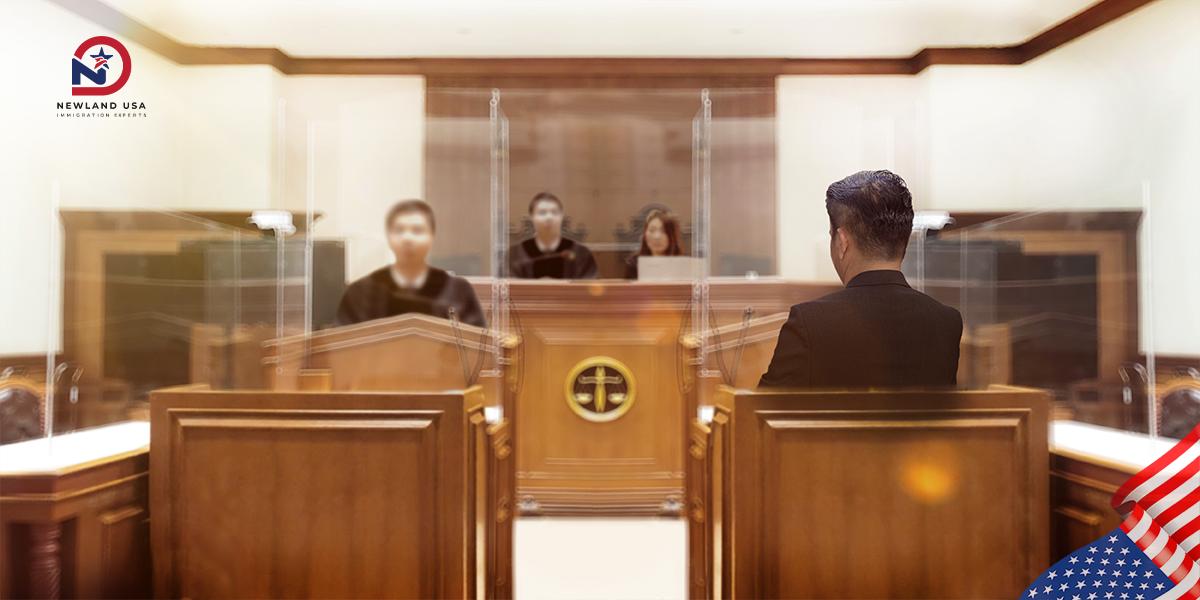
In cases of being denied a US Visa due to criminal records, applicants can explore the possibility of applying for a Waiver of Inadmissibility. The process starts with submitting a regular visa application through form DS-160 and participating in an interview. If denied for judicial history reasons, consular officers will provide detailed guidance on submitting Form I-601 (for non-immigrant visas like tourism, work) or Form I-212 (for people previously deported wanting permission to return).
Waiver application files need to include a detailed explanation letter about reasons for requesting special consideration, documents proving successful social reintegration processes such as confirmation letters from reputable organizations or individuals vouching for the applicant’s current character, financial proof showing ability to support oneself without becoming a burden on American society, and documents about special family relationships if there are relatives who are US citizens or permanent residents.
Waiver application review time typically takes 6 to 12 months, sometimes longer depending on the complexity of each case. Throughout this period, applicants need to be patient and ready to provide any additional documents that immigration authorities request to support the review process.
5. ESTA Visa Waiver Program and Its Limitations
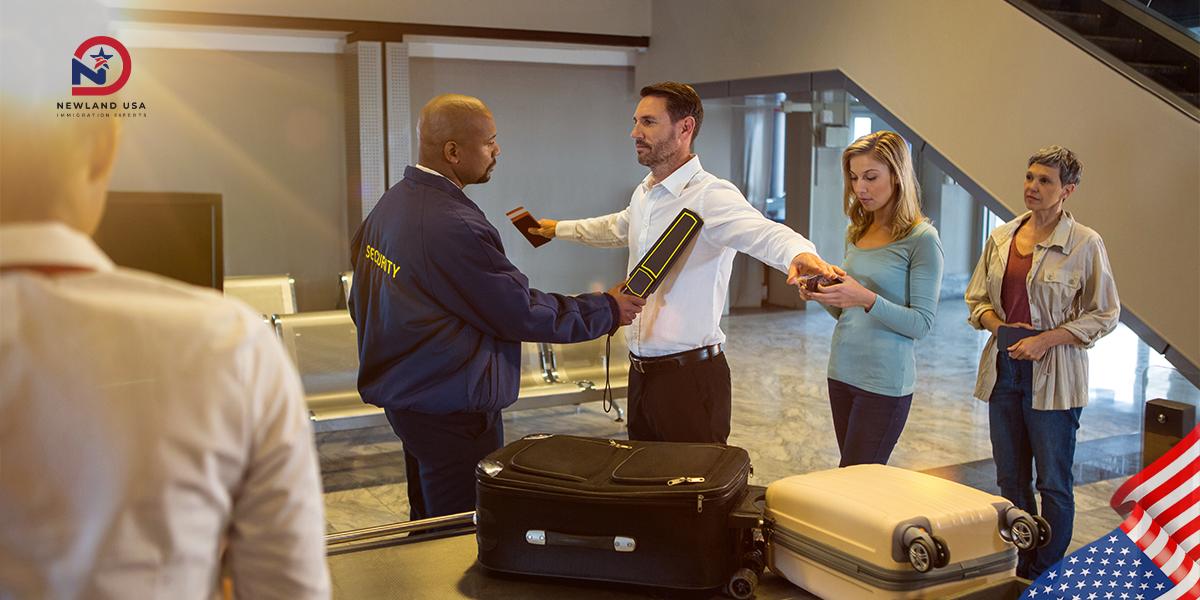
ESTA (Electronic System for Travel Authorization) is a program allowing citizens of 40 countries participating in the Visa Waiver Program (VWP) to go to America without needing traditional visas, with a maximum stay of 90 days for purposes such as tourism, short-term work, or transit. However, this program has strict limitation regulations for people with criminal record histories.
When filling out online ESTA applications, visa applicants must answer questions related to law violation history, immigration regulation violations, and health status. Some important questions include being arrested or convicted for offenses causing serious property damage or injury to others, violating laws related to owning, using, or distributing controlled substances. If answering “Yes” to any sensitive questions, ESTA applications will be immediately rejected and applicants must follow traditional US Visa application procedures.
It should be clearly distinguished that not all law violations cause loss of ESTA application ability. Minor traffic violations or criminal convictions typically do not affect applications. If only warned, cases still need to be considered. However, offenses in the Crimes Involving Moral Turpitude group such as fraud, theft, violence, or drug-related will definitely be rejected.
When ESTA is denied, visa applicants still have the right to apply for US Visas through old procedures. In this situation, files need careful preparation, honest declaration about criminal records, and may need to submit waiver of inadmissibility applications to be considered for visa approval. Review time through this method typically takes much longer than ESTA, especially if needing to go through additional waiver stages.
6. Frequently Asked Questions About US Entry with Criminal Records
6.1. Must I apply for a Visa if I have a criminal record?
For people with criminal records, using the Visa Waiver Program (VWP) through ESTA is almost unfeasible. They must submit traditional US Visa applications and fully declare judicial history in form DS-160 (for non-immigrant visas like tourism, work) or DS-260 (for immigrant visas). Applicants need to prepare files extremely carefully and be ready to submit Waiver of Inadmissibility applications if belonging to groups banned from US entry under regulations.
6.2. How do consular authorities evaluate files of people with judicial histories?
The US Visa review process for people with judicial histories is based on many important criteria. First is the severity of the offense – clearly distinguishing between minor violations and serious crimes. The second factor is the length of time passed since the violation occurred and sentence completion; the longer the time, usually the more beneficial for applicants as it shows positive personal changes.
The rehabilitation and reintegration process is also carefully considered through documents such as recent police clearance certificates, proof of stable employment, healthy family life, and positive community contributions. The purpose of the America trip plays an important role – legitimate reasons such as tourism, legal work, visiting seriously ill relatives will be evaluated higher than vague purposes or lacking persuasiveness.
6.3. In what cases is waiver application possible?
Not everyone with criminal records is accepted for waiver applications. Cases with opportunities include: violations occurring when under 18 years old and more than 5 years passed since completing sentence; offenses at minor levels, not involving drugs, serious violence, or national security issues; applicants having direct relatives who are US citizens or permanent residents and can prove that denying a US Visa will cause extreme hardship to that relative.
Note that waiver application processes typically take 6 to 12 months, requiring meticulous file preparation with complete proof documents. There is no guarantee waiver applications will be approved; all final decisions belong to US immigration authority rights based on overall assessment of each specific case.
6.4. Does judicial history affect the Visa Waiver Program?
The answer is yes, and this impact is very clear. People with criminal records cannot use the Visa Waiver Program or apply for ESTA to enter the US. They must follow traditional visa application procedures, fully fill out information in application forms, and participate in interviews at consulates. In many cases, they also need to submit Waiver of Inadmissibility applications if belonging to groups banned from going to America under INA clauses.
7. Notes from Immigration Experts
Applying for a US Visa with criminal records is a challenge requiring deep understanding of US immigration law and professional file preparation skills. Although not impossible to accomplish, success rates depend greatly on accurately assessing offense types, severity levels, time passed, and ability to prove genuine rehabilitation processes.
Particularly serious offenses such as large-scale drug smuggling, violent acts causing heavy consequences, participating in human trafficking, money laundering, or terrorism activities have almost no possibility of being granted US Visas under any form. However, with violations at lighter levels, especially offenses that occurred long ago and applicants having good reintegration processes, there are still visa opportunities if files are carefully prepared.
The most important factor in the entire process is absolute honesty. Attempting to conceal information about criminal records is not only ineffective but leads to much more serious consequences than declaring straightforwardly from the beginning. America’s inspection system has the ability to access international crime data through Interpol and cross-border law enforcement cooperation mechanisms, so concealing information is very easily detected.
When declaring judicial history, applicants should prepare clear and honest explanations about circumstances leading to violations, lessons learned, and how they have changed their lives since then. Specific evidence such as stable employment, family responsibilities, participation in positive community activities are all powerful supporting factors in the review process.
8. Conclusion
The question of whether people with criminal records can apply for US Visas has no simple answer applicable to all cases. Each application is evaluated based on specific circumstances, with many factors carefully considered such as the nature of the offense, length of time passed, level of rehabilitation, and purpose of America trip.
The key to success lies in honest declaration from the beginning, preparing complete and professional files, and building appropriate strategies to prove legitimate entry purposes along with commitment to law compliance. In some cases, submitting Waiver of Inadmissibility applications is a necessary step, but this process requires long waiting times and meticulous legal preparation.
At Newland USA, we not only provide US immigration services but also support clients in the cultural integration journey in this new country. If you need more information, please contact Newland USA immediately via hotline 0785591988 or email: newsletter@newlandusa.asia for detailed and free consultation.
Learn more:
News Categories

Related news

From Motorcycle Mechanic to Automotive Technician in the U.S.: Skills and Qualifications to Prepare in 2026

AI in Auto Repair in the U.S. 2026: How Artificial Intelligence Diagnoses Vehicle Problems Faster and More Accurately

7 Key Technologies Every Industrial Maintenance Technician in the U.S. Needs to Know in 2026

PLC & Automation Skills: A Launchpad for Maintenance Technicians in the United States in 2026

What Is the ASE Certification? Requirements, Exam Roadmap, and Its Importance for Auto Technicians in the U.S. in 2026

EB5 Capital Recovery Time: How Long It Takes and the Key Milestones

Electric Vehicle Technicians in the U.S.: The “Golden” Skills Helping Vietnamese Auto Mechanics Get Ahead of the 2026 EV Trend
US Engineering & Maintenance Labor Shortage 2026: The Driving Force Behind the EB3 Skilled Workers Visa Policy
Industrial Maintenance Technician: Job Duties, Requirements & U.S. Immigration Opportunities in 2026