AI in Auto Repair in the U.S. 2026: How Artificial Intelligence Diagnoses Vehicle Problems Faster and More Accurately
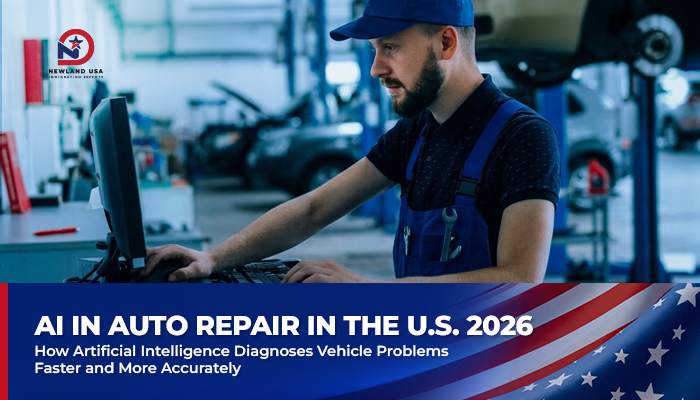
Over the past few years, the way shops and dealerships in the U.S. find what’s wrong with a car has changed dramatically. Instead of relying entirely on experience and trial and error, today’s technicians now have an extra “assistant” that can read data from hundreds of sensors and suggest the cause of a problem in just a few minutes. That’s why AI in auto repair has become one of the most talked-about topics in the auto service industry in 2026. This article from Newland USA explains how this technology helps diagnose cars with AI faster and more accurately, the AI applications in auto repair that are becoming common across the U.S., and the career opportunities it opens up for technicians.
1. The Big Picture: AI in Auto Repair Is Reshaping the Service Industry
Applying artificial intelligence inside the repair bay is no longer a story about the future. According to industry data, AI-based diagnostic tools accounted for about 32% of newly deployed equipment in 2025, and the global automotive diagnostic equipment market, worth around $44 billion in 2025, is projected to surpass $87 billion by 2035. On the software side, the auto repair software market is forecast to reach $3.4 billion in 2026 and hit $8.6 billion by 2033, growing at a compound annual rate of about 14.2%.
The pace of adoption is also worth noting. Deloitte’s State of AI 2026 report found that official access to AI tools in the auto service sector jumped 58.7% in just 12 months, and more than 60% of shops are expected to be using some form of AI by the end of 2026. Several factors are driving this trend. Cars are getting more complex, the average age of vehicles on the road has climbed to 12.7 years, and the severity of repairs on five-year-old vehicles has increased by about 50% compared to 2019. When a modern car has hundreds of sensors and multiple electronic control units, traditional diagnostic methods struggle to keep up — and that’s exactly the gap AI in auto repair is stepping into.
2. How Does AI Diagnose a Car’s “Illness”?
To understand why diagnosing cars with AI produces faster results, it helps to look at how data moves inside a vehicle. Every modern car has electronic control units (ECUs) that exchange information over internal networks such as CAN bus, LIN, or FlexRay. When a parameter goes outside its allowed range, the vehicle’s on-board diagnostic system (OBD) generates a Diagnostic Trouble Code (DTC). This diagnostic foundation has been around for a long time, but it only tells you “there’s a problem somewhere” — it doesn’t point to the actual root cause.
What sets AI-based vehicle fault diagnosis apart is its ability to analyze data over time. Instead of just reading a single fault code at one moment, machine learning models track how metrics like RPM, fuel level, temperature, or vibration change across thousands of operating cycles. Time-series models such as LSTM or ARIMA can pick up on very subtle signs of decline — anomalies that appear before an actual failure happens. In other words, the system recognizes a component’s downward trend instead of waiting until it fails completely.
A new layer of technology is also being built into AI vehicle-diagnostic tools: large language models (LLMs). These turn raw technical data into easy-to-understand explanations — for example, translating a fault code into a statement like “the catalytic converter is likely degrading, based on code P0420 combined with an elevated fuel trim value.” RAG (retrieval-augmented generation) helps keep answers grounded in verified repair documentation, while multi-agent platforms let several specialized “agents” analyze the problem together and converge on one conclusion. Just as important, explainable AI techniques like SHAP or weight mapping let technicians see why the system reached a particular conclusion, rather than having to trust it blindly.

3. From Fault Code to Root Cause: The Strength of AI-Based Car Diagnostics
Any experienced mechanic knows a familiar scenario: read the fault code, replace the obvious part, clear the warning light — and a few days later the car comes back because the real cause was somewhere else, such as a voltage drop, a data-network fault, or a bad signal from upstream. This is exactly where AI-based car diagnostics makes a difference. Instead of showing each module in isolation, the system groups related faults together, ranks the most likely causes, and confirms the hypothesis using live data or active tests.
The effectiveness of this approach shows up in the numbers. A 2026-generation AI diagnostic tablet with an agent-based assistant can narrow 15 fault codes down to a single root cause within minutes, and shops report diagnostic speeds about 70% faster along with a first-time-fix rate above 80%. More broadly, integrating AI into diagnostics is projected to cut average repair time by roughly 25% in 2026. For both shops and customers, less time means lower costs and fewer days with the car sitting in the shop.
To be clear, the value of AI in auto repair isn’t about replacing the technician who pushes the button — it’s about shortening the path from symptom to evidence to a well-grounded repair decision. The technician still makes the final call, but now with much more complete data to work from.
4. Predictive Maintenance: Fixing the Car Before It Breaks
One of the highest-impact AI applications in auto repair is predictive maintenance. Instead of waiting for a car to break down or servicing it on a fixed schedule, this approach uses IoT sensors to continuously collect operating data from the engine, transmission, brakes, and battery. The data is processed both at the edge (directly on the vehicle) and in the cloud, and AI models then look for early warning signs.
The results are very tangible. Predictive maintenance systems can detect abnormal signs days to weeks before a component fails; businesses that adopt this approach report a 35–50% reduction in unplanned downtime and a 10–40% cut in maintenance costs. The predictive technology market in the automotive sector is projected to reach $119.37 billion by 2030, growing at roughly 8.21% per year.
For long-haul vehicles, knowing in advance that a brake system or a component will soon need replacing makes it possible to plan parts ordering and repairs during a scheduled maintenance window, instead of dealing with an emergency breakdown in the middle of the night. That’s why many experts consider predictive maintenance the form of AI in auto repair that delivers the clearest economic value today.
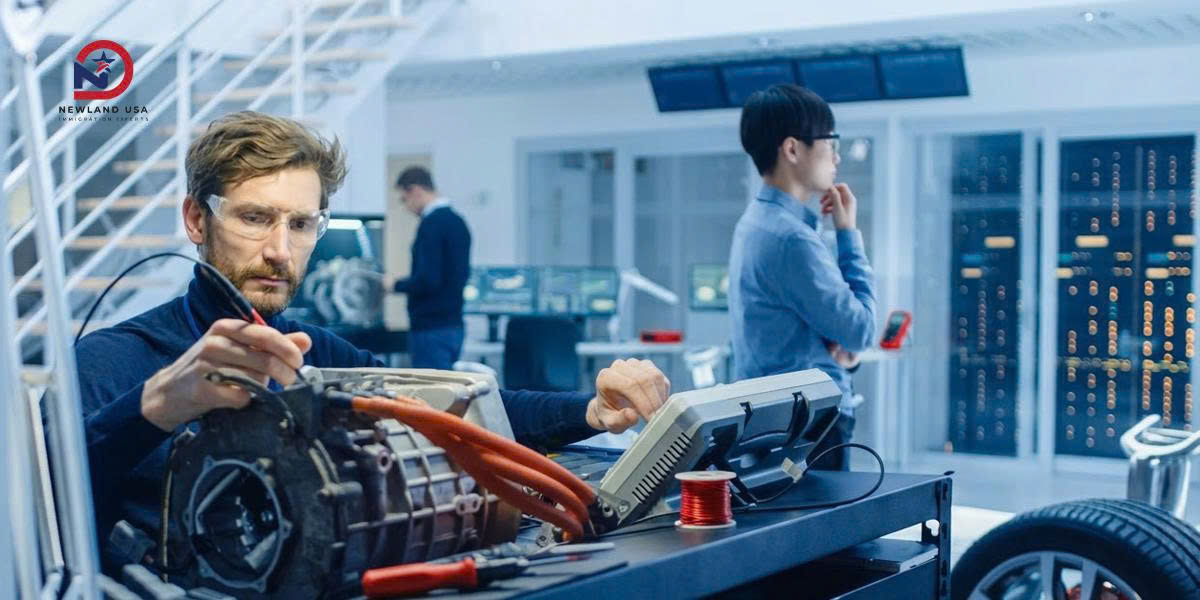
5. Common AI Applications in Auto Repair at U.S. Shops
In practice, AI applications in auto repair extend across many stages of the process, not just the diagnostic bay:
- Diagnostics in the repair bay: platforms like ALLDATA, as well as diagnostic tools from Autel and THINKCAR, now add an AI layer that suggests the next inspection step and links related modules together. This is the category of AI vehicle fault-diagnosis tools that directly serves technicians.
- Visual inspection: some tools let users upload photos of parts, leaks, or warning lights for visual analysis, helping both technicians and vehicle owners spot problems early.
- Shop management and customer communication: software like Tekmetric, Shop-Ware, or automated response assistants help handle appointment scheduling, quotes, and maintenance reminders, freeing up technicians’ time to focus on the technical work itself.
- Tools for everyday users: a Bluetooth-connected OBD2 reader paired with an AI phone app can now perform analyses that, five years ago, required a specialized device costing around $3,000.
As you can see, AI in auto repair isn’t just for large shops. It’s spreading into independent garages, fleets, and individual users too, at many different price points.
6. Concrete Benefits: Faster, More Accurate, More Cost-Effective
If you sum up the value that AI-based car diagnostics delivers, it comes down to three points.
First, speed. Shortening the time it takes to find a fault and improving the first-time-fix rate means each repair job wraps up faster, letting a shop serve more cars per day.
Second, accuracy. With a modern car, a misdiagnosis doesn’t just waste time — it costs the customer money, since a problem that should only cost around $200 to fix can turn into a bill worth thousands of dollars if the wrong part gets replaced. The data-driven ability of AI-based fault diagnosis to rank likely causes helps reduce this risk.
Third, human performance. With step-by-step guidance backed by images, torque specs, and part numbers, newer technicians can complete complex jobs at roughly 80% of the level of a skilled veteran, and each technician can complete 25–35% more repair jobs. This is what makes AI applications in auto repair particularly meaningful given the industry’s current labor shortage.
7. The Limits of the Technology: Why AI Can’t Replace Technicians Yet
Despite the clear promise, AI in auto repair needs to be viewed with balance. The technology still has important limitations.
First and foremost, diagnostic quality depends on data quality. Sensor noise, changing road conditions, or missing data can all affect the accuracy of predictions. On top of that, AI models — especially large language models — can generate information that sounds very convincing but is actually wrong, a phenomenon commonly called “hallucination.” That’s why results from AI-based car diagnostics always need to be verified by a technician through real-world measurements before any decision is made.
More importantly, most of the work in a shop still belongs to people. AI is good at data analysis and pattern recognition, but physical work, situational judgment, and communicating with customers can’t be automated. Technicians also need to understand why the system is making a particular recommendation, rather than just looking at a probability score — especially when safety and liability are on the line. The sensible way to look at it, then, is that AI in auto repair is a tool that amplifies the capabilities of a skilled technician, not something that replaces them.
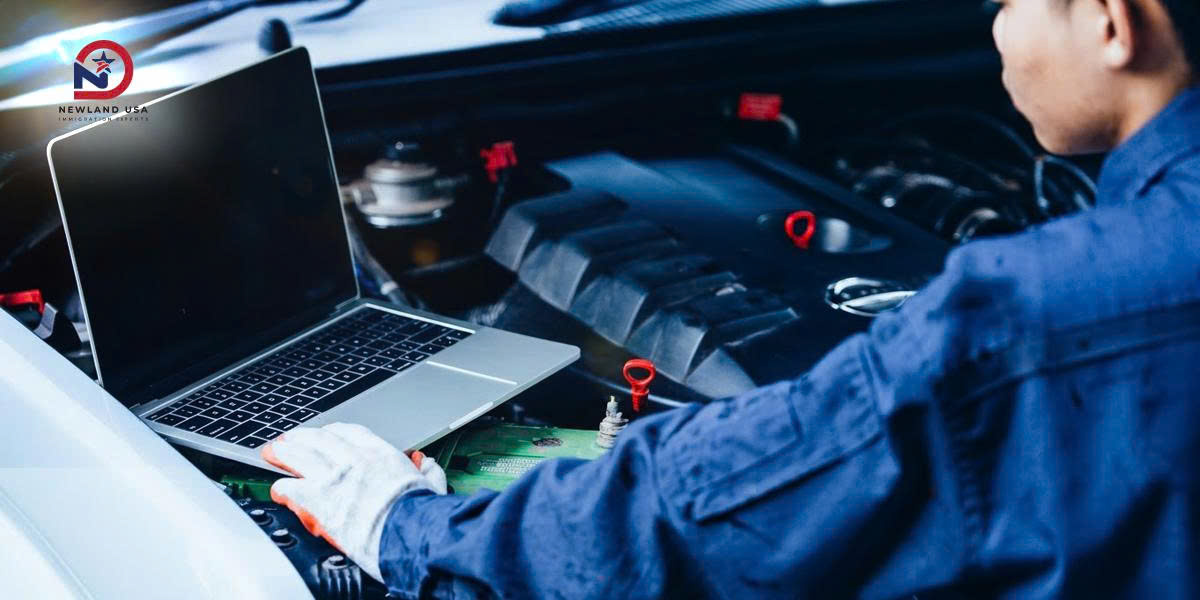
8. Career Opportunities: Auto Technicians in the AI Era
Precisely because AI supports rather than replaces technicians, demand for technicians in the U.S. remains very strong — and this is worth paying attention to for Vietnamese workers interested in the automotive technical field. The U.S. Bureau of Labor Statistics (BLS) projects an average of about 70,000 auto technician job openings per year from 2024 to 2034. Meanwhile, supply isn’t keeping up. The industry needs to replace about 76,000 technicians every year, but training programs are only producing around 39,000 people, creating a shortfall of roughly 39,000 technicians per year. The existing skilled workforce is also aging, with an average age above 55, retiring faster than young people are entering the field.
What’s notable is that AI isn’t reducing this demand — it’s changing the skill set that’s in demand for technicians. Leading manufacturers and service providers aren’t using AI to cut technical jobs; they’re using it to help technicians work more efficiently and help offset the labor shortage. Technicians who understand how mechanical, electrical, and control systems interact with each other, who know how to read data, and who can work alongside AI vehicle-diagnosis tools will have a clear advantage. In other words, the wave of AI in auto repair is raising the bar for the profession, and those with solid training in modern automotive technology are the ones who stand to benefit.
Conclusion
2026 marks the stage where AI in auto repair moves from concept to everyday working tool at shops and dealerships across the U.S. Thanks to its ability to read data from hundreds of sensors, analyze trends over time, and rank likely causes, AI-based car diagnostics helps find the right fault faster, reduces misdiagnosis, and shortens the time a car spends in the shop. AI applications in auto repair, from predictive maintenance to support for newer technicians, are expanding into independent garages, fleets, and individual users alike. That said, the technology still needs humans to verify results and make decisions, so the real picture is one of collaboration between technicians and AI-based vehicle diagnostics. With the U.S. short tens of thousands of technicians every year, workers with a solid technical foundation who are ready to work alongside new technology are looking at a career opportunity well worth considering.
Learn more:
- 7 Key Technologies Every Industrial Maintenance Technician in the U.S. Needs to Know in 2026
- PLC & Automation Skills: A Launchpad for Maintenance Technicians in the United States in 2026
- What Is the ASE Certification? Requirements, Exam Roadmap, and Its Importance for Auto Technicians in the U.S. in 2026
- Electric Vehicle Technicians in the U.S.: The “Golden” Skills Helping Vietnamese Auto Mechanics Get Ahead of the 2026 EV Trend
News Categories



Related news

From Motorcycle Mechanic to Automotive Technician in the U.S.: Skills and Qualifications to Prepare in 2026
AI in Auto Repair in the U.S. 2026: How Artificial Intelligence Diagnoses Vehicle Problems Faster and More Accurately

7 Key Technologies Every Industrial Maintenance Technician in the U.S. Needs to Know in 2026

PLC & Automation Skills: A Launchpad for Maintenance Technicians in the United States in 2026

What Is the ASE Certification? Requirements, Exam Roadmap, and Its Importance for Auto Technicians in the U.S. in 2026

EB5 Capital Recovery Time: How Long It Takes and the Key Milestones
Electric Vehicle Technicians in the U.S.: The “Golden” Skills Helping Vietnamese Auto Mechanics Get Ahead of the 2026 EV Trend

US Engineering & Maintenance Labor Shortage 2026: The Driving Force Behind the EB3 Skilled Workers Visa Policy
Industrial Maintenance Technician: Job Duties, Requirements & U.S. Immigration Opportunities in 2026