Industrial Maintenance Technician: Job Duties, Requirements & U.S. Immigration Opportunities in 2026
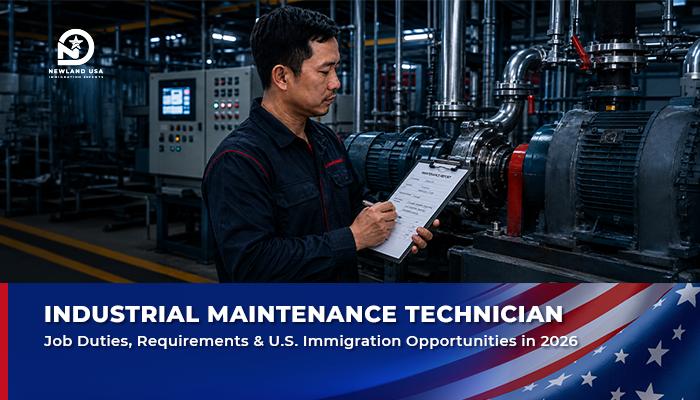
The U.S. manufacturing sector is expanding, and automation is being adopted more and more deeply, driving strong demand for teams to operate and repair machinery. Against this backdrop, the career of industrial maintenance technician is seen as a sustainable choice for skilled workers, while also opening a path to U.S. immigration through the EB3 industrial maintenance category for many Vietnamese people, thanks to reasonable entry requirements and steady hiring demand. This article from Newland USA provides complete information about industrial maintenance work, professional requirements, industrial maintenance salary levels in the U.S. in 2026, and the immigration pathway, giving readers a solid basis to consider before making a plan.
1. Who is an industrial maintenance technician, and where do they work?
Many people researching this career often ask what is an industrial maintenance technician. Put simply, this is someone who installs, maintains, and repairs machinery and equipment in factories and manufacturing facilities. According to the U.S. Bureau of Labor Statistics (BLS), this occupational group includes industrial machinery mechanics, maintenance workers, and millwrights, all sharing the common task of keeping production lines running smoothly.
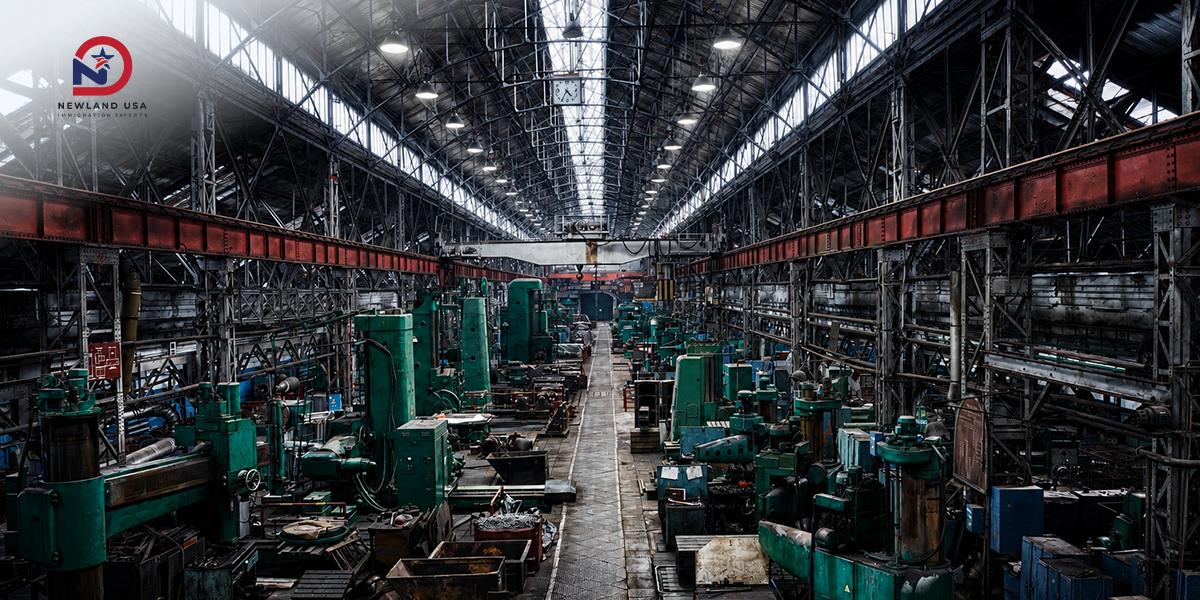
An industrial maintenance technician typically works in workshops, factories, packaging facilities, warehouses, or equipment repair units. BLS data shows that about half of the workforce in this occupational group works in manufacturing, with the rest spread across wholesale trade, construction, and commercial machinery repair services. As of 2024, there were about 538,300 people working in this occupational group across the U.S., showing that this is a labor market of significant size.
2. What does industrial maintenance work include?
Industrial maintenance work goes beyond simply fixing machines when they break down — it also includes preventive maintenance to limit downtime. This is an important distinction, because a small issue left undetected can bring an entire production line to a halt and cause losses for the business.
Based on BLS occupational descriptions and numerous job descriptions from U.S. employers, the common tasks of an industrial maintenance technician include:
- Reading technical documents and blueprints to understand how equipment is built and how it operates.
- Inspecting, test-running, and diagnosing the cause when a machine shows abnormal signs such as vibration or unusual noise.
- Disassembling and reassembling machinery to replace or repair damaged parts.
- Performing routine maintenance: cleaning, lubricating, calibrating, and aligning equipment to standard specifications.
- Handling unexpected breakdowns and completing reports and work orders according to procedure.
In practice, industrial maintenance work requires a combination of mechanical, electrical, and electronic skills. Since many machines today are computer-controlled, technicians also need to know how to use electronic diagnostic systems and vibration analysis to trace the root cause of a fault. In factories that use automated conveyor systems, maintaining motors, rollers, and belts is also part of the daily scope of responsibility.
3. Requirements and skills to become an industrial maintenance technician
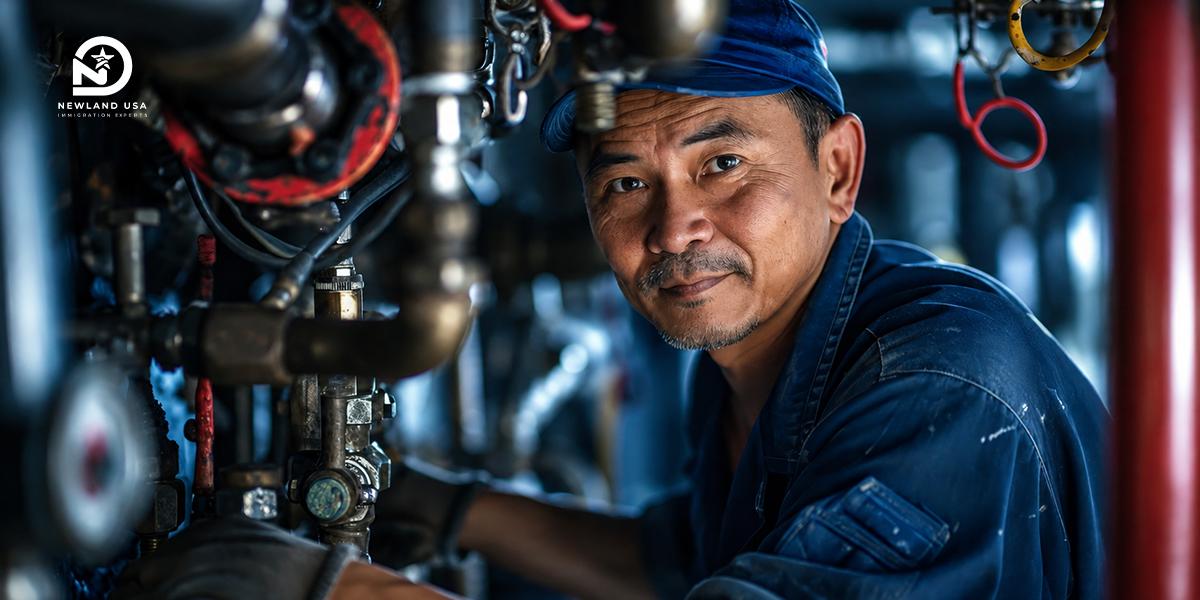
One reason this career suits Vietnamese workers well is that the entry bar isn’t too high. According to BLS, most positions only require a high school diploma or equivalent, along with on-the-job training. So what does a worker need to prepare, and where can one learn industrial maintenance?
In terms of training, industrial machinery mechanics and maintenance workers typically go through more than a year of hands-on training at the workplace. Some choose to complete a two-year college program in industrial maintenance, covering subjects such as welding, applied mathematics, hydraulics, and pneumatics. Millwrights, specifically, usually go through an apprenticeship lasting about three to four years, combining classroom theory with paid work hours.
Besides formal qualifications, to become an industrial maintenance technician who meets the expectations of U.S. employers, workers need some foundational skills:
- Mechanical skills: understanding how machines are built and knowing how to assemble equipment.
- Diagnostic and troubleshooting skills: observing, reasoning, and fixing problems in a systematic way.
- Manual dexterity: working precisely with small parts, requiring good hand-eye coordination.
- Safety discipline: following procedures carefully to avoid accidents when working with machinery.
For Vietnamese workers with a background in mechanics, electrical work, or factory experience, these are favorable conditions. Experience gained in Vietnam, if it can be documented, can become an advantage when applying through the EB3 Skilled Workers immigration program.
4. Industrial maintenance salary in the U.S. in 2026
Income level is the factor people care about most when researching this career. According to official data, BLS recorded a median wage for this occupational group in May 2024 of $63,510 per year, equivalent to about $30.53 per hour. The bottom 10% earned less than $44,430, while the top 10% earned more than $91,620 per year.
When updated to industrial maintenance salary levels in the U.S. in 2026, market survey platforms show higher figures, reflecting the recent wage growth trend. Salary.com (updated mid-2026) estimates an average of around $70,000 per year, with a common range from $58,000 to $85,000. Glassdoor records an average close to $68,500, while ERI gives a more conservative figure around $54,500. This variation is normal, since each source uses a different data-collection method.
The picture of industrial maintenance salary in the U.S. in 2026 can be summarized into three groups:
- New to the field: typically ranges from $44,000 to $52,000 per year.
- Experienced: around the median of $63,000 per year, based on BLS data.
- Highly skilled or specialized: can reach $85,000 to over $91,000 per year.
Actual income also depends on the state of residence, the industry of the factory, overtime hours, and level of expertise. States with a higher cost of living and well-developed industrial zones tend to pay somewhat higher wages to attract workers. Besides base pay, many positions also come with bonuses and additional benefits.
5. Career outlook and workforce demand in the U.S.
In the long run, this is an occupational group with a stable outlook. BLS projects that total employment in this field will grow by about 13% over the 2024–2034 period, much faster than the 3% average across all occupations in the U.S. Looking specifically at industrial machinery mechanics, the growth rate is even higher, at about 16%.
In terms of concrete numbers, the U.S. market needs to add an average of about 54,200 positions per year for this occupational group over the coming decade. Most of that demand comes from replacing workers who move to other careers or retire, in addition to demand driven by expanding automation. As more factories install automated conveyor systems and computer-controlled machinery, the need for industrial maintenance technicians to keep these systems running is further reinforced.
In addition, reports on the U.S. manufacturing labor market continue to point to a shortage of skilled workers, partly due to an aging workforce reaching retirement age. This is a factor that makes U.S. employers willing to look for qualified foreign workers, and it’s also the basis for employment-based immigration programs to play their role.
6. U.S. immigration through the EB3 industrial maintenance category
With high hiring demand and moderate entry requirements, this career has become a practical path for those interested in U.S. immigration through the EB3 industrial maintenance category. EB3 is an employment-based immigrant visa, divided into three subcategories: Skilled Workers, Professionals, and Other Workers.
One important point worth clarifying: many people ask whether an EB3 skilled worker needs a college degree. The answer is no. The Skilled Worker category only requires that the job need at least two years of training or experience — a college degree is not required. Because industrial maintenance work usually requires experience and professional training lasting more than a year, many positions in this field can qualify for the Skilled Worker category. This is a significant advantage for Vietnamese workers, since the Skilled Worker category currently has a much shorter wait than the Other Workers category.
The path to U.S. immigration through the EB3 industrial maintenance category requires three core conditions: the worker must have a full-time, permanent job offer from a U.S. employer; the employer must complete the PERM labor certification process with the U.S. Department of Labor; and the worker must demonstrate sufficient experience or training to meet the position’s requirements.
7. Timeline and processing time for EB3 applications in 2026
Understanding the conditions for U.S. immigration through EB3 and the processing timeline will help workers prepare mentally and plan accordingly. In general, the process includes the following main steps:
- Determining the Prevailing Wage: usually takes about 3 to 8 months.
- Recruitment and filing the PERM application (Form ETA-9089): the recruitment stage takes several months, after which the U.S. Department of Labor reviews the application. According to data from early 2026, average PERM processing time is around 500 days, equivalent to about 16 to 17 months.
- Filing Form I-140 with USCIS: standard processing takes about 6 months, or can be shortened to about 15 business days with Premium Processing.
- Waiting for the Priority Date to become current: depends on the monthly Visa Bulletin and the applicant’s country of chargeability.
For Vietnamese nationals, the situation is relatively more favorable compared to applicants from India or China, who face years-long backlogs due to per-country limits. For the Skilled Worker category, the total processing time for applications from Vietnam typically falls within a few years rather than decades. However, the Other Workers category from Vietnam is still experiencing a wait, with the priority date limited to around early 2020 as of mid-2026. This is why an industrial maintenance technician who qualifies for the Skilled Worker category can significantly shorten the journey compared to going through the Other Workers category.
Because these timelines can change with each Visa Bulletin update and shifts in immigration policy, workers should follow updates regularly and consult an experienced advisory firm to accurately assess their individual case.
8. Quick answers to frequently asked questions
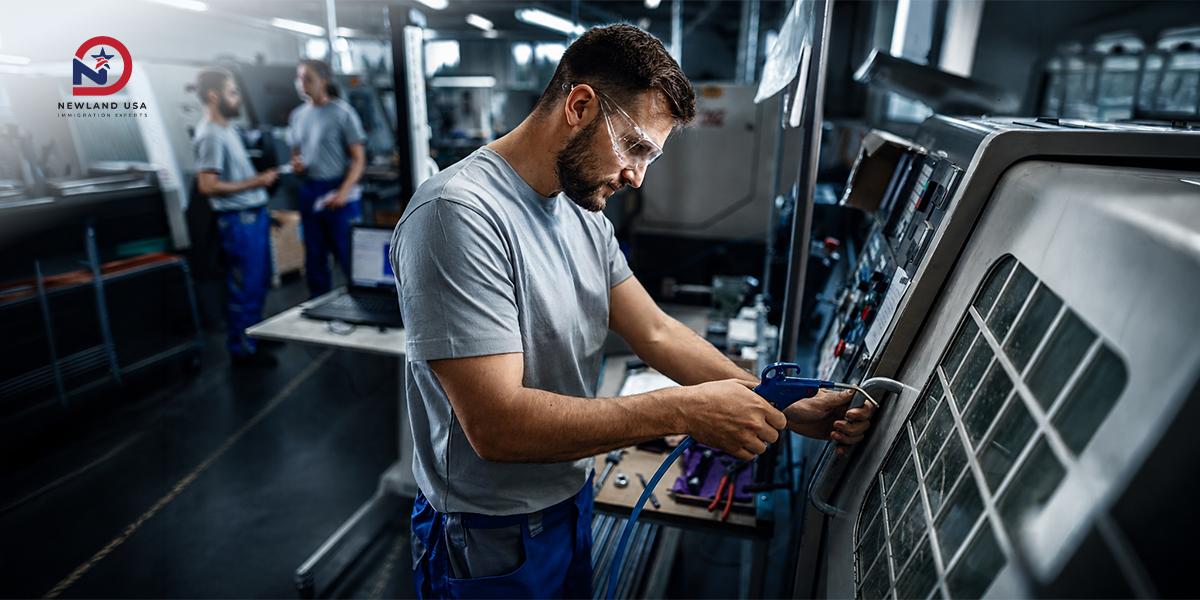
What does an industrial maintenance technician do? They install, maintain, and repair machinery in factories, perform preventive maintenance, and handle breakdowns to keep production lines running smoothly.
What is the current salary for industrial maintenance technicians in the U.S.? According to BLS, the median in 2024 was $63,510 per year. Market surveys from 2026 show averages ranging from about $54,500 to $70,000, depending on the source and region.
Why is this a worthwhile immigration path to consider? Because hiring demand is stable, industrial maintenance salaries in the U.S. in 2026 are fairly good relative to the entry requirements, and the whole family can receive a green card once the case is approved.
9. Conclusion
The career of industrial maintenance technician brings together several factors well-suited to Vietnamese workers: a moderate entry requirement, stable long-term workforce demand, and income that matches skill level. Combined with the opportunity for U.S. immigration through the EB3 industrial maintenance category, this is not just a job but a long-term career path for the whole family. With the information above about industrial maintenance work, professional requirements, and industrial maintenance salary levels in the U.S. in 2026, readers can be more proactive in evaluating whether this path suits them. The important next step is to carefully review individual case eligibility and consult a reputable immigration advisory firm to build a concrete plan.
Learn more:
- Why Are U.S. Businesses “Hungry” for EB3 Skilled Workers?
- The Electric Vehicle (EV) Wave in the U.S. and the Retraining Challenge for EB3 Auto Mechanics
- EB3 Program – The Safest and Most Transparent Pathway to U.S. Permanent Residency for Vietnamese Workers in 2026
- EB3 Visa Interview Experience at the U.S. Consulate in 2026: The Most Frequently Asked Questions
News Categories



Related news
AI in Auto Repair in the U.S. 2026: How Artificial Intelligence Diagnoses Vehicle Problems Faster and More Accurately
7 Key Technologies Every Industrial Maintenance Technician in the U.S. Needs to Know in 2026
PLC & Automation Skills: A Launchpad for Maintenance Technicians in the United States in 2026
What Is the ASE Certification? Requirements, Exam Roadmap, and Its Importance for Auto Technicians in the U.S. in 2026

EB5 Capital Recovery Time: How Long It Takes and the Key Milestones
Electric Vehicle Technicians in the U.S.: The “Golden” Skills Helping Vietnamese Auto Mechanics Get Ahead of the 2026 EV Trend
US Engineering & Maintenance Labor Shortage 2026: The Driving Force Behind the EB3 Skilled Workers Visa Policy
Industrial Maintenance Technician: Job Duties, Requirements & U.S. Immigration Opportunities in 2026

Lương thợ sửa xe tại Mỹ: Cách tối ưu giờ công để nhân đôi thu nhập năm 2026