The Electric Vehicle (EV) Wave in the U.S. and the Retraining Challenge for EB3 Auto Mechanics
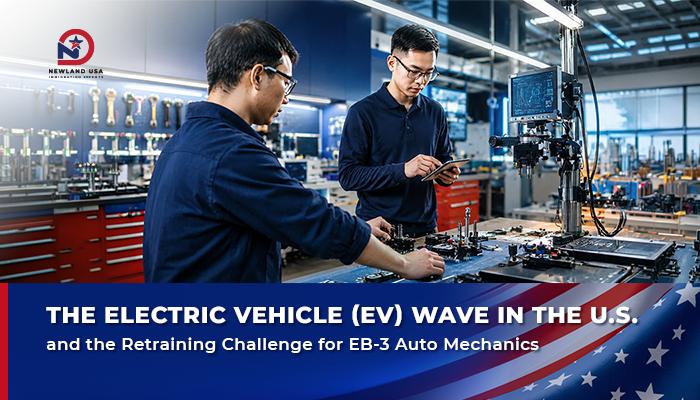
The American auto industry is going through its biggest transformation in decades. As battery-powered cars gradually replace internal combustion engines, the job landscape inside repair shops is shifting right along with it. For Vietnamese workers pursuing the dream of settling in the U.S. through a skilled-trade pathway, this is both a challenge and a rare opportunity. This article from Newland USA breaks down the full picture of this “electrification” wave, explains why EB3 auto mechanics need to proactively upgrade their skills, and outlines a practical retraining roadmap to keep up with the U.S. auto labor market.
1. The EV Wave in America: A Snapshot of the 2025–2026 Market
Electric vehicles are no longer an unfamiliar sight on American roads. In 2024, EVs made up about 8.1% of total new light-vehicle sales in the U.S., up from 7.3% in 2023. By the third quarter of 2025, that share peaked at a record 10.6% as buyers rushed to take advantage of the $7,500 federal tax credit before it expired.
However, the picture shifted significantly in early 2026. After the tax credit disappeared on September 30, 2025, new EV sales in the first quarter of 2026 dropped 28% year-over-year to 216,399 units, with market share falling back to 5.8%. Even so, analysts stress that this is a “correction,” not a collapse. One bright spot is the used EV segment, which grew strongly: used EV sales rose 12% to 93,500 units in Q1 2026, with average transaction prices only about $1,300 higher than comparable gas-powered cars.
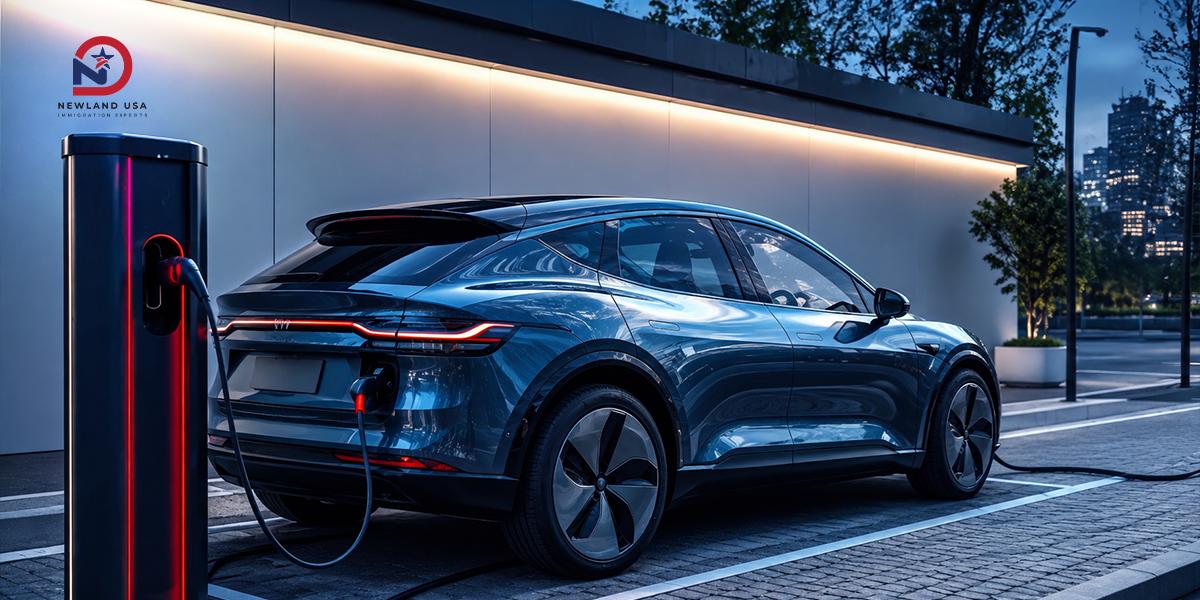
Looking at the bigger picture, the shift toward electrification remains unstoppable in the long run. The International Energy Agency (IEA) estimates that around 2.9 million battery electric vehicles (BEVs) were sold in the U.S. in 2025, and that number is expected to climb to 6.8 million by 2030. Even forecasts made after the tax credit ended still project that EV market share in the U.S. could reach 15–25% by 2030. Consumers also have more choices than ever, with over 140 BEV models on the market by the end of 2024. In short, the U.S. EV market is moving from the “early adopter” phase into the “mainstream” phase, which means a massive number of vehicles will need maintenance and repair in the near future.
2. Why EVs Are Reshaping the Auto Repair Trade in the U.S.
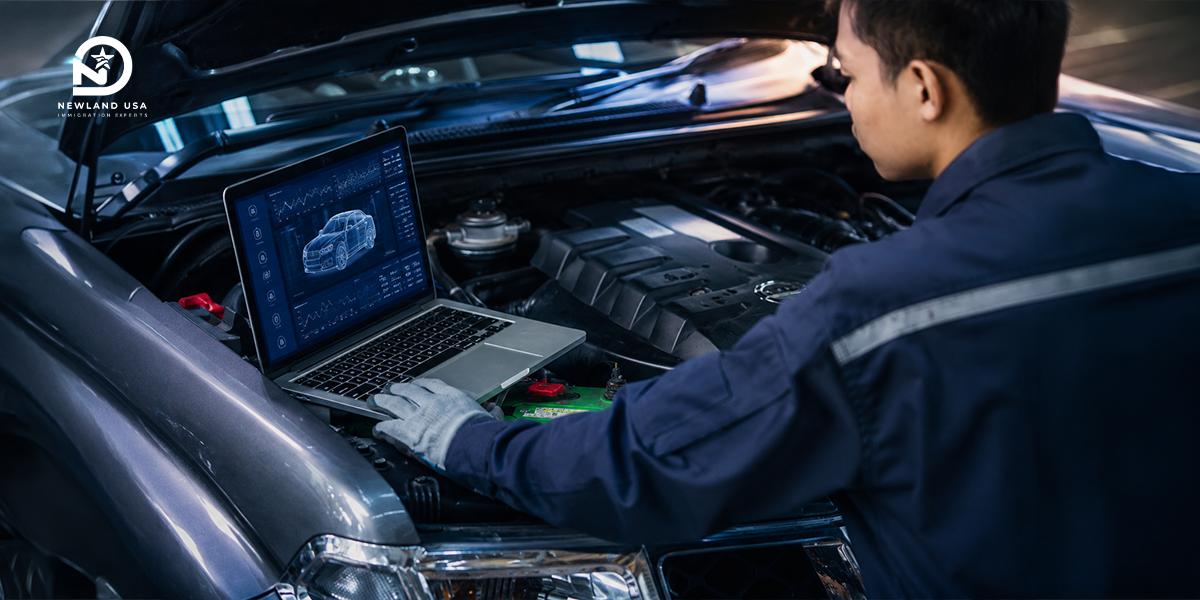
The rise of electric vehicles is directly reshaping the structure of the auto repair trade in America. An EV isn’t simply a gas-powered car with the engine swapped out — it’s an entirely different technical ecosystem. Instead of thousands of moving mechanical parts, engine oil, and an exhaust system, an EV runs on a high-voltage battery system, electric motors, power electronics, and complex control software.
This difference makes the maintenance process feel almost brand new. A garage owner in North Carolina once shared that the entire workflow is different, even something as basic as lifting the car becomes trickier because the battery pack typically runs along the whole underside of the vehicle. That means the skills that once made someone an expert with combustion-engine cars are no longer enough to handle the newer generation of vehicles.
On top of that, many modern EVs come equipped with Advanced Driver Assistance Systems (ADAS), which use sensors, cameras, and software to make driving safer. To maintain and calibrate these systems, a technician needs to understand both the mechanical and the electronic side of things. This is why auto repair work in the U.S. is shifting from a primarily mechanical job into a trade that demands digital thinking and electronic diagnostic skills. For immigrant workers, catching on to this trend early is the key to maintaining a long-term competitive edge in the industry.
3. The Talent Gap: A Golden Opportunity for EB3 Auto Mechanics
What surprises many people is that this rapid electrification is happening alongside a serious labor shortage. Right now, the auto repair trade in the U.S. is facing an increasingly large workforce gap. According to estimates from the U.S. Bureau of Labor Statistics (BLS), the country will need an additional 35,000 EV technicians by 2028, but current training programs aren’t producing enough graduates to meet that demand.
The numbers paint an even clearer picture of the skills gap. Out of more than 229,000 technicians certified by the National Institute for Automotive Service Excellence (ASE), only about 3,100 — roughly 1.4% — hold an EV-specific certification. A Cox Automotive survey also found that only 32% of technicians at dealerships offering EV service are actually trained to work on them, and more than half of dealerships are not fully ready.
The pressure is mounting further as the existing workforce ages. The U.S. currently has 805,600 working auto technicians. Automotive HR and trade organizations warn that the supply of auto technicians only covers 59% of annual demand, with the auto industry alone facing a shortfall of around 20,780 positions every year.
That gap creates a real opportunity for international workers. An EB3 auto mechanic with a solid foundation who’s willing to learn new technology can absolutely fill the positions the U.S. market is “hungry” for. More importantly, pay for EV specialists is very attractive: 2025 Glassdoor data shows the average salary for an EV technician is $64,511 a year, about 30% higher than the $49,670 median across the auto technician field as a whole. In states with large EV populations, pay is even higher — California reaches $68,272. This is exactly the kind of incentive that should push every EB3 auto mechanic to seriously invest in upgrading their skills.
4. The Difference Between Traditional Mechanics and EV Technicians
To understand why retraining is essential, it helps to draw a clear line between traditional mechanics and EV technicians. A skilled combustion-engine mechanic is proficient at oil changes, transmission repair, exhaust systems, or carburetors. An EV technician, on the other hand, focuses on entirely different tasks.
First and foremost is high-voltage electrical safety. EV batteries can operate at voltages in the hundreds, which is enough to be fatal if handled incorrectly. Because of this, an EV technician must be thoroughly familiar with procedures for disconnecting, isolating, and safely handling high-voltage systems. Next comes battery diagnostics: assessing state of charge, overall battery “health,” cell balancing, and thermal management systems. These are skills where EV technician work overlaps partly with traditional auto repair, but differs sharply when it comes to high-voltage systems and software.
Beyond that, EV technicians also need to understand power electronics, drive motors, and how to read software data for updates and bug fixes. You could say that while a traditional mechanic works mostly with a car’s “muscles,” an EV technician works with its “electronic nervous system.” This shift in the role explains why retraining isn’t optional — it’s a critical requirement for anyone who wants a long-term career in this field.
5. The Retraining Challenge: A Skills Upgrade Roadmap for EB3 Auto Mechanics
The good news is that the retraining path isn’t difficult at all. The U.S. vocational training system has been building, and continues to build, a number of bridges that help turn traditional mechanics into properly trained EV technicians. This is exactly the “challenge” that every EB3 program auto mechanic needs to tackle so they don’t get left behind.
When it comes to professional certification, the most widely recognized standard is the ASE L3 certification. However, this isn’t the starting point. According to ASE documentation, to sit for the L3 exam, a technician must already hold both the A6 (Electrical/Electronic Systems) and A8 (Engine Performance) certifications, since L3 is built on a foundation of electrical knowledge. In addition, to reinforce workplace safety, ASE introduced two new certifications in 2023: xEV Electrical Safety Awareness and xEV Technician Electrical Safety. These are the first “building blocks” an EB3 program auto mechanic should aim for.
When it comes to hands-on training programs, many major automakers have built their own dedicated training pipelines. Tesla runs its 12-week START program, training students directly at service centers; Ford runs its ASSET program; and General Motors has its ASEP program — all of which now incorporate EV content into their curricula.
For those looking for a shorter path, community colleges offer plenty of fast-track courses. For example, Wake Tech in North Carolina offers a six-week certificate program for Electric Vehicle Supply Equipment (EVSE) field technicians. More importantly, according to the World Resources Institute (WRI), the majority of workers who previously worked in traditional auto manufacturing can transition into the EV field if they receive the right retraining and skills upgrades. In other words, the existing mechanical experience of an EB3 auto mechanic isn’t wasted at all — it’s actually a launchpad toward higher-value positions.
6. What EB3 Program Auto Mechanics Need to Prepare to Keep Up
For Vietnamese workers, the journey to the U.S. to work in the auto industry is tied to the EB3 Skilled Workers visa category. According to U.S. Citizenship and Immigration Services (USCIS), a skilled worker under this category is someone capable of performing a job that requires at least two years of training or experience, and which is not temporary or seasonal in nature. Auto mechanics fall under this skilled-labor category, alongside factory technicians, production-line operators, and others. Each year, about 40,040 EB3 visas are allocated, accounting for 28.6% of the total 140,000 employment-based visas.
So what exactly should an EB3 program auto mechanic prepare? First is strengthening their skill foundation and building solid documentation of their work experience. Since the EB3 Skilled Workers category requires proof of at least two years of experience, workers need to keep thorough records of their auto repair career back home. Second is investing in EV skills, which will undoubtedly be needed in the future. Rather than stopping at combustion-engine skills, an EB3 program auto mechanic should start early on building knowledge of high-voltage electrical systems, battery systems, and electronic diagnostics — capabilities that turn them into candidates who “know both gas cars and EVs.” That’s a very valuable double advantage. As industry experts have pointed out, technicians who understand both gas and electric vehicle systems can hold a real edge in the job market.
Third is industry-specific English proficiency, since reading technical documentation, using diagnostic equipment, and communicating with customers all require a certain level of vocabulary. An EB3 auto mechanic who’s well-equipped in all three of these areas will significantly shorten the time it takes to settle in after arriving in the U.S.
Finally, it’s worth keeping in mind that the path to settling in the U.S. requires long-term planning. The process from PERM labor certification to receiving a green card typically takes a minimum of three to four years as of 2026. That waiting period, if used wisely to build additional skills, can absolutely turn into an advantage rather than “dead time.”
7. The Long-Term Outlook for Auto Repair in the U.S. in the Age of Electrification
Looking ahead, there’s good reason to believe auto repair work in the U.S. remains a sustainable career choice. The Bureau of Labor Statistics projects the auto service technician field to grow about 4% between 2024 and 2034, with around 70,000 job openings expected each year.
Additional momentum is coming from the wave of EVs reaching the end of their warranty periods. As the hundreds of thousands of EVs sold between 2021 and 2025 get older and roll out of their manufacturer warranty coverage, demand for repairs outside the dealership network will surge. At the same time, charging infrastructure is also expanding rapidly — the number of fast-charging ports in the U.S. grew by nearly 50% in 2025 compared to the previous year, driving demand for technicians who can install and maintain charging equipment.
All of these factors come together into one clear message: whoever proactively becomes an EV technician now will hold a first-mover advantage. For the Vietnamese labor community, this is the right time to map out a path toward becoming an EV technician alongside a settlement plan. An EB3 auto mechanic with a long-term vision, one who knows how to combine traditional mechanical experience with electrification skills, won’t just find stable employment — they’ll also open the door to career advancement and high income in one of the largest auto markets in the world.
8. Conclusion
The EV wave in the U.S. is redrawing the career map of the auto industry, creating a retraining challenge for every current auto technician. But behind that challenge lies a huge opportunity: a large talent gap, attractive pay, and a market that keeps expanding. For every EB3 auto mechanic, the key to success lies in proactive preparation — strengthening their foundational skills, getting ahead of the curve on high-voltage battery systems and electronic diagnostics, and pursuing professional certifications like ASE L3. When solid experience is combined with a mindset of continuous learning, the journey from a traditional mechanic to a skilled EV technician on American soil is entirely within reach.
Learn more:
- EB3 Program – The Safest and Most Transparent Pathway to U.S. Permanent Residency for Vietnamese Workers in 2026
- EB3 Visa Interview Experience at the U.S. Consulate in 2026: The Most Frequently Asked Questions
- U.S. Immigration Through the EB3 Visa in 2026: Reasonable Costs, Green Cards for the Entire Family
- Step-by-Step Guide to Proving Work Experience in the EB3 Application Package
News Categories



Related news

From Motorcycle Mechanic to Automotive Technician in the U.S.: Skills and Qualifications to Prepare in 2026
AI in Auto Repair in the U.S. 2026: How Artificial Intelligence Diagnoses Vehicle Problems Faster and More Accurately
7 Key Technologies Every Industrial Maintenance Technician in the U.S. Needs to Know in 2026
PLC & Automation Skills: A Launchpad for Maintenance Technicians in the United States in 2026
What Is the ASE Certification? Requirements, Exam Roadmap, and Its Importance for Auto Technicians in the U.S. in 2026

EB5 Capital Recovery Time: How Long It Takes and the Key Milestones
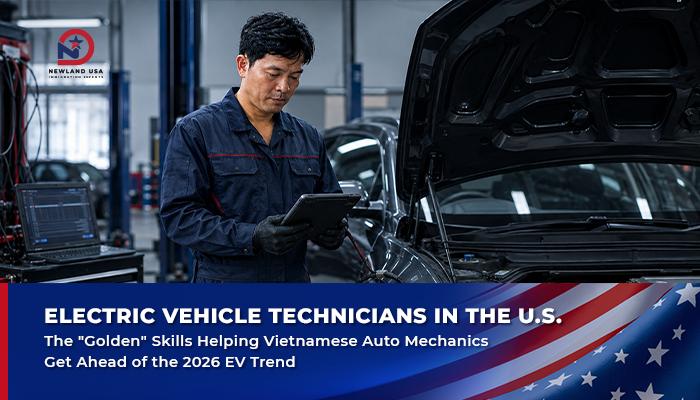
Electric Vehicle Technicians in the U.S.: The “Golden” Skills Helping Vietnamese Auto Mechanics Get Ahead of the 2026 EV Trend
US Engineering & Maintenance Labor Shortage 2026: The Driving Force Behind the EB3 Skilled Workers Visa Policy
Industrial Maintenance Technician: Job Duties, Requirements & U.S. Immigration Opportunities in 2026