Calling 911 in the U.S.: When to Call and How to Work with the Police
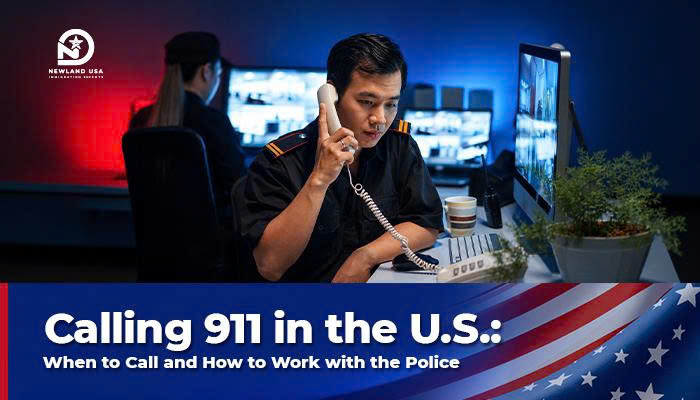
For many Vietnamese people who have just arrived in the U.S. through programs like EB-3, one of the things that worries them most is knowing what to do in an emergency. Calling 911 is the main way to reach the police, fire department, and emergency medical services anywhere in the U.S., but not everyone fully understands when to use it and how to communicate with the dispatcher. On top of that, knowing how to interact with American police in everyday situations — from being pulled over to having officers come to your door — is just as important. This article from Newland USA covers the essential knowledge to help you feel more confident as you start your new life, while avoiding misunderstandings that could lead to unnecessary legal trouble.
1. What Is 911 and How Does the System Work
In the U.S., 911 is the universal emergency phone number that gives the public quick access to three main services: police, fire, and medical. When you dial 911 from any phone, the call is routed to a local emergency dispatch center called a Public Safety Answering Point (PSAP), which can send the right responders to the caller’s exact location.
One important thing to know is that the modern system can identify the caller’s location. The upgraded 911 system (known as Enhanced 911 or E911) automatically provides the dispatcher with the caller’s location when that information is available, and this service now covers about 96% of the U.S. However, the accuracy depends on whether you’re calling from a landline or a cell phone. With a landline that has a properly registered address, the dispatch center usually gets the exact address right away. With a cell phone, the system uses cell tower-based location technology, so the location may only be an approximate area within a few hundred meters. For this reason, even though technology has improved a lot, callers should still make a point of knowing and stating their location.
Understanding how this system works helps you see why the dispatcher always asks for your address first, and why giving clear information plays such a critical role in how quickly responders can reach you.
2. When to Call 911 and When Not To
The most important question many newcomers have is when to call 911. The core rule is simple: only use this number for real emergencies — meaning situations where there’s an immediate threat to life, health, or property. Examples include medical emergencies such as chest pain, stroke symptoms, difficulty breathing, severe bleeding, unconsciousness, or seizures, as well as crimes in progress like assault, robbery, domestic violence, or suspicious activity that poses a direct danger. Fires of any kind also fall into this category and require an immediate call.
On the other hand, there are many situations that might seem like they need 911 but actually don’t. Cases where you should not call 911 include minor illnesses or injuries that don’t require immediate treatment — things like a cold, the flu, chronic pain, broken fingers or toes, or small cuts. Instead, you should call your doctor or go to an Urgent Care center. Similarly, issues like noise complaints, abandoned vehicles, or a theft that happened a while ago and the suspect is already gone should be reported through your local non-emergency number.
Using 911 correctly isn’t just about being polite — it matters for several reasons. The service is designed specifically for real emergencies, so when resources get tied up with false alarms, it wastes those resources and slows down response times for people who truly need help. Even more seriously, in many states, intentionally calling 911 to make a false report is against the law and can result in penalties. If you’re in a gray area and aren’t sure whether something counts as an emergency, the general advice from public safety agencies is to go ahead and call 911 — but never exaggerate how serious the situation is just to get a faster response.
3. Non-Emergency Numbers and Other Options
One thing that newcomers to the U.S. should keep in mind is that non-emergency phone numbers exist. There are two ways to contact a police department or sheriff’s office: dialing 911 and dialing a separate ten-digit number. Both are answered at the dispatch center, but they shouldn’t be used interchangeably — 911 is for emergencies, and the ten-digit number is for non-emergency matters.
In addition, many cities have also set up the number 311 as an easy-to-remember line similar to 911, but for administrative and community service issues. Some local governments have chosen 311 as a memorable counterpart to 911, and this number connects callers with non-emergency staff who can help, while other jurisdictions publish a ten-digit hotline for city services. You should take the time to look up and save the non-emergency number for your area in your phone. This also has a practical benefit: if for any reason 911 isn’t working, the ten-digit number can still connect you with local law enforcement.
4. What Information to Provide When Calling 911
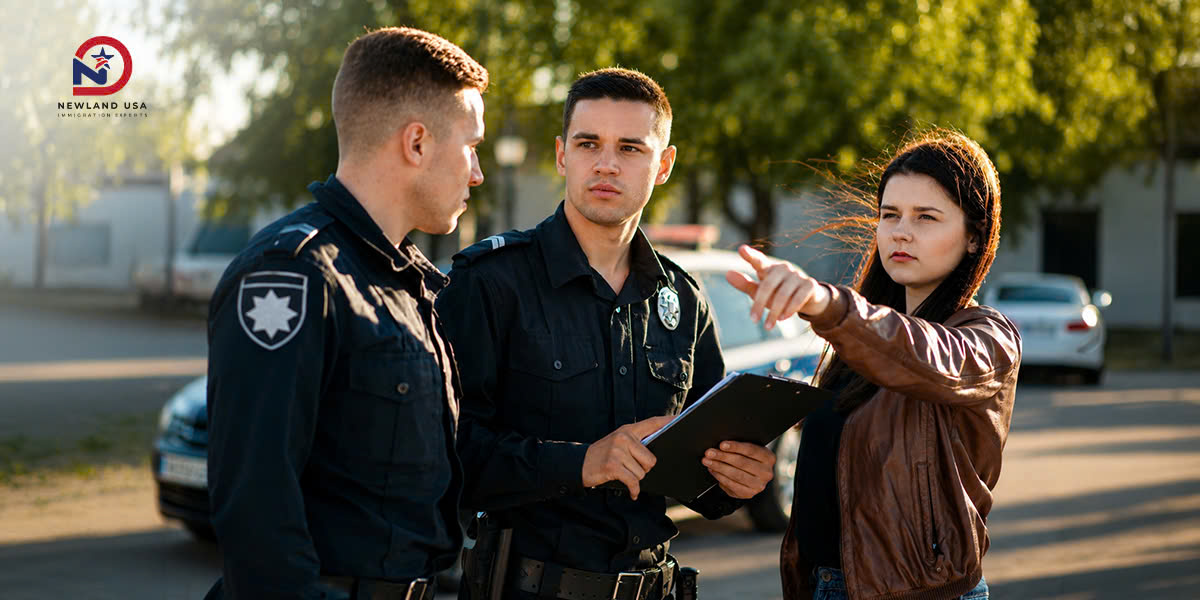
Once you understand the right time to call 911 in the U.S., the next step is knowing how to communicate effectively with the dispatcher. The most important piece of information is your location. Stay as calm as you can and speak clearly; start with your location — including your address, the nearest intersection, or any landmarks — because this is the most critical piece of information. Even if the call gets disconnected, responders will still know where to go.
After reporting your location, you need to briefly describe what’s happening: is it a police, fire, or medical issue, and what’s going on. The dispatcher will ask a series of questions, and this sometimes frustrates callers who think it’s slowing things down. In reality, it’s the opposite. The questions are being asked while response units are already on their way, and these questions don’t delay the dispatch of police, fire, or EMS. Dispatchers are trained to ask questions that help them prioritize the situation, pinpoint the location, and speed up the right response.
A note for those who aren’t fluent in English: don’t worry about the language barrier. Many 911 centers have interpreter services available. 911 centers use interpreter services, so no matter what language the caller speaks, the dispatch center can still help through a three-way call between the dispatcher, an interpreter, and the caller. Your answers should be short, honest, and to the point. If you don’t know the answer to a question, just say so rather than guessing, because inaccurate information can send responders to the wrong place or put emergency workers in danger.
5. Texting 911 When You Can’t Make a Call
A service that many people don’t know about is the ability to text 911. Text-to-911 lets you send a text message to reach emergency dispatchers from your cell phone. However, because a voice call provides more information to the 911 center, you should always try to call first whenever possible. This service is designed mainly for two groups: people who are deaf or have difficulty speaking, and people who can’t speak out loud for safety reasons — for example, if they’re hiding from an intruder or in a domestic violence situation.
When you need to text, enter 911 in the recipient field and include your location and the type of emergency in your very first message. Keep it short and clear, and provide all the important details right away, because the dispatcher needs to know your location, what the emergency is, and any other relevant information. A few rules to remember: don’t use abbreviations or slang because the dispatcher may not understand them; try to write in English since interpreter services for text are still limited; and don’t send group messages because that could prevent your text from reaching 911.
It’s also worth noting that this service is not yet available everywhere in the country. If you try to text 911 in an area where the service isn’t available, FCC rules require the carrier to send back an automatic “bounce-back” message telling you to contact emergency services another way, such as by calling. This reply message is meant to prevent you from thinking your text got through when it actually didn’t.
6. How to Interact with Police During a Traffic Stop
Being pulled over by the police is the most common encounter people have with law enforcement in the U.S., and it’s also the situation that makes many immigrants feel the most anxious. Knowing the right way to interact with American police in this situation will help keep both you and the officer safe.
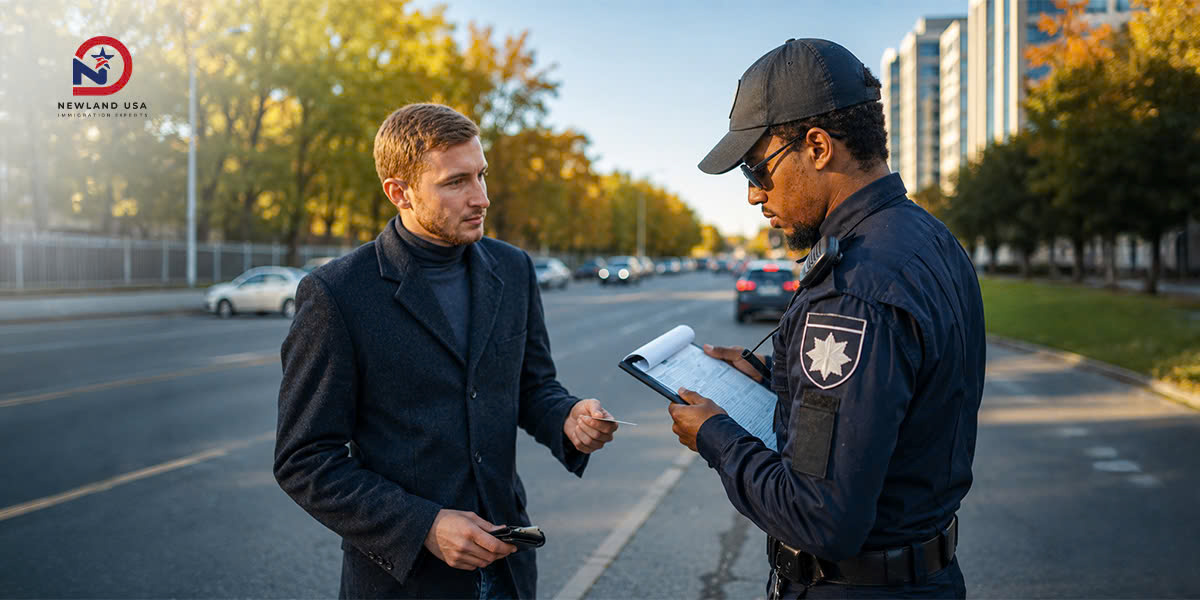
The first thing to do when you see flashing lights is pull over. Move to the right side of the road as soon as it’s safe to do so. Pulling over doesn’t mean you’re admitting you did something wrong — it’s simply how you show respect for the law and take the necessary steps so the interaction goes smoothly. After you stop, there are a few things you can do to help the officer feel at ease: stop in a safe spot as soon as possible, roll your window down slightly, turn off the engine, turn on the interior light, and place both hands on the steering wheel. Keeping your hands where the officer can see them and avoiding any sudden movements is very important. If you need to reach for your documents, let the officer know beforehand that you’re going to reach for them.
Regarding vehicle searches, this is a point many people aren’t clear on. The police may ask to search your car during a traffic stop. However, you should know that you have every right to decline this request. Express it politely but firmly: “I do not consent to a search.” This is your legal right. That said, there’s an important distinction between refusing verbally and physically resisting. You should only refuse a search with your words — don’t try to physically block it, because that could escalate the situation and lead to additional charges or injuries. In cases where the police have reasonable cause to believe the vehicle contains evidence of a crime, they can still go ahead with the search without your consent.

7. Conclusion
Knowing when and how to call 911, along with understanding your rights when dealing with the police, is an essential part of settling into life in America. This knowledge isn’t meant to create anxiety — on the contrary, it helps you feel more confident because you know how to respond in each situation. In short, save 911 for real emergencies, keep your local non-emergency number handy, always state your location clearly when contacting dispatch, and remember that the U.S. Constitution protects everyone regardless of immigration status.
For new settlers, taking the time to learn this information ahead of time, saving important phone numbers for your family and lawyer, and sharing this knowledge with other family members at home is the best way to prepare. When every member of the community understands how to use the system properly, not only are you safer, but emergency resources also stay available for those who truly need them.
Learn more:
- Does “Immigrant Intent” Affect Adjusting to EB5 Status in the U.S. in 2026?
- Tipping Culture in the United States 2026: What Newly-Arrived Vietnamese Immigrants Should Know
- EB-3 U.S. Immigration in 2026: The Alternative Solution to Family-Sponsored Visa Categories
- U.S. Immigration Through the EB3 Visa in 2026: Reasonable Costs, Green Cards for the Entire Family
News Categories

Related news

From Motorcycle Mechanic to Automotive Technician in the U.S.: Skills and Qualifications to Prepare in 2026
AI in Auto Repair in the U.S. 2026: How Artificial Intelligence Diagnoses Vehicle Problems Faster and More Accurately
7 Key Technologies Every Industrial Maintenance Technician in the U.S. Needs to Know in 2026

PLC & Automation Skills: A Launchpad for Maintenance Technicians in the United States in 2026
What Is the ASE Certification? Requirements, Exam Roadmap, and Its Importance for Auto Technicians in the U.S. in 2026

EB5 Capital Recovery Time: How Long It Takes and the Key Milestones
Electric Vehicle Technicians in the U.S.: The “Golden” Skills Helping Vietnamese Auto Mechanics Get Ahead of the 2026 EV Trend

US Engineering & Maintenance Labor Shortage 2026: The Driving Force Behind the EB3 Skilled Workers Visa Policy
Industrial Maintenance Technician: Job Duties, Requirements & U.S. Immigration Opportunities in 2026