Tipping Culture in the United States 2026: What Newly-Arrived Vietnamese Immigrants Should Know

For many newly-arrived Vietnamese immigrants in America, one of the most confusing things during the early days of settling in isn’t the language or the weather — it’s tipping. When the payment screen swings toward you with options of 18%, 20%, or even 25%, quite a few people freeze up, unsure which button to tap to be polite. Understanding tipping in America therefore becomes an essential life skill, helping you blend in faster, avoid awkward situations, and manage your spending wisely. This article from Newland USA will thoroughly explain tipping culture in the US, the most common tipping rules in America for 2026, along with important notes specifically for those who have just set foot on American soil.
1. What Is Tipping and Why Does It Matter So Much in American Life?
A tip (also called a gratuity) is an extra amount of money that customers voluntarily pay to show appreciation for the person serving them, on top of the bill. In many countries, this is simply a gesture left to personal discretion; but in the United States, tipping is practically a required part of social interaction and consumer culture.
The reason lies in the unique wage structure of America’s service industry. The majority of service workers receive a very low base wage and rely primarily on customer tips to make a living. For that reason, tipping in America is not simply a reward for good service — it is actually a critical component of workers’ income that helps them cover their daily expenses. When you don’t tip or tip too little, it can be seen as disrespectful toward the effort of the person serving you. This is the core difference that every newly-arrived Vietnamese immigrant in America needs to understand right from the start, to avoid unintentionally leaving a bad impression.
2. The Origins and Nature of Tipping Culture in the US
Few people know that the custom of tipping was not actually invented by Americans. The practice was imported from Europe around the 1800s, when wealthy Americans brought it back from their travels and treated it as a status symbol. Interestingly, at that time many Americans fiercely opposed it, even viewing tipping as a sign of aristocratic class stratification that went against America’s spirit of equality.
The turning point came with the Fair Labor Standards Act of 1938. This law allowed employers to pay workers below the minimum wage as long as the rest was made up through tips. The “tip credit” system — where tips are counted toward the minimum wage — was born then and still exists to this day. In some states, restaurant and hotel workers can receive as little as $2.13 per hour, with the assumption that tips will bring them up to the federal minimum wage of $7.25 per hour.
However, not everywhere follows this model. Some states like California do not allow tip credits, meaning servers are already paid a much higher minimum wage before receiving any tips on top. Understanding this historical background helps explain why tipping culture in the US is so deeply embedded in everyday life, and why it has remained a topic of debate for over a century.
3. Standard Tipping Rates in 2026 and the “Tipflation” Phenomenon
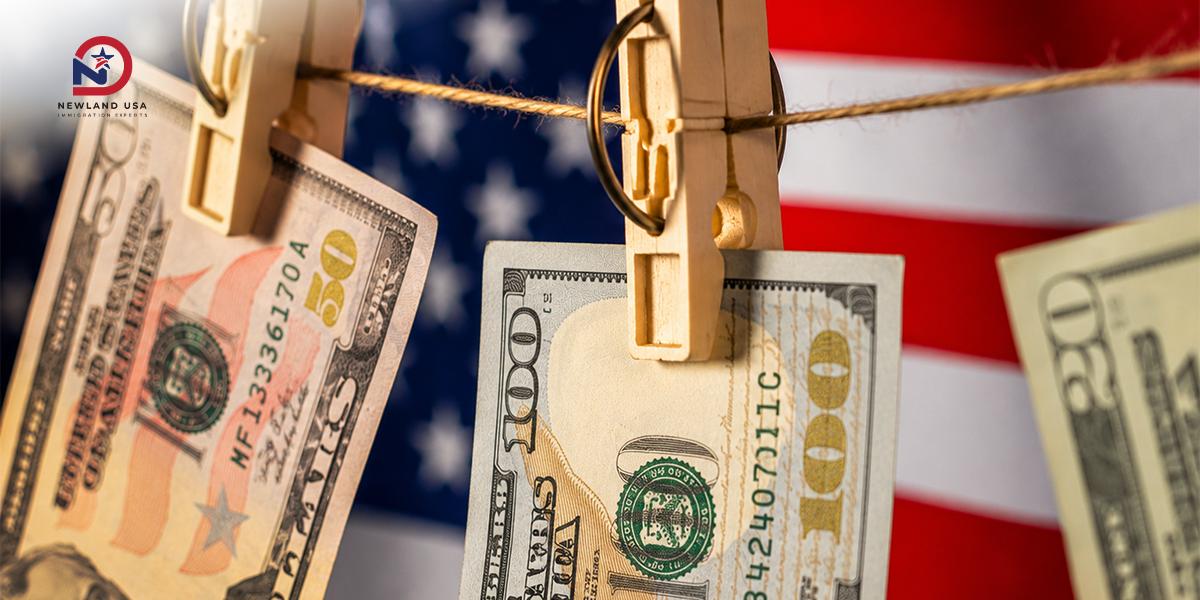
For many decades, the typical tip in America ranged from 15% to 20% of the bill. But the landscape has noticeably shifted. For most service industries, the standard tip has moved from 15% up to around 18–20%; anything above 20% is considered generous, while below 15% signals that the customer was unhappy. Real data from the Toast payment system shows that the average tip at full-service restaurants reached about 19.4% in the first quarter of 2025.
Americans jokingly call this steady rise in expected tips “tipflation” (tip inflation). It comes hand in hand with a growing wave of fatigue and frustration among the public. A 2025 Bankrate survey found that 63% of Americans hold at least one negative view about tipping culture, up from 59% the year before. At the same time, a study showed that 72% of Americans feel they are now expected to tip in more places than they were five years ago.
Another thing newcomers need to watch out for is the increasing appearance of “service charges” or “surcharges.” Many restaurants now add a service fee of 3% to 5%, sometimes higher, to help cover employee wages. The important thing is that this fee does not always go to the server. If the bill doesn’t clearly state that the charge goes to staff, you should assume it doesn’t count as a tip and consider tipping on top of it. This is one of those tipping rules in America that even locals often get wrong.
4. US Tipping Rules for Specific Situations
To help newly-arrived Vietnamese immigrants in America put this into practice easily, below is a reference guide for common tipping amounts in 2026 for each type of service. And always stay flexible — don’t be rigid about it.
At sit-down restaurants, the standard tip is now 18–20% of the pre-tax bill, and can go up to 20–25% at upscale restaurants or when the service is truly outstanding. For counter-service coffee shops and fast food places, the tip is usually just $0–$1 or rounding up, and it’s entirely optional. For takeout orders you pick up yourself, you can tip anywhere from 0% to 10%, since you’re doing most of the legwork.
For delivery drivers on apps like DoorDash or Uber Eats, a fair tip is 15–20% or at least $4–$5, whichever is higher, because they cover their own gas and vehicle costs. You should tip more generously when the weather is bad, the distance is long, or the order is large. Rideshare and taxi drivers (Uber, Lyft, taxi) are typically tipped 15–20% of the fare; for short rides under $5, a flat $2 tip is considered polite, while airport rides deserve $5 to $10.
In the beauty and personal care field, tipping culture in the US sets fairly consistent expectations. For haircuts, nail services, massages, and spa treatments, 20% is the standard across most of America, because these are jobs that require time, skill, and attention to detail. This is especially worth noting because many Vietnamese people work in the nail, hair, and spa industry — understanding this expectation from both sides is very helpful.
When staying at hotels, tipping follows relatively stable customs. You should leave $2–$5 per night for housekeeping, placed on the pillow or desk with a small note so they know it’s meant for them. Tip daily rather than at checkout, since a different person may clean your room each day. Bellhops typically receive $1–$2 per bag, valet attendants receive $2–$5, and concierge staff can receive $5 to $20 depending on how complex your request was. At bars, the custom is to tip $1–$2 per drink, or 15–20% of the total bill if you’re running a tab.

5. When You Don’t Need to Tip
A common mistake newcomers make is feeling pressured to tip everywhere. In reality, there are situations where tipping is unnecessary, or even inappropriate. You don’t need to tip doctors, nurses, teachers, government employees, business owners, or in any situation where tipping is explicitly prohibited.
A special note: under federal law, US Postal Service (USPS) workers are not allowed to accept tips or cash equivalents like checks or gift cards; however, you can give your mail carrier a gift worth $20 or less per occasion, such as during the holidays. Additionally, when there’s a large party of six or more, many restaurants automatically add an 18–20% service charge to the bill. In that case, you’re not required to tip extra, though you can still do so if the service was truly great. Knowing these exceptions is an important part of the tipping rules in America you should remember, so you can stay polite without wasting money.
6. How to Tip Correctly: Cash or Card, Pre-Tax or Post-Tax?
Once you know “how much to tip,” the next question is “how to tip.” When it comes to calculating, the proper method is to base the tip percentage on the pre-tax bill amount, not the final total that includes tax.
As for the method, you can tip in cash or by card. Cash tips let the server receive the money immediately and in full. If paying by card, simply write the tip amount on the “tip” line of the receipt when you sign, and the total will be charged to your account afterward. With rideshare apps, you can tip directly in the app after the ride ends.
Something that trips up many newly-arrived Vietnamese immigrants in America is the tablet screens that now pop up with tip suggestions even at coffee shops and fast food counters, sometimes showing options as high as 25–35%. Keep in mind that these numbers are just suggestions — they are absolutely not mandatory. You have every right to pick a lower amount, round up the total, or tap “No Tip” without feeling guilty, especially at counter-service spots where the employee simply hands your order across the counter.
7. The “No Tax on Tips” Law 2025–2026: Good News for Tipped Workers
This is a section that many newly-arrived Vietnamese immigrants in America who work in the service industry should pay close attention to, since it directly affects their take-home pay. The large-scale tax bill signed into law by the federal government in July 2025 introduced a new provision called “No Tax on Tips.”
Under this rule, employees and self-employed individuals may deduct qualifying tips in certain occupations from their federal taxable income. Here are some key points to remember: the maximum deduction is $25,000 per year; the benefit phases out when Modified Adjusted Gross Income (MAGI) exceeds $150,000 for single filers, or $300,000 for married couples filing jointly; filers must have a valid Social Security Number (SSN); and married individuals must file jointly. The good news is that this deduction is available whether you itemize deductions or take the standard deduction.
However, not all tip income qualifies. Eligible tips must be voluntary tips paid by customers, and do not include service charges or mandatory surcharges. The regulation also lists more than 70 qualifying occupations, from servers and bartenders to hairstylists and drivers. Another important note: this is only a federal income tax benefit; workers are still required to pay Social Security and Medicare taxes on tips, and may still owe state income tax. Therefore, reporting all your tips fully not only keeps you in compliance with the law but is also the condition for receiving this benefit in the first place.

8. Practical Advice for Newly-Arrived Vietnamese Immigrants
To put all of this knowledge into practice smoothly, here are a few simple principles to keep in mind. First, always check the bill to see if a service charge or tip has already been included, to avoid tipping twice. Second, when you’re unsure, don’t hesitate to ask the staff directly or look up local customs, since tipping amounts can vary between big cities like New York and Los Angeles and other areas.
Third, keep some small bills in your wallet at all times, because many situations — like tipping housekeeping or bellhops — are much easier to handle with cash. Finally, try to see tipping culture in the US as a natural part of daily life rather than a burden. Once you get used to it, tipping will feel as easy and natural as it does for any local. Understanding the tipping rules in America right from the beginning will make the journey of settling in much easier and less stressful for every family.
9. Conclusion
Tipping in America is not just a number on a receipt — it’s a mirror reflecting how an entire service economy works and the distinctive cultural values of American society. For newly-arrived Vietnamese immigrants in America, mastering tipping culture in the US along with the tipping rules in America doesn’t just help you act with confidence and courtesy in every situation, but also shows respect for the workers who serve the community day and night. In 2026, with both tipping norms and tax regulations undergoing many changes, staying up to date has become more important than ever. We hope this guide from Newland USA gives you one more solid piece of preparation to start your new life abroad with confidence and peace of mind.
Learn more:
- EB-3 U.S. Immigration in 2026: The Alternative Solution to Family-Sponsored Visa Categories
- U.S. Immigration Through the EB3 Visa in 2026: Reasonable Costs, Green Cards for the Entire Family
- How to Open a US Bank Account for EB-3 Immigrants in 2026
- How to Calculate Overtime Pay in the U.S. 2026 – The Latest Overtime Pay Regulations Every New Immigrant Should Know
News Categories


Related news

AI in Auto Repair in the U.S. 2026: How Artificial Intelligence Diagnoses Vehicle Problems Faster and More Accurately

7 Key Technologies Every Industrial Maintenance Technician in the U.S. Needs to Know in 2026

PLC & Automation Skills: A Launchpad for Maintenance Technicians in the United States in 2026

What Is the ASE Certification? Requirements, Exam Roadmap, and Its Importance for Auto Technicians in the U.S. in 2026

EB5 Capital Recovery Time: How Long It Takes and the Key Milestones

Electric Vehicle Technicians in the U.S.: The “Golden” Skills Helping Vietnamese Auto Mechanics Get Ahead of the 2026 EV Trend

US Engineering & Maintenance Labor Shortage 2026: The Driving Force Behind the EB3 Skilled Workers Visa Policy
Industrial Maintenance Technician: Job Duties, Requirements & U.S. Immigration Opportunities in 2026

Lương thợ sửa xe tại Mỹ: Cách tối ưu giờ công để nhân đôi thu nhập năm 2026