How to Hunt Coupons at U.S. Grocery Stores to Help Vietnamese Shoppers Save Hundreds of Dollars Every Month in 2026
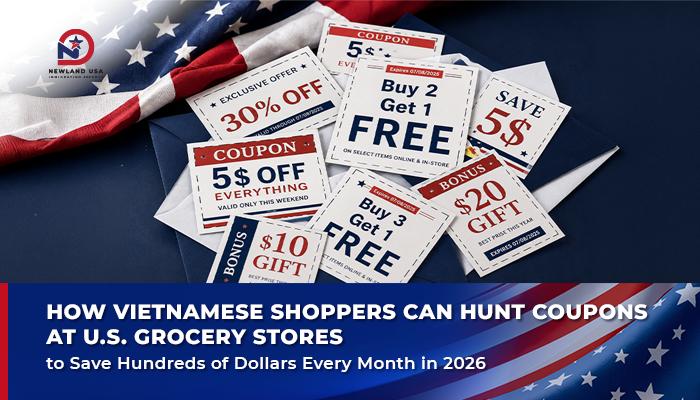
Food prices in the U.S. remain high in 2026, turning every grocery trip into a real budgeting challenge for many families. The good news is that with just a few minutes of preparation each week, Vietnamese shoppers in America can cut hundreds of dollars off their monthly grocery bills — as long as they know how to use U.S. grocery store coupons and take advantage of the best coupon apps for U.S. supermarkets in 2026. In this article, Newland USA will walk you through a step-by-step coupon hunting process for grocery shopping in America that’s easy to follow and especially well-suited to the shopping habits of the Vietnamese community.
1. Why Has Coupon Hunting Become an Essential Skill for Grocery Shopping in the U.S. in 2026?
Food inflation has not cooled down, which is why optimizing your supermarket receipts has become a top concern for families. According to industry data, the majority of American consumers used coupons in the past year, but most only applied one type of discount per purchase. That’s money left on the table, because if you know how to combine multiple layers of deals, the difference can amount to dozens of percentage points on a single product.
For a family of four, personal finance sources estimate that consistently using cashback apps along with store coupons can yield roughly $60–$200 in savings per month, depending on household size and how much time you put in each week. For newly settled communities, this isn’t just about saving money — it’s also a way to integrate: understanding how the American retail system works helps you take more control over your budget. In other words, figuring out how to save on groceries in the U.S. has become one of the most practical questions many people ask in their very first year.
One important thing to note is that couponing in 2026 has gone almost entirely digital. Sitting down to clip paper coupons from the Sunday newspaper is no longer how most people do it; instead, all the deals are right on your phone and loyalty card. That’s why getting comfortable with a smartphone and a few key apps is the most important first step.
2. Understanding the Different Types of Discounts When Shopping at U.S. Supermarkets
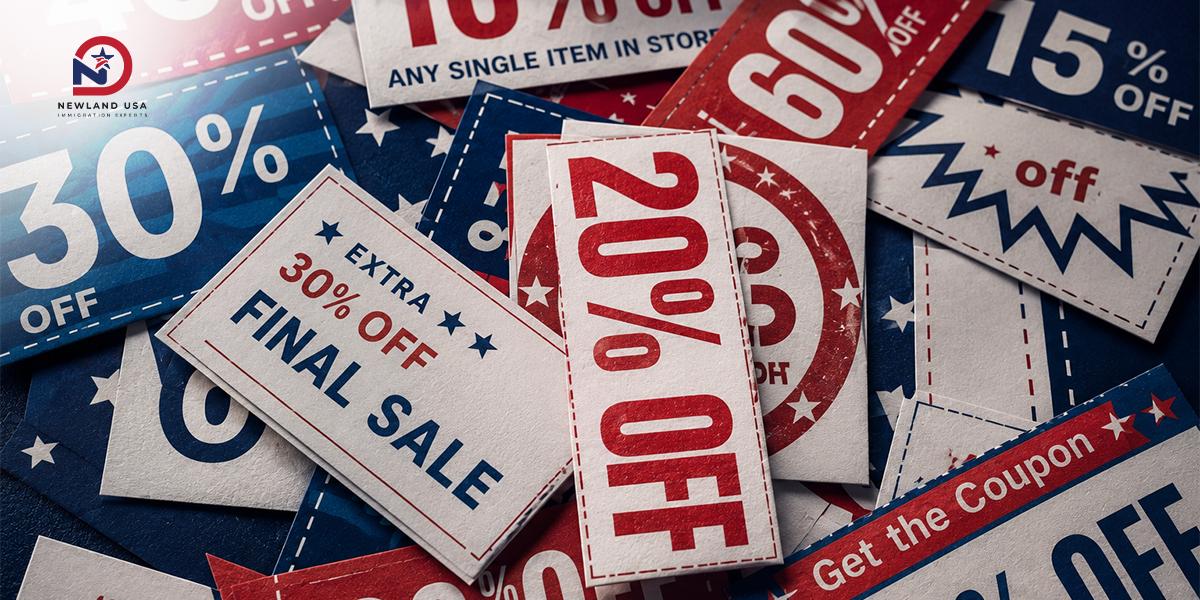
Before learning how to combine multiple deals, you need to understand the different “layers” of discounts, because each type has its own source and rules.
The first type is the manufacturer coupon, issued directly by the brand. You can usually find these on the brand’s website, on product packaging, or on sites like Coupons.com. The second type is the store coupon, offered by the supermarket itself through its weekly flyer or its own app. These two types are essentially independent of each other, which is why many stores allow you to use both on the same item.
The third type is member pricing from loyalty programs, which is automatically applied when you scan your loyalty card. The fourth type is post-purchase cashback rebates, which work through separate apps: you shop as usual, then scan your receipt to get money back. Finally, there are buy-one-get-one-free (BOGO) deals — a very powerful discount format that’s especially popular at chains like Publix. Understanding these four to five categories is the foundation for making the most of U.S. grocery store coupons in the next sections.
3. “Stacking” — The Art of Layering Multiple Discounts on a Single Product
Stacking is the most important technique that anyone who wants to save money on grocery shopping in America should master. The idea is simple: you layer several different deals on top of each other for the same product to drive the price down as low as possible.
Let’s look at a specific example with a box of cereal priced at $4.99. You could apply a $1.00 manufacturer coupon, add a $0.50 digital store coupon loaded onto your loyalty card, and then activate a $0.75 cashback offer on an app for the same item. With just three layers, the actual price you pay drops by more than half — and that’s not even counting the loyalty points you accumulate for next time.
An advanced tip is to use BOGO as your “base layer.” When an item is on a buy-one-get-one deal, the effective price per unit is already cut to 50%; if you then apply a cashback offer to one unit and a manufacturer coupon to the other, the total discount can reach 65–75% off the original price. The cumulative effect is significant: in an actual test at Kroger in 2026 with a family of four and a weekly budget of $150, a four-layer combo saved about $66.50 in a single grocery trip. However, keep in mind that stacking rules differ from chain to chain, so always check the current policy before you try it.
4. Top Best Coupon Apps for U.S. Supermarkets in 2026 That Vietnamese Shoppers Should Install
This section rounds up the best coupon apps for U.S. supermarkets in 2026 by purpose, so you can pick the right tools instead of downloading everything at random.
Leading the pack for grocery cashback is Ibotta. The app works by letting you activate offers first and scan your receipt afterward, and the money is added to your account. Regular users earn around $261 per year on average, but only if they use it consistently. One small note: Ibotta partners with specific brands, so don’t let a few cents of cashback lure you into buying a name-brand product that costs more than the store brand.
Next is Fetch — the “laziest” but most convenient option. Instead of activating individual offers, you simply scan your receipt after shopping, and the app awards points based on the brands you bought regardless of price, which you can then redeem for gift cards. Since it operates independently of the price at the register, Fetch is the easiest cashback app for shopping in the U.S. to stack on top of other deals.
For comparing prices before you go, Flipp is a must-have. The app gathers weekly flyers from hundreds of chains in one place and lets you search for a specific product to see which store has the lowest price that week. For online shopping, Honey and Rakuten are the go-to duo: Honey automatically tries every available promo code at checkout across more than 30,000 stores, while Rakuten gives you an average of 3–5% cashback — and you can use both at the same time.
On top of that, Checkout 51 refreshes its list of offers every week, and Krazy Coupon Lady (KCL) compiles coupons with step-by-step guides for beginners. Equally important: don’t forget to install the dedicated app from whichever supermarket you shop at most often (Walmart, Costco, Target, Kroger, etc.), because many digital coupons can only be activated through that store’s own app.
5. Making the Most of Loyalty Programs and Cashback Credit Cards
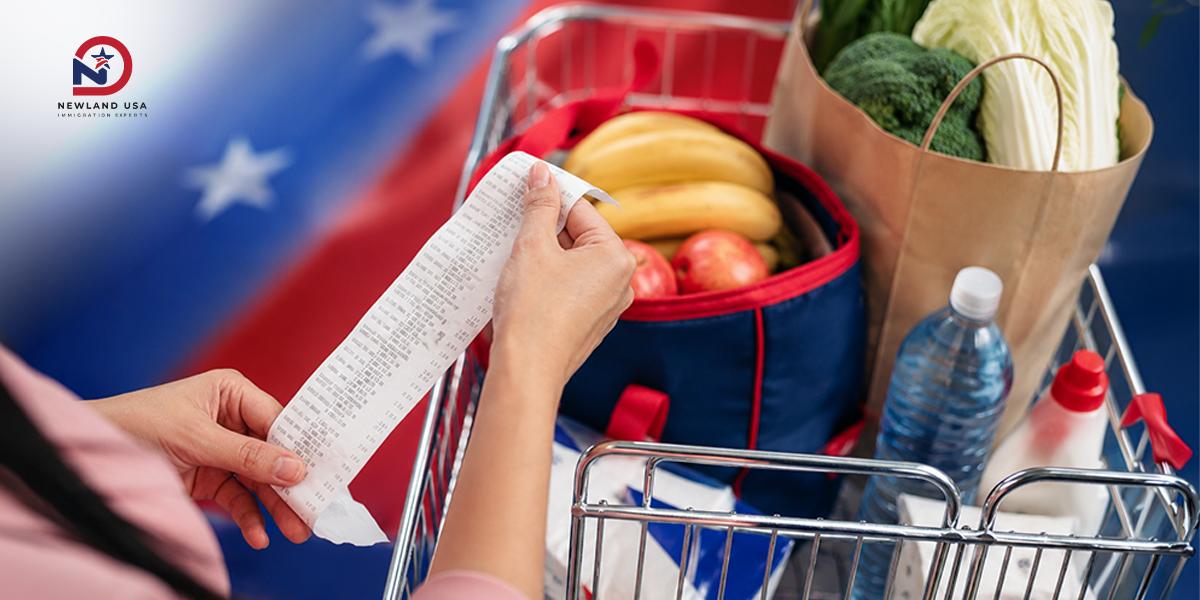
Beyond apps, U.S. supermarket loyalty programs are a quiet but steady layer of savings. The basic rule is simple: always scan your membership card on every purchase to earn points and unlock member pricing.
Each system has its own strengths. Target lets you stack a manufacturer coupon, a Target coupon, and a Circle offer on the same item; if you pay with the Target Circle Card, you get an additional 5% back on nearly every transaction, including groceries. Meanwhile, CVS is considered the “gold standard” of stacking because it allows you to combine manufacturer coupons, store coupons, ExtraCare deals, ExtraBucks, and cashback apps all together. At chains like Kroger or Safeway, loyalty points can also be converted into gas discounts — a double benefit for families with a car.
Another layer that’s often overlooked is cashback credit cards. Cards designed for the grocery category can add roughly 2–6% cashback on your entire bill, on top of all the other deals. If you shop regularly at Whole Foods, Amazon Prime members get an extra 10% off items that are already on sale. When you fold loyalty programs and credit cards into your routine, every dollar you spend “generates” a little extra value back into your pocket.
6. Don’t Forget Asian and Vietnamese Grocery Stores When Shopping in the U.S.
Something very specific to Vietnamese shoppers in America is that most of their go-to cooking ingredients come from Asian grocery stores — places that many people assume don’t have coupons. The reality is actually the opposite: the major chains all have quite appealing digital savings programs.
At H Mart, you should sign up for the Smart Card and install the app to unlock digital coupons for members; beyond the weekly flyer, the store also runs Flash Sales with deep discounts on select items. At 99 Ranch Market, the benefits are even clearer. The 99 Ranch app earns you points on every purchase and also lets you grab digital coupons right in the app to stack on top of the weekly flyer deals. This is an ideal place to hunt for bulk-price deals on rice, instant noodles by the case — items that Vietnamese families buy on a regular basis.
Two details worth noting: 99 Ranch accepts EBT for qualifying items, and the seafood counter will usually clean and prep fish for free, or even cook it on the spot for a very small surcharge; also, the new weekly flyer typically starts on Friday and runs through Thursday of the following week, which helps you plan your shopping schedule. In other words, money-saving strategies for grocery shopping in the U.S. work just as well at Vietnamese markets — not only at American supermarkets.
7. A 7-Step Weekly Coupon Hunting Routine for Vietnamese Shoppers in the U.S.
To turn theory into habit, you can follow this seven-step routine that takes only about 10–15 minutes per week.
Step one: open Flipp to browse the weekly flyers and identify items with deep discounts at supermarkets near you.
Step two: plan your meals and write your shopping list based on what’s on sale, instead of choosing meals first and then hunting for deals.
Step three: go into your supermarket’s app and “clip” all the digital coupons for items on your list — ideally the night before.
Step four: cross-check for manufacturer coupons on Coupons.com for any matching items.
Step five: activate cashback offers on Ibotta for the exact products you plan to buy.
Step six: at checkout, always scan your loyalty card to apply member pricing and earn points, and pay with the right cashback credit card.
Step seven: right after you leave the store, snap a photo of your receipt and submit it to Fetch, Ibotta, or Checkout 51 to collect your money back.
One small step that’s extremely important: check your receipt before you leave the parking lot, because errors like double-scanned items, sale prices that didn’t apply, or coupons that weren’t deducted happen quite often.
8. Mistakes That Make Coupons Backfire — and How to Avoid Them
Coupons are a double-edged sword: used correctly, they save you money; used poorly, they end up costing you more. The most common mistake is buying something you didn’t actually need just because “there’s a coupon for it.” A deal only truly saves you money when it’s applied to something you were already planning to buy.
The second mistake is forgetting to compare name brands with store brands. A 50-cent coupon on a $2.00 box of crackers sounds like a good deal, but if the store’s own brand is only $1.25 for the same quality, you’re still paying more. So always keep an eye on the broader picture at the shelf to figure out which option is really the best value.
Other mistakes to watch out for: going overboard on bulk deals and then letting food go to waste, ignoring the terms and expiration dates on coupons, and driving to multiple stores in one day so that gas and time “eat into” your savings. The experts’ advice is to pick one or two regular supermarkets and learn their policies inside out, rather than scrambling across four or five different locations. Sustainable savings come from consistency, not from impulsive “deal hunting.”
9. Quick Answers to Common Questions About Hunting Coupons for U.S. Grocery Shopping
Can coupon hunting really save hundreds of dollars a month? Yes, but only if you do it consistently. A household that combines digital coupons, two cashback apps, and shops at a store with a good loyalty program can absolutely hit that target — especially when they know how to stack properly.
Which app should newcomers start with? Keep it simple at first: use Ibotta as your cashback foundation, add Fetch for passive receipt scanning, and install the app of whichever supermarket you shop at most. Once you’re comfortable, branch out to Flipp, Checkout 51, or Honey.
Is stacking coupons legal? Absolutely. Using a manufacturer coupon together with a store coupon is something retailers explicitly allow; the only violation would be fraud, such as using photocopied coupons.
Do these money-saving tips for grocery shopping in the U.S. work at Vietnamese stores too? Yes. Chains like H Mart and 99 Ranch all have loyalty cards, digital coupons, and weekly flyers, so you can apply the same stacking principles and start saving right away.
10. Conclusion
Saving money on grocery shopping in the U.S. doesn’t require you to become an “extreme couponer” with stacks of paper coupons. The secret lies in a simple system that you repeat consistently: understand the types of deals, learn how to stack, choose the right few best coupon apps for U.S. supermarkets in 2026, take advantage of loyalty programs, and don’t overlook Asian grocery stores. With just 10–15 minutes of preparation each week, Vietnamese shoppers in America can absolutely save hundreds of dollars every month. More importantly, this is an essential financial management skill that helps you feel more confident as you settle into life in the U.S. — and that spirit of walking alongside our clients is exactly what Newland USA always strives to deliver.
Learn more:
- Top US Supermarkets for Newly Settled Vietnamese in 2026: Where to Shop for the Best Prices and Convenience?
- American Shopping Culture in 2026: The Major Sale Seasons You Should Not Miss
- Work Culture in U.S. Auto Repair Shops in 2026
- EB3 Visa Interview Experience at the U.S. Consulate in 2026: The Most Frequently Asked Questions
News Categories


Related news

From Motorcycle Mechanic to Automotive Technician in the U.S.: Skills and Qualifications to Prepare in 2026

AI in Auto Repair in the U.S. 2026: How Artificial Intelligence Diagnoses Vehicle Problems Faster and More Accurately

7 Key Technologies Every Industrial Maintenance Technician in the U.S. Needs to Know in 2026

PLC & Automation Skills: A Launchpad for Maintenance Technicians in the United States in 2026

What Is the ASE Certification? Requirements, Exam Roadmap, and Its Importance for Auto Technicians in the U.S. in 2026
EB5 Capital Recovery Time: How Long It Takes and the Key Milestones

Electric Vehicle Technicians in the U.S.: The “Golden” Skills Helping Vietnamese Auto Mechanics Get Ahead of the 2026 EV Trend

US Engineering & Maintenance Labor Shortage 2026: The Driving Force Behind the EB3 Skilled Workers Visa Policy
Industrial Maintenance Technician: Job Duties, Requirements & U.S. Immigration Opportunities in 2026