PLC & Automation Skills: A Launchpad for Maintenance Technicians in the United States in 2026
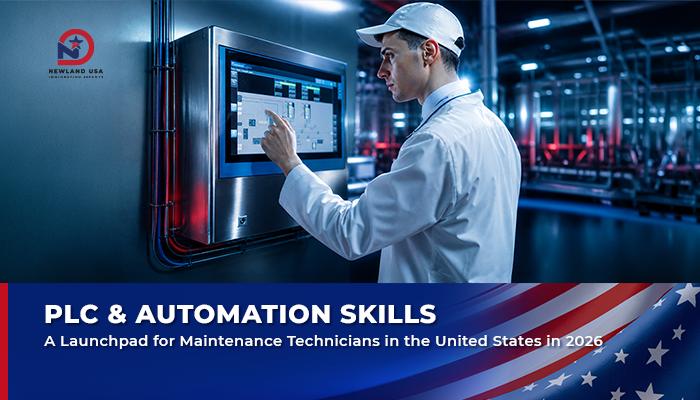
US manufacturing is entering a clear phase of restructuring, with a wave of new factories being built and automated to a high degree. In this picture, the people who keep production lines running steadily are maintenance technicians. But this job has changed a lot from before: an industrial maintenance technician today doesn’t just need mechanical skills — they also need to understand electrical systems, sensors, and above all, PLC programming. The article below looks at why PLC and automation skills are becoming a launchpad for income and career growth for automation maintenance technicians in the US, while also opening a path to residency through the EB3 Skilled Workers category for Vietnamese workers in 2026.
1. Who is a maintenance technician, and what is their role in a modern factory
A maintenance technician is responsible for installing, inspecting, diagnosing, and repairing machinery so that the production line keeps running. When a piece of equipment stops unexpectedly, they’re the first responders on the scene, tasked with finding the cause and getting things running again. In a highly automated production environment, just one machine going down can disrupt the entire supply chain — which is why their role has become increasingly central.
The biggest change lies in the scope of the job. In the past, a maintenance technician’s main duties leaned mechanical: alignment, replacing worn parts. Today, factory machinery is a combination of mechanics, electronics, sensors, and control software. That means an industrial maintenance technician now needs to be able to read wiring diagrams, understand sensor signals, and intervene in control programs. According to the US Bureau of Labor Statistics (BLS) classification, this occupation group sits close to industrial machinery mechanics and mechatronics technicians — roles that require cross-disciplinary knowledge. In other words, the line between a pure mechanic and an automation maintenance technician in the US is narrowing, and the higher-value work belongs to people who can handle both hardware and software.
2. Why PLC and automation skills have become a decisive advantage
Automation skills — specifically, the ability to work with PLCs — are creating a clear gap in income. Industry data shows that maintenance technicians who can diagnose PLC faults earn an average of around $28 per hour, while those without automation experience tend to plateau around $21 per hour. That gap doesn’t come from seniority — it comes from one specific skill.
This is also where the line sits for being considered for a team lead role. A highly valued maintenance technician is someone who can walk up to a malfunctioning line, open the PLC program on a computer, identify a faulty sensor in the ladder logic diagram, and get the line running again quickly. For many factories, every hour of downtime can cost thousands of dollars, so the ability to restore operations fast has direct financial value. With control-systems personnel in short supply across the board, people skilled in PLC programming are almost always in demand.
3. What is PLC programming? Foundational concepts to know
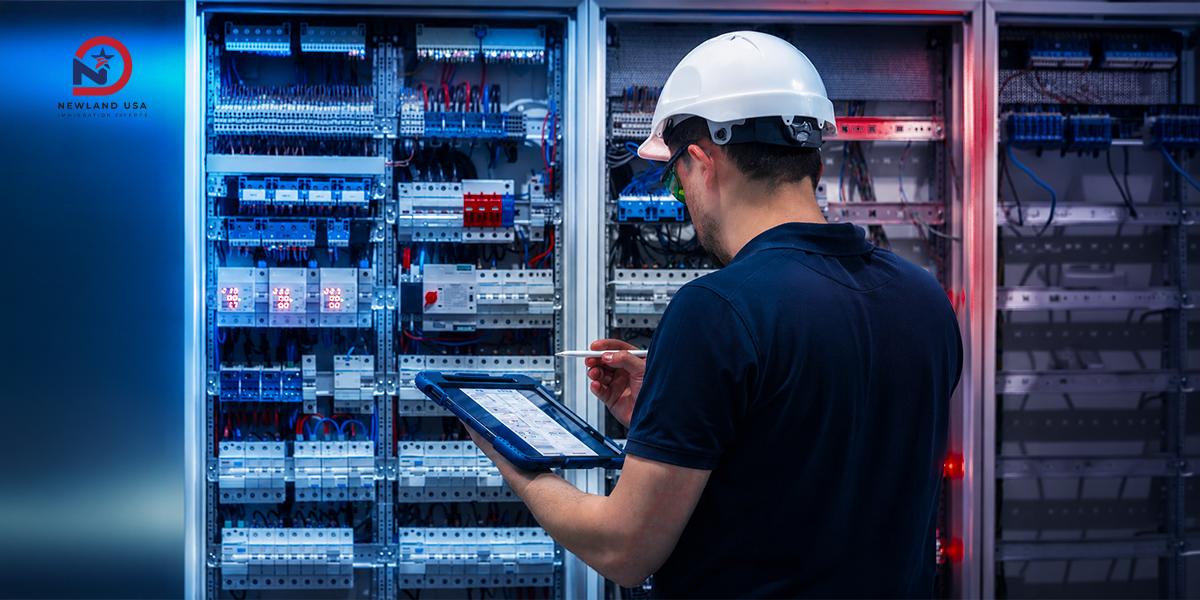
PLC programming means writing, adjusting, and troubleshooting the control programs that run on a Programmable Logic Controller — an industrial computer designed to control machinery and processes in a factory environment. This is foundational knowledge for automation work, and it’s also the part that makes many maintenance technicians hesitant when they’re first getting into it.
The most common language is ladder logic. This language mirrors traditional relay wiring diagrams, so it tends to feel familiar to anyone who’s worked with electrical systems before. Each “rung” consists of input conditions (contacts) and output actions (coils); when the conditions are met, the output is triggered. Besides ladder logic, the IEC 61131-3 standard also includes other languages such as function block diagrams, structured text, and instruction lists. Learners need to understand the program scan cycle, how input/output signals are processed, and memory structure in order to diagnose issues accurately.
In practice, a PLC doesn’t work alone. It connects to a human-machine interface (HMI) to display status and alerts to the operator, to a SCADA system for larger-scale monitoring and data collection, and to variable frequency drives and field sensors. Here’s a simple example: a sensor detects an empty bottle arriving at the filling station, the PLC receives the signal and activates the filling nozzle, the variable frequency drive adjusts motor speed to match the bottle flow, and the HMI displays tank levels and raises alarms when needed. Understanding how these components work together is what allows a maintenance technician to work effectively on a modern production line. As for hardware platforms, PLCs from Allen-Bradley, Siemens, and Mitsubishi are widely used; once you understand one platform, switching to another goes faster, since most of the underlying concepts are shared.
4. The demand picture: reindustrialization, labor shortages, and the automation wave
Demand for maintenance technicians is tied to two major trends in the US economy. The first is the wave of manufacturing moving back onshore. Industry data shows that announced manufacturing investment in the US has now surpassed $1.66 trillion, spanning semiconductor plants (Intel, TSMC, Samsung), EV battery lines, defense manufacturing, and automated warehousing. These new factories are all designed with a high degree of automation, which means they need people to operate and maintain control systems right from day one.
The second trend is the labor gap. The skilled workforce in US manufacturing is aging, with an average age above 50, while the number of young people entering the trade isn’t enough to offset retirements. Deloitte estimates that as many as 1.9 million manufacturing jobs could go unfilled by 2033, and surveys show that most plant leaders view the shortage of skilled labor as their biggest challenge. Notably, reindustrialized facilities first need equipment specialists who can install, commission, and maintain automated systems such as PLCs and robots. This is a scarce, well-paid group. It’s precisely this combination of new investment capital and a shrinking workforce that’s creating career opportunities for automation maintenance technicians in the US — especially for those willing to learn PLC programming and control skills.
5. Salary and career outlook for maintenance technicians in the US in 2026
On the income side, BLS data (May 2024) shows that industrial machinery mechanics and maintenance workers earn a median salary of about $63,510 per year, with projected job growth of 13% from 2024–2034 — far faster than the average across all occupations, equal to roughly 54,200 new openings per year. Mechatronics technicians have a higher median, around $70,760 per year; the bottom 10% earn under $47,770, while the top 10% earn over $105,000. These figures reflect the value of cross-disciplinary skills.
The factor that pulls income up is automation capability. A maintenance technician with PLC programming certification and about 5 years of experience typically earns $80,000–$92,000 per year; in states with strong aerospace, automotive, and semiconductor industries, the average salary for mechatronics technicians can exceed $80,000. Beyond the numbers, the career path is also clear: from this position, a worker can advance to controls technician, automation technician, and then senior controls engineer. Each step up is tied to deeper PLC programming expertise and the ability to troubleshoot independently — showing that this is a career with long-term room to grow, not just a job for the moment.

6. A skill-building roadmap: from mechanical foundations to mastering automated systems
The encouraging part is that automation skills can absolutely be learned step by step. The starting point is basic electrical fundamentals: Ohm’s law, series and parallel circuits, and the ability to read wiring diagrams. For someone who already has an electrical or mechanical background, ladder logic can be learned to a usable level in about 60–120 focused hours, and structured text adds roughly another 40–80 hours. This is an achievable bar for most skilled workers in Vietnam.
At a higher level, programs focused on PLC and HMI typically run 10–12 weeks, while a full pathway from PLC to SCADA takes about 20–24 weeks, or roughly 480–600 hours of hands-on practice. Learners should take advantage of free simulation software and practice directly on popular platforms like Allen-Bradley or Siemens to build troubleshooting instincts. Beyond control-system skills, a modern maintenance technician also needs to be comfortable with computerized maintenance management software (CMMS) to log work, update equipment records, and track maintenance schedules. When an existing mechanical foundation is combined with PLC programming and systems thinking, an industrial maintenance technician ends up with a skill set competitive enough for the US market.
7. EB3 pathway to US residency for maintenance technicians
For Vietnamese workers, automation skills don’t just boost income — they also open a path to US residency through the EB3 Skilled Workers category. EB3 is an employment-based immigrant visa category, in which the Skilled Worker group requires a position needing at least two years of training or experience, sponsorship from a US employer, and a PERM labor certification step. This category doesn’t allow self-petitioning, so a sponsoring employer is required.
It’s precisely the labor shortage that has made many US factories willing to sponsor foreign workers. An industrial maintenance technician with experience and PLC programming skills fits squarely into the skilled labor category, and is also the kind of candidate employers struggle to find domestically — which makes the case for sponsorship more compelling. On timing, workers should keep in mind that the PERM step alone currently takes about 16–17 months, and the whole process typically takes two years or more depending on how the Visa Bulletin moves. In return, the outcome is a green card for the whole family, with a spouse gaining the right to work legally in the US. Seen from this angle, building the skills to become an automation maintenance technician in the US is both a career move and the foundation for a sustainable immigration plan.
Conclusion
The role of the maintenance technician is being redefined by automation. Those who stop at mechanical skills alone will find it hard to break through, while those who master PLC programming and understand HMI, SCADA, and systems thinking will stand at the high-value end of the profession: better pay, clearer paths to advancement, and a stronger position amid change. For Vietnamese workers, this is also a key to building a compelling EB3 case. Starting to build PLC programming skills now is a practical way for an industrial maintenance technician to be ready for both the job market and the path to residency in 2026 and beyond.
Learn more:
- US Engineering & Maintenance Labor Shortage 2026: The Driving Force Behind the EB3 Skilled Workers Visa Policy
- Industrial Maintenance Technician: Job Duties, Requirements & U.S. Immigration Opportunities in 2026
- Why does the Urban TEA project consistently remain attractive in the EB-5 program?
- What Is the ASE Certification? Requirements, Exam Roadmap, and Its Importance for Auto Technicians in the U.S. in 2026
News Categories



Related news
AI in Auto Repair in the U.S. 2026: How Artificial Intelligence Diagnoses Vehicle Problems Faster and More Accurately
7 Key Technologies Every Industrial Maintenance Technician in the U.S. Needs to Know in 2026
PLC & Automation Skills: A Launchpad for Maintenance Technicians in the United States in 2026
What Is the ASE Certification? Requirements, Exam Roadmap, and Its Importance for Auto Technicians in the U.S. in 2026

EB5 Capital Recovery Time: How Long It Takes and the Key Milestones
Electric Vehicle Technicians in the U.S.: The “Golden” Skills Helping Vietnamese Auto Mechanics Get Ahead of the 2026 EV Trend
US Engineering & Maintenance Labor Shortage 2026: The Driving Force Behind the EB3 Skilled Workers Visa Policy
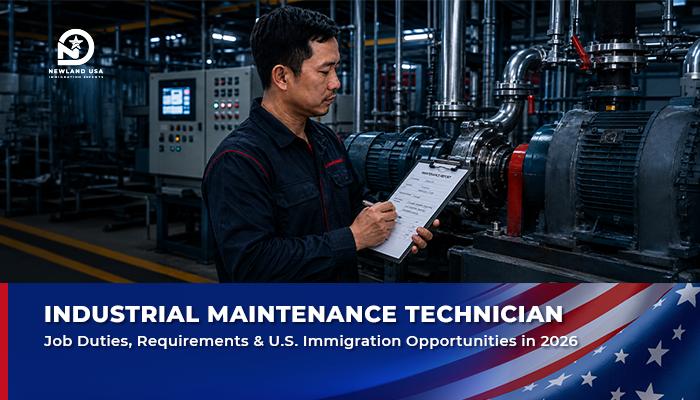
Industrial Maintenance Technician: Job Duties, Requirements & U.S. Immigration Opportunities in 2026

Lương thợ sửa xe tại Mỹ: Cách tối ưu giờ công để nhân đôi thu nhập năm 2026