Home Loan Tips in the USA 2026: A Detailed A-Z Guide

Owning a home in the US has always been an important milestone for the Vietnamese community settling abroad, especially families who recently immigrated through EB-3 and EB-5 programs. However, with interest rates staying high and approval requirements becoming increasingly strict, getting a home loan requires thorough preparation in both finances and legal documentation. This article from Newland USA covers everything you need to know about the home loan market in the USA in 2026, popular loan types, approval requirements, and practical home loan tips in the USA to help buyers save on costs, speed up the approval process, and avoid common financial mistakes.
1. Overview of the US Home Loan Market in 2026
Heading into 2026, the US real estate lending market continues to be significantly affected by tight monetary policy and global geopolitical changes. According to updated data from lending institutions as of mid-May 2026, the average interest rate on a 30-year fixed mortgage ranges around 6.36% – 6.75%, while the 15-year loan sits at approximately 5.71% – 6.03%. Financial companies forecast that the 30-year rate will stay within the 6.1% – 6.3% range throughout 2026 and may stabilize around 6.1% heading into 2027.
While current interest rates are higher than pre-pandemic levels, they have slightly decreased compared to the same period in 2025 (6.81%). For Vietnamese families planning to settle or invest in real estate, this is the time to carefully weigh paying in cash versus taking advantage of home loans in the USA in 2026 to use financial leverage. On top of that, real estate markets in Texas and Florida are leaning toward buyers, opening up better negotiation opportunities compared to the Northeast or Midwest regions, which still favor sellers. On average, buyers can expect to close a deal within 30 – 45 days from the date of application.
2. Common Types of Home Loans in the USA
Understanding the different real estate loan products is the first step in your home loan journey. In the US, buyers can choose from several options, each with its own advantages suited to different groups.
Conventional Loan is the most common product, backed by financial institutions. Borrowers only need a minimum down payment of 3% through programs like Conventional 97 or HomeReady, along with a credit score of 620 or higher. However, if the down payment is below 20%, borrowers must pay Private Mortgage Insurance (PMI) until they build enough home equity.
FHA Loan, guaranteed by the Federal Housing Administration, is a top choice for first-time homebuyers. In 2026, the maximum FHA loan limit in low-cost areas is $541,287 and goes up to $1,249,125 in expensive cities like San Francisco, Los Angeles, or New York. Borrowers with a credit score of 580 or above only need to put 3.5% down, while those with scores between 500 – 579 must put down at least 10%.
VA Loan is exclusively for veterans, active-duty service members, and surviving spouses of those who died in service. This product allows 100% financing, waives PMI, and has more flexible credit requirements than most other loan types.
USDA Loan targets buyers in rural and suburban areas with populations under 35,000. This loan requires no down payment and is available to households with income not exceeding 115% of the local median (approximately $112,450 for a 1–4 person household in 2026).
Jumbo Loan is for homes that exceed the maximum limit of a conventional loan. Interest rates are typically higher, and the credit score and down payment requirements are significantly stricter.
Foreign National Loan is designed specifically for foreigners who do not yet have a green card or Social Security number. This loan type usually requires a 20 – 30% down payment, carries higher interest rates than average, and demands complete international financial documentation along with an International Credit Report (ICR).

3. What Are the Requirements for a Home Loan in the USA?
The question “what are the requirements for a home loan in the USA” is always a top concern for the Vietnamese community preparing to settle in the US. To get approved, borrowers need to meet several financial and legal criteria at the same time.
Credit Score is a key factor. For a conventional loan, borrowers need at least 620 points. FHA loans accept lower scores — 580 and above for a 3.5% down payment, or 500 – 579 with a 10% down payment. Some lenders like Freedom Mortgage can even be flexible with scores as low as 550 in special cases.
Debt-to-Income Ratio (DTI) is typically capped at 43% or lower. This is the ratio of total monthly debt obligations (including the future home payment) divided by total gross monthly income. The lower your DTI, the higher your chances of approval.
Stable employment and income history for at least two years is a common requirement from lenders. Buyers need to provide pay stubs, W-2 forms, tax returns, and bank statements. For EB-3 immigrants, having a long-term employment contract in the US is a significant advantage during the evaluation process.
Down Payment ranges from 0% with VA or USDA Loans to a minimum of 3 – 3.5% for Conventional and FHA Loans. Buyers who want to eliminate PMI need to put down at least 20%.
Legal residency status is also carefully reviewed. Permanent residents can access the same loan products as US citizens. Those on long-term work visas (H-1B, L-1, O-1, etc.) are still accepted as long as they can prove legal residency and work authorization.
Required documents include: passport, Social Security card (SSN), green card (if applicable), proof of income for the past 2 years, bank statements for 2 – 3 months, credit report, and employment verification letter.
Overall, when considering what the requirements are for a home loan in the USA, buyers should compare their personal profile against each specific loan product to find the best option for their financial situation.
4. Step-by-Step Home Loan Process in the USA from A to Z
The home loan process in the US typically takes 30 – 45 days from the date of application to the closing date. The journey can be broken down into the following main stages:
Step 1 – Assess Your Financial Capacity: Before starting, buyers should calculate their total income, current debt obligations, and affordable monthly payment. Experts recommend that housing costs should not exceed 28% of gross income.
Step 2 – Pre-Approval: The borrower submits financial documents to a bank or lender to receive a Pre-Approval Letter. This is a critical document that helps with price negotiations with the seller. According to the National Association of Realtors (NAR), buyers with Pre-Approval are 40% more likely to have their offer accepted compared to those who only have Pre-Qualification.
Step 3 – Property Search: Work with a reputable real estate agent to find a home that fits your budget and needs.
Step 4 – Sign the Purchase Agreement: Once the seller accepts the offer, both parties sign the official purchase contract.
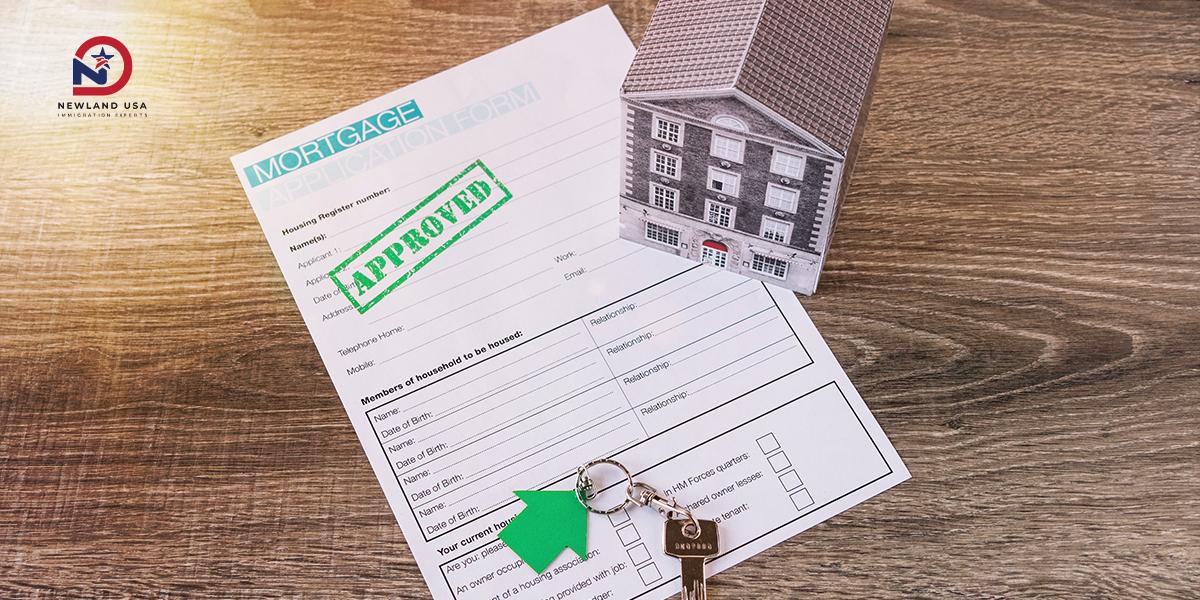
Step 5 – Submit the Official Loan Application: After securing the purchase agreement, the buyer completes the loan application and receives a Loan Estimate — a document that lists all estimated costs in detail.
Step 6 – Home Appraisal: The bank sends an independent appraiser to evaluate the home’s value to ensure the loan does not exceed the value of the collateral.
Step 7 – Home Inspection: The buyer hires a professional inspector to check the structural condition, electrical and plumbing systems, and safety features.
Step 8 – Underwriting: This is the stage where the bank evaluates overall risk, including verification of income, assets, credit history, and property characteristics. This process can take several weeks.
Step 9 – Conditional Approval: If the application meets basic requirements, the bank issues a conditional approval and requests additional documents before granting final approval.
Step 10 – Closing Day: The buyer goes to the title company office to sign legal documents, wire the down payment and closing costs, then receives the keys and officially becomes the homeowner.

5. Costs to Prepare When Getting a Home Loan in the USA in 2026
Besides the down payment, home loan borrowers need to budget for many other costs to avoid unexpected expenses during the transaction.
Closing Costs typically account for 2 – 5% of the home’s value. For a property worth $400,000, buyers may need to pay $8,000 to $20,000 for loan origination fees, insurance, appraisal, transfer taxes, and related legal fees. Data from 2026 shows that title insurance costs have increased by about 12% due to enhanced fraud protection measures.
Homeowners Insurance ranges from $800 to $2,500 for the first year, depending on the area and property value.
Property Tax is usually prepaid for 2 – 6 months at closing, equivalent to $500 – $3,000.
Mortgage Insurance (MIP or PMI) applies to FHA loans or conventional loans with a down payment below 20%.
Emergency Fund of at least 3 – 6 months of living expenses is recommended to ensure the ability to make payments during the first few months after moving in.
A useful tip for the home loan market in the USA in 2026 is to compare quotes from at least 3 lenders. Statistics show that borrowers who compare offers from 3 or more lenders save an average of $3,200 in closing costs. Additionally, buyers can negotiate for the seller to contribute up to 3% of closing costs.
6. Home Loan Tips for the Vietnamese Community
For Vietnamese newcomers or those in the process of adjusting their residency status, building up practical home loan tips in the USA is a deciding factor for success.
First, build a credit history in the US as soon as possible. Credit scores from Vietnam are not recognized in the US system. However, some banks can pull an International Credit Report (ICR) to evaluate your financial history. Opening a secured credit card, paying on time, and keeping your utilization rate below 30% will help boost your score quickly within 6 – 12 months.
Second, make it a priority to complete a first-time homebuyer education course (Homebuyer Education). According to research by NeighborWorks America, participants in this course have a 31% lower risk of default compared to those who did not participate. On top of that, many down payment assistance programs require course completion as a mandatory condition.
Third, take advantage of Down Payment Assistance (DPA) programs. According to Q3 2025 data from Down Payment Resource, there are currently more than 2,624 active DPA programs across the US with an average assistance of $18,000 per household. About 38% of these programs also apply to buyers who have previously owned a home.
Fourth, for EB-3 and EB-5 settlers who already have a green card, the home loan process is almost identical to that of US citizens. Buyers should prepare their green card, Social Security number, and complete income documentation as soon as they start working in the US.
Fifth, for investors who do not yet reside in the US, the Foreign National Loan is a viable option but requires a higher down payment, usually 20 – 30%. It is best to work with lenders experienced in serving international clients for the smoothest process.
Sixth, time your transaction wisely. Receiving an FHA case number after January 1, 2026 could help you take advantage of loan limits that are 3.26% higher than in 2025 — equivalent to thousands of dollars in additional borrowing capacity.
These home loan tips in the USA will help Vietnamese families shorten the path to homeownership and avoid unnecessary financial risks on the journey to settling down.
7. Conclusion
The journey of getting a home loan in the US is a long-term financial decision that requires thorough preparation in cash flow, legal documentation, and a deep understanding of the real estate market. In the context of home loans in the USA in 2026 still being under pressure from high interest rates and global economic changes, having a solid grasp of loan types, approval requirements, and the process will help buyers feel more confident at every step.
Learn more:
- How Long Is a U.S. Green Card Valid? The Complete 2026 Renewal Guide
- Securing the Green Card and Getting Your Money Back: How to Build an Effective EB5 Visa Exit Strategy
- Working at Medical Glove Factories in the USA: Salary, Benefits, and EB3 Green Card Opportunities
- Form I-131A – How to Board a Flight Back to the U.S. When You Lose Your Green Card Abroad
- 5 Important Steps When You Lose Your U.S. Green Card
News Categories


Related news

From Motorcycle Mechanic to Automotive Technician in the U.S.: Skills and Qualifications to Prepare in 2026

AI in Auto Repair in the U.S. 2026: How Artificial Intelligence Diagnoses Vehicle Problems Faster and More Accurately

7 Key Technologies Every Industrial Maintenance Technician in the U.S. Needs to Know in 2026

PLC & Automation Skills: A Launchpad for Maintenance Technicians in the United States in 2026

What Is the ASE Certification? Requirements, Exam Roadmap, and Its Importance for Auto Technicians in the U.S. in 2026

EB5 Capital Recovery Time: How Long It Takes and the Key Milestones

Electric Vehicle Technicians in the U.S.: The “Golden” Skills Helping Vietnamese Auto Mechanics Get Ahead of the 2026 EV Trend
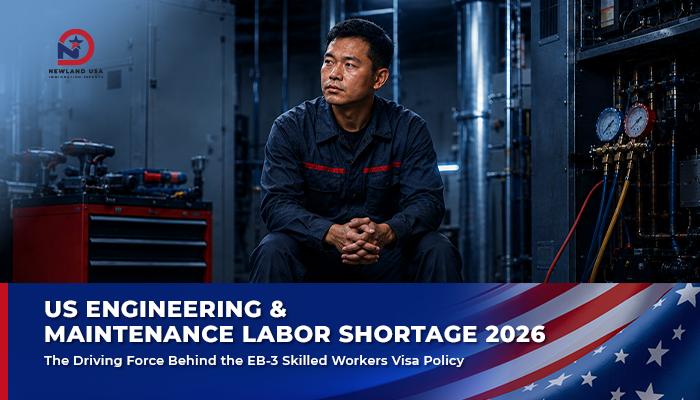
US Engineering & Maintenance Labor Shortage 2026: The Driving Force Behind the EB3 Skilled Workers Visa Policy
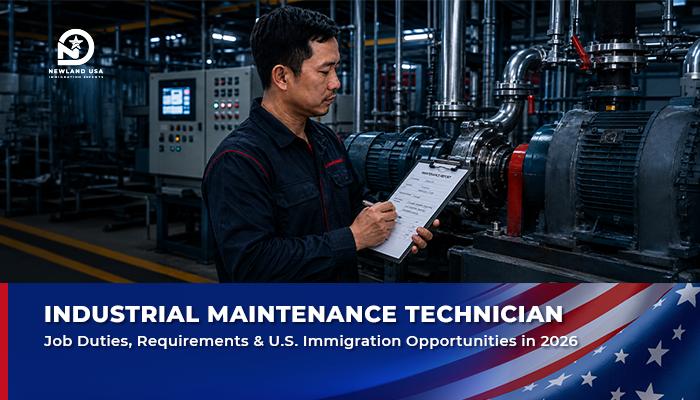
Industrial Maintenance Technician: Job Duties, Requirements & U.S. Immigration Opportunities in 2026