Working at Medical Glove Factories in the USA: Salary, Benefits, and EB3 Green Card Opportunities
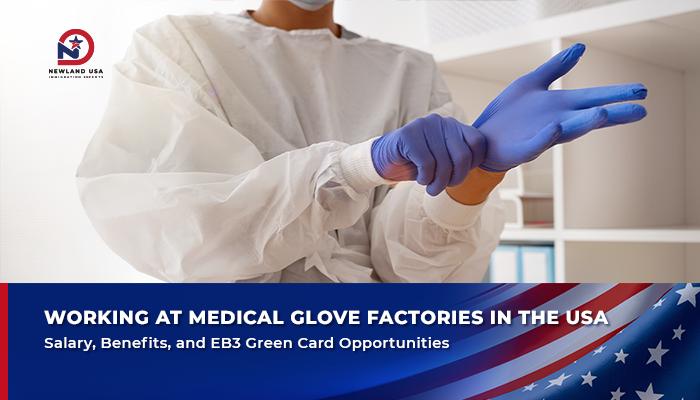
The medical glove manufacturing industry in the U.S. is entering a period of explosive growth as the federal government ramps up its strategy to bring personal protective equipment (PPE) supply chains back onshore. For international workers, this isn’t just a chance at stable employment — it also opens up the most realistic path to a U.S. Green Card through the EB3 program. In this article, Newland USA provides all the details you need about salary levels, benefits packages, and the immigration pathway when working at a medical glove factory in the U.S. — helping you make the right decision for your journey to settle in America.
1. Overview of the Medical Glove Manufacturing Industry in the U.S.
Before the COVID-19 pandemic, the U.S. relied almost entirely on imported medical gloves from Asia, mainly from Malaysia and China. However, the severe shortages during the pandemic pushed the federal government to launch a large-scale reindustrialization strategy. Since 2020, the Department of Defense and the Department of Health and Human Services have invested around $1.5 billion to support domestic production of PPE items, including face masks, gowns, and especially medical-grade gloves.
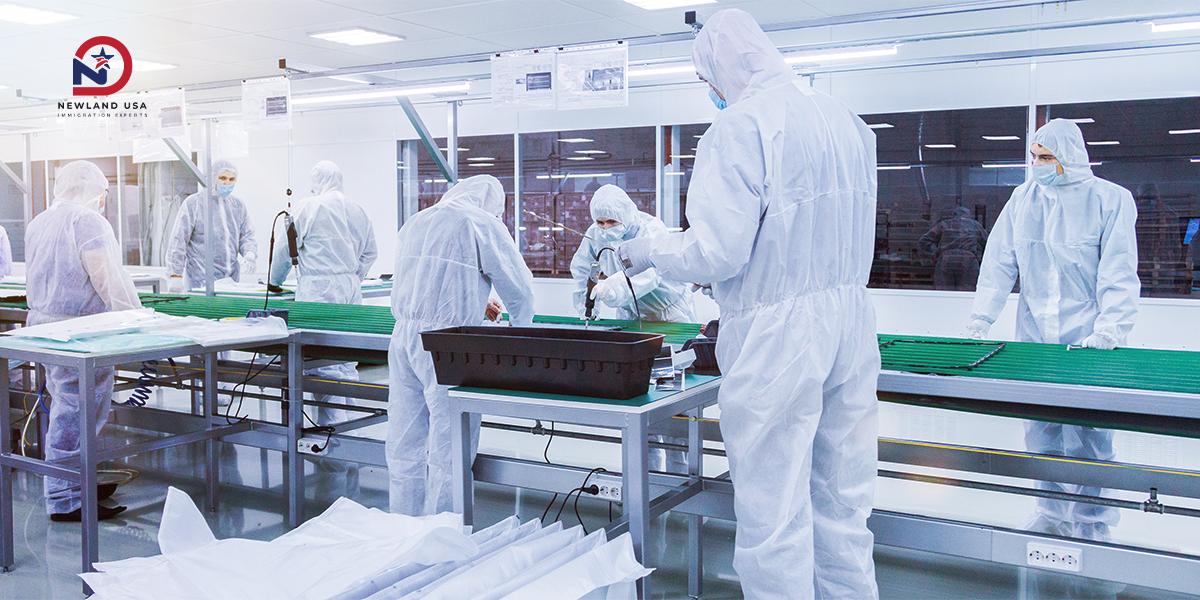
Today, numerous large-scale medical glove factories are up and running across the U.S., mainly concentrated in states like Illinois, Arkansas, Nevada, and several states in the Midwest and Southeast. These production facilities feature cutting-edge technology lines that meet FDA standards, with total capacity reaching billions of nitrile and polyisoprene gloves per year. Many factories also run fully closed-loop supply chains — from producing chemical raw materials, compounding, dipping molds, all the way to packaging finished products — entirely on U.S. soil.
The global medical glove market was valued at approximately $12–15 billion in 2025 and is expected to grow at an average rate of 6–11% per year in the coming period. North America alone accounts for over 34% of the market share, thanks to advanced healthcare infrastructure, strict infection-control regulations, and the ongoing trend of reducing reliance on imports. Notably, the U.S. government raised import tariffs on gloves manufactured in China from 7.5% to 25% in 2026, creating a strong incentive for medical glove factories in the U.S. to scale up their hiring.
This growth means a massive demand for workers. Production facilities need hundreds, even thousands of workers for positions in line operation, packaging, quality inspection, equipment maintenance, and chemical handling. This is exactly what makes EB3 factory jobs in America a realistic option for foreign workers looking to settle permanently in the U.S.
2. Common Job Positions at Medical Glove Factories
A medical glove factory operates through a closed-loop process — from compounding chemical materials, dipping molds, drying, quality inspection, to packaging finished products. As a result, these facilities need workers in many positions with diverse skill requirements.
The most common group of positions includes Production Line Workers, Glove Packers, General Laborers, and Forklift Operators. On the technical side, medical glove factories in the U.S. typically hire Quality Control Inspectors, Lab Technicians, Chemical Compounding Assistants, and Welders. These positions require at least two years of experience or specialized training, falling under the Skilled Workers category in the EB3 Visa system.
In addition, the operations support department also needs Maintenance Technicians, Warehouse Staff, and Industrial Cleaning Workers. All of the above positions are full-time, permanent jobs — fully meeting the conditions for employers to sponsor a U.S. Green Card for foreign workers.

3. Salary Levels When Working at a Medical Glove Factory in the U.S.
Income is the top concern when considering EB3 factory jobs in America. Based on data compiled from several reputable U.S. job platforms, salaries in the medical glove manufacturing industry are quite competitive compared to the overall manufacturing sector.
For medical glove factory employees under the EB3 Skilled Worker category, typical wages range from $20 to $29 per hour, which equals roughly $41,600 to $60,320 per year based on a standard 40-hour workweek. The exact amount depends on the specific position, accumulated experience, geographic location, and company size. Technical roles like systems operators, lab technicians, or quality control specialists tend to fall in the upper half of the pay scale, while production line workers or packers start lower but still earn a stable income.
These wages are more than enough to support a comfortable life in states with average living costs, such as Illinois, Nevada, or Arkansas. Compared to the national average salary for factory workers (roughly $35,000–$52,000/year according to data from Glassdoor, ZipRecruiter, and PayScale), wages in the medical glove manufacturing industry sit in the competitive range, largely thanks to federal incentive policies for domestic PPE production.
On top of base pay, many factories also offer overtime pay, productivity bonuses, and night-shift premiums. Some larger production facilities even provide sign-on bonuses to attract workers in a fiercely competitive labor market. This is a major advantage for those pursuing the path to a U.S. Green Card through the EB3 program, as stable income helps ensure quality of life from the very first days of settling in.
4. Comprehensive Benefits for Factory Workers
Employee benefits in the U.S. manufacturing sector rank among the highest across the entire economy, especially at mid-to-large-scale medical glove factories in the U.S. According to data from the Bureau of Labor Statistics (BLS), the manufacturing sector consistently maintains benefits that exceed those offered in many service industries.
Health Insurance is considered the most important benefit. Most large factories provide comprehensive health coverage for full-time employees, including costs for medical visits, inpatient care, outpatient care, and prescription drugs. Many also extend coverage to the employee’s spouse and children. About 65% of companies in the manufacturing materials industry offer short-term disability insurance, and 49% offer long-term disability insurance — significantly higher than the national average.
Beyond health insurance, medical glove factory employees also receive Dental Insurance, Vision Insurance, Life Insurance, and access to an Employee Assistance Program. Some facilities also provide Flexible Spending Accounts (FSA) or Health Savings Accounts (HSA), helping employees manage their healthcare expenses more effectively.
For retirement, the 401(k) plan is a standard benefit in the manufacturing industry. This is an employer-sponsored retirement savings program that allows employees to set aside a portion of their pre-tax income for investment. Many companies also match a portion of the employee’s contribution, typically 3–6% of salary. For international workers who are new to the U.S., this is a crucial financial foundation for building a long-term future after receiving a U.S. Green Card.
Other benefits include Paid Time Off (PTO), Paid Holidays, Paid Sick Leave, and family leave under the FMLA Act. Some companies also run Tuition Reimbursement programs, giving employees the chance to advance their skills and grow their careers without a financial burden.
5. EB3 Green Card Opportunities When Working at a Medical Glove Factory
The EB3 Visa program (Employment-Based Third Preference) is one of the most common pathways for foreign workers to obtain lawful permanent resident status in the U.S. According to USCIS regulations, this program is designed for three groups: Skilled Workers with at least two years of training or experience, Professionals with a bachelor’s degree, and Other Workers in jobs requiring less than two years of training.
The key reason EB3 factory jobs in America are so attractive is that production positions at medical glove factories perfectly meet the criteria for the Skilled Workers category.
The EB3 sponsorship process includes three main stages. The first stage is PERM Labor Certification (Program Electronic Review Management), where the employer must prove to the Department of Labor that there are not enough qualified and willing U.S. citizens or permanent residents to fill the position. The employer must publicly advertise the job through newspapers and the state labor agency, and must offer at least the prevailing wage for that area.
The second stage involves filing Form I-140 (Immigrant Petition for Alien Workers) with USCIS. At this step, the immigration agency verifies the legitimacy of the job and the employer’s financial ability. Once the I-140 is approved, the worker receives a priority date and waits until a Visa number becomes available according to the Visa Bulletin published monthly by the Department of State.
The final stage is Adjustment of Status (Form I-485) if the worker is already in the U.S., or Consular Processing through an interview at the U.S. Consulate if the worker is abroad. Upon completion, the worker along with their spouse and unmarried children under 21 all receive a U.S. Green Card, granting the right to live, work, and travel freely throughout the United States.
The total processing time for an EB3 case typically ranges from 3 to 5 years, depending on the applicant’s country of origin and the Visa quota situation. Each year, approximately 40,000 EB3 Visas are issued, of which 10,000 are reserved specifically for the Other Workers category. Although the wait time can be lengthy, this remains the most practical and sustainable immigration pathway for workers without advanced degrees.
6. Why Medical Glove Factories in the U.S. Are an Ideal Fit for the EB3 Program
In a context where the U.S. labor market constantly faces severe worker shortages — with around 8 million positions to fill but only about 6.8 million unemployed people — manufacturing in general, and medical glove production in particular, is among the industries most desperate for workers. According to the U.S. Chamber of Commerce, the manufacturing and construction sectors combined may need up to 546,000 new workers each year.
This supply-demand imbalance has created favorable conditions for medical glove factories in the U.S. to sponsor foreign workers through the EB3 program. When they cannot recruit enough American citizens for production roles, these companies have a solid legal basis to demonstrate international hiring needs in their PERM applications. This results in a favorable approval rate for their cases.
Furthermore, jobs at medical glove factories are highly stable by nature. Unlike seasonal industries such as agriculture or tourism, the demand for medical gloves is constant and does not depend on the time of year. Hospitals, clinics, laboratories, and research facilities consume large quantities of gloves every day. The permanent, full-time, and long-term nature of this work is exactly what’s required to meet the conditions for issuing a U.S. Green Card under the EB3 category.
Additionally, the trend of investing in expanded domestic production is another positive signal. Many companies in the industry are rolling out new factory construction projects with total investments of hundreds of millions of dollars, while continuously adding distribution partners nationwide. This expansion means ever-growing hiring needs, opening up more EB3 factory jobs in America for international workers.
7. Working Conditions and the Factory Environment
The working environment in the U.S. nitrile glove manufacturing industry is closely monitored by the Occupational Safety and Health Administration (OSHA). Medical glove factories strictly comply with standards for ventilation, chemical control, personal protective equipment, and safe operating procedures. Workers receive thorough safety training before starting their shifts.
The standard work schedule is 40 hours per week, divided into morning, afternoon, or night shifts depending on production needs. Night shifts usually come with higher premiums, making them an attractive option for those looking to maximize their income. Some factories also use a 4-day workweek schedule with 10-hour shifts, giving employees an extra day off.
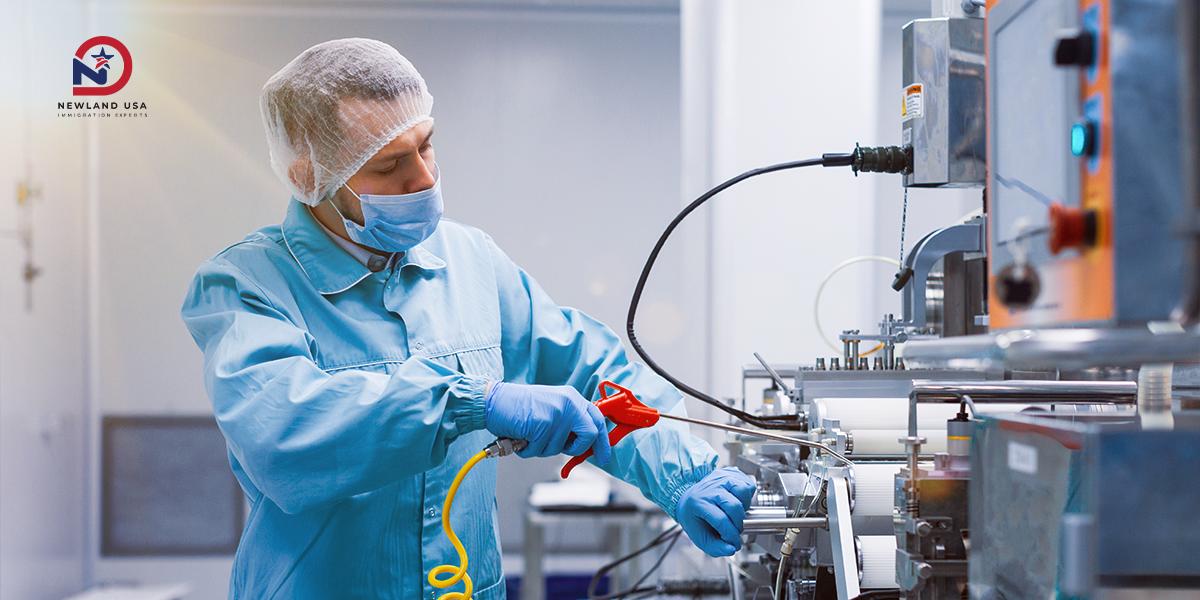
Notably, many large manufacturers are investing heavily in automation technology. This not only boosts productivity but also reduces physically demanding tasks, significantly improving working conditions for employees. The latest-generation production lines consume far less water and energy compared to traditional technology, creating a cleaner and safer environment.
8. Career Development Path After Receiving a Green Card
A major advantage of pursuing EB3 factory jobs in America is the long-term potential for advancement. After receiving a U.S. Green Card and fulfilling the initial work obligation with the sponsoring employer, workers are free to change jobs, industries, or place of residence anywhere in the U.S.
Many workers start in entry-level positions and gradually move up to roles such as Line Supervisor, Shift Manager, or QC Specialist. Internal training programs and tuition assistance help employees improve their qualifications without facing financial strain.
After five years of holding permanent resident status, U.S. Green Card holders are also eligible to apply for U.S. citizenship, unlocking even broader rights including the right to vote, the ability to sponsor a wider range of family members, and a U.S. passport that allows visa-free travel to over 180 countries.
9. Conclusion
The medical glove factory manufacturing industry in the U.S. is going through an unprecedented transformation, driven by billions of dollars in federal investment, import tariff policies that protect domestic production, and ever-increasing demand from the healthcare system. This isn’t just a bright picture for one industry — it’s a wide-open door for thousands of international workers seeking the opportunity to settle in the U.S.
With wages ranging from $20–$29/hour, comprehensive benefits including health insurance, 401(k) retirement plans, paid leave, and many additional perks, EB3 factory jobs in America in the medical glove manufacturing field provide financial stability right from the start. More importantly, this is one of the most realistic pathways for skilled workers to obtain a U.S. Green Card for themselves and their families — without requiring advanced degrees or large investment capital.
As the U.S. labor market continues to face shortages on the scale of millions of unfilled positions, medical glove factories in the U.S. will increasingly expand their foreign worker sponsorship programs. Seizing this opportunity today is a strategic move to turn the American Dream into reality.
With deep expertise in U.S. immigration consulting, Newland USA is proud to be a leading and pioneering firm helping Vietnamese individuals access the EB3 program, especially under the Skilled Workers category. Our team of experts will walk with you every step of the way — from the initial profile evaluation, connecting you with reputable employers at medical glove factories in the U.S., assisting with the completion of PERM and I-140 applications, all the way until you and your family officially receive your U.S. Green Card.
Learn more:
- How Much Does EB3 Skilled Worker Immigration to the US Cost? A Complete Financial Preparation Guide from A to Z
- Retrogression: What It Is and How It Affects Your EB3 Case
- Why is the EB3 Visa waiting time for skilled workers faster than for other workers?
- How Much Does EB3 Skilled Worker Immigration to the US Cost? A Complete Financial Preparation Guide from A to Z
- Premium Processing EB3: Is It Worth Paying the Extra Fee?
News Categories



Related news
AI in Auto Repair in the U.S. 2026: How Artificial Intelligence Diagnoses Vehicle Problems Faster and More Accurately
7 Key Technologies Every Industrial Maintenance Technician in the U.S. Needs to Know in 2026
PLC & Automation Skills: A Launchpad for Maintenance Technicians in the United States in 2026
What Is the ASE Certification? Requirements, Exam Roadmap, and Its Importance for Auto Technicians in the U.S. in 2026

EB5 Capital Recovery Time: How Long It Takes and the Key Milestones
Electric Vehicle Technicians in the U.S.: The “Golden” Skills Helping Vietnamese Auto Mechanics Get Ahead of the 2026 EV Trend
US Engineering & Maintenance Labor Shortage 2026: The Driving Force Behind the EB3 Skilled Workers Visa Policy
Industrial Maintenance Technician: Job Duties, Requirements & U.S. Immigration Opportunities in 2026
Lương thợ sửa xe tại Mỹ: Cách tối ưu giờ công để nhân đôi thu nhập năm 2026