Going to the US under EB3 for Medical Glove Manufacturing: Attractive Job Opportunity for Vietnamese Workers
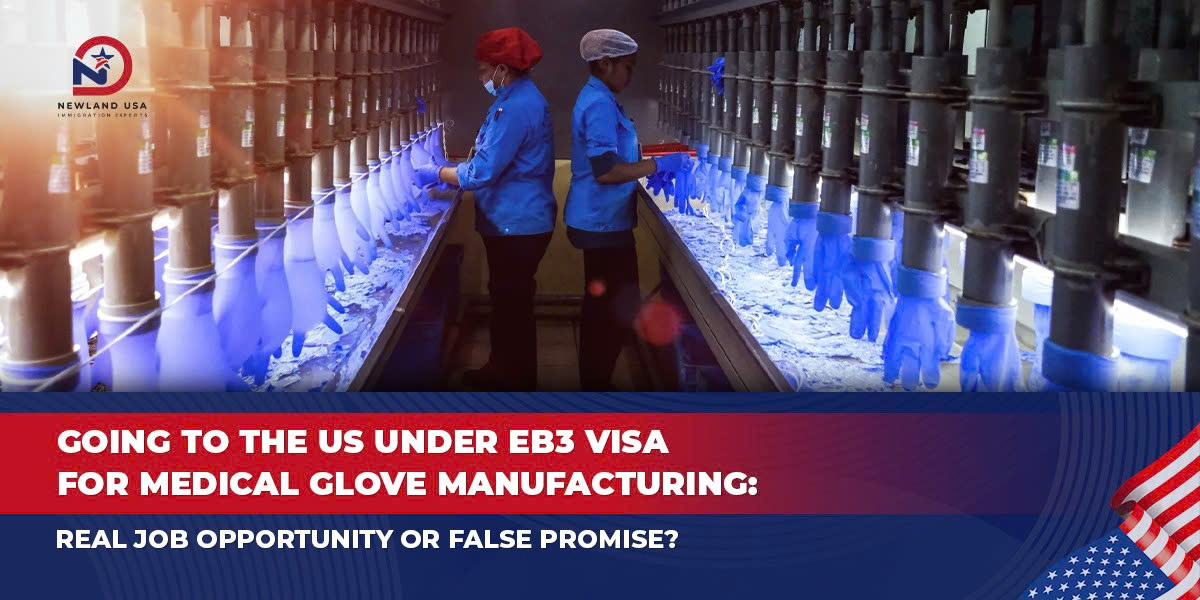
Immigrating to the US through the EB3 Visa program in the medical glove manufacturing sector is becoming a trend that many Vietnamese workers are interested in. However, is this opportunity truly reliable or just a “pipe dream”? This article from Newland USA will provide a detailed analysis of the current state of the medical glove industry in the US, the EB3 Visa application process, as well as important considerations to avoid falling into scam traps on the journey of US immigration through EB3 visa.
1. Overview of the Medical Glove Manufacturing Industry in the US
1.1. The Importance of Medical Gloves in the US Healthcare System
Medical gloves are one of the most essential personal protective equipment items in modern healthcare. From small clinics to large hospitals, from laboratories to long-term care facilities, the demand for these products is always high and stable.
According to statistics, the global medical glove market is worth billions of dollars and continues to grow steadily each year. The US is one of the world’s largest consumer markets with an estimated demand of hundreds of billions of gloves annually. This shows the labor shortage faced by medical glove manufacturing facilities in the US.
1.2. Industry Development After the Pandemic
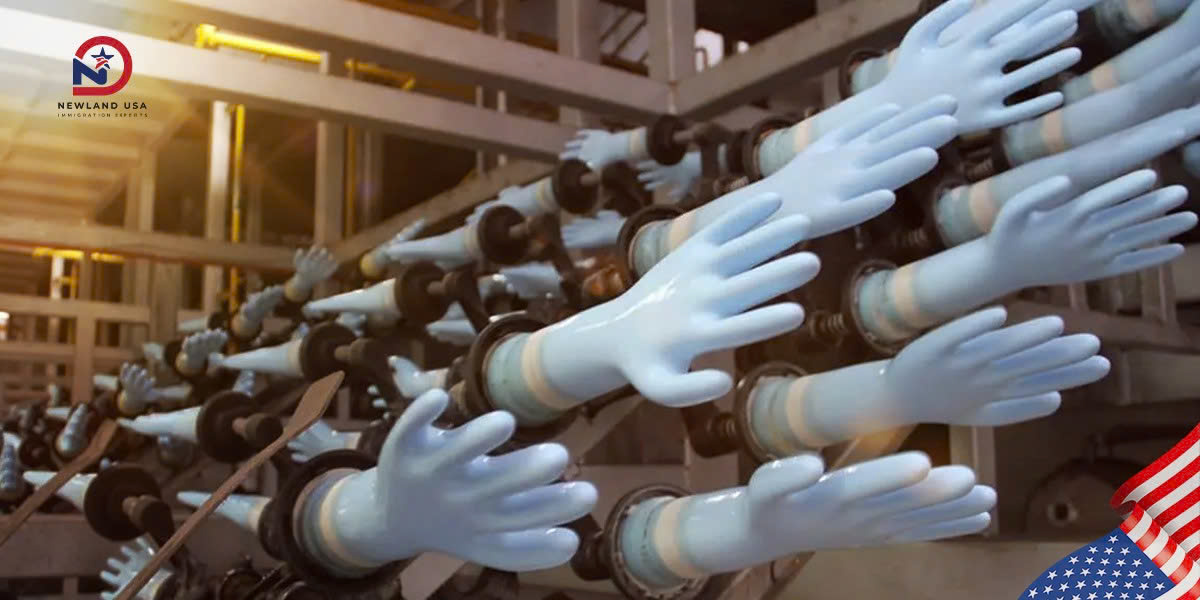
The COVID-19 pandemic completely changed the landscape of the global medical glove industry. Previously, most products were manufactured in Southeast Asian countries like Malaysia, Thailand, and Vietnam. However, supply chain disruptions during the pandemic made the US government realize the importance of building domestic production capacity.
Many new factory projects have been launched in states like Nevada, Arkansas, and Pennsylvania, with the goal of reducing dependence on imported supplies. These facilities not only meet healthcare needs but also create thousands of jobs for workers, including medical glove manufacturing workers in the US through international recruitment programs.
2. EB3 Visa: Fast Immigration Pathway to the US for Vietnamese Workers
2.1. What is EB3?
The EB3 Visa (Employment-Based Third Preference) is one of five types of employment-based visas issued by the US government to foreign workers. The US immigration EB3 visa program is divided into three main groups:
- Skilled Workers: Workers with skills requiring at least 2 years of experience or specialized training
- Professionals: People with bachelor’s degrees and jobs requiring this level of education
- Unskilled Workers (Other Workers): General workers, not requiring degrees or experience
For the position of medical glove manufacturing worker in the US, most fall under the Skilled Workers category depending on the specific job and employer requirements.
2.2. Standard Process for EB3 Visa Application
To immigrate to the US through EB3 visa via the medical glove manufacturing industry, applicants need to go through the following steps:
Step 1: Find a US Employer
This is the most important step. Workers need a US company willing to sponsor them, meaning the company must prove that they cannot find qualified American workers for that position.
Step 2: Apply for Labor Certification
The employer must submit a PERM (Program Electronic Review Management) application to the US Department of Labor. This process typically takes 6-12 months, requiring the company to prove they have made domestic recruitment efforts without success.
Step 3: File Form I-140
After PERM is approved, the employer files Form I-140 (Immigrant Petition for Alien Worker) with USCIS. This step typically takes 4-6 months.
Step 4: Wait for Priority Date to Become Current
This is the stage that can take the longest, especially for applicants from countries with high application volumes. The waiting time can range from 2-5 years or longer.
Step 5: Adjust Status or Apply for Visa
When the priority date arrives, applicants will complete the final procedures to receive their green card.
2.3. Estimated Costs
The total cost for the entire process typically ranges from $10,000 to $15,000, including attorney fees, application fees, medical fees, and other related costs. Most of these costs are paid by the employer, but some cases require workers to contribute a portion.
3. Current Status of Medical Glove Manufacturing Worker Recruitment in the US
3.1. Labor Demand in the Industry
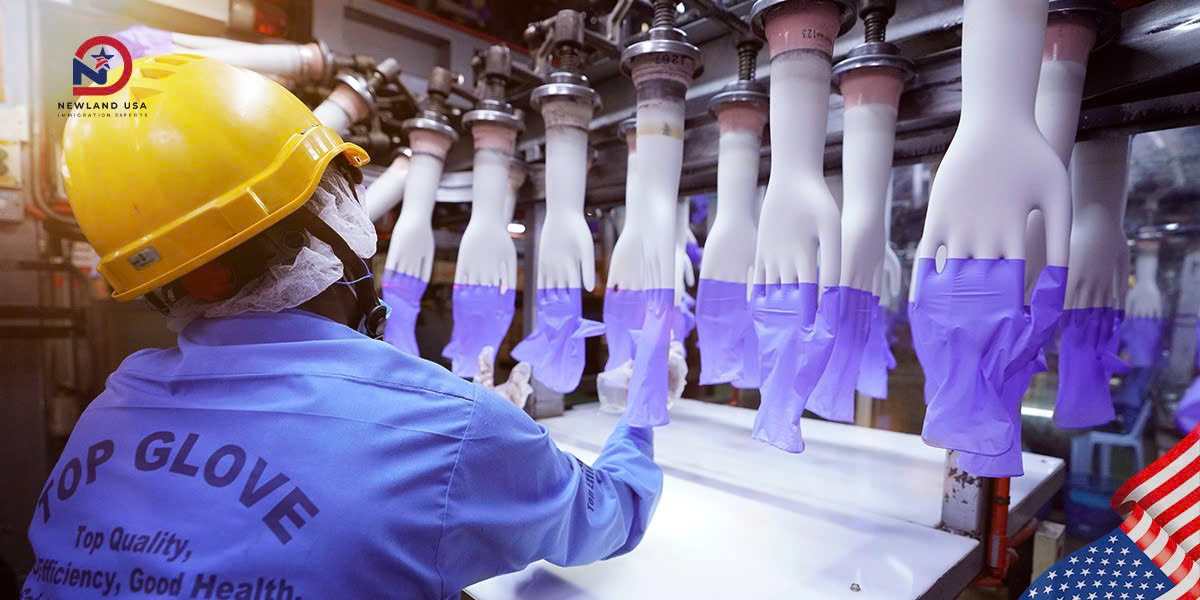
Medical glove manufacturing facilities in the US are facing a serious labor shortage. Work on production lines is often repetitive, requiring shift work and working in strictly temperature-controlled environments. This makes many American workers uninterested in this type of work.
The salary for medical glove manufacturing workers in the US typically ranges from $20-25 per hour depending on the state and experience. With overtime, monthly income can reach $2,500-3,500, enough to ensure living expenses and savings for the family.
3.2. Work Environment and Job Requirements
Work at medical glove manufacturing facilities is classified as skilled labor (Skilled Workers), so it requires 2 years of experience or relevant qualifications, and workers also need:
- Good health, ability to stand for long periods and work in shifts;
- Ability to work in a clean industrial environment;
- Strict compliance with hygiene and occupational safety regulations;
- Basic English to understand instructions and communicate with colleagues.
Most companies provide on-the-job training programs for 1-2 weeks for new employees to familiarize themselves with production processes and the strict quality standards of the medical glove industry.
4. Real Job Opportunities
4.1. Reputable Employers
To determine if a medical glove manufacturing job opportunity through US immigration EB3 visa is real, pay attention to these characteristics:
The company is real and transparent: The business has an official website, clear address, and verified contact information. You can look up company information through the US Department of Commerce database or business verification websites.
Professional recruitment process: The employer has a clear interview process, detailed employment contract, and fully explains the responsibilities of both parties.
Represented by an immigration attorney: All official EB3 Visa applications are processed by licensed immigration attorneys in the US. They will contact applicants directly and provide detailed information about the application progress.
Does not require unreasonable fees: Although there are some legitimate costs, reputable employers typically bear most or all of the costs. They do not require applicants to pay large sums of money before concrete results are achieved.
4.2. Clear Employment Contract
Employment contracts for medical glove manufacturing worker in the US positions need to clearly specify:
- Detailed job description;
- Hourly wage and allowance system;
- Working hours and leave policy;
- Health insurance benefits and other welfare;
- Terms regarding Visa and green card sponsorship.
The contract must be drafted in English and have a Vietnamese translation so applicants can clearly understand the content before signing.
5. ‘Pipe Dream’: Warning About Scam Schemes
5.1. Common Scam Tactics
Unfortunately, alongside genuine opportunities, the US immigration EB3 visa market also has many sophisticated scam schemes. Here are warning signs:
Promises that are too good, too fast: Scam organizations often promise Visa approval in a few months, while the actual process typically takes several years.
Demanding full upfront payment: Requiring workers to pay large sums immediately without clear commitments or legal documents.
No legitimate immigration attorney: Scam cases typically do not have licensed attorneys involved, or have “fake” attorneys with unverifiable information.
Using unofficial channels: Only contacting through social media, personal email, or phone numbers with no traceable source.
5.2. How to Protect Yourself
To avoid becoming a victim of scam tactics when looking for medical glove manufacturing opportunities in the US, take the following measures:
Research thoroughly: Learn about the recruiting company, read reviews from people who have previously worked or applied there.
Verify attorney information: Check immigration attorneys on the American Bar Association website or USCIS’s list of recognized attorneys.
Don’t rush to transfer money: Do not pay any large fees until you have verified the authenticity of the opportunity and have a legally binding contract.
Seek independent consultation: Contact reputable immigration consulting companies or attorneys for independent advice about your application.
Trust your instincts: If an offer sounds too good to be true, there’s a high chance it’s a scam.
6. Practical Benefits of Working in the Medical Glove Industry in the US
6.1. Stable Immigration Path
The US immigration EB3 visa program through the medical glove manufacturing industry provides a clear immigration path. After receiving a green card, workers have the right to:
- Live and work permanently in the US;
- Sponsor spouse and children under 21 who are unmarried to come to the US;
- Enjoy social benefits like US citizens (except voting rights);
- After 5 years, can apply for US citizenship.
6.2. Income and Quality of Life
Although the job of medical glove manufacturing worker in the US is not high-paying, this income level is completely sufficient to ensure life in the US. With an average salary of $2,500-3,500 per month, a family can:
- Rent a house for about $800-1,200 depending on the state;
- Living expenses about $500-800;
- Health insurance: $200-400 (usually partially subsidized by the company);
- The rest can be saved or sent home.
In addition, workers also enjoy benefits under US labor law such as health insurance, paid leave, and a safe working environment.
6.3. Career Development Opportunities
The medical glove industry doesn’t just stop at production worker positions. After a period of work, workers can be promoted to positions such as:
- Shift Leader
- Quality Control Inspector
- Machinery Maintenance Technician
- Training Staff
Many companies also support employees in learning English and skills training courses for career development.
7. Important Notes for Those Wanting to Pursue the EB3 Pathway
7.1. Prepare Documents Carefully
To increase the chances of success in US immigration through EB3 visa via the medical glove industry, applicants need to prepare:
- Health records: Health examination certificate from a reputable hospital, proving adequate health to work in an industrial environment.
- Personnel records: Degrees, documents proving work experience (if any).
- English proficiency: Although certificates are not mandatory, having basic English proficiency will be a great advantage.
- Legal documents: Birth certificate, passport, clean criminal record.
7.2. Be Patient and Realistic
The US immigration EB3 visa process is a long journey requiring patience. The waiting time can extend for many years, and during that time, applicants need to:
- Maintain regular contact with attorneys and employers;
- Continue current work in Vietnam;
- Learn English and improve skills;
- Prepare finances for the initial settlement period.
7.3. Choose Reputable Consulting Services
Choosing a reliable immigration consulting service is a key factor determining success. A good consulting company will:
- Have many years of experience in the EB3 Visa field;
- Have a clear and reputable network of US employers;
- Be transparent about costs and processes;
- Have a team of licensed US immigration attorneys.
8. Conclusion
The opportunity for US immigration through EB3 visa via the medical glove manufacturing industry is completely real and brings many benefits to Vietnamese workers. With increasing demand for domestically produced medical glove products, US factories are actively seeking human resources from around the world.
However, like any opportunity, this path requires thorough preparation, adequate knowledge, and the ability to distinguish between real opportunities and “pipe dreams”. Workers need to be cautious, research carefully, and turn to reputable consulting services for support throughout the immigration journey.
Newland USA, with a team of experienced experts and the motto “Stable settlement — Lifelong prosperity”, is ready to consult and assist in preparing documents and accompanying customers throughout the US EB3 immigration process. Contact Newland USA immediately via hotline 0785591988 or email: newsletter@newlandusa.asia for detailed and free consultation.
Learn more:
- Does the automotive repair profession through EB3 U.S. immigration require English? Important notes when using English in this industry
- Auto Repair Technician Shortage in the U.S.: A Golden Opportunity for EB3 Green Card Applicants
- Understanding ETA 9089 Form in the US EB3 Employment-Based Immigration Program
- EB3 Immigration Program – The Key to Unlocking a Bright Future for Young Vietnamese Generations
News Categories


Related news
AI in Auto Repair in the U.S. 2026: How Artificial Intelligence Diagnoses Vehicle Problems Faster and More Accurately
7 Key Technologies Every Industrial Maintenance Technician in the U.S. Needs to Know in 2026
PLC & Automation Skills: A Launchpad for Maintenance Technicians in the United States in 2026
What Is the ASE Certification? Requirements, Exam Roadmap, and Its Importance for Auto Technicians in the U.S. in 2026

EB5 Capital Recovery Time: How Long It Takes and the Key Milestones
Electric Vehicle Technicians in the U.S.: The “Golden” Skills Helping Vietnamese Auto Mechanics Get Ahead of the 2026 EV Trend
US Engineering & Maintenance Labor Shortage 2026: The Driving Force Behind the EB3 Skilled Workers Visa Policy
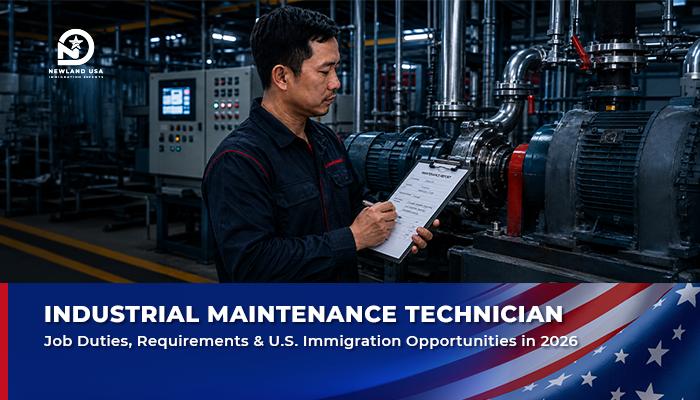
Industrial Maintenance Technician: Job Duties, Requirements & U.S. Immigration Opportunities in 2026

Lương thợ sửa xe tại Mỹ: Cách tối ưu giờ công để nhân đôi thu nhập năm 2026