DIY Culture: 5 Reasons Americans Prefer Repairing Their Own Homes Instead of Hiring Professionals
In modern American society, it’s not hard to spot homeowners fixing a leaky faucet, installing shelves, or repainting their living room on the weekend. This isn’t just a random habit — it’s a clear expression of DIY culture, a defining trait that has been deeply embedded in the American way of life for decades. For anyone preparing to settle down or who has just arrived in the United States, learning about American DIY culture will make the process of adapting much smoother and more cost-effective. In the following article, Newland USA will break down the origins, meaning, and five key reasons why home repairs have become an inseparable part of everyday life in America.
1. What Is Do It Yourself? Definition and Origins of DIY Culture
What is Do It Yourself? It’s an English phrase meaning “do it on your own,” commonly abbreviated as DIY. In a broader sense, Do It Yourself isn’t limited to home repairs — it covers all kinds of creative, crafting, fixing, and improving activities that individuals carry out themselves instead of relying on paid professional services. The concept encourages people to take the initiative and use their skills, tools, and available materials to handle tasks that might otherwise require an expert.
The history of DIY culture in America can be traced back to the period after World War II, when tough economic conditions forced many families to fend for themselves to maintain their daily lives. Influential magazines like Popular Mechanics (launched in 1902) and Mechanix Illustrated (launched in 1928) played a key role in spreading technical knowledge to the general public. By the 1950s, the phrase “do-it-yourself” had officially become popular, closely tied to the home improvement movement and small-scale crafting projects. The invention of power drills and electric saws after the war greatly supported these activities, while also fueling the growth of the home tools industry, which reached a value of $12 billion by 1960 with the presence of retail chains like True Value and Ace Hardware.
2. 5 Reasons Americans Prefer Repairing Their Own Homes Instead of Hiring Professionals
Reason 1: Significant cost savings amid rising labor prices
Financial factors are the number one motivation driving Americans to choose the DIY route. According to surveys, the average American household spent about $2,900 on home repairs in 2023, and that number continues to climb due to inflation. Another study found that 46% of Americans choose to do things themselves to save money, while 70% of them use social media and online search channels to support their projects.
Labor costs in the U.S. are high for several reasons: a shortage of skilled workers in the construction, electrical, and plumbing industries; rising insurance costs; and increasingly strict regulations. According to analysis, contractors typically charge 10–15% more than material costs for most projects. A typical example: instead of paying $40–50 per shelf installation by hiring a professional, homeowners can buy materials themselves for a total cost of less than $30. In American DIY culture, this spirit of saving is considered an essential life skill for adults. Similarly, another survey also showed that 55% of homeowners in the U.S. plan to carry out home maintenance tasks themselves instead of outsourcing.

Reason 2: A spirit of self-reliance deeply rooted in American cultural identity
One of the core values shaping the American mindset is individualism and self-reliance. This concept was profoundly discussed by philosopher Ralph Waldo Emerson in his famous essay “Self-Reliance,” published in 1841. In this work, Emerson emphasized the importance of each person standing on their own through their abilities and efforts, without depending too much on others.
This spirit originated from the era when the first settlers set foot on new land. They had no choice but to build their own homes, grow their own food, sew their own clothes, and fix everything with nothing but their bare hands and determination. Over many generations, this “can-do” attitude became part of the national identity. Americans generally believe that a responsible adult should know how to handle basic household tasks — from changing a light bulb and fixing a faucet to assembling furniture. This is also why American DIY culture isn’t simply a leisure activity but also carries the meaning of civic virtue and personal responsibility.
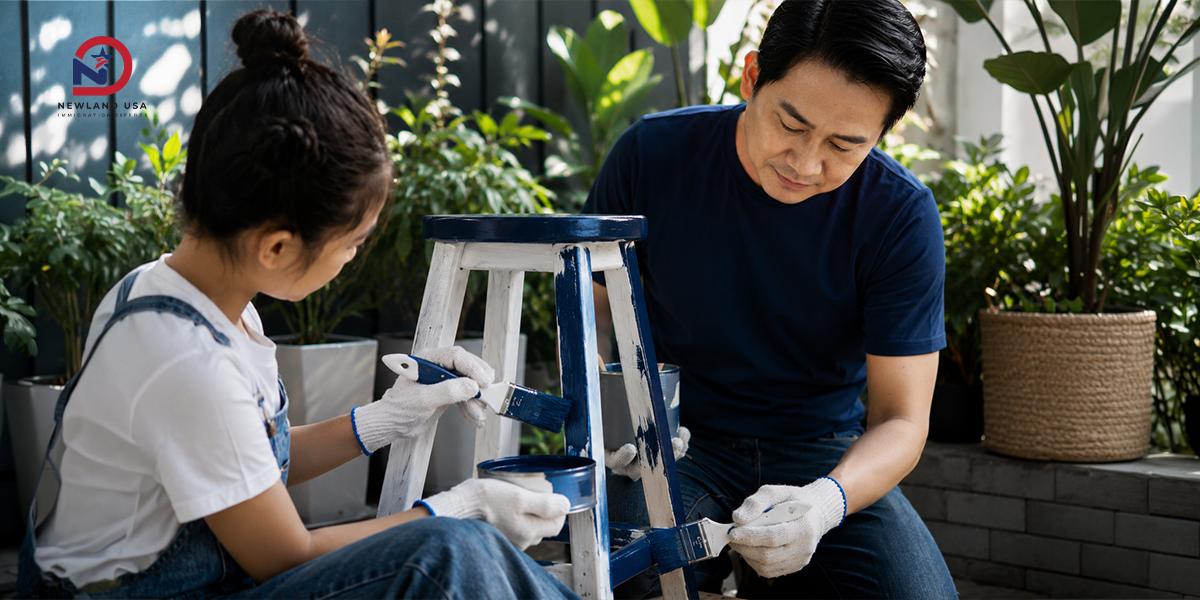
American children are often introduced to the concept of DIY from a young age through extracurricular activities, school programs, and family traditions. Parents encourage their kids to take part in small projects like fixing a bicycle, assembling models, or gardening. This training process not only equips them with practical skills but also nurtures confidence and independence — qualities that American society values very highly.
Reason 3: A sense of achievement and the joy of personal creativity
Beyond the economic benefits, the emotional satisfaction is a factor that can’t be overlooked when talking about DIY culture. According to research, up to 58% of Americans take on DIY projects because of the fulfillment they feel when completing something from idea to finished product. The act of creating or repairing something with your own hands delivers a unique experience that no outsourced service can replace.
Many people have shared that doing it yourself is both cheaper and gives a sense of accomplishment from completing a project on your own. This simple statement accurately reflects the common mindset of millions of Americans. When you repaint a room, install an LED lighting system, or build a wooden table yourself, you’re not only saving money but also getting to enjoy the pride that comes from your own hard work.
On top of that, DIY activities allow people to personalize their living spaces in their own style. Instead of owning items identical to those in thousands of other homes, homeowners can create unique details that carry their personal touch. In American DIY culture, a home isn’t just a place to live — it’s a space to express personality, taste, and each family’s own story.
Reason 4: The explosion of the internet, YouTube, and social media
A few decades ago, anyone wanting to learn repair skills usually had to buy instruction manuals, attend community classes, or ask relatives to teach them. Today, the rapid development of digital technology has completely changed this picture. According to surveys from reputable organizations, 77% of homeowners in the U.S. use social media to support their DIY projects, with 87% choosing YouTube as their main platform. Up to 92% of those surveyed admitted they prefer video tutorials over written materials, and 97% rated instructional content on social media as high quality.
YouTube currently hosts millions of detailed tutorial videos covering every area of repair — from replacing a refrigerator compressor, installing a water filter, and fixing a washing machine to laying hardwood floors, painting walls, and gardening. Specialized channels like This Old House, Home Repair Tutor, and Family Handyman have attracted millions of followers. Beyond YouTube, platforms like Pinterest, Instagram, and TikTok are also rich sources of inspiration for creative DIY ideas.
The abundance of digital content doesn’t just provide knowledge — it also sparks confidence in beginners. When you see an ordinary person completing a complex project in just a few hours through a demonstration video, viewers feel encouraged and ready to give it a try. This psychological factor has contributed to the widespread influence of DIY culture in contemporary American society.
Reason 5: The belief that a home is the most valuable asset worth investing in
For most Americans, a home isn’t just a place to return to after a long day of work — it’s also the most important financial investment of their lives. According to experts, many homeowners today pay special attention to improving and investing in their homes because they see it as their most valuable asset. This mindset drives homeowners to actively participate in maintenance and upgrades, whether they do it themselves or hire professionals.
Data from survey sites shows that home renovation and repair activity among homeowners increased by 16% during the year, from $350 billion to $406 billion in Q2 2022, and was projected to reach $450 billion by Q1 2023. About 52% of Americans who carried out home renovation projects in the past year completed the work themselves, with Gen X having the highest DIY rate.
Additionally, 49% of Americans take on DIY projects with the goal of improving comfort and functionality in their homes — creating a cozy reading nook, improving energy efficiency, or adjusting spaces to fit their actual needs. The view that “a home reflects its owner” makes many people willing to invest time and effort to turn their house into a truly ideal place. In American DIY culture, every self-repair or upgrade is a small step on the journey to perfecting one’s dream home.
3. Things to Keep in Mind When Embracing DIY Culture in America
Despite its many outstanding advantages, DIY culture also comes with certain risks that newcomers to the U.S. should be aware of. According to published data, about 17% of homeowners have damaged their homes or equipment while attempting self-repairs, with average damage costs reaching up to $599. On top of that, 22% of respondents said the situation actually got worse after they tried to fix it themselves without the proper expertise.
Some particularly dangerous tasks that require specialized skills include electrical wiring, complex plumbing repairs, removing load-bearing walls, and dealing with foundation issues. According to the National Fire Protection Association (NFPA), electrical incidents are among the leading causes of house fires. Most states require permits and officially certified electricians for any work involving electrical systems. Therefore, newcomers to the U.S. should carefully weigh their own abilities against the complexity of a project before deciding whether to DIY or hire a professional.
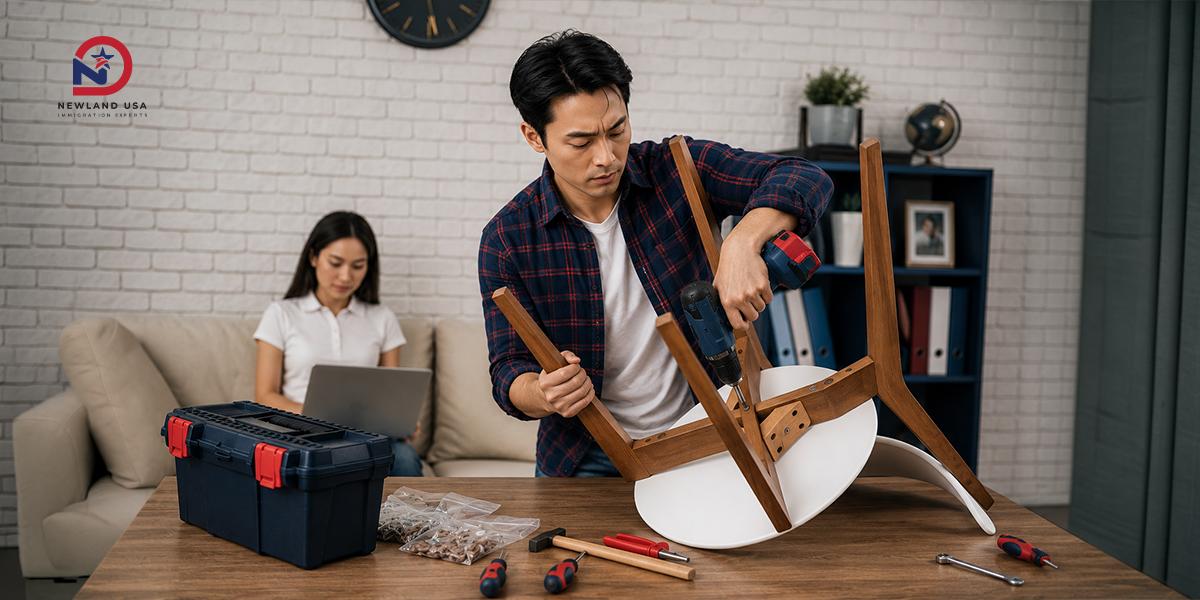
The good news is that newcomers can absolutely embrace American DIY culture safely by starting with simple tasks like painting walls, assembling furniture, gardening, or fixing basic household items. Major home improvement stores like Home Depot and Lowe’s regularly offer free workshops or provide detailed instructional materials in-store. These are excellent opportunities to learn new skills while also saving on monthly living expenses.
4. Conclusion
DIY culture has become an iconic symbol of the American way of life, reflecting the spirit of self-reliance, creativity, and the proactive attitude of taking control of one’s own life. It’s clear that this movement is more than just picking up a hammer or turning a screw. It’s an entire life philosophy forged over many generations, closely tied to the history and development of the United States.
Learn more:
- Does the automotive repair profession through EB3 U.S. immigration require English? Important notes when using English in this industry
- Auto Repair Technician Shortage in the U.S.: A Golden Opportunity for EB3 Green Card Applicants
- The Daily Work of an Auto Mechanic in the US
- Working as an EB3 Auto Mechanic in the U.S. 2026: How Much Do You Actually Take Home Each Week?
News Categories



Related news

Who Is the ESTA Program For? How to Assess Your Fit Before Applying in 2026

Who Is the ESTA Program For? How to Assess Your Fit Before Applying in 2026

From Motorcycle Mechanic to Automotive Technician in the U.S.: Skills and Qualifications to Prepare in 2026

AI in Auto Repair in the U.S. 2026: How Artificial Intelligence Diagnoses Vehicle Problems Faster and More Accurately

7 Key Technologies Every Industrial Maintenance Technician in the U.S. Needs to Know in 2026

PLC & Automation Skills: A Launchpad for Maintenance Technicians in the United States in 2026

What Is the ASE Certification? Requirements, Exam Roadmap, and Its Importance for Auto Technicians in the U.S. in 2026

EB5 Capital Recovery Time: How Long It Takes and the Key Milestones
Electric Vehicle Technicians in the U.S.: The “Golden” Skills Helping Vietnamese Auto Mechanics Get Ahead of the 2026 EV Trend