‘Only the wealthy can immigrate to America’ – True or false?

The belief that “only the wealthy can immigrate to America” has existed for a long time in the Vietnamese community and many other countries. However, reality shows that the US immigration system is far more diverse than what most people think. In this article, we’ll take an in-depth look at US immigration requirements, examine whether middle-income people can immigrate to the US, and explore current immigration pathways to America for Vietnamese to get the most objective and comprehensive view.
1. The truth about the belief “only the wealthy can immigrate to America”
The statement “only the wealthy can immigrate to America” depends on the approach and pathway you choose. The US immigration system is designed with many different programs aimed at serving diverse groups from investors, workers, to people with family in the US.
According to data from the US Citizenship and Immigration Services (USCIS), over 140,000 employment-based immigrant visas are issued annually, along with over 226,000 family-based visas. These numbers show that immigrating to America is not reserved for the super-rich, but opens doors to many different groups.
2. Immigration pathways to America and actual costs
2.1. EB5 Investment Program
When talking about “only the wealthy can immigrate to America,” many people immediately think of the EB5 program. This is truly an immigration pathway to America for Vietnamese and citizens of other countries with significant capital.
US immigration requirements through EB5 in 2026 include:
Minimum investment of $800,000 for projects in Targeted Employment Areas (TEA) and $1,050,000 for projects outside TEA
Create at least 10 full-time jobs for US workers
Administrative costs: $50,000-$80,000
Attorney fees: $15,000-$30,000
Total actual cost: $900,000 – $1,150,000
With this investment level, clearly EB5 is a suitable choice for those with strong finances who want to immigrate to America. However, this is just one of many immigration pathways to America for Vietnamese.
Processing time for EB5 typically takes 2-4 years, and investors will receive a conditional green card for the first 2 years. After proving they maintained the investment and created jobs, they can convert to a permanent green card, paving the way for long-term US immigration.
2.2. EB3 Labor Program
EB3 is one of the most popular immigration pathways to America for Vietnamese.
US immigration requirements through EB3 include:
Have a job offer from a US employer
For EB3 Skilled Workers: Minimum 2 years of experience or training
For EB3 Professionals: Bachelor’s degree or equivalent
For EB3 Other Workers: Jobs requiring less than 2 years of training
Actual costs to immigrate to America through EB3:
Government fees (Form I-140): $715
PERM Labor Certification fees: Paid by employer
Adjustment of Status fees (Form I-485): $1,440
Attorney and consulting service fees: $20,000-$35,000
Medical examination and translation costs: $2,000-$3,000
Total cost: Approximately $45,000 – $80,000 (Depending on the category you apply for)
Compared to EB5, the cost of immigrating to America through EB3 is nearly 20 times lower, proving that the answer to the question “can middle-income people immigrate to the US” is YES. With stable income and savings over a few years, many Vietnamese families can fully afford to pursue this immigration pathway to America for Vietnamese.
EB3 processing time typically takes 2-5 years, may be longer depending on nationality and category you choose. However, once approved, you and your family will receive a permanent green card right from the start, without going through a conditional period like EB5.

2.3. Family-Based Sponsorship
This is the most popular immigration pathway to America for Vietnamese and also the clearest evidence for whether middle-income people can immigrate to the US.
US immigration requirements for family-based:
Have a relative who is a US citizen or green card holder
Valid relationship: Spouse, parents, children, siblings
Sponsor meets minimum income requirements
Cost of immigrating to America through family sponsorship:
Form I-130 (Petition for Alien Relative): $675 (online filing) or $625 (paper filing)
Form I-485 (Adjustment of Status): $1,440
Biometrics fee: $85
Medical examination: $200-$500
Total cost: $2,000-$3,000
With these costs, most middle-income families can afford the cost of immigrating to America. This is the clearest answer to the question “can middle-income people immigrate to the US” – Absolutely yes!
Family-based processing time depends on the relationship:
Spouse, parents, unmarried children of US citizens: 8-14 months
Other preference categories: 1-20 years depending on category and country
2.4. Diversity Visa Lottery (DV Lottery)
DV Lottery is the US green card lottery program, granting up to 55,000 immigrant visas annually to citizens from countries with low immigration rates.
IMPORTANT NOTE: Vietnam is NOT on the list of eligible countries to participate in DV Lottery for 2025 and 2026. According to regulations, countries with more than 50,000 people immigrating to the US in the previous 5 years are not eligible. The list of ineligible countries includes: Bangladesh, Brazil, Canada, China (including Hong Kong), Colombia, Cuba, Dominican Republic, El Salvador, Haiti, Honduras, India, Jamaica, Mexico, Nigeria, Pakistan, Philippines, South Korea, Venezuela, and Vietnam.
Therefore, although DV Lottery is the lowest-cost pathway to immigrate to America (free registration, only pay visa fee around $330 if selected), this is not currently an immigration pathway to America for Vietnamese.
3. Can middle-income people immigrate to the US?
The question “can middle-income people immigrate to the US” is the top concern of many Vietnamese families. Let’s analyze specifically based on criteria:
3.1. Financial aspect
Can middle-income people immigrate to the US financially? The answer is YES, if you choose the right pathway:
Family-based ($2,000 – $3,000): This is a completely feasible cost for most families with stable income. With average savings, you can accumulate enough within 6-12 months.
EB3 Employment-Based ($45,000 – $80,000): Though higher, still within reach of middle-income earners if:
Save for 2-3 years
Receive employer support (some companies pay part of the costs)
Can pay in installments through service packages
EB5 ($900,000+): This is truly for those with strong finances, not suitable for middle income.
3.2. Professional and skills aspect
US immigration requirements are not just based on money. Many immigration pathways to America for Vietnamese require skills and experience:
Skilled workers: Welders, mechanics, electricians, medical glove manufacturing workers, auto repair – These professions are in short supply in the US and have many opportunities to immigrate to America through EB3 Skilled Workers.
Professionals with college degrees: Engineers, accountants, teachers, IT staff – US immigration requirements for this group include bachelor’s degrees and related experience.
Unskilled labor: Even jobs like elderly care, farm workers, restaurant staff can be an immigration pathway to America for Vietnamese through EB3 Other Workers.

4. Immigration pathways to America for Vietnamese
After analyzing pathways and answers to “can middle-income people immigrate to the US,” let’s explore in detail the most feasible immigration pathways to America for Vietnamese.
4.1. Pathway 1: EB3 Program
This is the immigration pathway to America for Vietnamese that Newland USA specializes in providing and has many advantages:
Implementation process:
Find US employer: Immigration companies will connect you with employers seeking foreign workers. Many industries are facing labor shortages such as medical glove manufacturing, auto repair, food processing.
PERM Labor Certification: The employer must prove they cannot find qualified American workers for this position. Costs paid by employer.
Form I-140 Petition: After PERM is approved, the employer files I-140 to sponsor you.
Adjustment of Status or Consular Processing: Depending on whether you’re inside or outside the US, file Form I-485 or Form DS-260.
Receive green card: After approval, you and your family receive permanent green cards, officially immigrating to America.
Advantages of this pathway:
Reasonable costs for middle-income earners
Does not require high English proficiency
Entire family can immigrate to America at once
Permanent green card from the start
Pathway 2: Family sponsorship
If you have relatives who are US citizens or green card holders, this is the fastest and cheapest immigration pathway to America for Vietnamese.
Process:
Sponsor files Form I-130: Prove valid family relationship.
Wait for Priority Date: Waiting time depends on relationship and category.
File green card application: Form I-485 (if in US) or DS-260 (if outside US).
Interview and receive green card: Complete the US immigration process.
Important US immigration requirements:
Sponsor must have income at 125% of federal poverty level
Documents proving relationship must be accurate and complete
Pathway 3: EB5 Investment Program
Although this is not a popular immigration pathway to America for Vietnamese due to large capital requirements, it remains an option for those with strong financial capability.
US immigration requirements through EB5:
Invest $800,000 (TEA) or $1,050,000 (non-TEA)
Create 10 jobs for US workers
Maintain investment for minimum 2 years
Advantages:
No job offer required
Can self-manage business or invest through Regional Center
Entire family immigrates to America and can apply for citizenship after 5 years
Pathway 4: Other special programs
Besides the main immigration pathways to America for Vietnamese above, there are also:
EB-2 NIW (National Interest Waiver): For people with master’s degrees or higher and special contributions to US national interest.
EB-1: For people with extraordinary abilities in arts, sciences, business, education, or sports.
Refugee/Asylum: For people persecuted or with reasonable fear of persecution in their home country.
5. Important notes when immigrating to America
5.1. About finances
When learning about US immigration requirements, you need to note:
Long-term financial planning: The cost of immigrating to America is not just visa fees. You need to prepare money for:
Plane tickets for entire family
Initial settlement costs (rent, car purchase, necessities)
Reserve for first 3-6 months without stable employment
Cost of living in US is higher than Vietnam
Legitimate financial sources: US immigration requirements require proving legitimate financial sources. Prepare:
Bank statements
Documents about income, assets
Employment contracts, business documents
5.2. About time and perseverance
Immigrating to America is a long journey and this depends not only on finances but also on perseverance:
EB3: 3-5 years (can be up to 6 years for some countries)
Family-Based: 8 months – 20 years depending on category
EB5: 2-4 years
During this time, you need to:
Maintain stable job and income
Update application when changes occur
Be patient and not give up
5.3. About legal matters
US immigration requirements have many complex legal requirements:
No serious criminal record: Criminal history can affect the US immigration process.
Good health: Medical examination is a mandatory US immigration requirement. Some serious infectious diseases can lead to visa denial.
Comply with procedures: Any errors in the application can lead to rejection or delays.
6. Role of reputable immigration consulting companies
When seeking immigration pathways to America for Vietnamese, working with reputable consulting companies like Newland USA brings many benefits:
Proper advice: Help you choose the most suitable immigration pathway to America for Vietnamese for your situation, accurately answer the question “can middle-income people immigrate to the US.”
Connect with employers: For EB3, the company has a network of employers ready to hire and sponsor Vietnamese to immigrate to America.
Professional application preparation: Ensure full compliance with US immigration requirements and increase success rate.
Post-immigration support: Help your family settle into life in America after successful US immigration.
Cost optimization: Advise on service packages suitable for budget, especially important for middle-income people wanting to immigrate to America.

7. US immigration policy trends 2025-2026
To find suitable immigration pathways to America for Vietnamese, you need to understand current policy trends:
7.1. Changes in 2025
Increased processing fees: From April 2025, many fees related to immigrating to America have increased:
Form I-130: Increased from $535 to $675 (paper filing)
Form I-485: Increased from $1,225 to $1,440
New fees for Employment Authorization Document (EAD)
Gold Card Program: Trump administration introduced new program allowing foreigners to “buy” Gold Card for $1,000,000 to receive green card. However, this program is still in rollout phase and unclear.
Processing time: Many visa categories are seeing extended waiting times due to very high application volumes.
7.2. Forecast for 2026
EB5 costs may change: From January 2027, minimum investment for EB5 may increase to $900,000-$975,000 (TEA) due to inflation adjustment.
H-1B visa selection: H-1B selection system may shift from random lottery to wage-based priority, indirectly affecting immigration pathways to America for Vietnamese through H-1B to green card conversion.
Dignity Act: If passed, may create more new immigration pathways to America for Vietnamese and improve processing times.
8. Conclusion
Back to the initial question: “Only the wealthy can immigrate to America” – True or false? The answer is: FALSE.
The US immigration system is designed to serve diverse groups. While the EB5 program is truly for people with strong finances and large investments, there are many other immigration pathways to America for Vietnamese suitable for middle-income earners.
US immigration requirements don’t just revolve around money. Factors like professional skills, family relationships, perseverance, and thorough preparation all play important roles.
Newland USA, with an experienced team of experts and the motto “Stable settlement – Lifelong prosperity,” is ready to advise and support in preparing applications and accompany clients throughout the EB3 US immigration process. Contact Newland USA now via hotline 0785591988 or email: newsletter@newlandusa.asia for detailed and free consultation.
Learn more:
- Does the EB3 Skilled Worker Immigration to the U.S. Really Cost Billions of VND?
- What Benefits Do Children Receive When Parents Immigrate Through EB-3?
- U.S. Immigration Through Medical Glove Manufacturing Industry: Easy or Difficult?
- Why Choose EB3 U.S. Immigration Through the Medical Glove Manufacturing Industry in 2026?
- U.S. Immigration Policy 2026: Important Changes You Need to Know
News Categories


Related news

From Motorcycle Mechanic to Automotive Technician in the U.S.: Skills and Qualifications to Prepare in 2026

AI in Auto Repair in the U.S. 2026: How Artificial Intelligence Diagnoses Vehicle Problems Faster and More Accurately
7 Key Technologies Every Industrial Maintenance Technician in the U.S. Needs to Know in 2026
PLC & Automation Skills: A Launchpad for Maintenance Technicians in the United States in 2026
What Is the ASE Certification? Requirements, Exam Roadmap, and Its Importance for Auto Technicians in the U.S. in 2026
EB5 Capital Recovery Time: How Long It Takes and the Key Milestones
Electric Vehicle Technicians in the U.S.: The “Golden” Skills Helping Vietnamese Auto Mechanics Get Ahead of the 2026 EV Trend
US Engineering & Maintenance Labor Shortage 2026: The Driving Force Behind the EB3 Skilled Workers Visa Policy
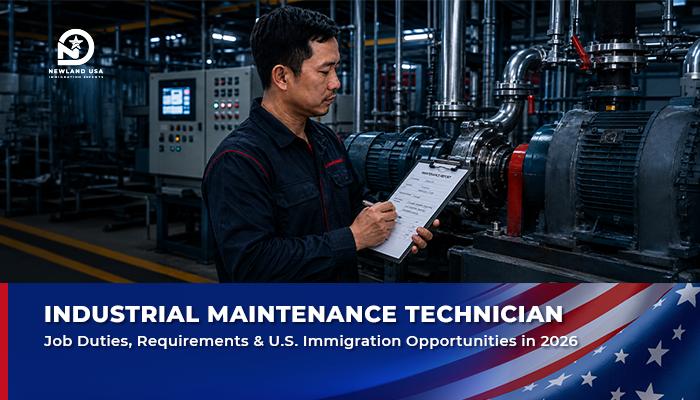
Industrial Maintenance Technician: Job Duties, Requirements & U.S. Immigration Opportunities in 2026