EB3 Skilled Workers Wait Time: Comprehensive Analysis of the Latest 2026 Movement
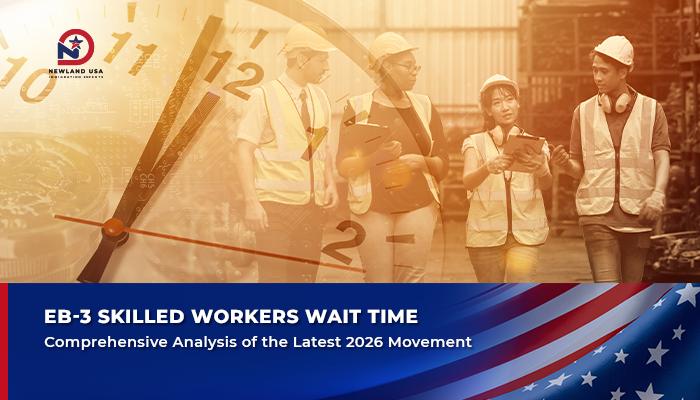
As fiscal year 2026 begins, the Visa Bulletin for the EB3 category has seen a wave of positive changes that immigration observers describe as unprecedented in recent years. Notably, in the “All Chargeability Areas” group, the priority date jumped forward by 8 months in just a single Visa Bulletin cycle. This analysis by Newland USA will break down the current EB3 wait time picture, the reasons behind this acceleration, and the opportunities that the EB3 Skilled Workers 2026 program is opening up for Vietnamese workers who are pursuing the American dream of permanent residency.
1. Overview of the EB3 Skilled Workers 2026 Category and How the Visa Bulletin Works
The EB3 Visa is the most common immigration pathway for international workers. Under the U.S. Immigration and Nationality Act (INA), each fiscal year the U.S. Department of State allocates approximately 40,000 permanent residency Visas to the EB3 category, divided equally among three groups: Skilled Workers, Professionals, and Other Workers. For the EB3 Skilled Workers 2026 program, applicants must demonstrate at least two years of work experience or specialized training related to the position sponsored by a U.S. employer.
Case processing time depends heavily on the EB3 wait time as published in the monthly Visa Bulletin. The bulletin includes two main charts: Final Action Dates (the cutoff priority date for Visa issuance or permanent residency approval) and Dates for Filing (the date when applicants are allowed to submit their adjustment of status applications). When an applicant’s personal priority date falls before the date listed on the chart, their case becomes “current” — meaning it’s their turn to be processed. That’s why every time the Visa Bulletin moves forward by even a few months, it means thousands of workers can move closer to receiving their green card.
2. The Breakthrough Journey of EB3 Skilled Workers Wait Time from Mid-2025 to 2026
To fully appreciate the speed of this acceleration, it helps to look at the context before it happened. For most of fiscal year 2025, the Final Action Date for the EB3 “Rest of World” group had been largely stagnant. By August 2025, it was still stuck at April 1, 2023, meaning Vietnamese workers had to wait nearly two and a half years from the time their PERM application was filed until a Visa became available.
The picture started brightening in the early months of fiscal year 2026. Here’s what happened:
- February 2026: The EB3 priority date moved slightly from April 22, 2023, to June 1, 2023.
- March 2026: The Visa Bulletin was called a “major leap” by immigration attorneys — the EB3 category reduced the EB3 skilled workers wait time by 2 to 17 months depending on the country.
- April 2026: A spectacular breakthrough occurred when the EB3 priority date jumped from October 1, 2023, straight to June 1, 2024 — an eight-month leap in a single cycle.
- May 2026: The U.S. Department of State kept the date at June 1, 2024, for EB3 Skilled Workers under the Rest of World category, holding steady on the gains from the previous month.
In other words, in just about nine months, the EB3 wait time for countries including Vietnam has been significantly reduced — from a backlog of nearly three years down to roughly two years. This is a shift that many experts consider a golden signal for the Southeast Asian workforce looking to settle in the U.S. through the skilled employment pathway.

3. Why Is the EB3 Skilled Workers Category Speeding Up in 2026?
The breakthrough in EB3 wait time is not a random event — it’s the result of several factors working together.
3.1. A Large Supply of Available Visas in the First Half of the Fiscal Year
Starting from October 2025, policies restricting immigrant Visa issuance to certain countries under Presidential Executive Orders led to a drop in the number of Visas issued at U.S. consulates abroad. As a result, the annual quota — about 140,000 employment-based Visas — was not consumed as quickly as in previous cycles. The U.S. Department of State took advantage of this surplus to push priority dates forward aggressively, opening up more opportunities for applicants living in the U.S. to file adjustment of status applications.
3.2. USCIS Actively Encouraged Adjustment of Status Filing
For six consecutive months from October 2025 to April 2026, U.S. Citizenship and Immigration Services (USCIS) chose to apply Dates for Filing for employment-based adjustment of status applications. This decision sent a clear message: USCIS was actively inviting eligible applicants to file Form I-485 early to clear the backlog. This was a key catalyst behind the EB3 skilled workers acceleration in 2026, especially for cases where PERM was filed during 2023–2024.
3.3. The Switch to Final Action Dates from May 2026 Is a Technical Move
Some people may worry when USCIS announced the switch to Final Action Dates starting May 2026. However, this is a technical regulatory move to make sure the annual quota isn’t used up too fast before the fiscal year ends on September 30, 2026. More importantly, the Final Action cutoff dates have been maintained at record-high levels.
3.4. Strong Demand for Skilled Workers in the U.S. Labor Market
The latest jobs reports show that the U.S. labor market continues to face worker shortages in manufacturing, healthcare, food services, mechanical engineering, and construction. Employers need to sponsor foreign workers to keep their operations running, and U.S. Congress is also considering several bills aimed at speeding up employment-based Visa processing. All of these big-picture factors are working together to create the most favorable environment ever for the EB3 Skilled Workers 2026 category.
4. Opportunities for Vietnamese Workers Amid Changes in the Visa Bulletin
Vietnam is classified by the U.S. Department of State under the “All Chargeability Areas Except Those Listed” group in the Visa Bulletin. Unlike China, India, or the Philippines, Vietnamese applicants fully benefit from priority date improvements for the Rest of World group. This means the actual EB3 wait time for Vietnamese cases is much shorter than for countries that have their own separate column (which are still stuck at the November 15, 2013 mark).
Notably, this acceleration is happening at the same time that many U.S. employers in industries like medical glove manufacturing, food processing, mechanical engineering, and healthcare are actively expanding their recruitment plans from Vietnam. Workers aged 22 to 45 who are healthy and motivated are standing at a very favorable moment to start their application. In other words, this is not just a financial opportunity — it’s a pathway to legal permanent residency for the entire family.

5. Forecast for the Second Half of Fiscal Year 2026
According to immigration attorneys, after the acceleration in the early part of the fiscal year, the Visa Bulletin may enter a period of stability during May, June, and July 2026. The main reason is that the U.S. Department of State needs to control the number of Visas issued to avoid exceeding the quota before the fiscal year ends on September 30, 2026. However, even without further big jumps, the June 1, 2024 mark for the EB3 “Rest of World” category is still considered the most favorable position since 2023.
A renewed acceleration is entirely possible when fiscal year 2027 officially begins in October 2026, at which point the Visa numbers are fully refreshed. Additionally, if immigration restriction executive orders are eased, a portion of surplus Visas could continue to be allocated to the EB3 Skilled Workers 2026 category, leading to stronger movement in the final months of the calendar year.
6. Recommendations for Vietnamese Applicants
Given these positive developments, applicants considering the EB3 Skilled Workers 2026 program should think about a few strategic steps.
First, start preparing your documents now. The gap between the PERM filing date and Visa availability is getting shorter by the day, so delays could mean missing out. Academic records, work experience documentation, medical exams, and police clearance certificates should all be prepared alongside your sponsoring employer’s labor certification process.
Second, choose a reputable employer and immigration consulting firm. A successful case requires close coordination between the worker, the U.S. employer, and a qualified immigration advisory team. Prioritize employers who have a track record of successfully sponsoring multiple EB3 cases and who offer transparent employment contracts that comply with U.S. Department of Labor regulations.
Third, closely monitor the monthly Visa Bulletin to stay updated on the EB3 wait time that applies to your individual case. Keeping track of Visa Bulletin trends helps applicants make timely decisions, especially when USCIS announces which chart applies each month.
Fourth, plan your finances appropriately. Participating in the EB3 program involves costs for legal fees, translation, notarization, airfare, and initial living expenses when you first arrive in the U.S. Having a clear financial plan from the start will help your family avoid stress and make the most of the settlement opportunity.
Finally, stay proactive. While the Visa Bulletin is currently moving in a favorable direction, any political changes or policy adjustments could affect the timeline. Thorough preparation and a persistent attitude are the keys to turning this opportunity into real results.

7. Conclusion
The year 2026 is painting a remarkably bright picture for the EB3 Skilled Workers Visa category. The significant reduction in EB3 wait time, combined with USCIS’s policy of encouraging early filing and the sustained demand for workers in the U.S. labor market, has created a golden moment that Vietnamese applicants rarely get. For those who have been planning to settle in America through a legitimate employment pathway, now is the ideal time to get started.
Learn more:
- What Is an EAD Card? Latest 2026 Regulations for the EB3 Category
- EB3 Immigration to the US: Can Your Spouse and Children Come Along?
- Working at Medical Glove Factories in the USA: Salary, Benefits, and EB3 Green Card Opportunities
- How Much Does EB3 Skilled Worker Immigration to the US Cost? A Complete Financial Preparation Guide from A to Z
- Retrogression: What It Is and How It Affects Your EB3 Case
News Categories



Related news

AI in Auto Repair in the U.S. 2026: How Artificial Intelligence Diagnoses Vehicle Problems Faster and More Accurately

7 Key Technologies Every Industrial Maintenance Technician in the U.S. Needs to Know in 2026

PLC & Automation Skills: A Launchpad for Maintenance Technicians in the United States in 2026

What Is the ASE Certification? Requirements, Exam Roadmap, and Its Importance for Auto Technicians in the U.S. in 2026

EB5 Capital Recovery Time: How Long It Takes and the Key Milestones

Electric Vehicle Technicians in the U.S.: The “Golden” Skills Helping Vietnamese Auto Mechanics Get Ahead of the 2026 EV Trend
US Engineering & Maintenance Labor Shortage 2026: The Driving Force Behind the EB3 Skilled Workers Visa Policy
Industrial Maintenance Technician: Job Duties, Requirements & U.S. Immigration Opportunities in 2026

Lương thợ sửa xe tại Mỹ: Cách tối ưu giờ công để nhân đôi thu nhập năm 2026