Common Mistakes That May Cause Your EB3 U.S. Immigration Application in the Medical Gloves Manufacturing Industry to Be Rejected
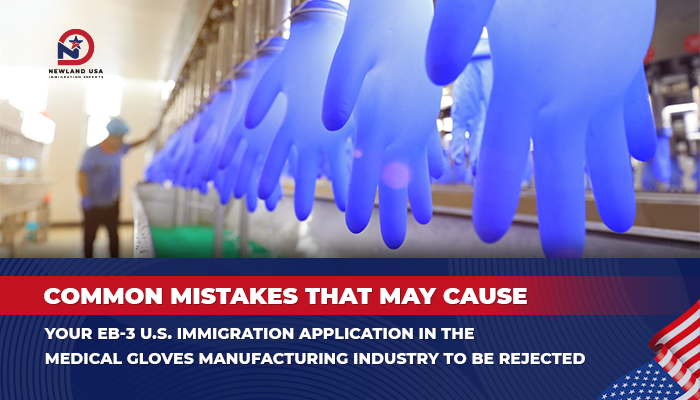
U.S. immigration through the EB3 visa program in the medical gloves manufacturing industry is becoming a popular trend among Vietnamese workers. However, many EB3 immigration applications are delayed or rejected due to unfortunate mistakes during the application preparation process. This article by Newland USA will analyze in detail the most common errors that cause visa applications to be rejected, along with solutions to maximize your chances of success when participating in the EB3 U.S. immigration program in the medical gloves manufacturing field.
1. Overview of the EB3 U.S. immigration program in the medical gloves industry
The EB3 U.S. immigration program is one of the most common pathways that helps foreign workers have the opportunity to build a new life in America through sponsorship from a U.S. employer. Among these opportunities, the medical gloves manufacturing industry is attracting special attention from the Vietnamese worker community thanks to its very high labor demand and requirements for skills that are not too demanding.
The EB3 visa is designed to accept three main groups of workers: skilled workers, professionals, and other workers (unskilled workers). For the medical gloves industry, most positions fall under the skilled workers group, requiring at least two years of experience or training related to manufacturing work.
The strength of this program lies in the ability to bring family members (spouse and children under 21) to receive green cards together, opening up a sustainable and long-term EB3 U.S. immigration pathway. However, the registration process is complex with many stages of strict screening from the U.S. Department of Labor (DOL), U.S. Citizenship and Immigration Services (USCIS), the National Visa Center (NVC), and the Consulate.
According to data from USCIS, the processing time for EB3 immigration applications typically ranges from 3-5 years depending on nationality and type of work. For Vietnamese people, the average waiting time can be shortened to about 2-3 years for the Skilled Workers category.
2. Seven serious mistakes that cause EB3 immigration applications to be rejected
2.1. Lack of reasonable proof of financial capacity
One of the most serious errors is that applicants cannot prove their ability to support themselves during the initial period when arriving in America. Immigration authorities evaluate the applicant’s financial situation to ensure they will not become a burden on the social welfare system.
Specifically, if you cannot provide evidence of stable income, bank statements, or legal assets, your EB3 immigration application will be flagged as suspicious. Officials may think you are hiding your actual financial status.
Solution: Prepare complete and transparent financial documents including bank statements for the most recent 6-12 months, real estate documents, and clearly explain the source of income. For workers in the medical gloves manufacturing industry, showing a stable salary at your current company also helps increase the credibility of your application.
2.2. Dishonest declarations about health and criminal records
The EB3 visa is a work visa that requires applicants to be in good health to perform the work required by the employer. If you have chronic illnesses, have undergone major surgery, or have health issues but do not fully declare them, the rejection of your EB3 immigration application is unavoidable.
Regarding criminal records, any criminal history – even minor ones – must be fully declared. Serious traffic violations, legal disputes, or security-related issues all need to be clarified. Hiding or falsely declaring information can lead to serious consequences, including permanent entry bans.
In particular, verification of criminal records is required not only in Vietnam but also in all countries where you have lived for more than 6 months since age 16. Many EB3 immigration applications are delayed due to missing documents from countries where applicants previously resided.
Solution: Conduct a comprehensive health check and honestly declare all medical issues. Prepare police clearance certificates from all countries where you have lived and consult with an immigration attorney if you have legal issues in your past.
2.3. Qualifications and experience not suitable for the position
Each position in the EB3 U.S. immigration program has specific requirements for education level and work experience. For the Skilled Workers group, you need to prove at least 2 years of experience or specialized training suitable for the job.
A common mistake is providing qualifications that are not recognized by USCIS or work experience not directly related to the registered position. In the medical gloves industry, if you have experience in industrial manufacturing, product packaging, or quality control, proving suitability for the job will be much easier.
Solution: Conduct credential evaluation through organizations recognized by USCIS, prepare complete evidence of actual work experience such as employment contracts, social insurance records, confirmation letters from former companies. For the medical gloves manufacturing industry, having certificates in occupational safety training or quality control will be important bonus points.
2.4. Employer lacks financial capacity
Not every business in America is qualified to sponsor foreign workers under the EB3 visa. Employers must prove their ability to pay the committed salary in the long term through financial reports, corporate taxes, and current number of employees.
If the company has unstable revenue or is facing financial difficulties, USCIS will reject the sponsorship application. Additionally, businesses that have been audited by the Department of Labor or USCIS will have significantly higher rejection rates.
This issue becomes more serious when some companies operate non-transparently, or are even “shell companies” that only exploit EB3 immigration applications. This is why choosing a reputable employer in the medical gloves industry is extremely important.
Solution: Work with reputable consulting companies to be connected with employers who have been verified for financial capacity and long-term commitment. Large and stable medical gloves manufacturing factories typically have a clear history of recruiting international workers.
2.5. The job position no longer exists at the time of interview
One of the most unfortunate situations occurs when, at the interview stage, the job position no longer exists. This can happen for many reasons: the company closed down, underwent organizational restructuring, or hired other employees as replacements.
The EB3 U.S. immigration process typically takes 3-5 years, during which time the company’s business situation can change completely. Some employers lack long-term commitment, only registering for sponsorship to “try out” without having specific plans for the recruitment position.
For the medical gloves manufacturing industry, this issue occurs less frequently than in other industries thanks to stable and continuous labor demand. However, choosing a large-scale factory is an important factor.
Solution: Choose an employer with a long operating history, stability, and actual recruitment needs in the medical gloves field. Maintain regular contact with the sponsoring company throughout the waiting process.
2.6. Unprofessional application with many errors
EB3 immigration applications are highly complex with hundreds of pages of documents and detailed information. Each small error can lead to a Request for Evidence (RFE), significantly extending processing time or leading to complete rejection.
Common errors include: inconsistent personal information across documents, incorrect dates, missing signatures or notarizations, inaccurate translations. In particular, employment history declarations must be consistent from Form I-140 to DS-260.
Many people don’t realize that USCIS has a very detailed information storage system. If you previously applied for another visa (study, tourism) and declared information different from your current EB3 immigration application, the system will automatically flag it and easily lead to rejection.
Solution: Work with immigration experts experienced in the EB3 program and who understand the specifics of the medical gloves manufacturing industry. Carefully check every detail before submission, ensuring all information is consistent throughout all documents.
2.7. Poor interview preparation and inconsistent answers
The interview stage at the consulate is the final and most important step in the EB3 visa application process. Many perfect EB3 immigration applications are still rejected because applicants are not well prepared for the interview round.
The most common error is answering inconsistently with the information declared in the DS-260 form. You should review the entire application before the interview, paying special attention to “yes/no” questions or requests for detailed explanations.
Avoiding, being vague, or not answering directly will make officials think you are hiding something. Instead of focusing on wanting a green card, demonstrate enthusiasm for work in the medical gloves manufacturing industry and your ability to contribute to the American economy.
Common questions include: Why did you choose to work in the medical gloves industry? Do you understand glove manufacturing work? Have you done similar work before? Who is your employer and what do they do?
Solution: Practice answering common questions, prepare mentally to be confident, review all declared information, and maintain an honest, open attitude throughout the interview. Learn thoroughly about the medical gloves manufacturing factory where you will work so you can answer in detail about the work environment.

3. Characteristics of the medical gloves industry in the EB3 program
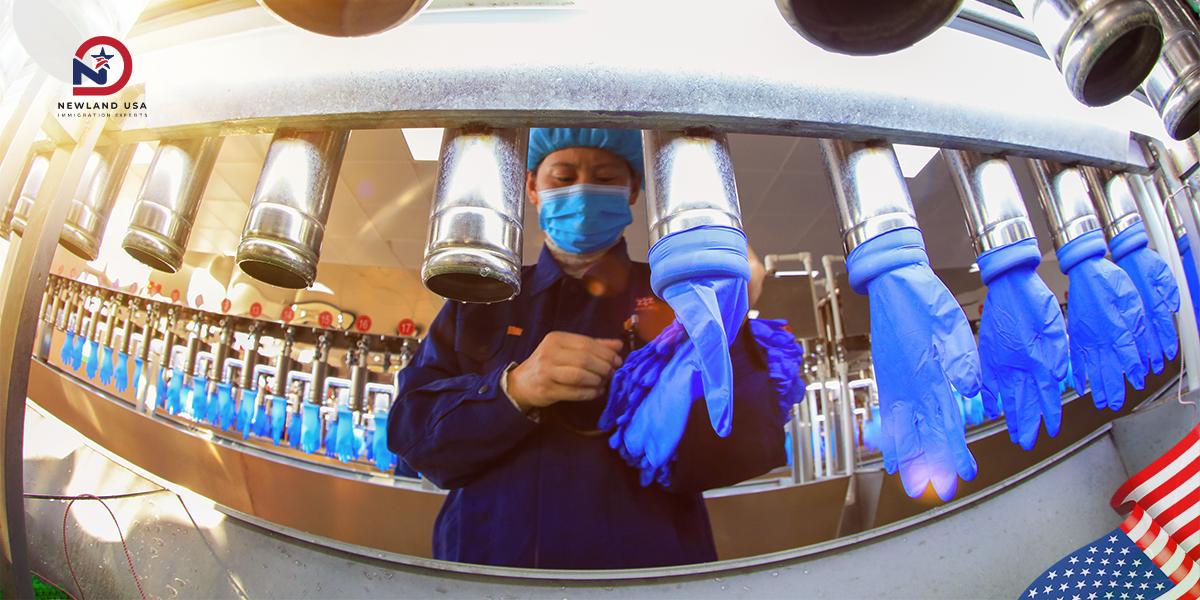
The medical gloves industry is currently one of the fields with high recruitment demand in America, especially after the COVID-19 pandemic when demand for medical equipment increased dramatically. Medical gloves manufacturing factories in the US typically recruit workers for positions such as: operating production machinery, checking product quality, packaging and shipping.
The special feature of this industry is that skill requirements are not too high but require meticulousness, diligence, and the ability to work in an industrial manufacturing environment. Most positions fall under the Skilled Workers group of the EB3 U.S. immigration program.
The average salary for workers in the medical gloves manufacturing industry ranges from $20-29/hour depending on experience and specific position. This is a sufficient salary to ensure a stable life in America, especially when employers typically support part of medical costs and insurance.
Large factories typically have internal training programs for new employees, helping workers quickly adapt to production processes and strict quality standards of the medical industry. This makes EB3 immigration applications in this field more attractive to general workers.
4. Comprehensive solutions to avoid mistakes
For your EB3 immigration application to have the highest chance of success in the medical gloves industry, you need to follow these principles:
First, work with a reputable immigration consulting company experienced in the EB3 program and who understands the specifics of the medical gloves manufacturing industry. They will help you check every detail in your application, ensuring there are no errors and information is consistent.
Second, prepare transparent and complete financial documents. This not only helps increase the credibility of your application but also proves you have the ability to be self-sufficient in the initial period when arriving in America.
Third, choose a reputable employer with a long operating history in the medical gloves industry. Check whether the company has sufficient financial capacity for sponsorship, and whether they have a successful history of recruiting international workers.
Fourth, honestly declare all information about health and background. Hiding information only makes the situation worse when discovered. If you have medical or legal issues in the past, consult with an attorney to find a reasonable solution.
Fifth, prepare thoroughly for the interview. Learn about the factory where you will work, practice answering common questions, and maintain a confident, honest attitude throughout the process.
Sixth, maintain regular contact with the employer throughout the waiting process. This helps you understand the company’s situation and ensures the job position still exists when it’s time for the interview.
5. Newland USA’s role in the immigration journey
Newland USA is proud to be a pioneering unit in the field of EB3 U.S. immigration consulting, especially in industries such as medical gloves manufacturing. With a team of experienced experts and a network of reputable employers in America, we are committed to accompanying you from application preparation until you receive your green card.
Newland USA fully understands the difficulties and risks that applicants may encounter during the EB3 immigration application submission process. We provide comprehensive consulting services including: initial application evaluation, connecting with suitable employers in the medical gloves industry, document preparation support, and interview practice.
In particular, Newland USA has close relationships with large medical gloves manufacturing factories in the US, ensuring applicants are connected with employers who have strong financial capacity and long-term commitment. We also provide application progress tracking services and update the latest information from USCIS.
Conclusion
Avoiding common mistakes in EB3 immigration applications is the key to increasing your chances of success on the EB3 U.S. immigration journey through the medical gloves industry. From proving financial capacity, preparing suitable qualifications, choosing a reputable employer, to practicing for interviews – each step requires caution and professionalism.
The medical gloves manufacturing industry offers excellent opportunities for Vietnamese workers who want to build a new life in America. With thorough preparation and support from reputable consulting units, the American dream can completely become reality.
Newland USA, with the motto “Safe Immigration – Lifelong Prosperity,” is ready to advise and support you in preparing your application as well as accompanying you throughout the EB3 U.S. immigration process through the medical gloves industry. Contact Newland USA now via hotline 0785591988 or email: newsletter@newlandusa.asia for detailed and free consultation.
Learn more:
- Overview of Medical Glove Manufacturing Work in the US under the EB3 Immigration Program
- Important Immigration Terms in the EB3 US Immigration Application
- Going to the US under EB3 for Medical Glove Manufacturing: Attractive Job Opportunity for Vietnamese Workers
- Does the automotive repair profession through EB3 U.S. immigration require English? Important notes when using English in this industry
- Auto Repair Technician Shortage in the U.S.: A Golden Opportunity for EB3 Green Card Applicants
News Categories


Related news
Who Is the ESTA Program For? How to Assess Your Fit Before Applying in 2026

Who Is the ESTA Program For? How to Assess Your Fit Before Applying in 2026

From Motorcycle Mechanic to Automotive Technician in the U.S.: Skills and Qualifications to Prepare in 2026
AI in Auto Repair in the U.S. 2026: How Artificial Intelligence Diagnoses Vehicle Problems Faster and More Accurately
7 Key Technologies Every Industrial Maintenance Technician in the U.S. Needs to Know in 2026
PLC & Automation Skills: A Launchpad for Maintenance Technicians in the United States in 2026
What Is the ASE Certification? Requirements, Exam Roadmap, and Its Importance for Auto Technicians in the U.S. in 2026

EB5 Capital Recovery Time: How Long It Takes and the Key Milestones
Electric Vehicle Technicians in the U.S.: The “Golden” Skills Helping Vietnamese Auto Mechanics Get Ahead of the 2026 EV Trend