Overview of Medical Glove Manufacturing Work in the US under the EB3 Immigration Program
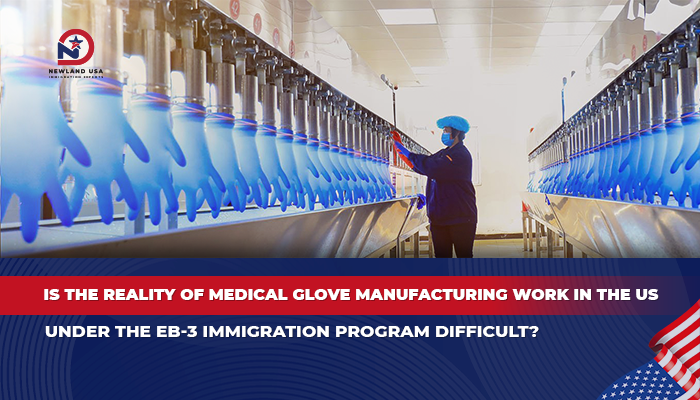
Many Vietnamese workers are interested in the opportunity for US EB3 immigration through medical glove manufacturing positions. However, the question remains: is this work really as difficult as many people worry? This article from Newland USA will provide a detailed analysis of the reality of working at medical glove factories in the US, the work environment, job intensity, and real experiences from those who have gone before to help you gain an objective and comprehensive view.
1. Medical Gloves and Their Important Role in Modern Healthcare
Medical gloves are one of the essential products indispensable in the global healthcare system. These are specialized personal protective equipment manufactured from premium materials such as natural latex rubber, nitrile, or vinyl, designed to protect healthcare workers’ hands from harmful agents like bacteria, viruses, and toxic chemicals.
The medical glove market in the US has enormous demand, especially after the COVID-19 pandemic when the need for personal protective equipment increased dramatically. According to reports from the Department of Health, in 2020, approximately 90% of gloves, syringes, and injection pumps used in the US were imported from Asia. This prompted the US government to invest heavily in developing domestic production with a budget of up to $1.7 billion.
This shortage of domestic supply has created wide-open job opportunities for foreign workers, including the US EB3 immigration program—a legal pathway for Vietnamese workers to both work at medical glove factories and build a long-term future settling in the land of opportunity.
2. What is the US EB3 Immigration Program?
The US EB3 immigration program (Employment-Based Third Preference) is one of the most popular employment-based immigration programs in the US. Passed by Congress in 1990, this program is designed to attract foreign workers to work for American businesses when there aren’t enough domestic workers to meet demand.
According to data from the US Citizenship and Immigration Services (USCIS), each year the program grants approximately 40,000 US EB3 immigration visas to workers worldwide. The program is divided into three groups: skilled workers, professionals, and unskilled workers.
For medical glove manufacturing positions, most Vietnamese applicants will fall under the skilled workers category. This group requires 2 years of experience or relevant qualifications in the field and working age from 18 to 55 years old.
A particularly attractive aspect of the US EB3 immigration program is that the worker’s entire family, including spouse and unmarried children under 21, are all sponsored to come to the US and receive green cards. This creates an opportunity for the whole family to settle, study, and develop in one of the world’s most developed countries.
However, the waiting time for application processing under this category can range from 3 to 7 years depending on the worker category and applicant’s nationality.
3. Medical Glove Manufacturing Process at US Factories
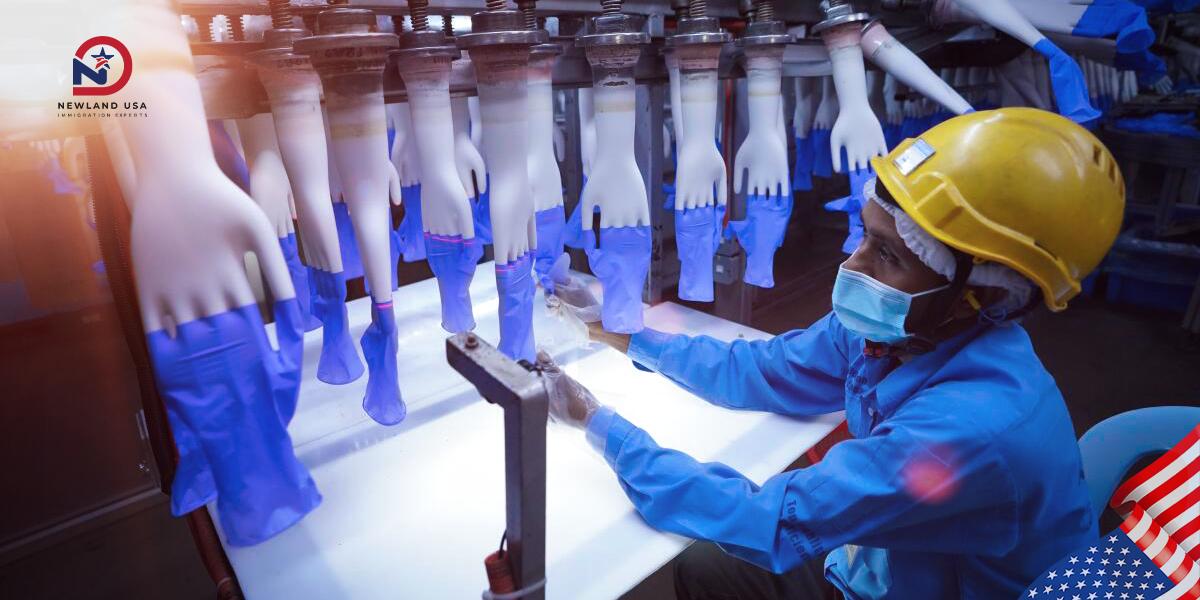
To understand clearly about working at medical glove factories, we need to learn about the manufacturing process. Currently, factories in the US are applying advanced technology and high automation, helping reduce physical labor compared to traditional factories in Asia.
The medical glove manufacturing process in the US typically includes the following main steps:
Step 1: Preparing Hand Molds
Ceramic or metal hand-shaped molds are thoroughly cleaned with hot water at approximately 70°C to remove dirt and impurities. Then the molds are spray-washed with high-pressure nozzles and placed in dryers to completely dry. Although simple, this stage is very important to ensure final product quality.
Step 2: Dipping in Coagulation Chemicals
The dried molds are dipped into a tank containing coagulation solution consisting of Calcium Carbonate, Calcium Nitrate, and wetting agents. This solution helps rubber adhere well to the mold surface and determines the thickness of medical gloves. After dipping, the molds are again passed through a dryer to dry the chemical layer.
Step 3: Dipping in Latex or Nitrile Rubber
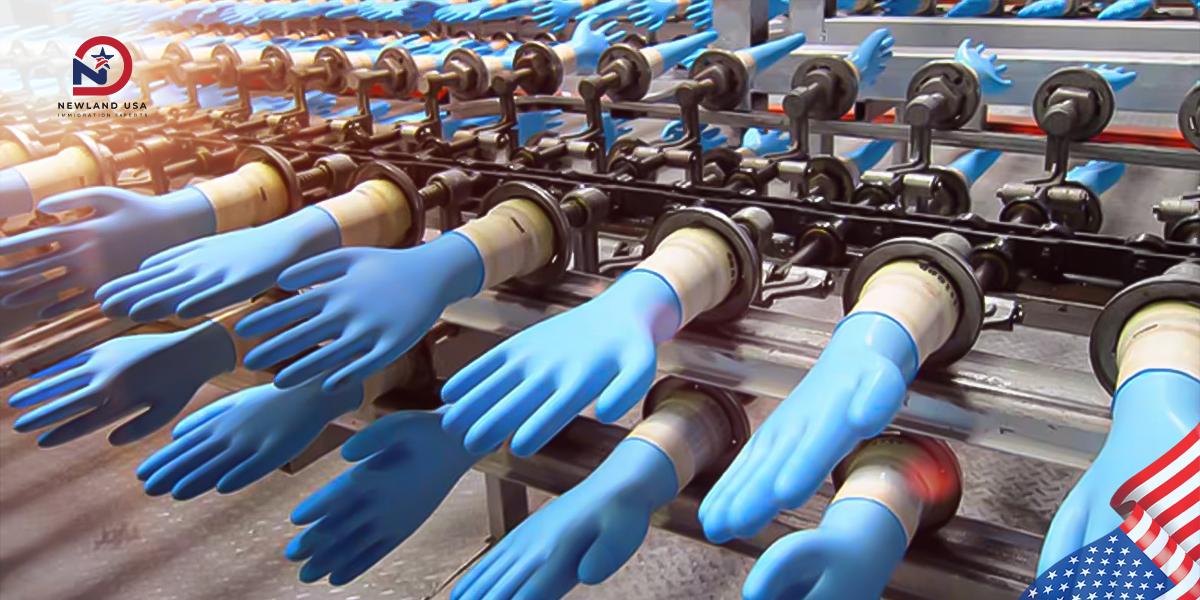
This is the most important step in the medical glove manufacturing process. Molds are immersed in a tank containing natural latex rubber or synthetic nitrile that has been diluted with standard formulas. The dipping speed, solution concentration, and soaking time will determine the weight and durability of the product. Then the molds are passed through a dryer to solidify the rubber.
Step 4: Surface Treatment and Protein Removal
Medical gloves after solidification need to be washed multiple times to remove excess protein to avoid causing allergies in users. Some premium products are also coated with polymer or chlorine-treated to increase smoothness, making them easy to put on and take off.
Step 5: Creating Rolled Cuffs and Vulcanization
The glove opening is rolled with automatic brushes to create sturdiness and ease of use. Then the product goes through a vulcanization process at strictly controlled temperature and time to fix the shape and increase durability.
Step 6: Removing Gloves, Quality Inspection, and Packaging
Medical gloves are removed from molds by automatic machinery, then undergo strict inspection steps such as water leak testing, checking thickness, tensile strength, and impermeability. Only products meeting standards are counted, classified, and packaged in boxes of 100 or 200 pieces depending on requirements.
4. The Reality of Working at Medical Glove Factories in the US
Many Vietnamese workers worry that medical glove manufacturing work in the US under US EB3 immigration will be very difficult and laborious. However, reality shows that the working environment at modern factories in the US has many bright spots compared to expectations.
4.1. Strictly Controlled Work Environment
Medical glove manufacturing factories in the US are all designed to modern standards with air conditioning systems, good ventilation, and adequate lighting. Temperature in the workshop is maintained stable around 20-25°C, creating comfortable working conditions.
These factories all strictly comply with safety regulations from the US Department of Labor (DOL) and are inspected regularly. Workers are fully equipped with personal protective equipment such as masks, gloves, protective clothing, and are trained on workplace safety from day one.
4.2. Work Intensity and Shifts
Workers at medical glove factories typically work 8 hours per day in shifts, with three rotating shifts: morning shift (6am-2pm), afternoon shift (2pm-10pm), and night shift (10pm-6am). Work schedules are arranged in advance and stable, helping workers easily arrange personal plans.
Work mainly includes: operating machinery, monitoring automated production lines, inspecting product quality, packaging, and transporting goods within the factory. Thanks to high automation levels, workers don’t have to do overly laborious work like heavy lifting or standing continuously for 8 hours.
According to sharing from workers currently working at medical glove factories, they are typically rotated between different positions during the day to avoid fatigue and muscle tension. Additionally, each shift has 2 breaks of 15 minutes and 1 lunch break of 30-45 minutes.
4.3. Salary and Benefits
Salary for medical glove manufacturing workers in the US under US EB3 immigration typically ranges from $40,000 to $58,000 per year, equivalent to about $20-29 per hour. While not extremely high compared to the general level in the US, it’s sufficient to cover basic living expenses for a small family, especially if both husband and wife work.
In addition to base salary, workers also receive benefits such as: health insurance, unemployment insurance, workers’ compensation insurance, paid leave (typically 10-15 days per year), holidays according to state and federal regulations. If working overtime, workers are paid 1.5 times the regular hourly rate.
4.4. Comparison with Other EB3 Jobs
When compared with other jobs in the US EB3 immigration program such as livestock and poultry slaughtering, working in slaughterhouses, or construction workers, medical glove manufacturing work is rated as much lighter and less strenuous.
The environment at medical glove factories is clean, without unpleasant odors, temperature is well-controlled, no exposure to blood or animal tissue. The work also has less risk of injury compared to construction or operating heavy machinery.
Many workers share that after about 2-3 months of getting used to it, they have completely adapted to the work pace and feel much more comfortable than their initial worries.
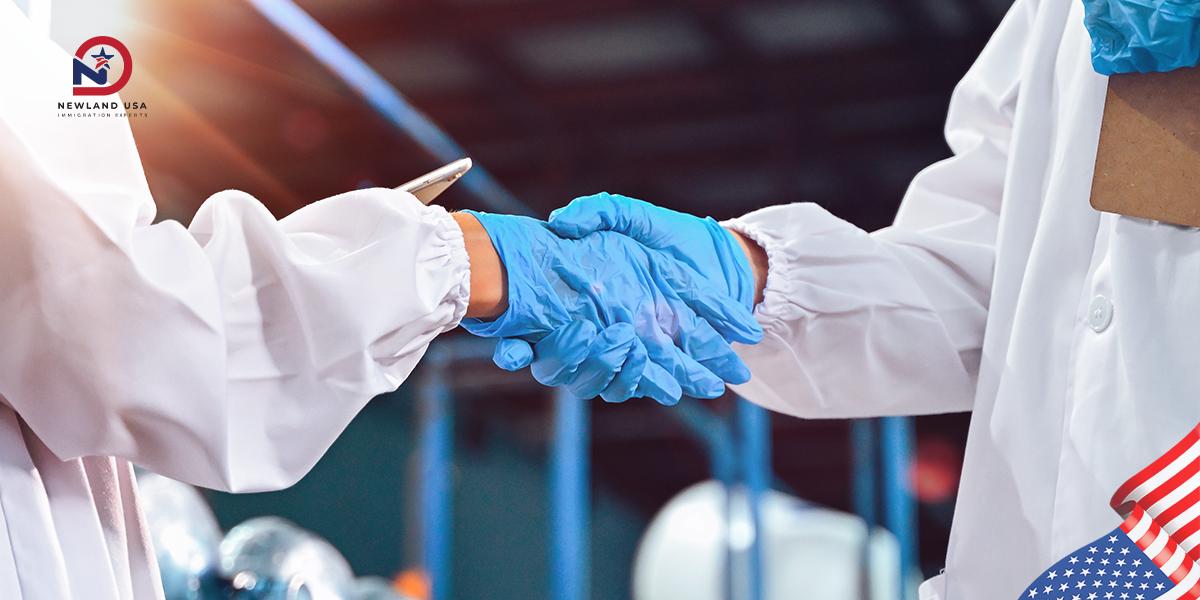
5. Challenges When Working at Medical Glove Factories under US EB3 Immigration
Although medical glove manufacturing work has many advantages, workers still need to be aware of some challenges they may encounter:
5.1. Language Barrier
English is the main language for communication in the workplace. Although companies typically have instructions with images and videos, communicating with colleagues and management still requires basic English proficiency. Workers should equip themselves with conversational English knowledge before coming to the US to integrate faster.
5.2. Different Work Culture
Work culture in the US emphasizes professionalism, punctuality, following procedures, and personal responsibility. Workers need to adapt to working independently, proactively reporting issues, and not being afraid to ask questions when unclear. This may be very different from work habits in Vietnam.
5.3. Pressure to Adapt to New Environment
Moving from Vietnam to the US is not just changing jobs but also adapting to climate, cuisine, lifestyle, and being far from family. Especially, many medical glove manufacturing factories are located in small cities or rural areas where the Vietnamese community isn’t dense, which can make workers feel lonely in the beginning.
5.4. Labor Contract Constraints
According to US EB3 immigration program regulations, workers must work for the sponsoring employer for a minimum of 1 year from receiving the green card. If changing jobs or employers before the deadline, workers may face risks regarding immigration status and must explain to USCIS.
5.5. Cost of Living in the US
Although salary is sufficient, the cost of living in the US is quite high, especially rent, transportation, insurance, and food. In the beginning, workers need to live frugally and manage finances carefully to both make ends meet and be able to send money to Vietnam or save for the future.
6. Experience and Advice from Those Who Went Before
Through conversations with many Vietnamese workers currently working at medical glove factories in the US under US EB3 immigration, there are some valuable experiences you should know:
6.1. Prepare English Before Going
Invest time learning basic conversational English, especially terminology related to manufacturing work, workplace safety, and daily communication. This will help you integrate faster and be more confident at work.
6.2. Research the Employer Thoroughly
Before signing a contract, research the sponsoring company thoroughly, their reputation, factory location, working conditions, and reviews from those who have worked there. This helps you avoid risks with disreputable employers.
6.3. Prepare Emergency Finances
In addition to application costs, you should have additional reserve funds of about $5,000-10,000 to cover living expenses in the first 3-6 months in the US, before receiving stable salary.
6.4. Build a Support Network
Seek out and connect with the Vietnamese community in the local area where you’ll be working. They can help you with housing, transportation, shopping, and introduce necessary services. Community support will help you overcome the initial difficult period.
6.5. Maintain Positive Attitude and Patience
The process of adapting to new life and work always takes time. Maintain a positive attitude, be patient, and don’t be discouraged by difficulties. Many people have succeeded and built stable lives in the US after 2-3 years of work.
7. Conclusion
So is medical glove manufacturing work in the US under US EB3 immigration difficult? The answer is: not as difficult as many people worry, especially when compared to other general labor jobs. With a modern, safe work environment, high automation level, and guaranteed benefits, working at medical glove factories is a reasonable choice for those who want to immigrate to the US with lower costs and less stringent conditions.
The important thing is that you need thorough preparation mentally, financially, and skill-wise, while carefully researching the US EB3 immigration program to make decisions suitable for your family’s current conditions. If you have good health, a learning spirit, and are willing to adapt, the immigration path through medical glove manufacturing is completely feasible and opens up many development opportunities for the whole family.
Newland USA, with an experienced team of experts and the motto “Secure Settlement—Lifelong Prosperity,” is ready to advise and support in preparing documents and accompanying customers throughout the US EB3 immigration process. Contact Newland USA immediately via hotline 0785591988 or email: newsletter@newlandusa.asia for detailed and free consultation.
Learn more:
- Important Immigration Terms in the EB3 US Immigration Application
- Going to the US under EB3 for Medical Glove Manufacturing: Attractive Job Opportunity for Vietnamese Workers
- Does the automotive repair profession through EB3 U.S. immigration require English? Important notes when using English in this industry
- Auto Repair Technician Shortage in the U.S.: A Golden Opportunity for EB3 Green Card Applicants
News Categories



Related news
Who Is the ESTA Program For? How to Assess Your Fit Before Applying in 2026

Who Is the ESTA Program For? How to Assess Your Fit Before Applying in 2026

From Motorcycle Mechanic to Automotive Technician in the U.S.: Skills and Qualifications to Prepare in 2026
AI in Auto Repair in the U.S. 2026: How Artificial Intelligence Diagnoses Vehicle Problems Faster and More Accurately
7 Key Technologies Every Industrial Maintenance Technician in the U.S. Needs to Know in 2026
PLC & Automation Skills: A Launchpad for Maintenance Technicians in the United States in 2026
What Is the ASE Certification? Requirements, Exam Roadmap, and Its Importance for Auto Technicians in the U.S. in 2026

EB5 Capital Recovery Time: How Long It Takes and the Key Milestones
Electric Vehicle Technicians in the U.S.: The “Golden” Skills Helping Vietnamese Auto Mechanics Get Ahead of the 2026 EV Trend