A Guide to Using Public Transportation in the USA for Newcomers
When you first arrive in the US, getting familiar with the public transportation system is one of the first challenges that immigrants need to tackle. Unlike many other countries, public transportation in the US has unique characteristics that vary by region. This article from Newland USA will provide detailed guidance to help you confidently use various forms of transportation, from buses to subways, to start your new life as smoothly as possible.
1. Overview of the Transportation System in the US
The transportation system in the US differs significantly from countries in Asia and Europe. Due to the vast land area and long distances between locations, personal vehicles like cars are more popular. However, in major cities such as New York, Chicago, Boston, San Francisco, and Washington D.C., public transportation systems are well-developed and become the top choice for residents.
According to statistics from the Federal Transit Administration (FTA), millions of Americans use public transportation daily. In particular, about one-third of public transit users and two-thirds of train riders live in the New York area and its suburbs. This shows the importance of public transportation in daily life in major cities.
2. Common Types of Public Transportation
2.1. Buses – Economical and Flexible Transportation
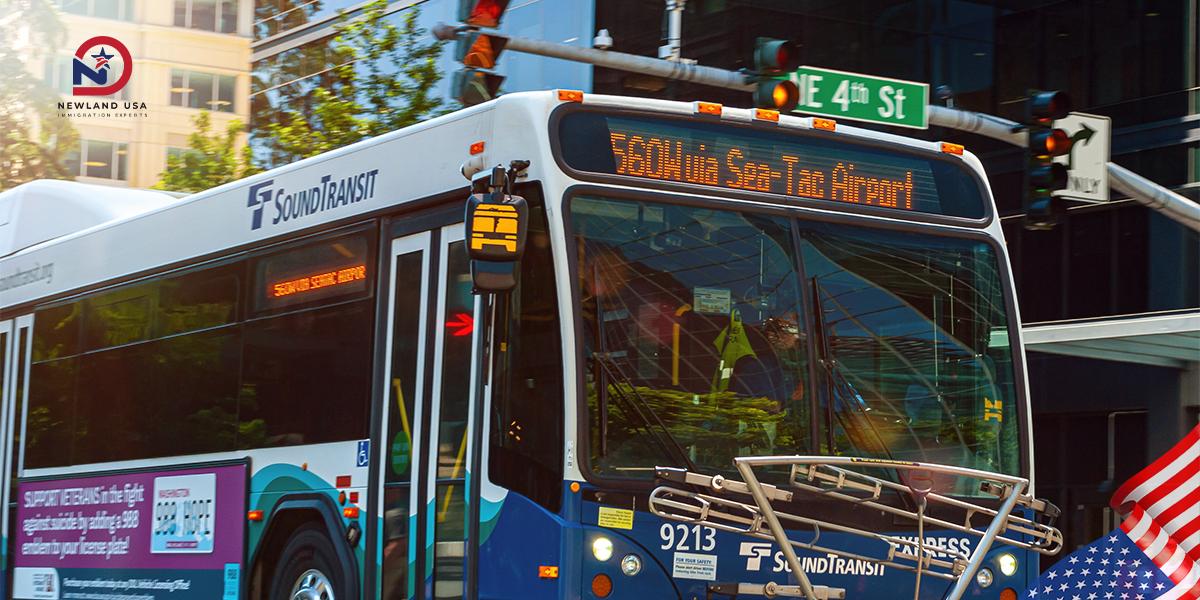
Buses are the most widely used form of public transportation in the US. Most cities, from large to small, have regular bus networks. In major cities, buses run continuously with intervals between trips ranging from 5 to 30 minutes depending on peak hours and routes.
Greyhound is the largest bus transportation company, with a network spanning across the entire US transportation system. Besides that, there are Megabus, Trailways, and Peter Pan – long-distance transportation options with competitive prices.
To use buses effectively, you should note the following points:
How to buy tickets and pay: You can buy daily tickets directly from the driver or at bus stations. However, you need to prepare exact change because most drivers cannot give change. To save costs, many systems offer weekly or monthly passes at discounted rates. Students and seniors often receive special discounts when using this transportation.
Understanding routes: Each bus has its own route number or name and always runs on a fixed schedule. You should study bus route maps online or use mobile apps to track bus arrival times. Most transit service providers publish information about schedules and routes on their official websites.
Using technology support: Google Maps is the most useful tool for navigation when using public transportation. This app provides detailed directions about routes, travel times, and stops. Many cities also have their own apps like CityMapper that help you track bus locations in real-time.
2.2. Subway – Fast Option in Urban Areas
The subway (or metro) is the fastest transportation option in major cities. New York is famous for its subway system that operates 24/7, while Boston, Chicago, and Washington D.C. also have developed subway networks. This is the ideal transportation when you need to move quickly during rush hour without worrying about traffic jams.
Fares and how to buy tickets: Subway fares range from $1.75 to $2.75 per trip depending on the city. If you use it regularly, you should buy weekly or monthly passes to save costs. Modern subway systems allow you to store transit cards on your smartphone, making payment more convenient.
How to use safely: At some stations, you need to swipe your card when entering and exiting the station area. During rush hours, subways are usually very crowded, so be mentally prepared and keep your belongings safe. Avoid riding the subway alone at night, especially at deserted stations. If you need to travel late at night, choose cars with many people or sit near security personnel.
2.3. Light Rail – Environmentally Friendly Transportation
Light Rail operates in cities like Portland, Seattle, Minneapolis, Los Angeles, Denver, and San Francisco. This is a modern public transportation system, usually traveling above ground and connecting urban areas. Light Rail is highly rated for its environmental friendliness and convenience.
Notable advantages: Many Light Rail trains are equipped with free Wi-Fi and air conditioning systems, providing comfort for passengers. Diverse stops and good connections with other transportation modes help you easily continue your journey. The cost of using this transportation is usually lower than taxis or ride-sharing services.
2.4. Commuter Rail – Connecting Suburban Areas
Commuter Rail is ideal transportation for people living in suburbs or needing to travel between neighboring cities. This system has longer routes and higher speeds compared to Light Rail. The largest Commuter Rail networks include the MTA Long Island Rail Road in the New York area, along with many other systems in Boston, Philadelphia, and other major cities.
Operating characteristics: Commuter Rail runs more frequently during rush hours (morning and evening when people commute to and from work). You can buy tickets at stations or through mobile apps, with prices varying depending on the travel distance.
2.5. High-Speed Trains – Long-Distance Travel
Amtrak is the largest railway service company in the US, operating high-speed train routes. However, this transportation is not the best choice for long-distance travel because the network is not as widely developed as buses or airplanes. High-speed train fares can be equivalent to or more expensive than airfare, but they offer a unique scenic viewing experience.
Benefits of trains: If you have travel plans and want to enjoy beautiful scenery along the way, Amtrak trains are an excellent choice. Modern equipment, comfortable seats, and spacious areas on the train make the journey pleasant. To save costs, you should book tickets early through the website www.amtrak.com, as fares are dynamic and increase over time.
3. Other Flexible Transportation Options
3.1. Bicycles and Rental Services
Bicycles are environmentally friendly and cost-effective transportation, especially suitable for short distances. In major cities like New York and Washington D.C., public bike-sharing services are very popular with brands like Citi Bike and Capital Bikeshare.
Costs and regulations: Rates range from $2-4 per hour or $20-30 per month for unlimited rental packages. When using this transportation, you need to follow traffic safety regulations: always wear a helmet (mandatory in some states), avoid riding at night, understand the laws, and remember to lock the bike when not in use to prevent theft.
3.2. Electric Scooters
Electric scooters are developing strongly in cities like Los Angeles, San Francisco, and Austin. Services like Bird and Lime allow you to rent electric scooters by the minute through mobile apps. This is convenient transportation for quick travel over short distances at reasonable costs.
3.3. Taxis and Ride-Sharing Services
Traditional taxis, especially the famous yellow cabs in New York, are still popular transportation in the US. However, the cost is much higher than public transportation. Currently, ride-sharing services like Uber and Lyft have become more convenient options thanks to easy-to-use apps and trip tracking capabilities.
How to use ride-sharing services: You just need to download the Uber or Lyft app, register an account, and link a credit card. Fares vary depending on distance and time, usually higher during rush hours. This service is suitable when there are no appropriate public transportation schedules or when you need to travel at night.

4. Guide to Using Public Transportation Effectively
4.1. Preparing Before Travel
Research routes: Before using any transportation, thoroughly research routes and operating schedules. Read information on local transit agency websites or download dedicated apps. Many universities and companies also provide detailed information about local transportation for international students and new employees.
Choose appropriate ticket types: Depending on frequency of use, you can choose single-ride tickets, day passes, weekly passes, or monthly passes. Reloadable cards are a convenient solution for people who regularly use public transportation. Many systems also offer discounts for students, seniors, and military personnel.
Use smart technology: Download support apps like Google Maps, CityMapper, or city-specific apps. These tools help you plan your journey, track real-time transportation schedules, and receive notifications about delays or route changes.
4.2. Important Safety Notes
Protect personal belongings: Always keep your belongings close to you, especially during rush hours when transportation is crowded. Avoid placing bags or wallets in easily accessible places. Use anti-theft bags with secure zippers if you’re concerned about this issue.
Choose travel times wisely: Avoid using public transportation at night, especially when traveling alone. If you must travel late at night, choose train cars or areas with many people, avoiding deserted stations. Research in advance about transportation operating hours and nighttime travel options.
Ask for help when needed: Don’t hesitate to ask for help from staff at stations or drivers. Most of them are willing to guide you to find the right transportation or route. If you can’t find staff, ask nearby passengers.
4.3. Follow Rules and Local Culture
Basic rules: Each city has its own regulations when using public transportation. For example, some vehicles require you to press a button to signal that you want to get off at the next stop.
Behavioral culture: Keep the volume low when talking on the phone, give up seats for elderly people, pregnant women, and people with disabilities. Avoid eating and drinking on transportation if regulations don’t allow it. These polite behaviors help you integrate better with the local community.
5. Comparing Transportation Costs
To help you choose transportation that fits your budget, here is information about average costs:
Public transportation: Buses and subways have fares from $1.75-$2.75 per trip. Monthly passes range from $70-$130 depending on the city. Light Rail and Commuter Rail are slightly more expensive but still very reasonable compared to personal vehicles.
Bicycles and electric scooters: Bike rental services cost about $20-$30 per month or $2-$4 per hour. Electric scooters charge by the minute, usually $1 to start plus $0.15-$0.40 per minute of use.
Taxis and ride-sharing: Significantly higher costs, usually from $10-$30 for a trip within the city, depending on distance and time. This is transportation that should be used when truly necessary.
Personal cars: If you decide to buy a car, initial costs for used cars range from $5,000-$15,000, new cars start at $20,000 and up. Average car insurance is $100-$200 per month, plus fuel, maintenance, and registration costs of about $1,000-$2,000 per year.
6. Choosing Appropriate Transportation by Area
Major cities: If you live in New York, Chicago, Boston, San Francisco, or Washington D.C., public transportation is the optimal choice. The well-developed system, high frequency, and reasonable costs mean you don’t need to own a personal car.
Suburban areas: In suburban areas or small cities, public transportation may operate on a limited basis. In this case, you should consider buying a personal car, renting a car, or finding carpool services to save costs.
Rural areas: In rural areas, public transportation is very rare or doesn’t exist. Owning a personal car and having a driver’s license becomes necessary to ensure daily mobility.
7. Conclusion
Getting familiar with the public transportation system in the US may initially be challenging, but with thorough preparation and necessary knowledge, you will quickly become more confident when traveling. From buses, subways, Light Rail to Commuter Rail, each transportation option has its own advantages suitable for different needs.
Remember to take advantage of technology, thoroughly research routes, choose appropriate ticket types, and always pay attention to safety when using transportation. With gradually accumulated experience, using public transportation will become a natural part of your new life in the US.
At Newland USA, we not only provide US immigration services but also support customers in their journey of cultural integration in this new country. If you need more information, please contact Newland USA immediately via hotline 0785591988 or email: newsletter@newlandusa.asia for detailed and free consultation.
Learn more:
- New Standards from USCIS in 2025 for US Immigration Record Photos
- Important Immigration Terms in the EB3 US Immigration Application
- Diseases That May Result in US Immigration Visa Rejection According to the Latest 2025 Guidelines
- EB3 Visa: Legal US Immigration Opportunities for Vietnamese Workers 2025
- US Immigration EB3, EB1C and EB5: Which is the Safest — Most Effective Choice for US Green Card Currently?
News Categories



Related news

From Motorcycle Mechanic to Automotive Technician in the U.S.: Skills and Qualifications to Prepare in 2026
AI in Auto Repair in the U.S. 2026: How Artificial Intelligence Diagnoses Vehicle Problems Faster and More Accurately
7 Key Technologies Every Industrial Maintenance Technician in the U.S. Needs to Know in 2026

PLC & Automation Skills: A Launchpad for Maintenance Technicians in the United States in 2026

What Is the ASE Certification? Requirements, Exam Roadmap, and Its Importance for Auto Technicians in the U.S. in 2026
EB5 Capital Recovery Time: How Long It Takes and the Key Milestones
Electric Vehicle Technicians in the U.S.: The “Golden” Skills Helping Vietnamese Auto Mechanics Get Ahead of the 2026 EV Trend
US Engineering & Maintenance Labor Shortage 2026: The Driving Force Behind the EB3 Skilled Workers Visa Policy
Industrial Maintenance Technician: Job Duties, Requirements & U.S. Immigration Opportunities in 2026