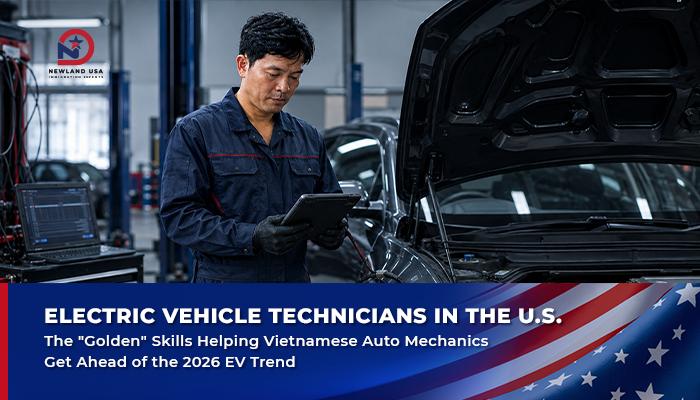
Electric Vehicle Technicians in the U.S.: The “Golden” Skills Helping Vietnamese Auto Mechanics Get Ahead of the 2026 EV Trend
The U.S. auto industry is entering a transition period, moving from internal combustion engines to electric vehicles, and this shift is creating a significant workforce gap in the position of EV technician in the U.S. While the number of electric vehicles on the road is rising quickly, the number of technicians qualified to service them remains very limited. For Vietnamese auto mechanics who already have hands-on skills, this is a good time to add electric vehicle repair skills and consider the path to settling in the U.S. through the EB3 auto technician category. The article below from Newland USA will break down the demand for EV technicians in the U.S., the core skills needed, professional certifications, income levels, and the steps to prepare in order to get ahead of the 2026 EV trend.
1. Who is an EV technician in the U.S. and what do they do?
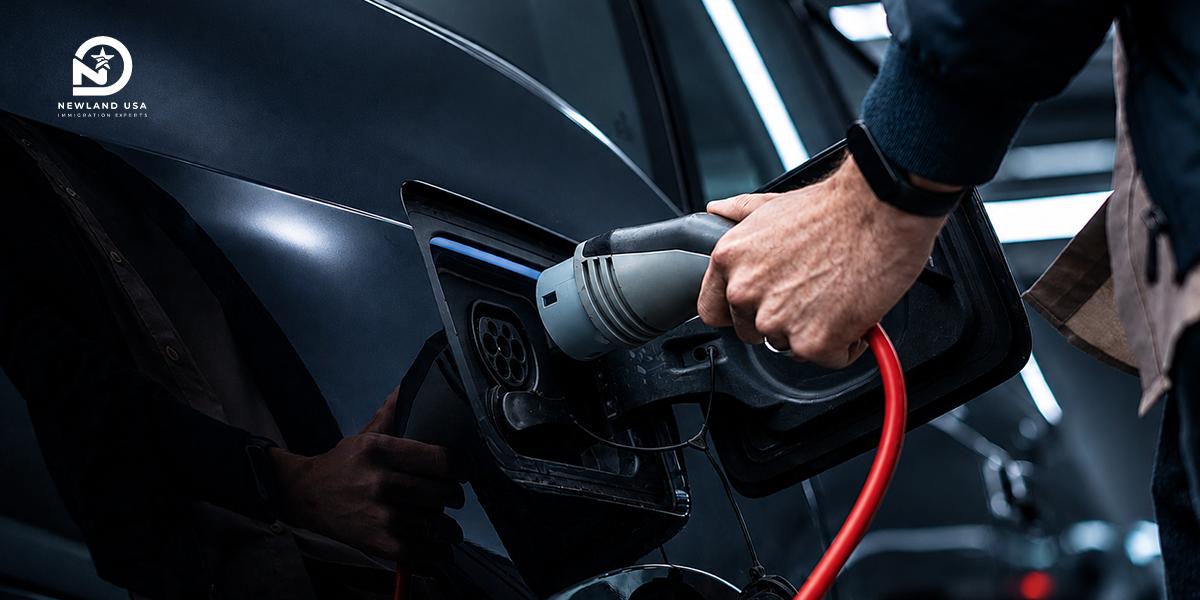
An EV technician in the U.S. is someone who specializes in diagnosing, maintaining, and repairing the systems in electric vehicles (EVs) and hybrid vehicles — especially the high-voltage battery, the battery management system (BMS), the electric motor, and the control software. Unlike traditional mechanics who are used to working with oil and combustion engines, the work of an EV technician in the U.S. leans heavily toward electrical/electronic systems and software data.
A simple way to picture it: this job is part mechanic, part electrician, and partly plays the role of a software engineer. The diagnostic laptop becomes just as important as a wrench, and high-voltage safety procedures are considered the most essential “tool” of all. EV technicians deal with fewer moving mechanical parts than a typical auto mechanic, and instead focus on electrical components, battery diagnostics, thermal management systems, and software-based troubleshooting. That said, a basic mechanical foundation is still necessary, since the suspension, brakes, tires, and air conditioning on an EV still need to be checked regularly.
This difference is exactly what makes EV repair technicians a distinct professional group, one that requires specialized training rather than relying solely on traditional auto repair experience.
2. Demand for EV technicians in the U.S.: the numbers speak for themselves
To understand why this position is in such high demand, it helps to look at the market data. Demand for EV technicians in the U.S. is being pushed up by both the growth rate of electric vehicles and a shortage of skilled labor.
In terms of EV market size: EV sales in the U.S. hit a record 1.3 million units in 2024, accounting for 8.1% of total vehicle sales — yet only about 1.4% of ASE-certified technicians are able to service this type of vehicle. Out of more than 229,000 technicians certified by the National Institute for Automotive Service Excellence (ASE), only around 3,100 hold a certification specific to electric vehicles. This figure reveals a very large gap between the number of vehicles that need servicing and the number of technicians qualified to do it.
As for overall industry hiring demand: according to the U.S. Bureau of Labor Statistics (BLS), the auto service technician profession is expected to add around 70,000 new openings per year through 2034, with job growth of about 4% and a total workforce of around 805,600 people. The median salary for this group was $49,670 per year as of 2024. For the EV segment specifically, income levels are higher: the average salary for an EV technician in the U.S. is around $65,000, growing at roughly 7% per year, and the supply of technicians is not keeping pace with demand.
On the manufacturing side, the trend is similar. A Center for Automotive Research survey on the battery manufacturing workforce found that companies expect to increase hiring by more than 20% in 2026, with strong demand for engineers, technicians, and assembly workers. Taken together, demand for EV technicians in the U.S. is not a short-term wave but a trend that will continue for years to come.
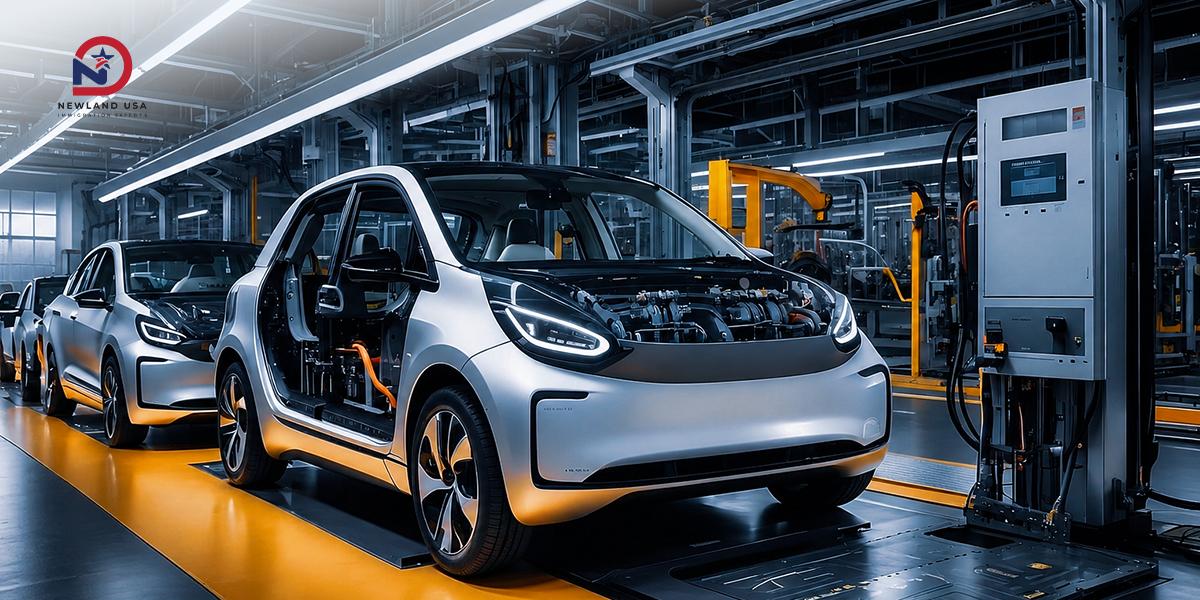
3. Why is the market “thirsty” for EV technicians in the U.S.?
There are four main reasons why demand for EV technicians in the U.S. is rising and why it’s difficult to fill these roles in the short term.
First is an aging workforce. Many experienced mechanics are reaching retirement age, while fewer young people are entering the traditional trade. The U.S. auto industry needs tens of thousands of new technicians every year, retirement rates are climbing, and fewer and fewer young workers are pursuing vocational training in this field.
Second is rising technical complexity. Modern vehicles are equipped with hundreds of electronic control units, sensors, cameras, and software systems, which means technicians now need advanced diagnostic skills rather than just knowing how to tighten bolts. Electric vehicles push this requirement to a new level with their high-voltage systems.
Third is the expansion of charging infrastructure, which drives demand for technicians who can maintain charging stations and DC fast chargers (DCFC). Fourth is simply the growing number of EVs on the road, while the share of EV-certified technicians remains very low. This gap is exactly the opportunity for skilled foreign workers, and it’s why an EV technician in the U.S. is now seen as a profession facing a serious labor shortage. For Vietnamese mechanics, this is the key point: the market isn’t short on work — it’s short on people with the right skills.
4. Electric vehicle repair skills: the “golden” skills you need
To become an EV technician in the U.S., a mechanic needs to master the following group of electric vehicle repair skills.
High-voltage safety. This is the first and most important skill. Electric vehicles operate at voltages that can exceed 400 volts, so technicians must know how to identify, de-energize, and isolate high-voltage components before working on them. The risk here is real: the National Highway Traffic Safety Administration (NHTSA) estimates that nearly half of technician injuries during EV repair come from improperly handling high-voltage batteries. That’s why protective procedures and electrical isolation form the foundation of every set of electric vehicle repair skills.
Battery and battery management system (BMS) diagnostics. This is currently the highest-value skill in EV service work. Technicians learn to use diagnostic software and measurement tools to identify weak battery cells, faulty modules, cooling system problems, and BMS-related faults. When insulation resistance drops below a safe threshold, the vehicle may automatically lock charging or driving functions to protect the user — so reading and responding to these signals requires deep understanding.
Software and digital diagnostic skills. An EV technician in the U.S. spends most of their time reading data and updating software rather than doing mechanical disassembly. Electric vehicles generate a huge amount of real-time diagnostic data, unlike older vehicles that rely heavily on mechanical inspection. The toolkit is different too: digital multimeters (DMM), scan tools built specifically for EV systems, battery analyzers, and thermal cameras to detect temperature differences within the battery pack.
A traditional mechanical foundation. Something many people overlook is that electric vehicle repair skills still need to be built on top of a mechanical foundation. Suspension, brakes, tires, and the standard 12V electrical system are still present on every EV. A skilled technician is someone who can move fluidly between classic mechanical work and electrical/software diagnostics, viewing the whole vehicle as one integrated system. This is also an advantage for Vietnamese technicians, who are already skilled with the mechanical side — they simply need to add the electrical and software components to complete their set of electric vehicle repair skills.
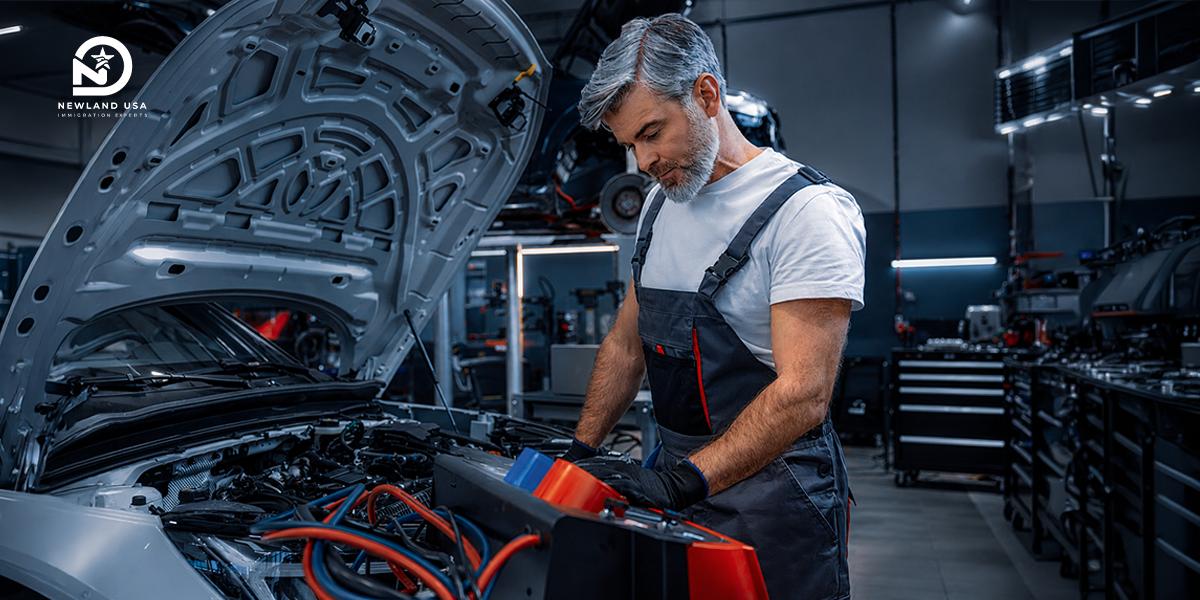
5. ASE xEV certification, income, and career path
Certification is the tool that helps an EV technician in the U.S. prove their competence to employers and increase their income. The most widely recognized certification system is issued by ASE.
ASE offers a high-voltage safety testing and certification program for electric vehicles (xEV) with two levels, both of which can be completed online. Level one (xEV Electrical Safety Awareness) is for anyone who might come into contact with an electric vehicle, including repair staff, salespeople, or support staff. Level two is for technicians who have completed high-voltage training, and requires the ability to assess battery condition, isolate high voltage, work safely on de-energized systems, and use proper protective equipment. There is also the L3 – Light Duty Hybrid/Electric Vehicle certification, which focuses on hybrid/EV diagnostics, high-voltage safety, and braking systems.
As for general ASE testing requirements: candidates need two years of relevant hands-on experience, or one year of experience plus a two-year automotive vocational degree (or an equivalent number of training hours).
Certification has a direct impact on income. Entry-level auto technicians earn around $42,000–$50,000, while entry-level EV technicians earn $45,000–$58,000; certified auto technicians earn $55,000–$70,000, while certified EV technicians earn $60,000–$75,000. Technicians holding ASE’s EV certification can earn 12–15% more, and specialized areas such as DCFC fast charging or battery diagnostics also come with significant pay premiums.
As for career advancement, this profession offers multiple paths forward. Experienced technicians can become technical trainers, service managers, or build mobile EV repair businesses as electric vehicles spread beyond major cities. In other words, an EV technician in the U.S. doesn’t have to stop at being a technician — they can advance into expert or management roles.
6. EB3 auto technician and the ESTA program: a path to settling in the U.S. for Vietnamese technicians
For Vietnamese mechanics, the key question is how to work legally and settle in the U.S. This is where the EB3 auto technician category comes into play.
EB3 is the third employment-based immigrant visa preference category, for skilled workers sponsored by a U.S. employer. The Skilled Workers group applies to positions that require at least two years of training, education, or work experience, and common occupations in this group include auto technicians, HVAC technicians, and industrial maintenance technicians, among others.
As for the process: the EB3 auto technician category requires employer sponsorship and must go through the PERM labor certification step. The employer must obtain a prevailing wage determination from the Department of Labor, carry out recruitment to demonstrate that no qualified U.S. worker is available, then file the labor certification application before submitting Form I-140 to USCIS.
Within Newland USA’s approach, this path is packaged through the ESTA – EB3 Skilled Trade America program, designed specifically for the EB3 Skilled Workers category. ESTA treats EB3 as more than just a visa — it’s viewed as a career development journey: technicians upgrade their skills to international standards while also building a stable foundation for settling in the U.S. For an EB3 auto technician moving into the EV field, this represents a combination of a profession that’s short on workers and an immigration policy that prioritizes skilled labor.
7. What do Vietnamese auto mechanics need to prepare to get ahead of the 2026 EV trend?
Based on the analysis above, Vietnamese technicians can prepare in four directions.
First is strengthening their mechanical foundation and accumulating enough years of experience, since this is the base requirement of the EB3 auto technician category. Next is proactively learning electric vehicle repair skills — especially high-voltage safety, battery/BMS diagnostics, and software data-reading skills — in order to catch up to the standard expected of an EV technician in the U.S. Third is improving industry-specific English, which helps with reading technical documentation and communicating in the shop. Finally, technicians should work toward certifications recognized in the U.S. market, such as ASE xEV, while also working with a reputable immigration consulting firm to prepare their documentation properly.
Preparing early puts a technician ahead of the “growth curve” of this profession, while supply still hasn’t caught up with demand for EV technicians in the U.S. The earlier someone enters the field and earns certification, the clearer their income advantage will be before the market becomes saturated.
Conclusion
The electrification of the U.S. auto industry is opening up a long-lasting workforce gap, and demand for EV technicians in the U.S. is projected to keep growing for years to come. For Vietnamese auto mechanics, the opportunity lies in combining three things: an existing mechanical foundation, a set of electric vehicle repair skills built up to international standards, and a legal path to settling in the U.S. through the EB3 skilled auto technician category. With all three elements in place, a Vietnamese technician can absolutely become an EV technician in the U.S. with stable income and a sustainable future for settling down. The 2026 EV trend isn’t waiting — and those who prepare early will be the ones who get ahead of it.
Learn more:
- How to Negotiate Flat-Rate Pay for Auto Mechanics in the U.S. in 2026
- The Electric Vehicle (EV) Wave in the U.S. and the Retraining Challenge for EB3 Auto Mechanics
- Experience Opening an Auto Repair Shop in the USA in 2026: An A-to-Z Roadmap for Vietnamese
- Work Culture in U.S. Auto Repair Shops in 2026
News Categories



Related news
Electric Vehicle Technicians in the U.S.: The “Golden” Skills Helping Vietnamese Auto Mechanics Get Ahead of the 2026 EV Trend
US Engineering & Maintenance Labor Shortage 2026: The Driving Force Behind the EB3 Skilled Workers Visa Policy
Industrial Maintenance Technician: Job Duties, Requirements & U.S. Immigration Opportunities in 2026

Lương thợ sửa xe tại Mỹ: Cách tối ưu giờ công để nhân đôi thu nhập năm 2026
Why Must You File Your EB5 Petition Before September 30, 2026? What Is the “Grandfathering” Benefit?

Why U.S. Manufacturers Wait More Than a Year for PERM to Hire High-Skilled Workers in 2026

Skilled Labor Shortage: The Workforce Paradox Pushing the United States to “Open the Door” in 2026

Why Are U.S. Businesses “Hungry” for EB3 Skilled Workers?

2026 EB-5 Visa Adjudication Progress Update: Realistic Waiting Times for Vietnamese Investors