Standards for U.S. Visa Photos in 2025
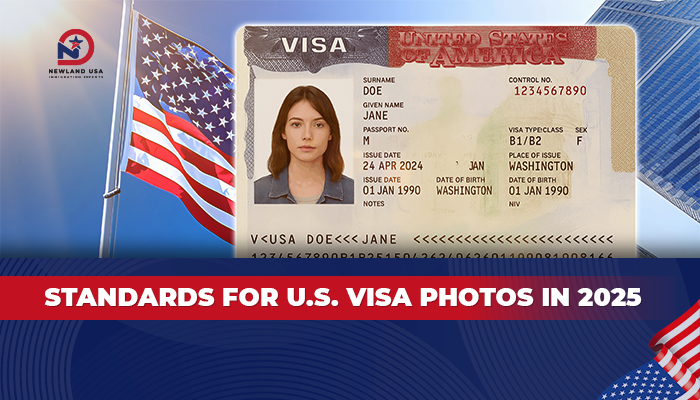
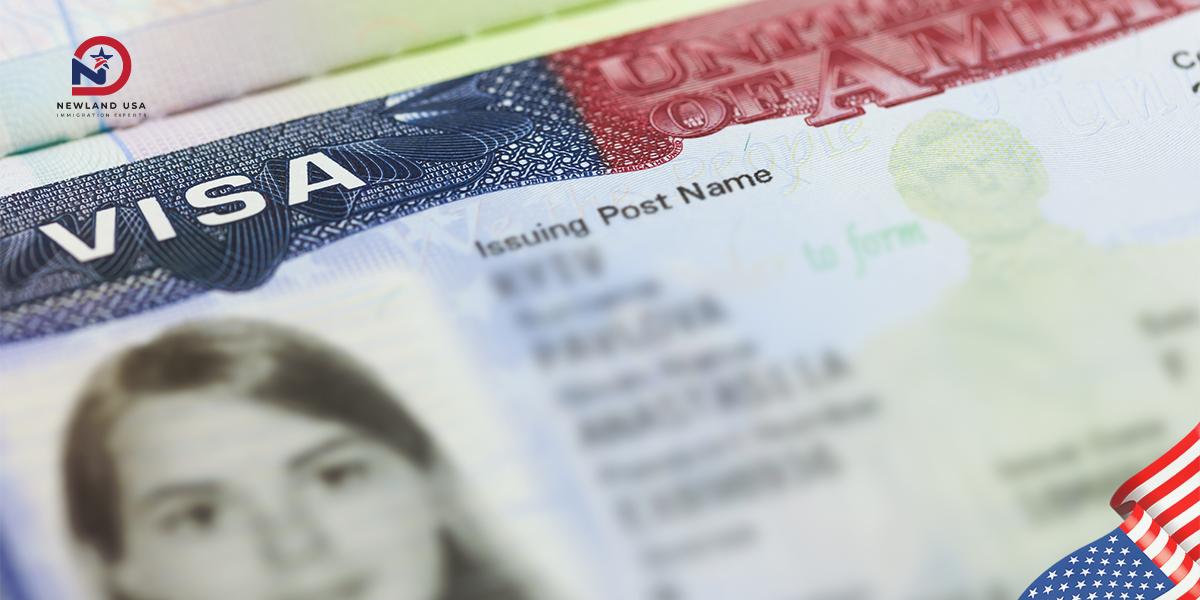
In U.S. visa applications, U.S. visa photos play an extremely important role and directly affect the approval results from consular officers. According to statistics from the U.S. Embassy in Vietnam, nearly 18% of applications in 2024 required new photos due to not meeting technical standards. This article from Newland USA provides detailed guidance on U.S. visa photo standards for 2025, helping you confidently prepare a perfect application from the very first time.
1. Why are photos important in visa applications?
When going through the U.S. visa application process, many people often underestimate the photo requirement and consider it just a minor detail in the entire application. However, the reality shows that U.S. visa application photos are an indispensable component with a decisive role in the review process.
Photos in visa applications are used for many important purposes. First, they serve to verify identity through modern biometric recognition systems. Next, photos are stored in databases to serve your future trips. Finally, security departments at entry ports will rely on these photos to conduct checks when you arrive in the United States.
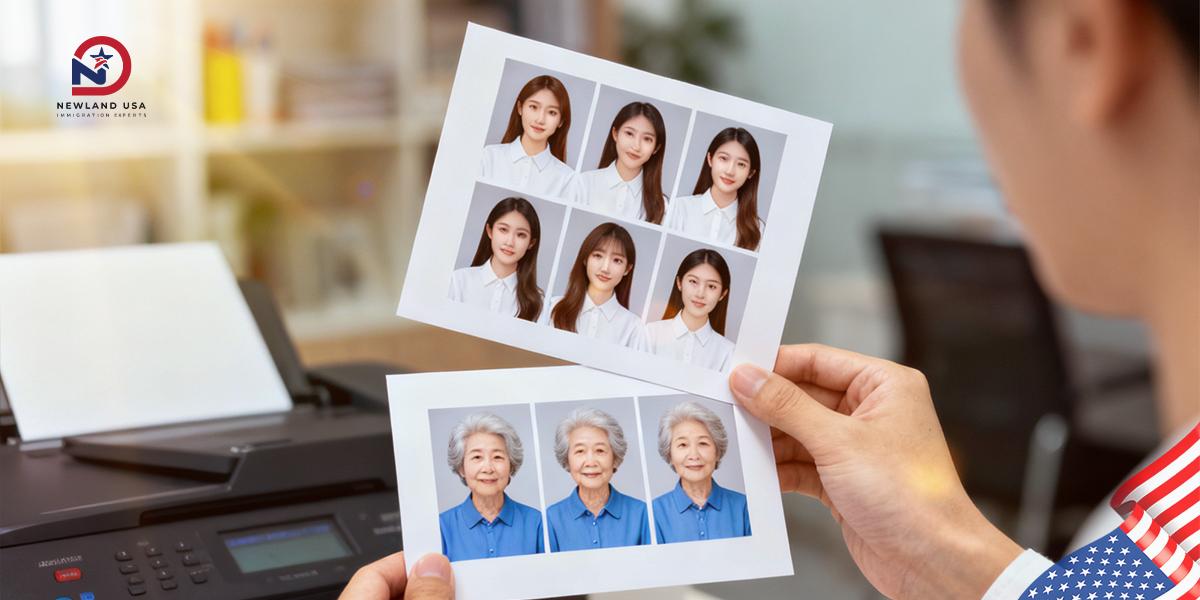
According to regulations from the U.S. Embassy in Vietnam, each U.S. visa application requires submission of two color photos with the same specifications. Personal information including full name and date of birth must be clearly written on the back of each photo.
2025 marks an important transformation as the U.S. Embassy officially implements an automated review system using artificial intelligence. This means technical standards are checked more strictly, and any small error can lead to applications being requested for supplementation or even rejection.
2. Latest updates on photo standards for 2025
The U.S. Department of State has issued several important changes effective from March 1, 2025. These adjustments aim to improve application processing quality and enhance security in the identification process.
Smart review technology: Modern artificial intelligence systems are applied to automatically analyze and evaluate technical aspects of photos. This helps shorten processing time but also requires higher accuracy from applicants.
Resolution requirements: One of the most notable changes is the minimum resolution for digital U.S. visa application photos has been upgraded. Instead of 600×600 pixels as before, the new standard requires a minimum of 720×720 pixels. The maximum resolution remains at 1200×1200 pixels.
File format and compression ratio: The system now only accepts JPEG format files with a compression ratio not exceeding 15:1. This number has decreased from the previous 20:1 level, aiming to ensure better image quality when processed through the automated system.
These adjustments reflect the modernization trend in the U.S. visa review process, while setting higher requirements for care and professionalism when preparing applications.
3. Precise technical specifications for U.S. Visa photos
3.1. Size and ratio requirements
One of the most important factors when preparing U.S. visa photos is size. According to official regulations, photos must be 2×2 inches in size, equivalent to 51×51 mm.
For digital versions, pixel size must be between 720×720 and 1200×1200 pixels. Maximum file size must not exceed 240 KB and must be saved in JPEG format.
The face ratio in photos is also very specifically regulated. The height of the head portion, measured from the top of the head (including hair) to below the chin, must occupy 50% to 70% of the total photo height. If this ratio doesn’t meet requirements, the photo will not be automatically accepted by the system.
The position of the eyes is also precisely determined. Eyes need to be at a height of 28mm to 35mm when measured from the bottom edge of the photo, corresponding to about 2/3 of the total height. This is an important point for the biometric recognition system to operate effectively.
3.2. Photo background and color quality
Requirements for photo backgrounds in U.S. visa applications are very strict. The background must be white or light off-white, absolutely not containing any patterns, designs, or objects. The background surface needs to be completely smooth, without texture or lines that could create shadows.
Regarding color quality, U.S. visa photos must be full-color photos with 24 bits per pixel color depth in sRGB color space. This ensures colors are reproduced as accurately and naturally as possible.
Sharpness is an indispensable factor. Photos must be clear, without blur, smudging, or shaking. Every detail on the face needs to be displayed clearly to serve identification purposes.
3.3. Valid usage period
An important point that many people often overlook is the photo’s usage period. U.S. visa application photos must be taken within the most recent 6 months before the application submission date. This regulation aims to ensure photos accurately reflect the current appearance of the visa applicant.
Notably, even if a photo was taken within 6 months but your appearance has changed significantly (such as changing hairstyle, significant weight loss or gain, growing or shaving a beard), the Embassy still has the right to request a new photo. Therefore, it’s important that the photo accurately reflects your current appearance.
4. Detailed guide on taking standard photos
4.1. Posture and facial expression
When taking U.S. visa photos, your posture needs to comply with strict regulations. You must look straight at the camera lens with your entire face fully within the frame. Your head needs to be centered in the photo, not tilted to the left or right.
Both eyes must be fully open and natural, absolutely not squinting, looking sideways, or blinking when taking the photo. Eye position needs to be at about 2/3 of the height measured from the bottom edge of the photo.
Regarding expression, your face needs to show a natural and serious look. You can close your lips lightly or slightly open your mouth naturally, but you must not smile so wide that your teeth show. Overly forced or overly cheerful expressions are not accepted.
Your gaze must be precisely straight at the lens, not looking up, down, or to either side. This is a mandatory requirement for the recognition system to operate accurately.
4.2. Lighting and shooting environment
Lighting plays a very important role in creating a standard U.S. visa application photo. Light sources need to be evenly arranged, not creating shadows on the face or background.
The most ideal light is soft white light with color temperature from 5500K to 6500K. If shooting at home, you should choose a location with good natural light, usually near a large window facing away from direct sunlight.
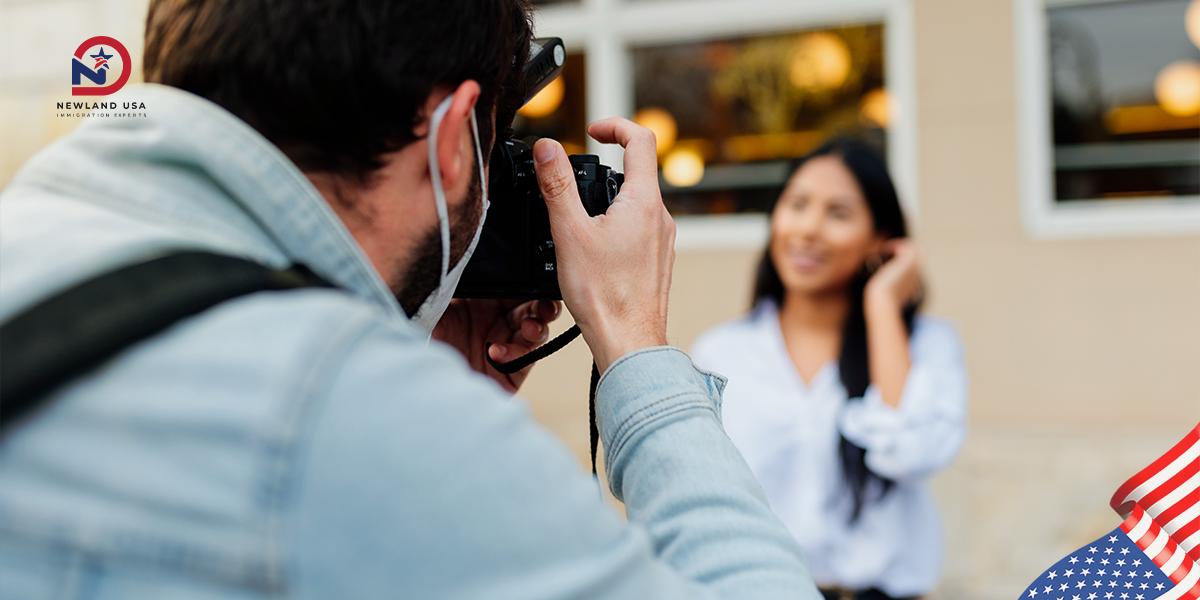
However, the U.S. Department of State strongly recommends using professional photo services. Studios specializing in U.S. visa photos typically have full standard lighting equipment and experience ensuring photos meet all technical requirements. The cost for this service typically ranges from 100,000 to 300,000 VND for a complete photo set including both hard copy and digital file.
5. Regulations on clothing and accessories when taking photos
5.1. Choosing appropriate clothing
Clothing when taking U.S. visa photos needs to be professional and polite. The U.S. Department of State recommends you wear everyday but formal clothing, avoiding uniforms of all types unless it’s religious attire you regularly wear.
Clothing colors should create clear contrast with the white background. However, avoid colors that are too bright or clothing with complex patterns, stripes, or eye-catching designs. These details can cause interference with the automatic recognition system.
High-neck shirts or shirts with neat collars are usually good choices. For men, dress shirts or polo shirts are appropriate. For women, simple-styled, modest blouses are safe choices.
5.2. Accessories allowed and not allowed
Regulations on accessories when taking U.S. visa application photos are very specific and must be strictly followed.
Eyeglasses: This is an important point. You cannot wear glasses in U.S. visa photos, including prescription or reading glasses. The only exception is special medical cases and you must have a doctor’s certificate with signature.
Hats and head coverings: The general rule is no hats or scarves covering hair. However, if this is a religious item you wear regularly daily, you can keep it on condition that your entire face must be fully visible and not create shadows.
Electronic devices: It’s absolutely forbidden to wear earphones, Bluetooth earphones, or any other electronic devices.
Jewelry: You can wear jewelry such as earrings, small necklaces, but they must not obscure the face or create strong reflections affecting photo quality.
All special exceptions related to religion, medicine, or traditional culture must have valid documentation and still cannot affect the photo’s identification capability.
6. Handling situations where photos don’t meet requirements
6.1. Common errors to avoid
According to statistics from the U.S. Embassy, there are several common errors that cause U.S. visa photos to be rejected:
Size errors are the leading cause. This includes incorrect overall size of 2×2 inches, face ratio not within the 50-70% photo height range, or eye position wrong according to regulations.
Background errors are also very common, such as background not white enough, having patterns or objects appearing, or having shadows on the background. These details, though small, can all cause photos to be rejected.
Regarding image quality, errors such as blurred, smudged, too dark or too bright photos, unnatural colors, or grainy noise are all issues to avoid.
Errors in posture and expression include tilted head, eyes not looking straight, inappropriate expression, or mouth too wide open.
Finally, not complying with regulations on clothing and accessories such as wearing glasses, hats, or earphones are also common errors.
6.2. Permitted photo editing process
If photos have small defects that can be fixed, you’re allowed to perform some basic technical edits. However, regulations on this are very strict.
Permitted operations include: cropping photos to correct size, adjusting pixel size, balancing light and contrast, and changing background to standard white.
Importantly, you absolutely must not use beauty tools, change facial features, hide natural imperfections like moles or scars, or smooth skin. Any intervention that changes the natural image is prohibited.
If a photo is rejected, you need to retake a new standard photo and resubmit according to Embassy instructions.
7. Technology applications supporting photo taking
In the digital age, many applications and online tools have emerged to support creating standard U.S. visa photos. However, you need to be careful when using these tools.
Some popular applications today use artificial intelligence to automatically crop photos, adjust backgrounds, and adjust technical parameters. Applications like PhotoAID, Green Card Photo US VISA, or VisaFoto are widely used with quite high acceptance rates.
Particularly, the U.S. Department of State provides a free tool at the website photos.state.gov for users to crop and check photos before submission. This is a reliable tool as it’s officially developed by the authoritative agency.
However, regardless of which tool you use, you always need to manually check the final result. Ensure that the photo after processing still maintains your natural appearance and fully meets technical standards.
8. Frequently asked questions about U.S. Visa photos
8.1. Do photo standards differ between visa types?
There are no differences in technical photo standards between different types of U.S. visas. Whether you’re applying for a tourist visa, student visa, work visa, or even an immigrant visa like EB3, all apply the same set of standards for size, background, quality, and technical requirements.
The only difference lies in the number of photos required. For non-immigrant visas, you need to submit 1 digital photo and 1 hard copy photo. Meanwhile, immigrant visa applications typically require 2 photos.
8.2. Is self-taking photos at home allowed?
Theoretically, you can completely take U.S. visa photos yourself at home. The U.S. Department of State doesn’t prohibit this. However, you must ensure strict compliance with all regulations.
When self-taking, you need sufficient and even lighting, standard white background, appropriate shooting distance, and must not edit photos excessively. Particularly, selfies are not allowed as they usually have incorrect size and shooting angle.
However, the Department of State still encourages using professional photo services to ensure the best results and avoid risks of application delays.
8.3. Do I need new photos for each visa application?
The answer is yes. Each time you apply for a U.S. visa, you need to prepare new photos, even if you’ve applied for a visa before and the old photo is still within the 6-month validity period.
The reason is that people’s appearance can change over time. The Embassy needs to ensure photos most accurately reflect your current appearance at the time of application submission. Even small changes like hairstyle, weight, or facial hair can require new photos.
9. Conclusion
Preparing standard U.S. visa photos is the first and extremely important step in your U.S. visa application journey. With changes in 2025, especially the implementation of automated review systems using artificial intelligence, accuracy requirements become even more strict.
For those planning long-term immigration to the U.S., especially through programs like EB3, preparing professional applications becomes even more essential. A perfect U.S. visa application includes not only standard photos but also complete documents and materials carefully and accurately prepared.
At Newland USA, we not only provide U.S. immigration services but also support customers in their cultural integration journey in this new country. If you need more information, please contact Newland USA immediately via hotline 0785591988 or email: newsletter@newlandusa.asia for detailed and free consultation.
Learn more:
News Categories

Related news

From Motorcycle Mechanic to Automotive Technician in the U.S.: Skills and Qualifications to Prepare in 2026
AI in Auto Repair in the U.S. 2026: How Artificial Intelligence Diagnoses Vehicle Problems Faster and More Accurately
7 Key Technologies Every Industrial Maintenance Technician in the U.S. Needs to Know in 2026

PLC & Automation Skills: A Launchpad for Maintenance Technicians in the United States in 2026
What Is the ASE Certification? Requirements, Exam Roadmap, and Its Importance for Auto Technicians in the U.S. in 2026

EB5 Capital Recovery Time: How Long It Takes and the Key Milestones
Electric Vehicle Technicians in the U.S.: The “Golden” Skills Helping Vietnamese Auto Mechanics Get Ahead of the 2026 EV Trend
US Engineering & Maintenance Labor Shortage 2026: The Driving Force Behind the EB3 Skilled Workers Visa Policy
Industrial Maintenance Technician: Job Duties, Requirements & U.S. Immigration Opportunities in 2026