Special Education Programs: What Parents Settling in the US Need to Know
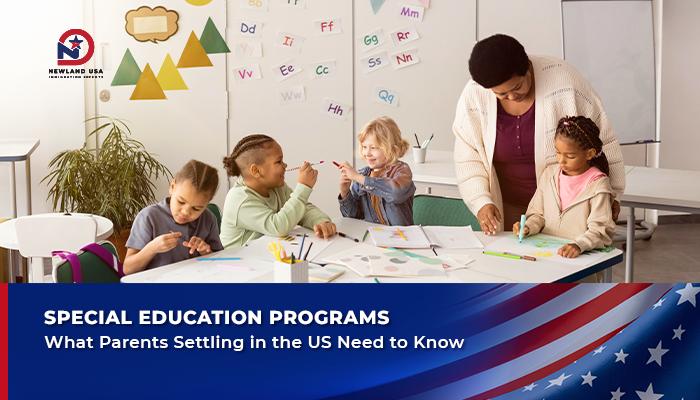
When bringing their children to live in the US, many Vietnamese families are unaware that the public school system here provides a unique form of educational support designed for children with special needs — completely free of charge. Special education programs not only protect the learning rights of children with disabilities but also open up opportunities for well-rounded development for every student who needs specialized support. In this article, Newland USA will provide parents who are currently or soon to be settling in the US with the most comprehensive overview of special education in the US — from the legal foundation, the evaluation process, to the educational rights when settling in the US that parents should fully understand in order to walk alongside their children on the journey toward integration.
1. What Is Special Education?
A special education program (Special Education) is a system of instruction and support services specifically designed to meet the learning needs of children with disabilities or developmental challenges. In the US, this form of education is guaranteed by federal law, meaning that every eligible child has the right to access the program without having to pay any fees.
Unlike traditional classroom models that apply the same teaching method to all students, special education in the US focuses on personalizing content, teaching methods, and assessment formats. This means that lesson content, instructional approaches, and testing methods are all adjusted to match each child’s unique characteristics. The core goal is not to separate children from the regular educational environment, but to create the conditions for them to participate in the general curriculum as effectively as possible.
For families going through the process of settling in the US, understanding the true nature of special education programs is the first step toward protecting the educational rights when settling in the US for their children — especially when children show signs of developmental delays or have difficulties with communication and social integration.
2. Legal Foundation: The IDEA Act and Children’s Right to Education
The most important legal foundation for special education programs in the US is the Individuals with Disabilities Education Act (IDEA). First enacted in 1975 under the name Education for All Handicapped Children Act and later renamed IDEA in 1990, this law establishes the obligation of the public school system to provide a fair, appropriate, and free education — commonly known as FAPE (Free Appropriate Public Education) — for all students with disabilities.
According to the latest data, during the 2023–2024 school year, approximately 7.9 million children ages 3 to 21 in the US received special education services through Part B of IDEA, making up nearly 15% of total public school enrollment. This figure reflects the enormous scale of the support system for children with special needs.
A key point that parents settling in the US need to remember: IDEA applies to all children residing on US soil, regardless of immigration status. This means that whether a family is waiting for a green card, is in a sponsorship process, or has already become a citizen, their children are all protected by this federal law. The Supreme Court ruling in Plyler v. Doe (1982) affirmed that all children have the right to access free public education. This is a foundational educational right when settling in the US that every parent should fully understand.

3. Who Qualifies for Special Education? 13 Disability Categories Under IDEA
Not every child who struggles in school qualifies for a special education program. To be eligible, a child must meet two criteria: first, the child must be identified as having a disability falling under one of the 13 categories defined by IDEA; second, that disability must negatively impact the child’s ability to learn, requiring specialized instructional support.
The 13 disability categories recognized by IDEA include:
- Autism;
- Deaf-Blindness;
- Deafness;
- Emotional Disturbance;
- Hearing Impairment;
- Intellectual Disability;
- Multiple Disabilities;
- Orthopedic Impairment;
- Other Health Impairment — including ADHD;
- Specific Learning Disability — such as dyslexia;
- Speech or Language Impairment;
- Traumatic Brain Injury;
- Visual Impairment.
In addition, for children ages 3 to 9, IDEA allows the use of the “Developmental Delay” classification when a child shows delays in physical, cognitive, communication, social-emotional, or adaptive behavior development.
Parents settling in the US should note that having a medical diagnosis falling under the above categories does not automatically mean a child will be admitted into a special education program. The school will conduct a comprehensive evaluation to determine whether the child’s condition genuinely interferes with their ability to learn. This is a mandatory process to ensure that each child receives the support that is truly necessary and appropriate.
4. IEP — The Individualized Education Program: The Heart of Special Education in the US
Once a child has been confirmed as eligible, the school will develop an Individualized Education Program (IEP). This is the primary tool for putting a special education program into action for each student. An IEP is not a generic document — it is a detailed legal document that clearly states the services and support the school is obligated to provide.
A complete IEP typically contains the following: an assessment of the child’s current academic achievement and functional performance levels; measurable annual learning goals; methods for tracking and reporting the child’s progress to parents; a list of special education services, related services, and supplementary aids the child will receive; a service schedule including frequency, duration, and location; and information about the Least Restrictive Environment (LRE).
A particularly important point for families newly settling in the US is that parents hold an equal role alongside professionals on the IEP development team. IDEA requires the school to invite parents to participate in every related meeting, clearly explain procedural safeguard rights, and ensure that communication is understandable and accessible. If parents are not proficient in English, the school is obligated to provide interpreters during IEP meetings and translate documents into the family’s native language. This is an educational right when settling in the US that many Vietnamese parents need to be aware of.
The IEP is reviewed at least once a year, and the child is re-evaluated at least once every three years. Throughout this process, parents have the full right to request adjustments if they feel the program is not meeting their child’s needs.
5. Section 504 Plan — An Alternative When a Child Doesn’t Qualify for an IEP
Not every child who faces obstacles in learning falls within the scope of IDEA. In cases where a child has a health condition or disability that affects learning but does not meet the criteria for an IEP, a Section 504 Plan is a worthwhile alternative to consider.
The Section 504 Plan is established under Section 504 of the Rehabilitation Act of 1973 — a federal civil rights law aimed at preventing discrimination against people with disabilities. Unlike an IEP, which focuses on specialized instruction, the Section 504 Plan is geared toward removing barriers so that a child can access the general education curriculum on an equal basis.
For example, a student with Attention Deficit Hyperactivity Disorder (ADHD) may not need specialized instruction but may still need extra time on tests, preferential seating near the teacher, or short breaks during class. These accommodations fall within the scope of a Section 504 Plan.
For parents settling in the US, understanding the difference between an IEP and a Section 504 Plan helps in choosing the right form of support for their child. Both are free and legally protected, but an IEP provides stronger legal guarantees and more comprehensive services. If a child does not meet the criteria for a special education program under IDEA, parents should ask the school about setting up a Section 504 Plan to ensure their child’s educational rights when settling in the US.
6. Evaluation and Eligibility Process: What Should Parents Do?
The process of enrolling a child in a special education program in the US follows a clear and transparent procedure. Parents can proactively initiate this process rather than waiting for the school to identify an issue.
The first step is a Referral for Evaluation. Either a parent or a teacher can request that a child be assessed to determine whether a disability is affecting their learning.
Next, the school conducts a Comprehensive Evaluation. IDEA stipulates that the evaluation cannot rely on a single test or measurement tool. Instead, the evaluation team gathers information from multiple sources: classroom observations, interviews with parents and teachers, review of academic records, and various assessments. This entire process is carried out free of charge.
After results are obtained, the eligibility team — which includes parents — will meet to determine whether the child qualifies. If eligible, the IEP team will be convened shortly after to develop an appropriate plan. By regulation, special education services must begin as soon as possible after the IEP is finalized.
An important note for Vietnamese parents who have recently arrived in the US: language barriers should not be a reason to miss out on these supports. Schools are responsible for providing interpreters throughout the evaluation and IEP development process. Do not hesitate to request language assistance — this is a legal right of parents.

7. Support Services Within Special Education Programs
Special education in the US is not limited to adjusting lessons in the classroom. The system provides a diverse network of services aimed at helping children develop holistically in both academic and life skills.
Related Services that a child may receive through an IEP include: Speech-Language Therapy for children who have difficulty communicating and expressing themselves; Occupational Therapy to develop fine motor skills and self-care abilities; Physical Therapy to support children with gross motor challenges; Counseling Services to help children address emotional and behavioral issues; Transportation services to ensure children have safe means of getting to school; and Assistive Technology, including specialized devices or software that help children access lessons more easily.
Notably, for children age 14 and older (or earlier if appropriate), the IEP must include a Transition Plan to prepare for life after high school — including higher education, employment, or independent living. This is an extremely valuable educational right when settling in the US, providing children with a clear roadmap for social integration as they grow into adulthood.
All of the above services are funded by the school. Families settling in the US do not have to pay any additional fees for these special supports, aside from fees that apply equally to all students.
8. Parents’ Rights: Protecting Your Child Within the US Special Education System
IDEA grants parents a robust system of rights and protections, commonly referred to as “Procedural Safeguards.” Understanding these rights is essential for every family, especially parents who have recently settled in the US and are not yet familiar with the education system here.
First, parents have the right to be notified before any changes are made to their child’s educational program. The school cannot unilaterally adjust the IEP or change the child’s class placement or services without parental consent. Second, parents have the right to review all educational records related to their child. Third, if parents disagree with a school’s decision — whether it concerns evaluation results, the content of the IEP, or classroom placement — they have the right to file a complaint through several dispute resolution mechanisms.
Dispute resolution mechanisms include: Mediation, where parents and the school work with a neutral third party; a Due Process Complaint, where one party files a formal complaint that is heard by an independent hearing officer; and a State Complaint filed with the state education agency. In addition, parents also have the right to request an Independent Educational Evaluation (IEE) conducted by an outside expert if they disagree with the school’s evaluation results.
Schools are obligated to provide the Procedural Safeguards Notice in a language the parents can understand. For Vietnamese-speaking families, this document must be translated into Vietnamese or explained through an interpreter.
9. Challenges Vietnamese Families Face When Accessing Special Education
Although educational rights when settling in the US are guaranteed by law, in practice, many immigrant families still face significant obstacles when trying to access special education programs.
Language barriers are the biggest challenge. While schools are responsible for providing interpreters, this service is not always fully delivered, especially in smaller school districts or areas with a small Vietnamese community. Parents should proactively make written requests and reach out to organizations that support immigrant families if needed.
Cultural barriers also play a significant role. In Vietnamese culture, many families still consider disability a sensitive topic and may even feel reluctant when their child is labeled as a “child with special needs.” However, in the US, early identification and timely intervention are seen as an advantage that helps children develop better — not as a form of discrimination or stigma.
Additionally, some educators may confuse language barriers (not being fluent in English) with learning disabilities. Immigrant children who are learning English as a second language (ESL) may be incorrectly evaluated — or conversely, may not be referred for evaluation even though they genuinely need specialized support. Parents should closely monitor their child’s development and not hesitate to speak up if they notice their child is experiencing prolonged difficulties in learning.
10. Advice for Parents Settling in the US
To make the most of educational rights when settling in the US and support their children in special education programs, parents should keep the following in mind:
- First, learn about the special education system in the US as soon as you start planning your move. Having this knowledge in advance will help your family be more prepared for any situation.
- Second, keep complete medical records, evaluation results, and all documents related to your child’s health and developmental conditions. These records are very helpful when requesting evaluations at a new school.
- Third, do not hesitate to request interpreters and translated documents at every meeting with the school.
- Fourth, connect with the Parent Training and Information Center (PTI) in the state where your family lives. This is a free resource that provides guidance and support for parents who have children receiving special education services.
- Finally, actively participate in every IEP meeting. Research shows that active family involvement is closely linked to better educational outcomes for children.
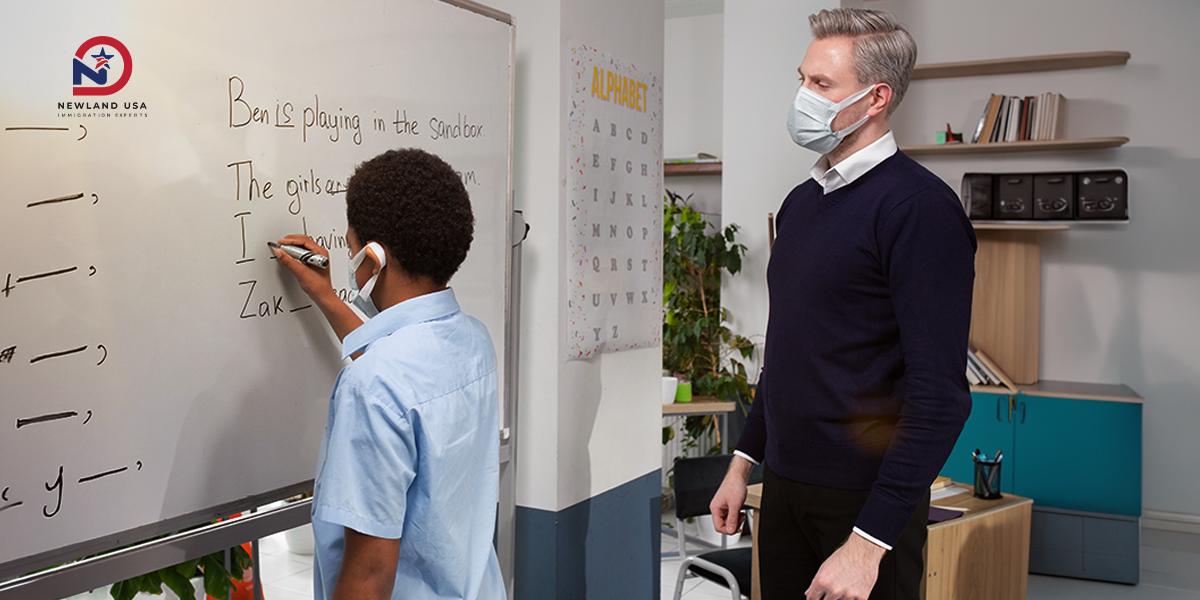
11. The Importance of Special Education in the Journey of Settling in the US
Settling in the US is not just about paperwork, visas, or green cards — it is also a journey of helping the entire family integrate into a new life. In that journey, education plays a central role.
Special education programs in the US are built on the principle that every child deserves the opportunity to learn and develop their potential — regardless of ability, family circumstances, or nationality. With an individualized IEP system, a diverse network of support services, and strong mechanisms for protecting parental rights, special education in the US creates a solid foundation for children to continue growing in academics, careers, and independent living.
Parents should view accessing a special education program not as a burden but as one of the most valuable educational rights when settling in the US — an advantage that the US public education system provides specifically for their children.
12. Conclusion
The journey of settling in the US opens up countless opportunities for the whole family, but to fully take advantage of those opportunities, parents need to equip themselves with thorough knowledge — especially in the field of education. Special education programs in the US are the clearest testament to this country’s commitment to equal educational rights: every child, regardless of circumstances or abilities, deserves to receive the appropriate support to reach their full potential.
Learn more:
- A-to-Z Guide to Applying for American Colleges
- EB3 Immigration to the US: Can Your Spouse and Children Come Along?
- What Is the ESL Program? Free English Language Support for Newly Arrived Students in the U.S.
- Key Factors That Directly Affect EB-5 Investment Interest Rates and Returns
- Key Participants in an EB-5 Transaction
News Categories


Related news

Who Is the ESTA Program For? How to Assess Your Fit Before Applying in 2026

Who Is the ESTA Program For? How to Assess Your Fit Before Applying in 2026

From Motorcycle Mechanic to Automotive Technician in the U.S.: Skills and Qualifications to Prepare in 2026

AI in Auto Repair in the U.S. 2026: How Artificial Intelligence Diagnoses Vehicle Problems Faster and More Accurately
7 Key Technologies Every Industrial Maintenance Technician in the U.S. Needs to Know in 2026
PLC & Automation Skills: A Launchpad for Maintenance Technicians in the United States in 2026
What Is the ASE Certification? Requirements, Exam Roadmap, and Its Importance for Auto Technicians in the U.S. in 2026

EB5 Capital Recovery Time: How Long It Takes and the Key Milestones

Electric Vehicle Technicians in the U.S.: The “Golden” Skills Helping Vietnamese Auto Mechanics Get Ahead of the 2026 EV Trend