Requirements to become an automotive mechanic in the USA through EB3 Visa
The automotive repair industry in the USA is facing a severe labor shortage, creating golden opportunities for Vietnamese workers who want to settle and work in the land of opportunity. The EB3 Visa program is currently opening up a legal immigration pathway for automotive mechanics, helping thousands of qualified candidates pursue their American dream. This article from Newland USA will provide detailed information about the requirements to become a mechanic in the USA through the EB3 program, from educational qualifications and experience requirements to the visa application process and promising career prospects.
1. Overview of the EB3 program for mechanics
EB3 (Employment-Based Immigration: Third Preference) is one of the most popular immigration pathways in the USA for foreign workers. The EB3 program is designed to meet the labor needs of the U.S. job market, especially in industries facing labor shortages like automotive repair.
The EB3 program is divided into three main categories: Skilled Workers, Professionals, and Other Workers. Automotive mechanics typically fall under the Skilled Workers category of EB3, as this job requires at least two years of experience or specialized training.
A notable feature of EB3 is that the program provides a permanent resident Green Card from the start, allowing workers and their families to live, work, and study in the USA long-term. After five years, they can even apply for U.S. citizenship.
2. Why the automotive repair industry in the USA needs to recruit through EB3
According to data from the U.S. Bureau of Labor Statistics, there are currently about 70,000 job openings for mechanics each year over the next decade. This number reflects the high demand for labor in the U.S. automotive industry.
The main reasons for the shortage of automotive mechanics include: an aging workforce retiring in large numbers, an increasing number of vehicles on the road, modern automotive technology requiring higher specialized skills, and Americans tending to keep their cars longer, leading to increased maintenance and repair needs.
For this reason, U.S. employers are actively seeking mechanics through the EB3 program to fill personnel gaps. This is an excellent opportunity for Vietnamese workers with experience in this field.

3. Requirements to become a mechanic in the USA through EB3
3.1. Work experience requirements
The most important requirement to become a mechanic in the USA is work experience. According to EB3 regulations for skilled workers, candidates need at least two years of work experience related to automotive mechanic work.
This experience must be proven through documents such as: employment verification letters from previous garages or repair shops, pay stubs or employment contracts, vocational training certificates from reputable training centers, or degrees related to automotive technology.
More importantly, the mechanic’s experience must meet the specific requirements in the job description provided by the U.S. employer. This means you need practical experience in areas such as: engine maintenance, brake systems, electrical systems, transmission systems, or other systems depending on the job position.
3.2. Educational qualification requirements
Unlike the EB3 program for Professionals which requires a university degree, EB3 for automotive mechanics does not require a college degree. However, the minimum educational requirement is typically high school graduation or equivalent.
Some requirements to become a mechanic in the USA are more flexible when accepting vocational training certificates or diplomas from community colleges specializing in automotive technology. Many mechanic training programs in Vietnam can fully meet this requirement.
It’s worth noting that if candidates have relevant degrees or vocational training certificates, they can replace part of the work experience requirement. For example, one year of study at an automotive vocational school combined with one year of work experience can be accepted instead of two years of pure experience.
3.3. Professional certification requirements
Although not mandatory when applying for EB3, having ASE (Automotive Service Excellence) certification is a huge advantage for automotive mechanics. ASE is a non-profit organization established in 1972 that sets certification standards for mechanics throughout the USA.
ASE certification not only proves your professional competence but also helps you stand out from other candidates when applying for jobs through EB3. Many U.S. employers prefer to hire mechanics with ASE certification because they trust the quality of training and skills of these individuals.
ASE offers over 40 different certifications, covering areas such as engines, brakes, electrical systems, air conditioning, and many other specialties. If an automotive mechanic passes all 8 basic tests (A1-A8), they will earn the title of Master Automotive Technician – one of the most prestigious certifications in the industry.
3.4. Health and background check requirements
Requirements to become a mechanic in the USA through EB3 also include health and criminal background requirements. Candidates must undergo medical examinations at facilities designated by the U.S. Embassy, ensuring they don’t have dangerous infectious diseases or other serious health issues.
Regarding background checks, EB3 candidates need to provide police clearance from all places they have lived since age 16. Any criminal records related to serious crimes can affect the chances of visa approval.
4. Application process for EB3 for automotive mechanics
Step 1: Find a sponsoring employer
Unlike some other types of visas, EB3 requires sponsorship from a legal U.S. employer. Mechanics cannot apply on their own but need a garage, automotive repair center, or car dealership in the USA to agree to hire and sponsor them.
The employer must be a legal business in the USA, have sufficient financial capacity to pay the automotive mechanic’s salary, and commit to providing a full-time, permanent position (not temporary or seasonal work).
To find an EB3 sponsoring employer, many mechanics in Vietnam work with reputable immigration consulting companies like Newland USA. These companies have networks connecting with U.S. employers who need to recruit automotive mechanics through EB3.
Step 2: PERM Labor Certification
After finding an employer, the next important step in the EB3 process is obtaining PERM (Program Electronic Review Management) labor certification from the U.S. Department of Labor.
During this phase, the employer must prove that they cannot find qualified and willing U.S. workers (U.S. citizens or green card holders) to take this automotive mechanic job. To do this, they must conduct recruitment activities such as posting job ads in newspapers, job websites, and other channels.
The employer must also determine the prevailing wage for the mechanic position in the specific geographic area and commit to paying at least this amount or higher. The PERM process for EB3 typically takes 6-12 months, depending on the complexity of the application and the Department of Labor’s workload.
Step 3: Submit Form I-140 (Immigrant Petition)
After receiving PERM certification, the employer will submit Form I-140 (Immigrant Petition for Alien Worker) to U.S. Citizenship and Immigration Services (USCIS) to formally propose hiring the automotive mechanic through EB3.
Form I-140 must be accompanied by documents proving the mechanic’s capabilities, including degrees, certificates, work experience, and other related documents. USCIS will review the application to ensure the candidate fully meets the requirements to become a mechanic in the USA according to EB3 requirements.
Processing time for Form I-140 for skilled EB3 workers is typically 5-7 months. However, it can be shortened to 15 days if the employer chooses Premium Processing service for an additional fee.
Step 4: Wait for visa number and consular interview
After Form I-140 is approved, the mechanic needs to wait until an EB3 visa number becomes available. Due to annual immigration visa number limits, candidates may have to wait depending on their country of origin and specific category.
When a visa number is available, the candidate will be notified to complete final procedures, including submitting Form DS-260, medical examination, and preparing for the interview at the U.S. Embassy or Consulate.
During the interview, the automotive mechanic needs to bring all original documents proving qualifications, experience, and other personal documents. The consular officer will assess whether the candidate meets the requirements to become a mechanic in the USA through EB3 and decide to approve or deny the visa.
Step 5: Receive green card and start working
If the EB3 visa is approved, the mechanic will receive an immigrant visa and can enter the USA. Upon arrival in the USA, they will receive their Green Card by mail within a few weeks.
With a green card from EB3, automotive mechanics have full rights to live and work anywhere in U.S. territory. They are not bound to work for the sponsoring employer forever, although they should work for them for at least one year to avoid suspicion about immigration intent.
5. Career prospects for automotive mechanics in the USA
5.1. Salary and income
One of the important questions when considering requirements to become a mechanic in the USA through EB3 is income level. According to data from the U.S. Bureau of Labor Statistics, the average salary for automotive mechanics is about $49,670 per year (as of May 2024).
However, this salary varies significantly depending on experience, skills, and geographic area. Entry-level mechanics typically start with lower salaries, while those with experience and ASE certification can earn $65,660 per year or more. The top 10% of the best automotive mechanics can earn over $77,630 per year.
States with the highest salaries for mechanics include the District of Columbia, California, Washington, Alaska, and Hawaii. In addition to base salary, many mechanics also receive benefits such as health insurance, dental insurance, paid vacation, 401(k) retirement plans, and other perks.
5.2. Advancement opportunities
Automotive mechanics working in the USA through EB3 have many career development opportunities. After gaining experience, they can advance to positions such as: Master Technician, Lead Technician, Shop Supervisor, or Service Manager.
Some mechanics choose to specialize in specific areas such as diesel engines, hybrid and electric vehicles, ADAS (Advanced Driver Assistance Systems), or other advanced automotive technologies. These specializations typically bring significantly higher salaries.
Additionally, with the shortage of automotive mechanics in the USA, many people have opened their own shops after a few years of work. With a green card from EB3, they have full rights to start their own business and build an independent career.
5.3. Industry trends
The automotive industry is undergoing major changes with the emergence of electric vehicles, hybrid vehicles, and autonomous driving technologies. This doesn’t reduce the demand for mechanics; on the contrary, it creates demand for automotive mechanics with knowledge of new technologies.
Mechanics trained in high-voltage electrical systems, lithium-ion batteries, and advanced driver assistance systems will have a major competitive advantage. Many training programs in the USA are updating their curricula to meet this demand, and mechanics coming to the USA through EB3 can fully participate in these training courses to enhance their skills.

6. Important notes when applying for EB3 as a mechanic
6.1. Processing time
One of the common questions about EB3 is processing time. The entire process from starting PERM to receiving a green card typically takes 3-5 years, depending on many factors such as nationality, EB3 category, and application timing.
Automotive mechanics in the Skilled Workers category of EB3 typically have shorter waiting times compared to the Other Workers category (unskilled workers). However, candidates need to prepare mentally for a long process and be patient while waiting.
6.2. Costs
The total cost to apply for EB3 for mechanics can range up to several tens of thousands of USD, including: PERM Labor Certification fees, Form I-140 fees, visa processing fees, medical examination fees, translation and notarization costs, and consulting service fees if used.
By regulation, the employer must bear the costs for the PERM process and Form I-140. Automotive mechanic candidates only need to pay costs related to their personal application such as visa fees, medical examination fees, and other related expenses.
6.3. Role of immigration consulting companies
The EB3 application process for mechanics is quite complex with many legal procedures. Therefore, many candidates choose to work with reputable immigration consulting companies for comprehensive support.
These companies not only help automotive mechanics find suitable EB3 sponsoring employers but also assist with preparing applications, tracking processing progress, and providing consultation throughout the process. This significantly increases the success rate and shortens processing time.
7. Conclusion
Requirements to become a mechanic in the USA through EB3 are not too strict compared to many other immigration programs. With a minimum of two years of work experience, basic educational qualifications, and good health, automotive mechanics in Vietnam can fully meet the requirements.
The EB3 program opens up excellent opportunities for mechanics who want to settle in the USA with stable income, a professional work environment, and long-term career development prospects. With the severe labor shortage in the automotive repair industry in the USA, this is a golden time for Vietnamese automotive mechanics to pursue their American dream.
Newland USA, with the motto “Secure settlement – Lifelong prosperity,” is ready to consult and support you in preparing your application and accompany you throughout the EB3 U.S. immigration process through the automotive repair profession. Contact Newland USA immediately via hotline 0785591988 or email: newsletter@newlandusa.asia for detailed and free consultation.
Learn more:
- How Important is Form I-140 in the EB3 Visa Process?
- Why Choose EB3 U.S. Immigration Through the Medical Glove Manufacturing Industry in 2026?
- What Factors Affect EB3 Immigration Processing Time to the United States?
- Why do many people give up on their EB3 application while it’s still being processed?
- 5 Common Misconceptions About the EB3 Program That Vietnamese People Often Make
News Categories



Related news
Who Is the ESTA Program For? How to Assess Your Fit Before Applying in 2026

Who Is the ESTA Program For? How to Assess Your Fit Before Applying in 2026

From Motorcycle Mechanic to Automotive Technician in the U.S.: Skills and Qualifications to Prepare in 2026
AI in Auto Repair in the U.S. 2026: How Artificial Intelligence Diagnoses Vehicle Problems Faster and More Accurately
7 Key Technologies Every Industrial Maintenance Technician in the U.S. Needs to Know in 2026
PLC & Automation Skills: A Launchpad for Maintenance Technicians in the United States in 2026
What Is the ASE Certification? Requirements, Exam Roadmap, and Its Importance for Auto Technicians in the U.S. in 2026

EB5 Capital Recovery Time: How Long It Takes and the Key Milestones
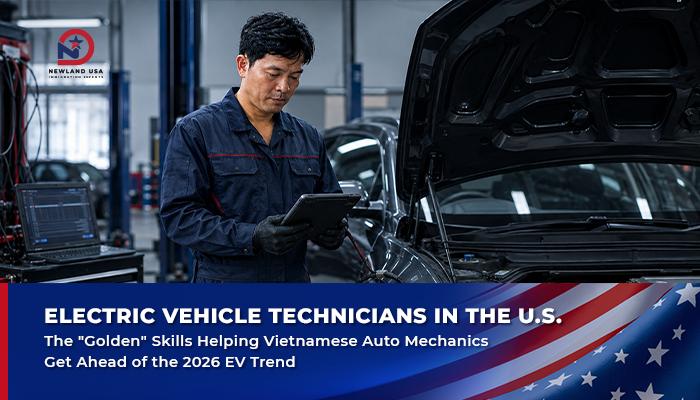
Electric Vehicle Technicians in the U.S.: The “Golden” Skills Helping Vietnamese Auto Mechanics Get Ahead of the 2026 EV Trend