Causes and Refund Policy if EB-5 Application is Rejected?
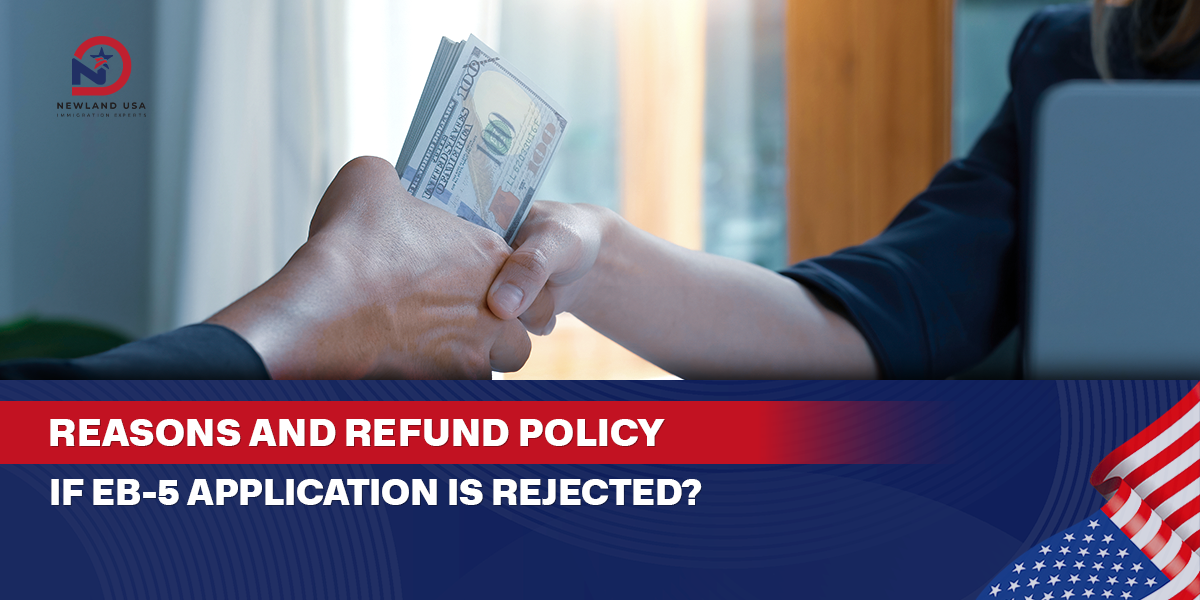
The EB-5 investment immigration program attracts many Vietnamese investors thanks to green card benefits and family immigration opportunities. However, many people have the same question about the possibility of getting refunded if their EB-5 application is not approved. This article by Newland USA will analyze in detail the costs, refund policies, and ways to minimize risks in the US EB-5 immigration process.
1. Overview of Costs When Participating in the EB-5 Investment Program
Participating in the EB-5 investment program requires investors to prepare good financial resources with various expense categories.
Main investment amount: Minimum $800,000 for projects in TEA areas.
Project management fees: Range from $50,000 to $80,000 depending on the specific project and Regional Center management.
Legal consultation fees: About $15,000 to $25,000 for professional immigration lawyer services.
US government fees (updated July 2025):
- I-526E: $12,160 (including $11,160 processing fee + $1,000 Integrity Fund)
- I-829: $9,525 (conditional green card removal stage)
- I-485: $1,440/adult (adjustment of status within the US)
- I-765 (work permit): $260
- I-131 (re-entry permit): $630 if needed
- Premium Processing: $2,805
In total, investors may have to spend from $900,000 to $950,000 for the entire US EB-5 immigration process.
2. Refund Policy When EB-5 Application is Rejected
2.1. The $800,000 Investment Amount
The main investment money is usually deposited into an escrow account or transferred directly to the project. The possibility of recovery depends on the reason for rejection:
Cases eligible for refund: When the EB-5 application is rejected due to errors not attributable to the investor, such as the project not being approved by USCIS, or the regional center violating regulations.
Cases difficult to refund: If rejection stems from the investor’s personal issues such as inability to prove legal source of funds, having a criminal record, or providing false information.
The important thing is that refund terms are clearly stipulated in the PPM (Private Placement Memorandum) and Escrow Agreement. Investors need to study carefully before signing.
2.2. Project Management Fees
This amount is usually not refunded as it is an administrative cost already paid to the regional center. However, some premium projects may apply a policy of partial or full refund when the EB-5 application is rejected.
2.3. Legal Consultation Costs
Attorney fees are service costs and are not refunded regardless of the EB-5 investment outcome. Some law firms may offer fee reductions if clients continue to file new applications or switch to other immigration programs.
2.4. Government Fees
All fees paid to USCIS are not refunded under any circumstances, even when the EB-5 application is not approved.

3. Common Causes Leading to EB-5 Application Rejection
3.1. Issues with Proving Source of Funds
This is the leading reason why EB-5 applications are rejected. Funds that are not clearly explained, wire transfers without adequate documentation, or unconvincing financial logic can all lead to unwanted results.
3.2. Problems from the Project or Regional Center
Projects that don’t meet I-956F standards, haven’t created enough jobs as required, or regional centers with a history of violating USCIS regulations also affect EB-5 investment immigration.
3.3. Personal Conditions Not Meeting Requirements
Investors with criminal records, visa fraud history, or applications containing untrue information will have difficulty passing the vetting process.
3.4. Administrative Errors in the Application
Missing documents, incorrect personal information, or missing deadlines without timely correction are also common causes.

4. Risk Mitigation Strategies for EB-5 Investors
4.1. Choosing Safe Projects
Prioritize projects that have been approved by USCIS I-956F, have high financial transparency, and clear capital return mechanisms. Consider the success rate of EB-5 applications I-526E and I-829 from the same project or regional center in the past.
Especially, rural area projects receive priority processing and have separate visa quotas, increasing success opportunities for US EB-5 immigration.
4.2. Partnering with Reputable Consulting Firms
Working with experienced immigration consulting companies is an important factor throughout the process and will:
- Evaluate projects from legal and financial perspectives based on deep expertise
- Coordinate with US attorneys to build source of funds documentation that meets USCIS standards
- Advise on EB-5 investment structures suitable for investor goals
- Provide detailed guidance for each stage from application submission to receiving green cards and capital return

5. Conclusion
The answer to whether refunds are available when EB-5 applications are rejected depends on many factors: type of costs, reason for rejection, and especially the legal terms signed initially. To avoid regrettable risks, investors need to choose the right projects and work with experienced consulting teams and attorneys in the EB-5 investment immigration field.
Newland USA, with a team of experienced experts and the motto “Secure Settlement – Lifelong Prosperity,” is ready to consult and support clients with information related to the EB-5 investment program. Please contact Newland USA immediately at hotline 0785591988 or email: newsletter@newlandusa.asia for detailed and free consultation.
News Categories


Related news

AI in Auto Repair in the U.S. 2026: How Artificial Intelligence Diagnoses Vehicle Problems Faster and More Accurately
7 Key Technologies Every Industrial Maintenance Technician in the U.S. Needs to Know in 2026
PLC & Automation Skills: A Launchpad for Maintenance Technicians in the United States in 2026
What Is the ASE Certification? Requirements, Exam Roadmap, and Its Importance for Auto Technicians in the U.S. in 2026
EB5 Capital Recovery Time: How Long It Takes and the Key Milestones

Electric Vehicle Technicians in the U.S.: The “Golden” Skills Helping Vietnamese Auto Mechanics Get Ahead of the 2026 EV Trend
US Engineering & Maintenance Labor Shortage 2026: The Driving Force Behind the EB3 Skilled Workers Visa Policy
Industrial Maintenance Technician: Job Duties, Requirements & U.S. Immigration Opportunities in 2026

Lương thợ sửa xe tại Mỹ: Cách tối ưu giờ công để nhân đôi thu nhập năm 2026