What Is Visa Bond Pilot? Costs, Requirements, and U.S. Visa Bond Procedures in 2026
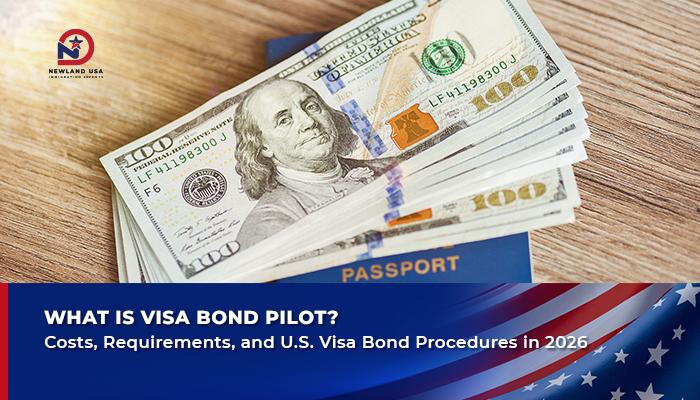
Starting in August 2025, the U.S. Department of State officially launched the Visa Bond Pilot program — a system requiring B1/B2 Visa applicants from countries with high overstay rates to post a financial deposit ranging from $5,000 to $15,000. As of April 2, 2026, the list has expanded to 50 countries, making this one of the most significant immigration policy changes of the year. In the article below, Newland USA will help you understand exactly what the Visa Bond Pilot is, the U.S. Visa bond requirements, specific costs, the step-by-step process, and the real-world impacts that Vietnamese citizens need to keep in mind when applying for a U.S. tourist or business Visa.
1. Overview of the Visa Bond Pilot — U.S. Visa Bond Pilot Program
1.1 What Is the Visa Bond Pilot?
The Visa Bond Pilot is a 12-month pilot program issued by the U.S. Department of State (DOS) through a Temporary Final Rule (TFR), effective from August 20, 2025 to August 5, 2026, under Section 221(g)(3) of the Immigration and Nationality Act (INA). Under this program, consular officers at U.S. Embassies and Consulates have the authority to require B1 (business) or B2 (tourist) Visa applicants to post a financial guarantee — known as a “Maintenance of Status and Departure Bond” — as a mandatory condition before a Visa can be issued.
In simple terms, the U.S. Visa bond is a financial deposit that applicants must make to guarantee that they will follow all rules regarding their authorized stay and leave U.S. territory on time. This amount is not a fee — it functions as collateral and will be refunded if the traveler fully meets their legal obligations.
1.2 Background and Strategic Goals
The Visa Bond Pilot program was created in the context of the U.S. Government’s enforcement of Executive Order 14159 — “Protecting The American People Against Invasion.” This executive order directed the Department of the Treasury, in coordination with the Department of State and the Department of Homeland Security (DHS), to build a management system for all bonds required under the INA.
In terms of real results, the program has proven clearly effective: 97% of travelers subject to bond requirements departed the U.S. on time. Additionally, the Department of State estimates that the program saves the federal budget up to $800 million per year by reducing deportation costs, detention expenses, and immigration court proceedings. This demonstrates that financial mechanisms are becoming an effective immigration management tool, rather than relying solely on traditional administrative measures.
1.3 Expansion of the Program’s Scope
Initially, the Visa Bond Pilot applied to only 2 countries (Malawi and Zambia) in August 2025. By October 2025, the list added 4 more countries; January 2026 added 32 more; and by April 2, 2026, the total reached 50 countries — roughly 25% of all countries recognized by the Department of State. The 12 countries added in the most recent round include Cambodia, Ethiopia, Georgia, Grenada, Lesotho, Mauritius, Mongolia, Mozambique, Nicaragua, Papua New Guinea, Seychelles, and Tunisia.
An important note: the Visa Bond Pilot program only applies to B1/B2 Visas and does not affect other nonimmigrant Visa categories such as F-1, J-1, H-1B, O, or any Visa type outside B1/B2. This is a key detail that many people often get confused about.
2. U.S. Visa Bond Costs: Specific Amounts and How They’re Determined
2.1 Three Bond Levels Based on Risk Assessment
Unlike the fixed $185 MRV Fee for B1/B2 Visa interviews, the U.S. Visa bond amount is determined by the consular officer based on the individual risk profile of each applicant at the time of the interview. There are three bond levels: $5,000, $10,000, or $15,000.
Specifically, the factors consular officers consider when deciding the bond amount include: international travel history, the strength of economic and social ties to the home country, financial capacity as shown in supporting documents, and the average overstay rate of the applicant’s country of nationality in the most recent fiscal year.
Converted to Vietnamese Dong (reference exchange rate ~25,000 VND/USD), the three U.S. Visa bond levels are roughly:
- $5,000 level: approximately 125 million VND (applicants with a positive travel history and transparent finances)
- $10,000 level: approximately 250 million VND (first-time applicants with stable income but limited ties)
- $15,000 level: approximately 375 million VND (applicants from countries with an overstay rate above 10% or with multiple risk factors)
2.2 Accepted Payment Methods
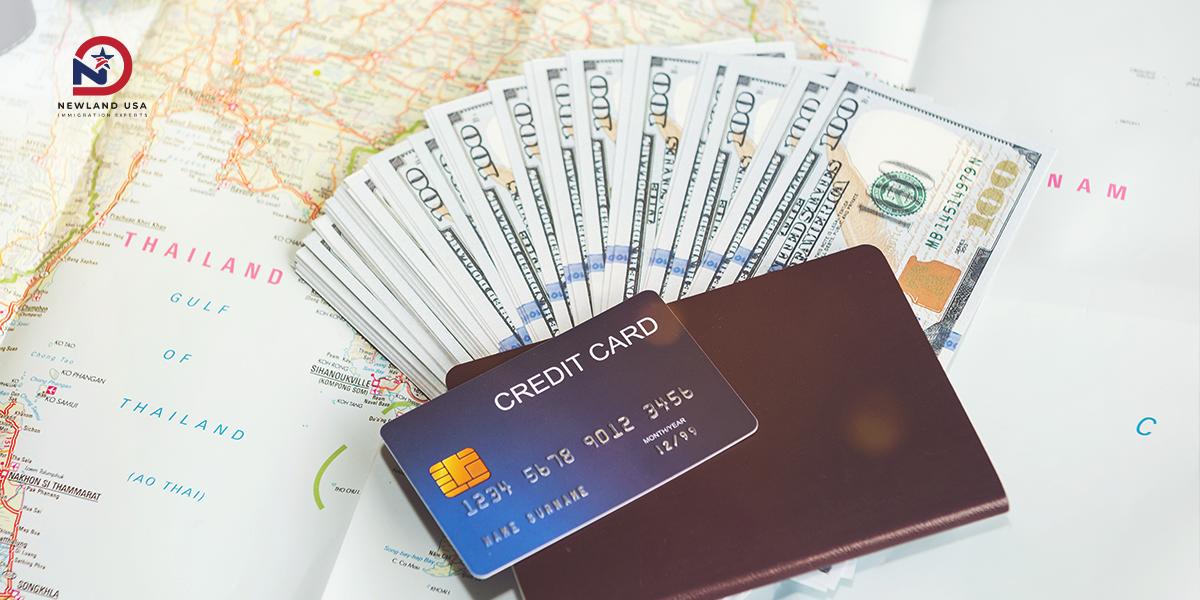
Applicants must make payment through the Pay.gov portal. Accepted methods include electronic bank transfer (ACH) or international credit/debit cards. Cash, savings books, land-use certificates, and securities are not accepted as collateral. The deposit must be paid in U.S. dollars.
Once the bond payment is received, the Department of the Treasury will transfer the funds into an account managed by DHS, similar to an escrow account.
3. U.S. Visa Bond Requirements: Who Is Subject to This Requirement?
3.1 Criteria for Determining Which Countries Are on the List
The Department of State applies bond requirements selectively to citizens of countries that meet one or more of the following criteria: a high B1/B2 Visa overstay rate based on DHS data, screening and verification systems deemed insufficient, or the country offers a “Citizenship by Investment” (CBI) program that does not require actual residency. These are the U.S. Visa bond requirements at the country level.
3.2 Individual Risk Assessment by Consular Officers
Beyond country-level criteria, consular officers also evaluate U.S. Visa bond requirements based on individual profiles. Groups that are more likely to be asked for a bond deposit include:
Applicants with limited ties to their home country: Those aged 18–35, unmarried, working as freelancers, or without property registered in their own name are often seen as lacking “anchor” factors in their home country.
Applicants with limited travel history: A blank passport or travel limited to visa-free ASEAN countries, with no prior Visas to developed nations such as Schengen countries, the UK, Australia, Canada, or Japan.
Extended stay plans: Applicants requesting stays of 3 to 6 months in the U.S. to visit relatives without a specific itinerary, hotel booking confirmations, or round-trip airline tickets will face greater scrutiny.
Applicants with relatives who previously violated U.S. immigration law: CBP’s data systems can retrieve violation records of immediate family members. If an applicant’s parents, siblings, or children have previously overstayed or worked illegally in the U.S., the current application will be placed in a higher risk category.
3.3 Is Vietnam on the List?
As of April 2026, Vietnam is not on the list of countries subject to mandatory Visa Bond Pilot program requirements. However, this does not mean Vietnamese citizens are entirely “immune.” Consular officers still retain discretionary authority under Section 221(g)(3) of the INA, and the list can be updated at any time with at least 15 days’ advance notice. Therefore, preparing a thorough application, demonstrating strong financial ties, and clearly stating the purpose of travel remain essential factors for all Vietnamese applicants.
4. Step-by-Step U.S. Visa Bond Procedures
Step 1: Complete the Interview and Receive a Notice of Eligibility
After the in-person interview at the consular office, if the officer determines that the applicant qualifies for a Visa but falls within a high immigration-risk group, they will issue a Notice of Eligibility. This document specifies the case number, the exact U.S. Visa bond amount ($5,000/$10,000/$15,000), and the deadline to complete the payment — typically 30 days from the date of the notice.
Applicants must also complete Form I-352 (Immigration Bond Form) from the Department of Homeland Security and should only do so when instructed by the consular officer. Submitting payment before receiving official instructions will result in a non-refundable payment.
Step 2: Make Payment Through the Pay.gov System
Applicants use the identifier from the Notice of Eligibility to access the Pay.gov portal and make payment. As mentioned, only two payment methods are accepted: ACH electronic transfer or international credit/debit cards. Relatives or third parties in the U.S. can also make the payment on the applicant’s behalf, but they must complete a separate I-352 form and accept legal responsibility. In this case, the refund will be returned to the account of the person who made the payment in the U.S., not to the applicant’s account.
Step 3: Payment Confirmation and Visa Issuance
Once the system confirms the funds have been deposited into the holding account, the application status updates to “Bond Paid.” The consular office proceeds to print and affix the Visa sticker in the passport. The passport is then delivered to the registered address within approximately 3–5 business days.
Step 4: Comply with Entry and Exit Conditions
All travelers subject to the U.S. Visa bond are required to enter and exit the U.S. through designated commercial airports, including major international airports such as JFK, LAX, ATL, ORD, IAD, EWR, and several others. Using land borders, seaports, or private aviation may result in denied entry or failure to record the departure date.
5. Refund and Forfeiture Process for Bond Deposits
5.1 When Will You Get a Refund?
The deposit will be automatically refunded when DHS confirms that the traveler has left the U.S. on or before their authorized stay period, or when the traveler does not enter the U.S. before the Visa expires. The refund timeframe ranges from 15 to 30 business days, but in practice, it can take up to 90 days depending on CBP’s verification process.
5.2 When Will the Bond Be Forfeited?
DHS will refer suspected bond violation cases to U.S. Citizenship and Immigration Services (USCIS) for review. Situations include: the traveler departing after the authorized period, continuing to stay in the U.S. without leaving, or filing for a change of immigration status (including asylum applications).
This is a point that many applicants are not fully aware of: even filing for asylum or changing Visa status during the authorized stay period can be considered a violation of the U.S. Visa bond requirements, resulting in the loss of the entire deposit. Additionally, consequences may include an entry ban of 3 to 10 years.

6. Real-World Impacts and Key Notes for Vietnamese Applicants
6.1 An Opportunity Rather Than a Barrier
From a positive perspective, the Visa Bond Pilot program opens an alternative path for applications that previously would have been outright refused under Section 214(b). Instead of receiving a “refused” decision, applicants now have an additional option to demonstrate “good faith” through a financial commitment.
6.2 Cash Flow Challenges
However, having up to nearly 375 million VND frozen for an extended period creates significant financial pressure. In particular, CBP’s verification process may cause actual refund timelines to be longer than expected. Therefore, applicants should have a clear backup financial plan before deciding to participate.
6.3 Best Strategies for Application Preparation
Even though Vietnam is not yet on the mandatory list, proactive preparation is always a smart strategy. Applicants should: build a detailed travel itinerary with hotel booking confirmations and round-trip airline tickets; prepare transparent financial documents showing high liquidity; maintain a positive international travel record; and clearly demonstrate economic and social ties to Vietnam such as stable employment, real estate ownership, or family obligations.
7. Frequently Asked Questions About the Visa Bond Pilot
If my Visa is refused after I’ve paid the bond, will I get a refund? Yes. The U.S. Visa bond will be refunded 100% if the applicant’s Visa is refused. However, the $185 MRV interview fee and SEVIS fee (if applicable) are non-refundable under any circumstances.
If I miss my flight and overstay by just 1 day, will I lose my deposit? If the reason falls under force majeure (natural disasters, airline technical failures with written confirmation from the airline), the applicant may file a request for violation mitigation with DHS. However, without valid supporting evidence, the system will automatically record a violation and forfeit the entire amount.
Could the program become permanent? The program is currently scheduled to end on August 5, 2026, but there is a real possibility it could be extended or made permanent. Applicants should closely follow updates from the Department of State on Travel.State.Gov.
Do the U.S. Visa bond requirements apply to work or student Visas? No. At this time, the Visa Bond Pilot program only applies to B1/B2 Visas (business and tourist). Immigration Visa categories such as EB-3, EB-5, EB-2 NIW, and student Visa F-1 are not covered by this program.

8. Conclusion
The Visa Bond Pilot is not simply a new administrative regulation — it is a clear signal that the U.S. is shifting toward an immigration management model based on individual financial responsibility, rather than relying solely on traditional refusal or deportation measures. With a compliance rate of up to 97% in the initial rollout phase, the Visa Bond Pilot program has proven that economic leverage carries real weight in ensuring international travelers meet their departure obligations.
For the Vietnamese community with plans to apply for a U.S. tourist or business Visa, even though Vietnam has not yet been placed on the mandatory list, understanding the U.S. Visa bond requirements and how the entire program works is still essential. The list of affected countries can be expanded at any time with just 15 days’ advance notice, and Washington’s trend of tightening immigration policy suggests that the scope of the U.S. Visa bond will very likely continue to widen in the near future.
Learn more:
News Categories

Related news

Who Is the ESTA Program For? How to Assess Your Fit Before Applying in 2026

Who Is the ESTA Program For? How to Assess Your Fit Before Applying in 2026

From Motorcycle Mechanic to Automotive Technician in the U.S.: Skills and Qualifications to Prepare in 2026

AI in Auto Repair in the U.S. 2026: How Artificial Intelligence Diagnoses Vehicle Problems Faster and More Accurately

7 Key Technologies Every Industrial Maintenance Technician in the U.S. Needs to Know in 2026

PLC & Automation Skills: A Launchpad for Maintenance Technicians in the United States in 2026

What Is the ASE Certification? Requirements, Exam Roadmap, and Its Importance for Auto Technicians in the U.S. in 2026

EB5 Capital Recovery Time: How Long It Takes and the Key Milestones

Electric Vehicle Technicians in the U.S.: The “Golden” Skills Helping Vietnamese Auto Mechanics Get Ahead of the 2026 EV Trend