Common Questions About Settling in the U.S. Through EB3 Manufacturing Employment
Settling in the U.S. through employment in the manufacturing industry is becoming an attractive option for many skilled and unskilled workers. With increasing labor demand and thousands of vacant positions in the U.S. manufacturing industry, questions about working in the U.S. are constantly being raised by those who wish to build their future in this country. This article by Newland USA compiles the most common concerns to help you better understand the opportunities, requirements, and immigration process to the U.S. in the manufacturing sector.
1. What is the EB3 visa and who can apply to immigrate to the U.S. through the manufacturing industry?
The EB3 visa belongs to the employment-based immigration visa category, designed for three main groups of workers when immigrating to the U.S.: skilled workers, professionals, and other workers (unskilled workers). This is a popular pathway to access long-term employment opportunities in the U.S. manufacturing industry.
Skilled workers need to demonstrate at least two years of experience or training related to the job position. Common occupations include factory assembly line technicians, packaging workers, CNC technicians, industrial electricians, and quality control staff. The professional group requires a U.S. bachelor’s degree or foreign equivalent in a related field. Meanwhile, unskilled workers only need to meet training requirements of less than two years for positions that are not temporary or seasonal in nature.
The important thing when wanting to immigrate to the U.S. through the EB3 visa is that you must have an official job offer from a U.S. employer. The employer must prove that they cannot find qualified American workers for that position through the PERM labor certification process from the U.S. Department of Labor.
2. What positions in the U.S. manufacturing industry are facing labor shortages?
The U.S. manufacturing industry is currently facing a severe labor shortage. According to estimates from the U.S. Bureau of Labor Statistics, there could be up to 2.1 million unfilled manufacturing jobs by 2030 due to shortages in professional skills and work experience. This creates great opportunities for those who want to immigrate to the U.S. through employment.
The positions with the highest demand include CNC machine operators with an average salary of about $48,310 per year. Industrial engineers are paid higher at $96,350 annually. Welders and metal fabricators have an average income of $47,540, especially those with TIG and MIG welding skills. Quality control inspectors with a salary of $44,190 ensure products meet industry standards.
The trend of manufacturing returning to the U.S. (reshoring) is increasing, causing many companies to bring production operations back domestically. This increases the demand for hiring skilled workers in the manufacturing industry, while expanding opportunities for those who want to immigrate to the U.S. through visa programs like EB3.
3. What skills and qualifications does the U.S. manufacturing industry require?
This is one of the most frequently asked questions about working in the U.S. Qualification requirements depend on the visa type and specific job position during the U.S. immigration process. For the EB3 visa for skilled workers, you need to demonstrate a minimum of two years of work experience or vocational training. This experience must be confirmed through detailed documentation from previous employers, relevant skill certificates, and may require professional competency assessment.
Regarding English language skills, although there is no official requirement, you need sufficient communication ability to perform the job safely and effectively. The required English level is usually practical, focusing on work-related communication rather than academic proficiency. This makes immigrating to the U.S. through the manufacturing industry more accessible compared to other fields requiring high specialized English.
4. What are the salary levels in the U.S. manufacturing industry?
When considering immigrating to the U.S., income is an important factor. Salaries in the manufacturing industry vary widely depending on position, experience, and work location. According to the latest data, the average annual salary for manufacturing industry employees is about $51,890, equivalent to $24.95 per hour.
For entry-level manufacturing workers with less than one year of experience, the average wage is $17.08 per hour. With one to four years of experience, the wage increases to $18.46 per hour. Long-term experienced employees can earn from $27.48 per hour or higher.
Salaries also differ significantly between geographic regions. Cities in California pay the highest wages with an average of $77,622 per year, 49.6% higher than the national average. States like Michigan, Ohio, and Pennsylvania also offer tax incentives for manufacturers hiring skilled foreign workers, increasing actual income when immigrating to the U.S.
In addition to basic salary, many companies in the U.S. manufacturing industry also provide bonuses and benefits such as health insurance, paid leave, and retirement plans.

5. How long does the EB3 visa process take to immigrate to the U.S.?
“How long does document processing take?” is one of the most important questions about working in the U.S. when planning to immigrate. The entire EB3 visa process typically takes 3 to 5 years, depending on the category and the applicant’s country of origin.
The first step is PERM labor certification, where the employer must prove they cannot find qualified American workers. This phase can take 6 to 12 months, including time for posting job advertisements, interviewing potential candidates, and processing documents at the Department of Labor.
After labor certification approval, the employer files the I-140 petition with USCIS. Standard processing time for I-140 is typically 4 to 8 months. However, there is a premium processing option with an additional fee that allows results within 15 business days.
After the I-140 is approved, you must wait until your priority date becomes current based on the monthly Visa Bulletin from the State Department. This waiting time varies significantly depending on the country of origin. Countries with high application volumes like India and China typically have longer wait times compared to other countries when immigrating to the U.S.
The final step is adjustment of status (if in the U.S.) or consular processing (if abroad), which takes an additional 6 to 18 months. For the unskilled worker category in the manufacturing industry, the time may be longer due to an annual quota of only 10,000 visas.
6. What is the work environment like in the U.S. manufacturing industry?
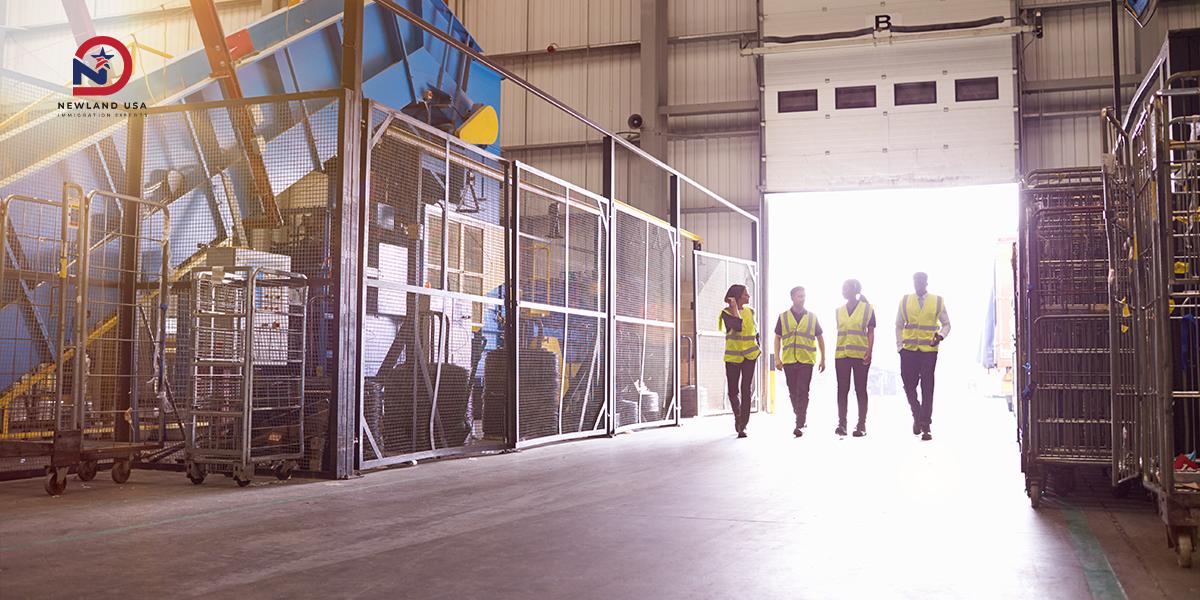
Understanding the work environment helps you better prepare for the U.S. immigration process. Workers in the manufacturing industry typically work full-time averaging 43.8 hours per week, higher than many other occupations. The job requires manual dexterity, the ability to operate tools and machinery, as well as speed to keep up with fast production lines.
Occupational safety is prioritized at U.S. manufacturing facilities. Employers must comply with strict occupational health and safety regulations. Employees are provided with necessary protective equipment and receive regular training on safety procedures. Work-related injuries or illnesses are recorded and managed according to federal regulations.
Many manufacturing companies offer training and skill development programs, allowing employees to advance in their careers. These opportunities are especially important for those immigrating to the U.S. who want long-term development. The work environment is increasingly diverse with the presence of workers from many different cultures, creating a multicultural and inclusive workplace.
Regarding benefits, most companies provide comprehensive health insurance packages, paid leave, paid holidays, and retirement programs like 401(k). Some employers also support continuing education costs and professional training, helping employees enhance their skills in the U.S. manufacturing industry.
7. Can family members accompany when immigrating to the U.S. under the EB3 visa?
This is one of the most frequently asked questions about working in the U.S. by those with families. The answer is yes – the EB3 visa allows spouses and unmarried children under 21 to accompany when immigrating to the U.S.
The spouse of the EB3 visa holder will receive an E-34 visa, while children receive an E-35 visa. They can apply simultaneously with the principal applicant or after the principal has received approval. The family will receive green cards along with the principal applicant, allowing them to live and work freely in the U.S.
A particular benefit is that spouses can apply for work permits independently, not tied to the principal’s employer. Children can enroll for free in public schools and enjoy in-state tuition at public colleges and universities when immigrating to the U.S. After five years with a green card, the entire family can apply for U.S. citizenship if they meet the conditions.
However, family members must be listed in the original application and must endure the same waiting time based on the priority date. Costs for family members include application fees, medical examinations, and related expenses for each member when immigrating to the U.S. through the manufacturing industry.
8. What does an employer need to do to sponsor an EB3 visa?
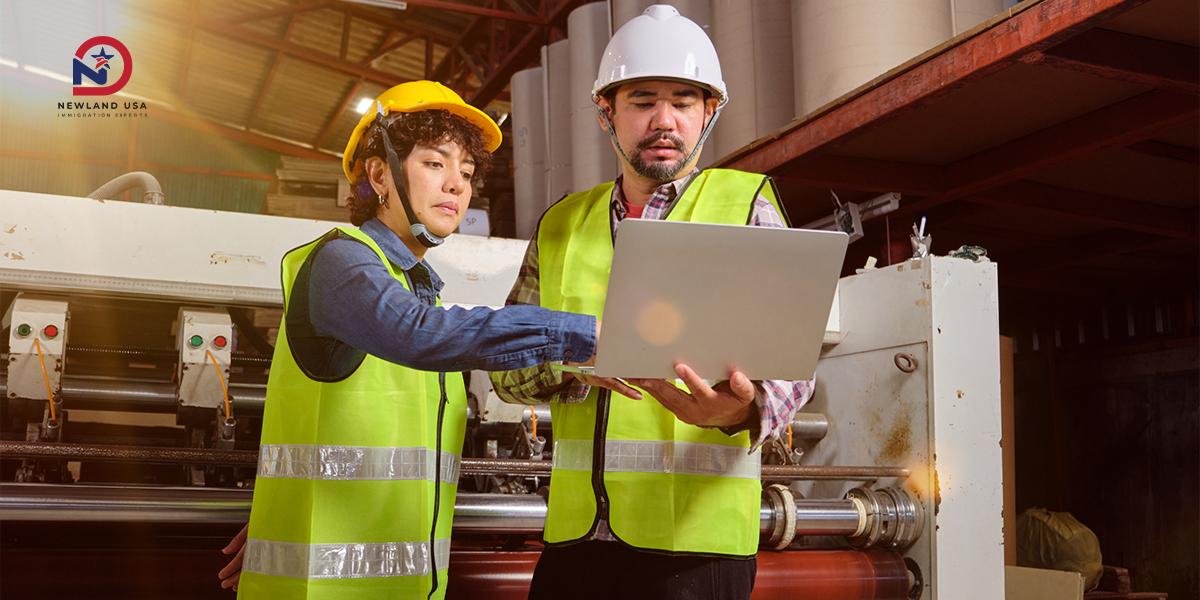
Employers in the U.S. manufacturing industry play a crucial role in the U.S. immigration process through the EB3 visa. They must prove they are a legitimate business with a tax identification number and valid business licenses. The company must have the financial ability to pay the offered wage from the priority date onward, demonstrated through tax returns, financial statements, or financial commitment letters.
The most critical stage is the PERM labor certification process. The employer must conduct recruitment steps as required, including internal job postings, local newspaper advertisements, state job site postings, and other appropriate channels for at least 30 days. They need to interview qualified American candidates and document rejection reasons if they don’t meet job requirements.
Costs the employer must bear include recruitment expenses, I-140 filing fees (currently $715), and possibly immigration attorney fees. Some companies also choose to pay premium processing fees to shorten waiting times. The total cost that manufacturing industry employers spend is tens of thousands of dollars.
Employers also commit to paying foreign workers at least 100% of the prevailing wage for that position in the specific geographic area. This protects both American workers and foreigners from labor exploitation when immigrating to the U.S.
9. Can you change companies after receiving a green card?
This is an important question among questions about working in the U.S. related to career flexibility after immigrating. After receiving a green card through the EB3 visa, you have the right to work for any employer in the U.S. without being tied to the original sponsor.
However, there are some important notes. Within the first 180 days after receiving a green card, USCIS may investigate whether the intent to work for the sponsor was genuine. If you leave the company immediately after receiving your green card, this may raise suspicions of visa fraud. Therefore, many immigration attorneys advise working for the sponsor for at least 1 year after immigrating to the U.S. to avoid legal issues.
After this period, you are completely free to change careers, switch to another industry, or even start your own business. The green card provides permanent residence rights and freedom of movement in the U.S. manufacturing industry as well as other fields. You can work in any state, not limited by the initial work location stated in the visa application.
This makes the EB3 visa an attractive pathway to immigrate to the U.S. because it provides both long-term stability and career flexibility. Many people have used their manufacturing experience as a stepping stone to advance to management or higher professional roles after immigrating.
10. Do you need a lawyer to apply for an EB3 visa when immigrating to the U.S.?
Although not legally required, hiring an experienced immigration attorney is recommended when immigrating to the U.S. through the EB3 visa in the manufacturing industry. This process is complex with many legal steps and detailed documentation requirements.
An immigration attorney can help evaluate your application from the start, saving time and costs if the application doesn’t meet requirements. They guide employers through proper PERM procedures, including strict recruitment requirements and necessary document preparation. A small error at this stage can lead to rejection and having to start over from the beginning.
When preparing the I-140 petition, attorneys ensure all evidence of qualifications, experience, and the worker’s financial capacity is presented correctly. They also know how to respond effectively if USCIS requests additional evidence (Request for Evidence – RFE), which occurs quite frequently.
Attorney fees typically range from $3,000 to $7,000 for the entire U.S. immigration process, depending on case complexity. Although this is a significant investment, it’s worthwhile due to higher success rates and reduced stress and worry for applicants throughout the application process. Some companies in the U.S. manufacturing industry are willing to pay part or all of the legal costs as part of the recruitment package.
11. Conclusion
Immigrating to the U.S. through the manufacturing industry opens up opportunities for stability and long-term development for skilled workers. With increasing labor demand, the U.S. manufacturing industry is actively seeking foreign workers to fill hundreds of thousands of vacant positions. The EB3 visa provides a clear path to obtaining a green card, bringing permanent living and working rights for families in the U.S.
Newland USA, with an experienced team of experts and the mission “Secure Settlement – Lifelong Prosperity,” is ready to advise and support in application preparation and accompany clients throughout the EB3 U.S. immigration process. Contact Newland USA now via hotline 0785591988 or email: newsletter@newlandusa.asia for detailed and free consultation.
Learn more:
- U.S. Immigration Through Medical Glove Manufacturing Industry: Easy or Difficult?
- Why Choose EB3 U.S. Immigration Through the Medical Glove Manufacturing Industry in 2026?
- U.S. Immigration Policy 2026: Important Changes You Need to Know
- What Factors Affect EB3 Immigration Processing Time to the United States?
News Categories


Related news
AI in Auto Repair in the U.S. 2026: How Artificial Intelligence Diagnoses Vehicle Problems Faster and More Accurately
7 Key Technologies Every Industrial Maintenance Technician in the U.S. Needs to Know in 2026
PLC & Automation Skills: A Launchpad for Maintenance Technicians in the United States in 2026
What Is the ASE Certification? Requirements, Exam Roadmap, and Its Importance for Auto Technicians in the U.S. in 2026
EB5 Capital Recovery Time: How Long It Takes and the Key Milestones
Electric Vehicle Technicians in the U.S.: The “Golden” Skills Helping Vietnamese Auto Mechanics Get Ahead of the 2026 EV Trend
US Engineering & Maintenance Labor Shortage 2026: The Driving Force Behind the EB3 Skilled Workers Visa Policy
Industrial Maintenance Technician: Job Duties, Requirements & U.S. Immigration Opportunities in 2026
Lương thợ sửa xe tại Mỹ: Cách tối ưu giờ công để nhân đôi thu nhập năm 2026