US Visa Application Guide 2025
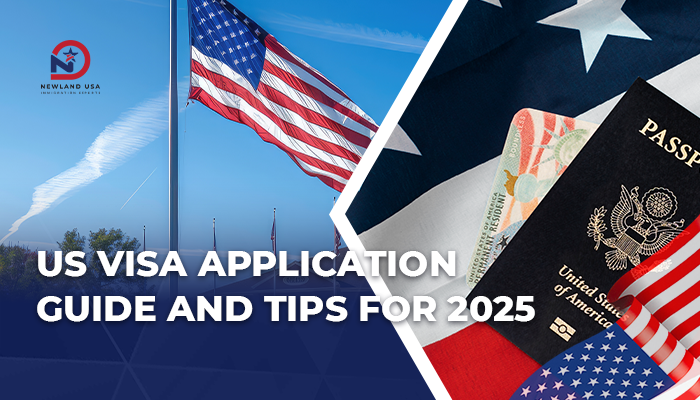
In early 2025, with the growing demand for travel, education, work, and investment in the United States, understanding the US Visa application process has become a topic of great interest to many applicants. Each type of visa has its own characteristics and processing times, so understanding each step and thoroughly preparing the US Visa application procedures is the key factor to help you achieve your desired results. This article will help you master information about processing times, common visa types, and useful tips from the team of experts at Newland USA – a reputable provider of immigration services in the United States.
1. Types of US Visas and Processing Times
1.1 Tourist Visa (B1/B2)
For those who wish to come to the US for tourism, visiting relatives, or short-term business trips, the US Visa for tourism (B1/B2) is always the most popular choice. The review process typically includes the following steps: scheduling an interview, submitting documents, and waiting for results.
- Interview waiting time: Can range from a few days to several months depending on the location and peak season.
- After the interview: If the application is approved immediately, the visa will be issued within 3-5 business days. However, if additional information is required or administrative processing is needed, the review process may take longer.
1.2 Student Visa (F1)
For international students, the US Visa for studying (F1) requires a more complex review process compared to tourist visas.
- First step: Students need to obtain an I-20 from their school, with processing time ranging from 2-6 weeks depending on the institution.
- Next: Scheduling an interview and thoroughly preparing documents is essential.
- Results: If everything goes smoothly, the visa can be issued quickly within a few days; however, cases requiring administrative processing (221g) can extend from several weeks to several months.
1.3 Work Visas (EB-3, H-1B, L-1)
For those who need to work in the US, applying for a US Visa under the work category also has specific regulations:
- H-1B and L-1 Visas: Average processing time is 2 to 6 months.
- EB-3 Visa: For skilled workers, the processing time can extend from 24 to 36 months or more, depending on the application and individual applicant’s situation. Careful document preparation and choosing the appropriate visa type are important factors that increase the chances of success.
1.4 Investment Immigration Visa (EB-5)
For investors, the US Visa for investment immigration EB-5 is being significantly improved thanks to adjustments in new immigration policies.
- Processing time: Typically 6 to 12 months for projects in Targeted Employment Areas (TEA).
- Advantages: Investors can take advantage of the “Concurrent Filing” policy to submit forms simultaneously, thereby shortening the immigration timeline.
2. Process and Important Notes When Applying for a Visa
The US Visa application process is designed with clear steps to help applicants understand requirements and minimize the risk of failure.
2.1 Determine Purpose and Appropriate Visa Type
First, you need to clearly identify the purpose of your trip: tourism, study, work, or investment. This helps you choose the right type of US Visa and provides direction for the entire review process.
2.2 Complete US Visa Application Procedures
The next step is to complete the US Visa application procedures:
- Fill out the DS-160 form completely and accurately (for non-immigrant visas) or related forms for immigrant visas.
- Prepare all necessary financial documents, personal documents, and related certificates.
2.3 Schedule an Interview
After submitting your application, you need to schedule an interview at the US Embassy or Consulate.
- Interview schedules can be affected by peak seasons or high application volumes.
- Therefore, proactively scheduling early is extremely important to avoid long waiting times.
2.4 Attend the Interview and Track Your Application
The interview is the decisive step:
- Answer truthfully, concisely, and stay on point.
- After the interview, you need to closely monitor your application status on the review agency’s website. If additional information is requested, respond quickly to avoid delaying the review process.
3. Advice from Newland USA
With extensive experience in immigration, Newland USA always puts service quality first. We believe that quickly grasping important information and notes will help you feel more confident on your journey to the American dream.
At the same time, once you have an overview of the US Visa application process and experience in preparing documents, each preparation step and proper approach will not only help minimize risks but also open up opportunities for successful access to your dreams of settling, studying, or working in the United States.
5. Conclusion
Through the article above, you can see that the US Visa application process is not simple, requiring patience, thorough preparation, and close monitoring of each step in the US Visa application procedures. Each visa type from tourism, study, work to investment has its own characteristics, processes, and specific documents, requiring you to understand the process and prepare carefully. Apply the strategies mentioned in this article, proactively schedule interviews, and contact Newland USA experts at hotline 0785591988 for dedicated and free support.
News Categories



Related news
AI in Auto Repair in the U.S. 2026: How Artificial Intelligence Diagnoses Vehicle Problems Faster and More Accurately
7 Key Technologies Every Industrial Maintenance Technician in the U.S. Needs to Know in 2026

PLC & Automation Skills: A Launchpad for Maintenance Technicians in the United States in 2026
What Is the ASE Certification? Requirements, Exam Roadmap, and Its Importance for Auto Technicians in the U.S. in 2026

EB5 Capital Recovery Time: How Long It Takes and the Key Milestones
Electric Vehicle Technicians in the U.S.: The “Golden” Skills Helping Vietnamese Auto Mechanics Get Ahead of the 2026 EV Trend
US Engineering & Maintenance Labor Shortage 2026: The Driving Force Behind the EB3 Skilled Workers Visa Policy
Industrial Maintenance Technician: Job Duties, Requirements & U.S. Immigration Opportunities in 2026

Lương thợ sửa xe tại Mỹ: Cách tối ưu giờ công để nhân đôi thu nhập năm 2026