Process, Requirements and Essential Experience for Getting a Driver’s License in the United States
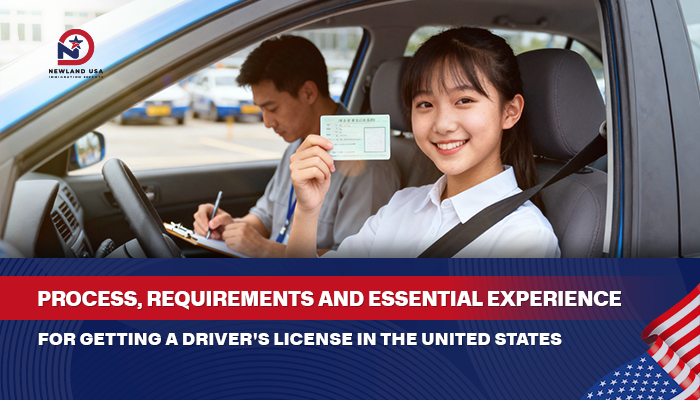
Getting a driver’s license in the US is one of the most important first steps when settling in the land of the free. Driving in the US not only helps you move around conveniently but is also essential for daily life. This article by Newland USA will share the complete process for taking the driver’s license test in the US, from participation requirements to valuable experiences that will help you pass the test easily.
1. Overview of the US Driver’s License System
The United States is known for having one of the world’s most modern and advanced transportation systems. The Department of Motor Vehicles (DMV) is the agency directly responsible for issuing driver’s licenses in the US nationwide. The advantage of the DMV is that you can handle all vehicle-related procedures here, such as processing violations, registering license plates, transferring vehicle ownership, issuing ID cards, and many other services.
Centralizing services at one location helps people save significant time and provides maximum convenience during the process of registering for the driver’s license test in the US and other related matters.
2. Structure of the Driver’s License Test in the US
The test to obtain a driver’s license in the US is divided into two separate stages, each with specific requirements and standards.
2.1. Stage 1: Written Theory Test
The theory test is the first step in the journey of taking the driver’s license test in the US. The test includes a total of 46 multiple-choice questions about traffic laws, road signs, and safety regulations. To pass this section, candidates must answer at least 39 questions correctly, equivalent to an 85% pass rate.
If you don’t meet the requirements on your first attempt, you’re allowed to take the test two more times. However, if you still don’t succeed after three attempts, you must wait at least seven days before you can register to retake the test.
When you successfully complete the theory section, you’ll receive a temporary permit. With this permit, you can begin practicing driving in the US, but you must have someone with a valid US driver’s license sitting with you to guide and supervise.
2.2. Stage 2: Practical Skills Assessment
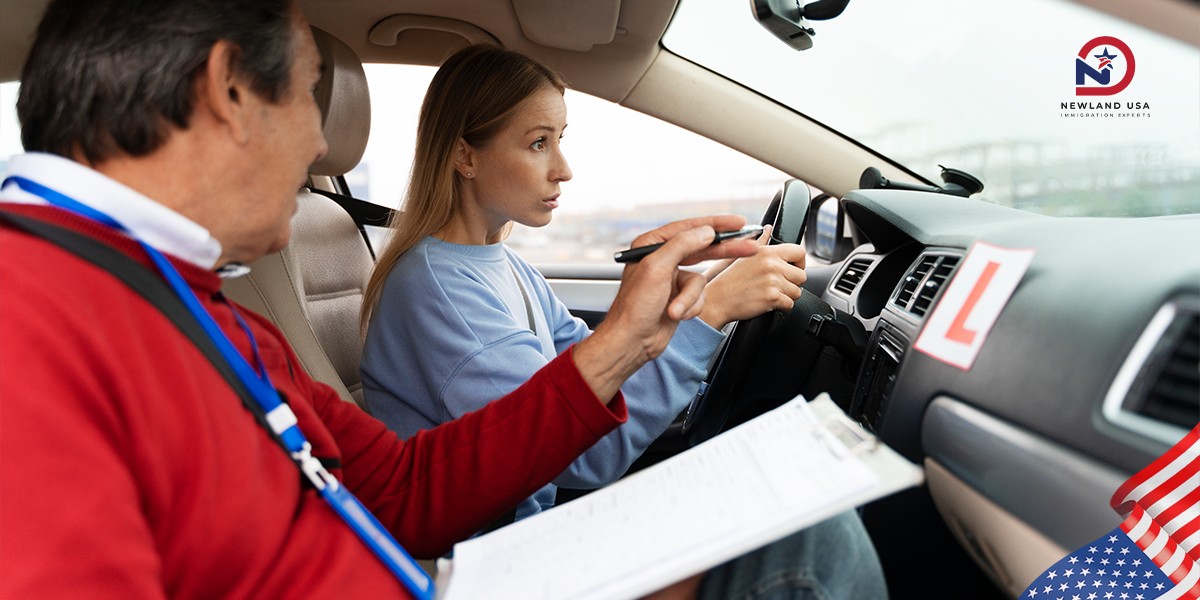
After gaining sufficient practical experience, you need to schedule an online appointment to take the practical test. This is the final stage of the driver’s license test in the US process.
One advantage for Vietnamese people is that in the US, driving in the US also uses left-hand steering similar to Vietnam. Throughout the practical test, the examiner will sit beside you and ask you to perform various driving situations to assess your skills.
Only when you pass both test stages will you officially own a full US driver’s license with complete privileges.
3. Conditions and Requirements for Test Participation
3.1. Legal Status Requirements
To register for the driver’s license test in the US, you must belong to one of the following groups:
- US citizens with valid identification documents
- Foreign nationals with valid passport and visa
- Green card holders (permanent residents) according to regulations
3.2. Age Requirements
Unlike Vietnam where the minimum age is 18, in the US you can start taking the driver’s license test from age 16, depending on specific state regulations. However, there’s an important distinction:
- Ages 16-17: Need an adult present when driving in the US
- Ages 18 and up: Allowed to drive independently
3.3. Health Requirements
All candidates must have a health certificate confirming they have the ability to safely operate motor vehicles according to US standards.
4. Required Documents and Paperwork
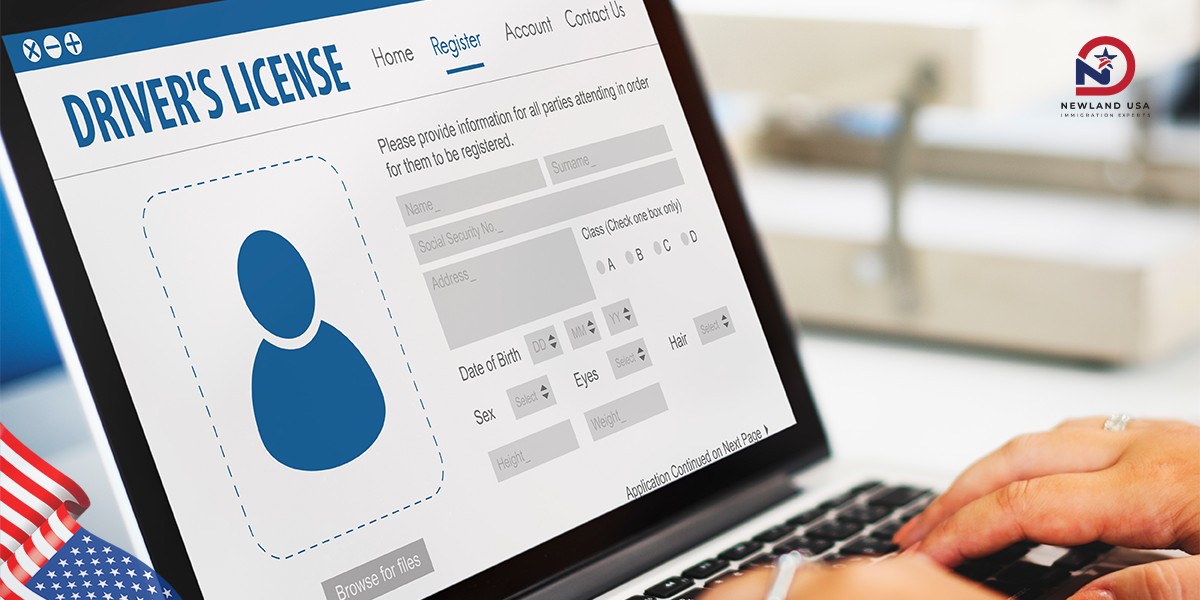
4.1. For Test Registration Stage
When registering at the DMV, you need to prepare:
- Identification documents (ID/green card/passport/I-94 card for temporary visas)
- US driver’s license application form (original)
- Standard-sized ID photos
- Health examination certificate from a recognized medical facility
4.2. For Theory Test Day
On test day, you must bring:
- Valid identification documents
- Approved test registration form and test fees
- Be prepared for ID photo and thumbprint collection
- Provide detailed personal information and tax ID number (if no SSN available)
- Health certificate
5. Costs and Validity Period
5.1. Test Fees
The cost to register for the driver’s license test in the US for a temporary permit is approximately $25. However, fees may vary between states and regions. To save on driving lesson costs, you can ask relatives or friends over 25 who have a US driver’s license to provide guidance.
For learning at training centers, fees range from $400-600 depending on the state and student’s age. In Houston, for example, the average cost is about $400.
5.2. Validity Period
A US driver’s license typically has a validity period of up to 16 years. However, the specific duration depends on:
- Type of license (temporary or official)
- Age of the registrant
- Individual state regulations
Some states may issue short-term or temporary permits with different validity periods.
6. Common Mistakes and Solutions
6.1. Driving Technique Errors
Many people new to driving in the US often make the following mistakes:
Improper steering wheel handling: Gripping the steering wheel too tightly or rigidly causes unstable vehicle movement. The solution is to maintain a comfortable posture and grip the steering wheel moderately for better vehicle control.
Inability to maintain straight direction: This error stems from observing both left and right lane markings simultaneously, causing loss of concentration. The correct technique is to focus on the left marking and use rearview mirrors to check position.
Inappropriate brake usage: Braking too frequently while moving can be dangerous for vehicles behind you.
6.2. Traffic Rule Violations
Failure to signal when turning: Many people forget to use turn signals or don’t check rearview mirrors before turning left/right, creating traffic hazards.
Improper lane changing: Hasty lane changes or sudden braking before changing lanes affects other vehicles.
Inadequate reverse driving skills: Beginners often struggle when reversing. The basic principle is to focus on the car’s rear – wherever you want the rear to go, steer in that direction.
7. Safety Principles to Follow
When taking the driver’s license test in the US, especially the practical portion, you must strictly follow:
- Maintain appropriate speed according to each area’s regulations
- Always signal with turn indicators when changing direction or lanes
- Observe carefully through mirrors and turn your head to check blind spots before performing any maneuver
- Follow right-of-way principles according to traffic laws
- At “STOP” sign locations, come to a complete stop for 3 seconds and observe carefully before continuing
8. Tips for Test Preparation
To increase your chances of success when taking the driver’s license test in the US, you should:
- Study materials thoroughly: Each state has its own guidebook, read carefully and practice sample tests.
- Practice regularly: After getting your temporary permit, spend time practicing driving in the US under various conditions.
- Get familiar with the test vehicle: If possible, practice with the type of vehicle you’ll use during the practical test.
- Stay calm: Tension can affect your ability to demonstrate your skills.
9. Conclusion
Getting a US driver’s license is an important step in the journey of settling and integrating into life in America. Although the driver’s license test in the US process has specific requirements and needs careful preparation, with complete information and proper practice, you can definitely succeed.
At Newland USA, we not only provide US immigration services but also support customers in their cultural integration journey in this new country. If you need more information, please contact Newland USA immediately at hotline 0785591988 or email: newsletter@newlandusa.asia for detailed and free consultation.
News Categories

Related news

Who Is the ESTA Program For? How to Assess Your Fit Before Applying in 2026

Who Is the ESTA Program For? How to Assess Your Fit Before Applying in 2026

From Motorcycle Mechanic to Automotive Technician in the U.S.: Skills and Qualifications to Prepare in 2026
AI in Auto Repair in the U.S. 2026: How Artificial Intelligence Diagnoses Vehicle Problems Faster and More Accurately
7 Key Technologies Every Industrial Maintenance Technician in the U.S. Needs to Know in 2026
PLC & Automation Skills: A Launchpad for Maintenance Technicians in the United States in 2026
What Is the ASE Certification? Requirements, Exam Roadmap, and Its Importance for Auto Technicians in the U.S. in 2026

EB5 Capital Recovery Time: How Long It Takes and the Key Milestones
Electric Vehicle Technicians in the U.S.: The “Golden” Skills Helping Vietnamese Auto Mechanics Get Ahead of the 2026 EV Trend