First Time Going to America: What You Need to Know

Your first trip to the land of the stars and stripes can make many people feel anxious and overwhelmed. From preparing documents and papers to immigration procedures, each step requires careful attention and thorough understanding. This article by Newland USA will share comprehensive experience and detailed guidance to make your first time going to America as smooth as possible.
1. Preparing Necessary Documents and Papers
Before departure, the first and most important thing for your first time going to America is to prepare all required documents according to regulations. Missing any document can cause unwanted troubles for your trip.
1.1. List of Required Documents
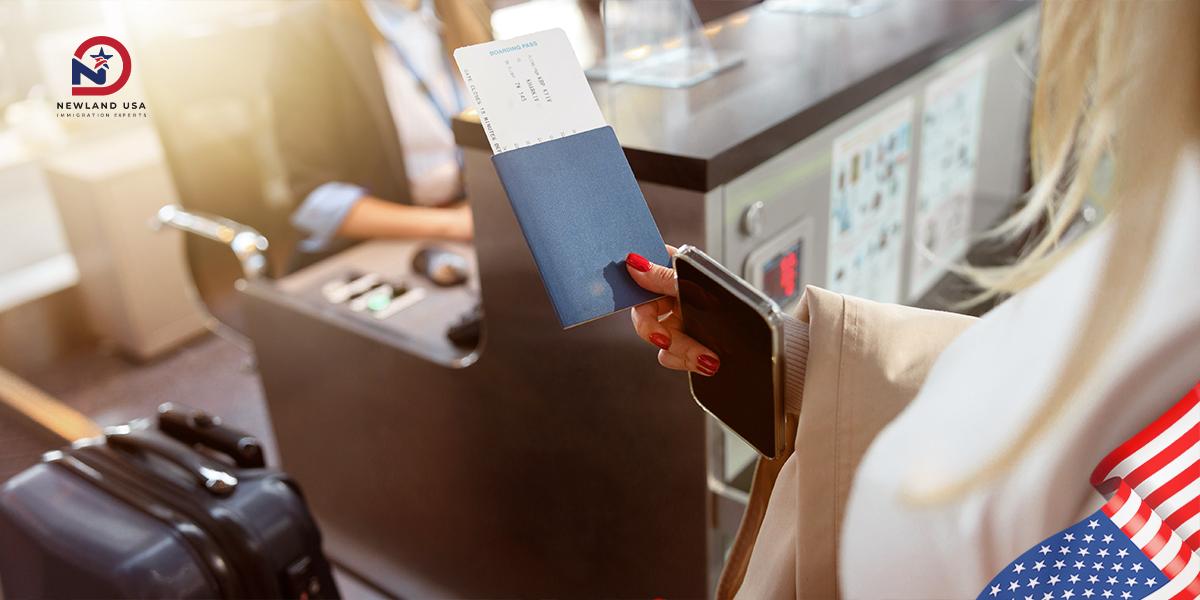
Flight tickets are the first documents you need to have, either electronic versions on your phone or printed copies. Booking tickets early not only helps save costs but also ensures suitable seating for the long journey.
Passport must be valid for at least 6 months from your planned return date to Vietnam. This is a mandatory requirement that the US applies to all international visitors. More importantly, the passport you use must match the information registered when purchasing flight tickets.
US entry visa issued by the US Embassy or Consulate in Vietnam is an indispensable document. Depending on the purpose of your trip, you may need a tourist visa, study visa, work visa, or immigration visa like EB3.
For flights with transit, transit visas may be required depending on the country where you stop. Checking transit regulations in advance will help avoid unexpected situations at the airport.
1.2. Special Documents for Children
Families with children need to prepare some special documents. Children under 14 years old need birth certificates that are translated and notarized. For newborns under 1 month old, birth certificates are mandatory documents.
1.3. Financial Preparation
Besides documents, preparing an appropriate amount of cash is also very important. This money is not only used for expenses at the airport but also for the first few days when you set foot in America.
2. Travel Process to America
The journey for your first time going to America includes many complex procedural steps. Understanding each stage will help you prepare better and minimize stress during the travel process.
2.1. Check-in Stage at the Airport
Arriving at the airport at least 3 hours before departure for international flights is advice from many people’s America travel experience. This time allows you to complete all procedures comfortably without rushing.
At the check-in counter, staff will check all your documents and weigh your luggage. Checked baggage usually has a weight limit of 23kg for economy class. If you exceed this, you’ll have to pay additional baggage fees according to the airline’s regulations.
2.2. Exit Procedures and Security Checks
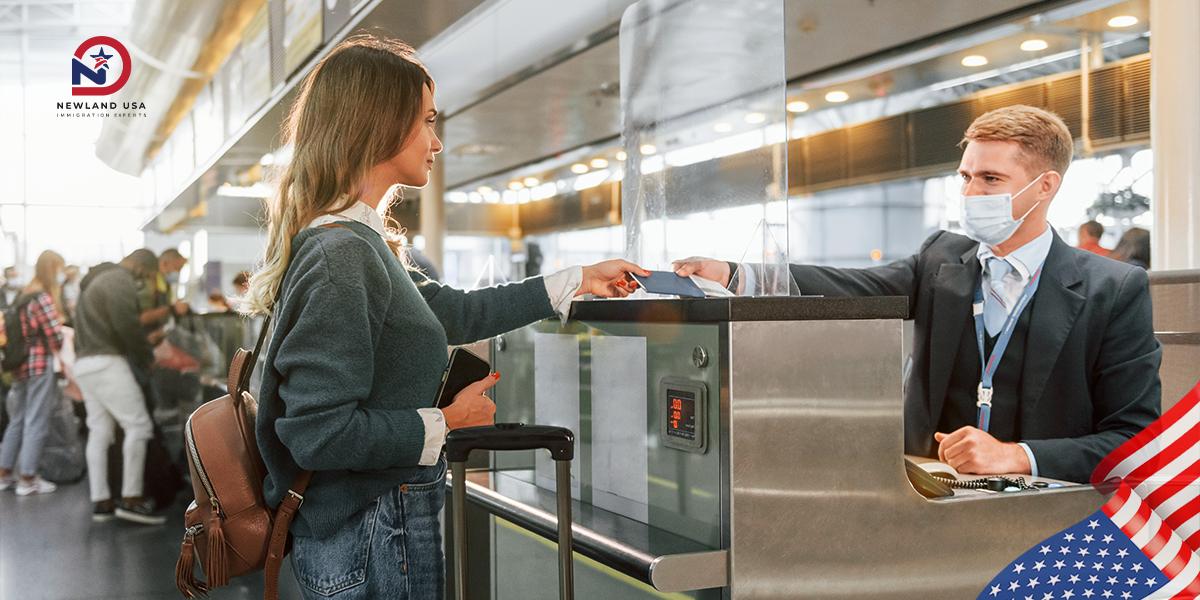
After check-in, you’ll go to the departure area. Customs officers will check your passport, visa, and stamp the exit seal on your passport. This is the official confirmation that you’re leaving Vietnamese territory.
The security check process also takes some time. You need to remove shoes, belts, watches, and put all metal objects in separate trays. Laptops and large electronic devices also need to be removed from bags.
2.3. Experience on Long Flights
Flights from Vietnam to America usually last 17 to 24 hours, depending on the number of transits. Preparing mentally and bringing items for this long journey is an important part of America travel experience.
3. US Immigration Procedures
When the plane lands at a US airport, the US immigration process officially begins. This is the most important stage of your first time going to America.
3.1. Filling Out Form I-94
On the plane, flight attendants will distribute Form I-94 to passengers. This is a document confirming your legal US immigration. Filling out this form needs to be done carefully and accurately.
Form I-94 requires basic personal information such as full name, nationality, date of birth, address of stay in the US, and purpose of trip. All information must match what you declared when applying for your visa.
3.2. Meeting with Customs Officers
At the US immigration checkpoint, customs officers will thoroughly check your passport, visa, and Form I-94. They may ask some questions about the purpose of your trip, duration of stay, and place of residence.
Common questions include: “What is the purpose of your trip?”, “How long will you stay in America?”, “Where will you stay in America?”. Answer honestly and consistently with what you declared in your visa application.
3.3. Customs and Baggage Inspection
After completing US immigration procedures, you’ll go to the baggage claim and customs inspection area. Customs officers will cross-check your actual baggage with what you declared on the customs form.
The US has strict regulations about prohibited and restricted items. Fresh food, plants, animals, and many types of medicine are not allowed into the country. Violating these regulations can lead to heavy fines or even denial of entry.
4. Cash Regulations
One of the most frequently asked questions about first time going to America is how much cash you can bring. Knowing these regulations helps you prepare finances appropriately and avoid trouble with customs.
4.1. Exit Regulations from Vietnam
When exiting Vietnam for tourism or short-term business purposes, individuals can carry amounts under $5,000 USD or equivalent without declaration. Amounts exceeding this require complete customs declaration procedures.
For immigration cases, regulations are different. Individuals can carry up to $10,000 USD. If total assets exceed $50,000 USD, you need documents proving purpose of use and can only carry 20% of the amount, with the remainder transferred through banks.
4.2. Entry Regulations in the US
The US doesn’t limit the amount of cash visitors can bring into the country, but any amount of $10,000 USD or more (including converted foreign currency) must be declared to customs. Failure to declare can lead to confiscation of all money and serious legal penalties.
5. Common Challenges
5.1. Language Barriers
English is the primary language in the US, and not everyone has the ability to communicate fluently from the start. This can cause difficulties in asking for directions, daily communication, or handling administrative procedures.
Preparing some basic conversational phrases, downloading translation apps on your phone, and carrying a pocket dictionary will help you feel more confident in the early days.
5.2. Culture Shock
Cultural differences between East and West can make many people feel overwhelmed. From greeting styles, eating habits, to basic social rules can all be significantly different.
Americans typically value independence, straightforward communication, and respect for personal space. Understanding and respecting these cultural characteristics will help you integrate more quickly.
5.3. Adapting to a New Living Environment
Climate, food, transportation, and pace of life in America can be completely different from Vietnam. Many people experience a period of “homesickness” in the first few weeks.
Finding local Vietnamese communities, maintaining contact with family back home, and gradually discovering positive aspects of new life will make this process smoother.
6. Tips for Integrating in America
With America travel experience from many generations of Vietnamese immigrants, some tips have proven effective in integrating with the new society.
6.1. Smart Housing Choices
Many Vietnamese choose to live in areas with large Vietnamese communities like California, Texas, or Virginia. This makes it easy to find familiar foods, Vietnamese-language support services, and build social networks.
However, complete integration with American society is also very important. Balancing maintaining cultural identity and learning new culture is the key to success.
6.2. Investing in Language Learning
English is not just a communication tool but also the key to many job, education, and life opportunities. Participating in English classes for immigrants (ESL) is usually free and very helpful.
Practicing English daily through watching movies, reading newspapers, and participating in social activities will help you progress quickly.
6.3. Participating in Community Activities
Religious organizations, sports clubs, volunteer groups, or skill classes are excellent places to meet and make friends with both Americans and other immigrant communities.
Active participation in social activities not only helps improve language skills but also creates a sense of belonging and acceptance.
7. Important Legal Considerations
When immigrating to the US and living there, complying with local laws is extremely important. Violations, even small ones, can affect your legal status.
7.1. Maintaining Good Legal Status
For those with temporary visas, not overstaying is the most important thing. Overstaying can lead to entry bans for many years, even permanently.
Those with immigration visas like EB3 also need to clearly understand obligations to maintain permanent resident status.
7.2. Understanding Rights and Obligations
Each type of visa comes with specific rights and obligations. Student visas allow part-time work on campus, temporary work visas have limitations on job changes, while permanent residents have almost full rights like US citizens except voting rights.
Thoroughly understanding your legal status and consulting with immigration lawyers when necessary will help you avoid unnecessary risks.
8. Preparing for the Future
Your first time going to America is just the beginning of a long journey. Preparing well for the future will help you maximize the opportunities this country offers.
8.1. Building Networks
Relationships play an important role in American society. Building professional networks, making friends with colleagues, neighbors, and joining professional organizations will open many future opportunities.
LinkedIn, networking events, and industry clubs are useful tools for expanding relationships.
8.2. Investing in Education and Personal Development
The American education system provides many learning opportunities. From professional skill courses to undergraduate and graduate programs, continuous learning and skill improvement will help you succeed in your career.
Many universities and community colleges offer discounted tuition for in-state residents, creating favorable conditions for accessing high-quality education.
9. Conclusion
The journey of your first time going to America is an important turning point. From preparing documents and papers, understanding US immigration processes, to integrating with new life, each step requires thorough preparation and appropriate knowledge.
At Newland USA, we not only provide US immigration services but also support clients in their journey of cultural integration in this new country. If you need more information, please contact Newland USA immediately at hotline 0785591988 or email: newsletter@newlandusa.asia for detailed and free consultation.
News Categories


Related news
Who Is the ESTA Program For? How to Assess Your Fit Before Applying in 2026

Who Is the ESTA Program For? How to Assess Your Fit Before Applying in 2026

From Motorcycle Mechanic to Automotive Technician in the U.S.: Skills and Qualifications to Prepare in 2026
AI in Auto Repair in the U.S. 2026: How Artificial Intelligence Diagnoses Vehicle Problems Faster and More Accurately
7 Key Technologies Every Industrial Maintenance Technician in the U.S. Needs to Know in 2026
PLC & Automation Skills: A Launchpad for Maintenance Technicians in the United States in 2026
What Is the ASE Certification? Requirements, Exam Roadmap, and Its Importance for Auto Technicians in the U.S. in 2026

EB5 Capital Recovery Time: How Long It Takes and the Key Milestones
Electric Vehicle Technicians in the U.S.: The “Golden” Skills Helping Vietnamese Auto Mechanics Get Ahead of the 2026 EV Trend