How Long Is a U.S. Green Card Valid? The Complete 2026 Renewal Guide
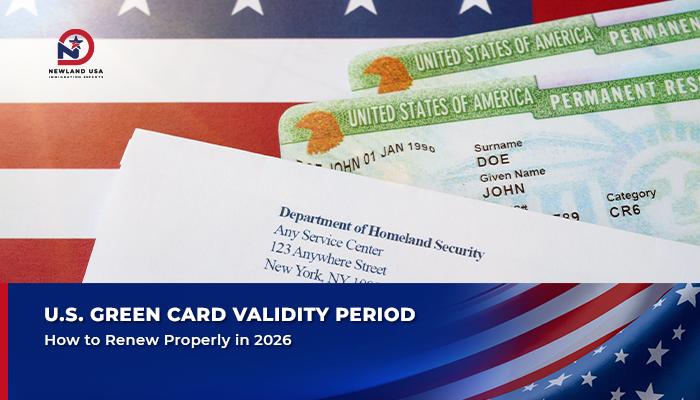
For every lawful permanent resident in the United States, understanding the validity period of your Green Card isn’t just a legal requirement — it directly affects your right to work, travel internationally, and pursue naturalization down the road. In 2026, U.S. Citizenship and Immigration Services (USCIS) continues to roll out important updates on procedures, fees, and renewal timelines. In the article below, Newland USA will help you understand exactly how many years a U.S. Green Card is valid, tell the different card types apart, and walk you through the Green Card renewal process in 2026 based on the latest regulations.
1. Overview of the U.S. Green Card and Why the Validity Period Matters
The U.S. Green Card — officially known as the Permanent Resident Card (Form I-551) — is an identification document that confirms a person’s status as a Lawful Permanent Resident (LPR) in the United States. This card allows the holder to live, work, and travel freely within U.S. territory, and it also serves as the foundation for eventually becoming a U.S. citizen through the naturalization process.
However, one point that often causes confusion is this: the validity period of a Green Card only refers to the expiration of the physical card itself, not the expiration of your permanent resident status. LPR status is, by nature, permanent and only ends if the individual voluntarily gives it up, commits a serious violation, or is ordered deported by a court. So even after the card expires, the holder still maintains lawful permanent resident status — but they need to get the card renewed to continue using it as official proof.
U.S. immigration law requires periodic card renewal for several important reasons: to update photos and biometric fingerprints, to apply new anti-fraud features, and to help USCIS verify each permanent resident’s personal information over time.

2. How Many Years Is a U.S. Green Card Valid? A Detailed Breakdown
The question “how many years is a U.S. Green Card valid?” is consistently one of the most common questions among Vietnamese immigrants. In practice, not all Green Cards have the same validity period. USCIS divides them into two main categories based on the type of approval:
2.1. Permanent Green Card — 10 Years
This is the most common type, issued to the majority of immigrants who come through family sponsorship, employment-based categories (including EB-1, EB-2, EB-3, and EB-2 NIW), and most other immigration programs. The 10-year Green Card confirms that the holder has fully met all permanent residency requirements and has been recognized by USCIS as an LPR without any conditions attached.
After each 10-year cycle, the permanent resident must file Form I-90 (Application to Replace Permanent Resident Card) to receive a new version of the 10-year Green Card. This process is purely administrative and does not affect the permanent resident status already granted.
2.2. Conditional Green Card — 2 Years
The second type is valid for 2 years and is issued to two main groups:
- Spouses of U.S. citizens whose marriage was less than two years old at the time the permanent residency application was approved. USCIS imposes this condition to verify that the marriage is genuine.
- EB-5 investors and their dependents, to make sure that the commitments regarding investment capital and job creation for U.S. workers are fully carried out.
Unlike the 10-year card, a conditional Green Card cannot be “renewed” in the usual sense. Within 90 days before the card expires, the holder must file a petition to convert to permanent resident status — using Form I-751 (for marriage-based cases) or Form I-829 (for EB-5 investors). Once USCIS approves the petition, the applicant receives the official 10-year Green Card.
2.3. Green Cards Without an Expiration Date
Some older Green Card versions issued before the 1990s do not have an expiration date printed on them. Legally, these cards still confirm LPR status, but USCIS recommends that holders file Form I-90 to get a new-generation card to avoid inconveniences when traveling, working, and conducting transactions in the U.S.
3. Why You Need to Stay on Top of Your Renewal Deadline
Keeping up with your Green Card validity period is more than just an administrative duty. An expired card can lead to a whole range of real-life problems for permanent residents, including:
- Difficulty verifying your work authorization: Under I-9 requirements, U.S. employers must verify the legal status of new employees. An expired card can disrupt the hiring process.
- Trouble with international travel: Airlines and U.S. Customs and Border Protection (CBP) typically require a valid Green Card to allow re-entry.
- Issues when renewing your driver’s license: Many states tie the expiration date of your driver’s license directly to the validity of your permanent resident card.
- Impact on social benefits: Signing up for federal assistance programs, opening a bank account, or applying for a loan may be denied or delayed.
- Effect on your path to citizenship: While not a strict requirement, having a valid card helps the N-400 application process go more smoothly.
This is exactly why USCIS strongly recommends filing your renewal application within 6 months before the card’s expiration date.
4. Step-by-Step Guide to Renewing Your Green Card in 2026 Under the Latest USCIS Rules
The Green Card renewal process in 2026 has seen several notable improvements compared to previous years, especially when it comes to online filing, fees, and automatic extension periods. Here’s the process step by step:
Step 1: Prepare Your Documents
Before starting the Green Card renewal process in 2026, applicants need to gather the following:
- A copy of the current Green Card (both sides).
- A copy of a valid passport and other acceptable identification.
- Evidence of any changes to personal information, if applicable (marriage certificate, divorce decree, legal name change document).
- A local police report if the card was lost or stolen.
- Passport-size photos (if USCIS requests additional ones).
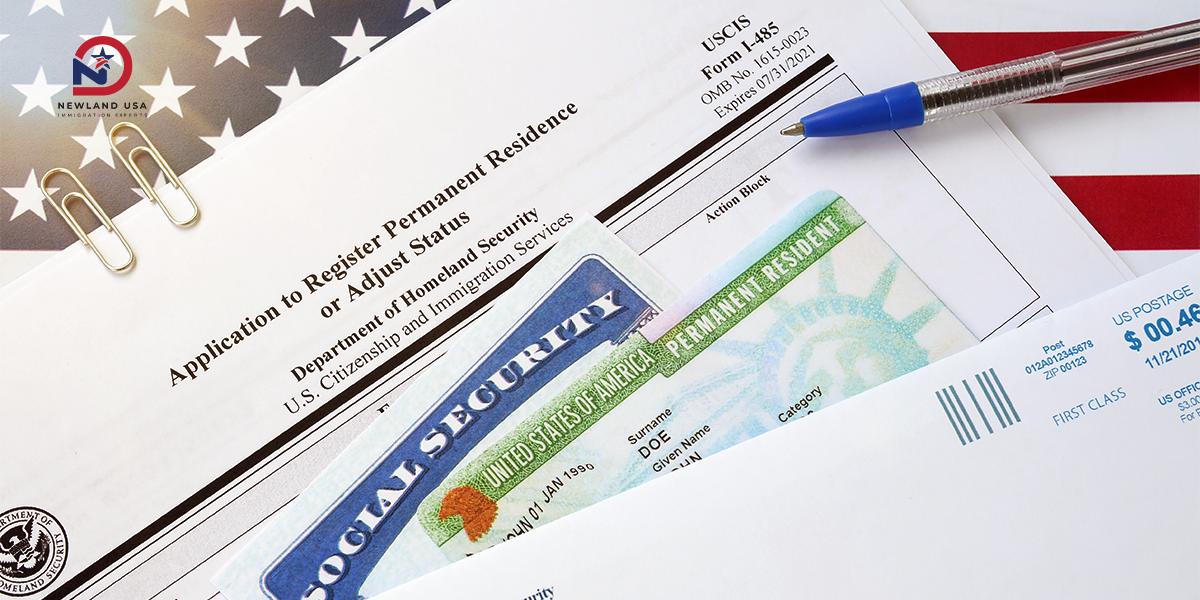
Step 2: Complete Form I-90
This is the official form for requesting a replacement Permanent Resident Card. Applicants can choose to:
- File online through a myUSCIS account: This is the recommended option because processing is faster, fees are lower, and you can track the status of your case in real time.
- File a paper application by mail: Send it to the USCIS mailbox in Phoenix, Arizona at the official address.
Important note: Starting October 28, 2025, USCIS no longer accepts personal checks, business checks, or money orders for paper-filed applications, except in certain special exemption cases.
Step 3: Pay the Filing Fee
As of 2026, the Green Card renewal fees are as follows:
- Online filing: $415
- Paper filing: $465
One welcome change is that since April 2024, USCIS has rolled the biometric fingerprint fee into the total filing fee, so applicants no longer need to pay the separate $85 biometrics fee that used to apply. For applicants experiencing financial hardship, Form I-912 can be filed to request a fee waiver.
Step 4: Receive Your Receipt Notice (Form I-797C)
After USCIS accepts the application, the applicant will receive a written notice with a 13-character receipt number. This document is extremely important because it automatically extends the validity of the old card.
Starting September 10, 2024, USCIS extended this automatic extension period from 24 months to 36 months to deal with the backlog of cases. This means that by combining an expired Green Card with the I-797C receipt notice, permanent residents can continue working and traveling for up to three years from the expiration date shown on the card.
Step 5: Complete Your Biometrics Appointment
USCIS will schedule an appointment at the nearest Application Support Center (ASC), usually within 2 to 6 weeks after receiving the application. At this appointment, immigration staff will collect fingerprints, take a photo, and capture a digital signature. Missing the appointment without a valid reason can result in the entire case being denied.
Step 6: Track Your Case and Receive the New Card
Applicants can check the progress of their case through the Case Status Online tool on the USCIS website using the receipt number. Once approved, the new card will be delivered by mail to the registered address.
5. Processing Times in 2026
One of the top concerns when renewing a Green Card in 2026 is the wait time. According to updated data from USCIS as of mid-2026:
- Average processing time: 8 to 14 months for most I-90 applications.
- Complex cases (those involving criminal history, extended time outside the U.S., or a Request for Evidence — RFE): Can take up to 16 months or longer.
- Some special cases: May be completed within 6 to 8 months.
Compared to the average of 10.5 months reported by USCIS at the beginning of 2026, it’s clear that the system is still dealing with a significant backlog. That’s why filing early — at least 6 months before the expiration date — is a highly recommended approach.
6. Renewing While You’re Outside the U.S.
For permanent residents who are outside the United States when their Green Card expires, the process works a bit differently. If you’ve been away from the U.S. for less than one year and your card is still valid for at least 6 months, USCIS recommends returning to the U.S. first and then filing Form I-90.
If your card has already expired while you’re abroad, you’ll need to contact the nearest U.S. Consulate to apply for a Transportation Letter or Boarding Foil — a document that allows airlines to let you board a flight back to the U.S. This is a separate procedure from the I-90 process and should be carefully discussed with an immigration attorney.
7. The I-551 (ADIT) Stamp — An Emergency Solution
In situations where the I-797C receipt notice isn’t enough proof for certain specific needs (for example, urgent travel or a job that requires strict identity verification), permanent residents can schedule an appointment at a USCIS office to get an ADIT stamp (Alien Documentation, Identification & Telecommunications) placed in their passport.
This stamp carries the same weight as a Green Card for a period of 6 to 12 months, providing strong support when you need to prove your lawful resident status right away.
8. Common Mistakes to Avoid
To make sure your Green Card renewal in 2026 goes smoothly, applicants should avoid these common errors:
- Filling out Form I-90 incorrectly or leaving fields blank, which leads to a Request for Evidence or outright denial.
- Failing to update your residential address with USCIS, causing important letters and notices to get lost.
- Filing the wrong form — for example, using Form I-90 to try to convert from a conditional card to a permanent one (this requires Form I-751 or I-829 instead).
- Filing too late, when the card has already been expired for more than 6 months with no backup plan in place.
- Missing the biometrics appointment without giving advance notice.

9. Conclusion
Understanding the validity period of your U.S. Green Card and staying proactive about renewal procedures is an essential responsibility for every lawful permanent resident. The question “how many years is a U.S. Green Card valid?” has a clear answer: 10 years for a permanent Green Card, 2 years for a conditional one, and in some special cases, no expiration date is printed at all. Holding a 10-year Green Card gives residents the peace of mind to live, work, and fully enjoy the rights that come with permanent residency, while also laying a solid foundation for future naturalization.
For the Vietnamese community building their lives in America, understanding the rules and following them correctly when it comes to Green Cards isn’t just about legal compliance — it’s about protecting the hard-earned results of the immigration journey that you and your family have worked so hard to build.
Learn more:
- Securing the Green Card and Getting Your Money Back: How to Build an Effective EB5 Visa Exit Strategy
- Working at Medical Glove Factories in the USA: Salary, Benefits, and EB3 Green Card Opportunities
- Form I-131A – How to Board a Flight Back to the U.S. When You Lose Your Green Card Abroad
- 5 Important Steps When You Lose Your U.S. Green Card
- What is Form I-829? Guide to Filing a Petition to Remove Conditions on 2-Year Green Card for EB5 Immigrant Investor Program
News Categories


Related news

AI in Auto Repair in the U.S. 2026: How Artificial Intelligence Diagnoses Vehicle Problems Faster and More Accurately

7 Key Technologies Every Industrial Maintenance Technician in the U.S. Needs to Know in 2026

PLC & Automation Skills: A Launchpad for Maintenance Technicians in the United States in 2026
What Is the ASE Certification? Requirements, Exam Roadmap, and Its Importance for Auto Technicians in the U.S. in 2026

EB5 Capital Recovery Time: How Long It Takes and the Key Milestones

Electric Vehicle Technicians in the U.S.: The “Golden” Skills Helping Vietnamese Auto Mechanics Get Ahead of the 2026 EV Trend

US Engineering & Maintenance Labor Shortage 2026: The Driving Force Behind the EB3 Skilled Workers Visa Policy

Industrial Maintenance Technician: Job Duties, Requirements & U.S. Immigration Opportunities in 2026

Lương thợ sửa xe tại Mỹ: Cách tối ưu giờ công để nhân đôi thu nhập năm 2026