Why does the Urban TEA project consistently remain attractive in the EB-5 program?

Since the Reform and Integrity Act (RIA) took effect in 2022, the EB-5 program market has witnessed intense competition between two main types of EB-5 projects: Rural and Urban TEA. Although Rural projects receive priority processing, EB-5 projects in urban areas (Urban TEA) continue to maintain their attractive position thanks to distinct advantages in financial structure, safety, and familiarity with investors.
1. Overview of the two types of projects in the EB-5 program
The EB-5 program today is no longer simply centered around a single model. After the RIA Act was officially implemented, the EB-5 investment ecosystem has been divided into several different groups, with the most prominent being EB-5 projects in Rural areas and Urban TEA (urban areas with high unemployment rates or economic hardship).
According to leading experts in the field of EB-5 investment immigration, both groups offer distinct advantages and meet the diverse needs of international investors.
What’s special is that choosing between Rural and Urban TEA isn’t simply based on processing speed alone, but also depends on many other criteria such as long-term settlement goals, family situation, financial capacity, and each individual’s willingness to accept risk.
2. Rural Projects – Priority choice for processing speed
EB-5 projects in the Rural category have become a prominent trend since 2022 thanks to USCIS’s priority processing policy. According to actual statistics, I-526 petition processing time for this group ranges from 6-12 months, significantly faster than other groups.
Most investors today are trending toward prioritizing EB-5 investment opportunities in rural areas because the time advantage is a key factor in many families’ migration decisions. USCIS has shown clear initiative in processing petitions in this category, creating a strong wave of interest from the global investor community.
However, experts also warn against following trends while overlooking the actual quality assessment of EB-5 projects. Anderson emphasizes the importance of caution: “We shouldn’t cater to market demand at the expense of EB-5 project integrity. Rural offers many excellent opportunities, but also comes with specific risks.”
3. Urban TEA – Sustainable choice for smart investors
3.1. Concept and characteristics of Urban TEA
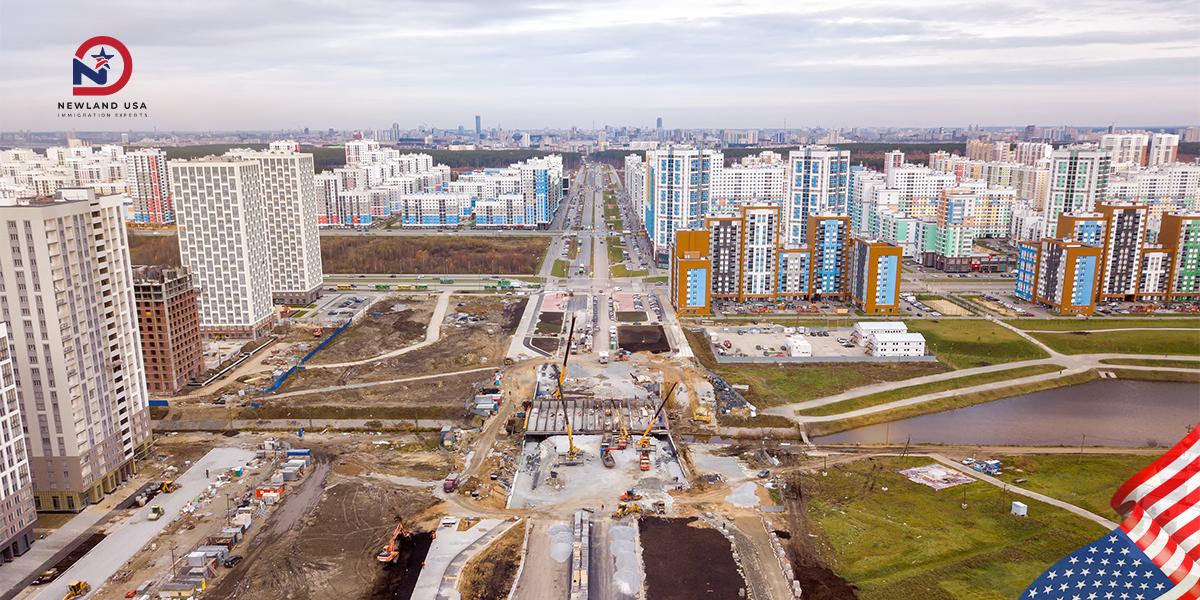
Urban TEA is a term referring to EB-5 projects located in urban areas within Targeted Employment Areas (TEA) – areas with high unemployment rates or economic hardship. These EB-5 projects belong to the Unreserved category, not among the three priority groups (Rural, High Unemployment Areas, Infrastructure) specified by the 2022 RIA Act.
Before the EB-5 program was restarted in 2022, Urban TEA dominated nearly the entire market. Representatives from a group of long-time US immigration experts said: “When the EB-5 program was relaunched, most available EB-5 investment opportunities on the market belonged to the HUA group – essentially still Urban TEA. In the first 12-24 months, I processed countless petitions for this group.”
3.2. Outstanding advantages of Urban TEA
Despite not receiving priority processing like Rural, Urban TEA maintains strong appeal thanks to distinct strengths:
Diverse and flexible financial structure
EB-5 projects under Urban TEA typically involve local banks and reputable financial institutions. These entities have deep understanding of laws and operational mechanisms in major cities, creating a more professional and transparent EB-5 investment ecosystem.
To compete with Rural’s speed, many urban EB-5 projects have offered attractive terms such as shorter investment periods, higher expected returns, along with flexibility in payment methods and capital disbursement timing.
Familiarity and personal connections
Wall notes that many investors still prefer Urban TEA because they have personal connections to these areas – where they previously lived, have relatives residing, frequently work or travel, or where their company is headquartered.
This psychological factor plays a significant role in EB-5 investment decisions, as investors feel more comfortable investing in locations they already know and have actual connections with.
Better transparency and risk management
EB-5 projects in urban areas are typically operated by Regional Centers that have been operating for many years, with clear management experience and completion history. This provides a higher level of security for investors concerned about capital preservation.
Strict monitoring systems, regular reporting processes, and third-party involvement in project auditing are significant advantages of Urban TEA compared to some EB-5 investment opportunities in rural areas.

4. Factors to consider when choosing an EB-5 project
4.1. Investors living outside the US with children approaching 21 years old
For investors currently residing abroad with an urgent need to settle quickly, speed is the top priority factor. In this case, Rural EB-5 projects are more suitable thanks to fast processing times.
4.2. Families with young children far from age 21
One of the biggest challenges of the EB-5 program is the issue of “aging out” – when investors’ children exceed 21 years old during the review process and no longer qualify for dependent immigration.
However, for families with young children who aren’t rushed for time, Urban TEA becomes a reasonable choice. They can wait a few more years for their children to complete their education program at home before moving to the US.
4.3. Investors already present in the US
Investors living in the US under other Visa categories (such as H-1B, L-1, F-1) can receive temporary EAD (Employment Authorization Document) and AP (Advance Parole) after filing the I-526 petition. This allows them to work and travel freely while waiting for their green card.
In this situation, Rural’s speed advantage is no longer critically important, and Urban TEA with potentially higher returns becomes a viable option.
4.4. Investors with stable lives abroad
For individuals and families with comfortable lives, stable careers in their current country, and no urgent pressure regarding immigration timing, Urban TEA provides optimal balance between speed, safety, and investment returns.
4.5. Risk of Visa retrogression
An important factor to note is that if EB-5 investment demand in the Rural category increases excessively, a backlog situation may occur – petition accumulation due to insufficient Visa numbers. When this happens, Urban TEA will become a strategic alternative for investors.

5. EB-5 market trends in the coming period
According to expert observations, the EB-5 program market is gradually becoming more balanced. In the initial period after RIA took effect, the market needed time to develop suitable Rural EB-5 projects in terms of structure and model.
Currently, both project groups have distinct strengths and meet the needs of different investor segments. Urban TEA hasn’t lost its position at all, but is becoming the perfect complementary choice for those who prioritize safety factors, familiarity, and stronger financial structure over processing speed.
6. Expert advice for EB-5 investors
Experts offer advice to investors considering participation in the EB-5 program: “The decision between Rural and Urban TEA has no absolutely right or wrong answer. What’s important is to thoroughly evaluate personal goals, family situation, financial capacity, and your own risk tolerance.”
Experts also emphasize the importance of working with reputable immigration specialists and experienced Regional Centers: “Choosing the right EB-5 project not only affects the speed of receiving a green card but also determines the safety of investment capital and the future of the entire family.”
7. Conclusion
The EB-5 program is now providing international investors with more diverse choices than ever before. While Rural offers superior processing speed, Urban TEA maintains its appeal thanks to professional financial structure, high transparency, familiarity, and better risk management capabilities.
Choosing between these two types of EB-5 projects needs to be based on a comprehensive picture of settlement goals, timeline, family situation, financial capacity, and each investor’s desired level of security. No option is absolutely perfect – only the option most suitable for individual needs and circumstances.
Newland USA, with an experienced team of experts and the motto “Stable settlement – Lifelong prosperity”, is ready to advise and support you with information related to the EB-5 investment program. Please contact Newland USA immediately via hotline 0785591988 or email: newsletter@newlandusa.asia for detailed and free consultation.
Learn more:
- The Most Effective EB5 Visa Solution in the Context of Trump Launching Gold Card
- What is Form I-829? Guide to Filing a Petition to Remove Conditions on 2-Year Green Card for EB5 Immigrant Investor Program
- The Optimal Choice for EB5 Investors to Manage a Green Card Investment Project
- Paying Taxes and What EB5 Investors Need to Know
- Is Native Language Proficiency a Mandatory Requirement for EB5 Investment?
News Categories



Related news

Who Is the ESTA Program For? How to Assess Your Fit Before Applying in 2026

Who Is the ESTA Program For? How to Assess Your Fit Before Applying in 2026

From Motorcycle Mechanic to Automotive Technician in the U.S.: Skills and Qualifications to Prepare in 2026

AI in Auto Repair in the U.S. 2026: How Artificial Intelligence Diagnoses Vehicle Problems Faster and More Accurately

7 Key Technologies Every Industrial Maintenance Technician in the U.S. Needs to Know in 2026

PLC & Automation Skills: A Launchpad for Maintenance Technicians in the United States in 2026

What Is the ASE Certification? Requirements, Exam Roadmap, and Its Importance for Auto Technicians in the U.S. in 2026

EB5 Capital Recovery Time: How Long It Takes and the Key Milestones

Electric Vehicle Technicians in the U.S.: The “Golden” Skills Helping Vietnamese Auto Mechanics Get Ahead of the 2026 EV Trend