Auto Repair Technician Shortage in the U.S.: A Golden Opportunity for EB3 Green Card Applicants
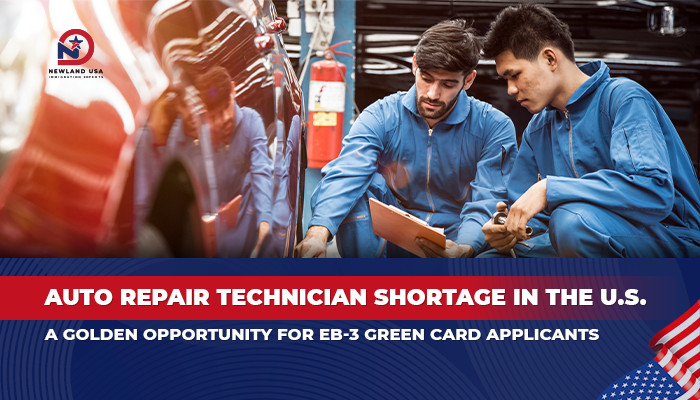
The auto repair industry in the U.S. is facing a serious shortage of workers, opening up golden opportunities for skilled Vietnamese workers. With the demand for auto repair technicians rising while the supply is decreasing, the U.S. EB3 immigration program is becoming an important bridge helping foreign workers access stable employment and a legal immigration pathway. This article from Newland USA provides an in-depth analysis of the labor crisis in the automotive maintenance field in the U.S. and immigration opportunities through the auto repair profession.
1. Current Labor Shortage in the U.S. Auto Repair Industry
According to data from the Bureau of Labor Statistics, the automotive maintenance and auto repair service industry is experiencing a severe shortage of technical workers. As of 2024, the industry is short tens of thousands of automotive mechanic positions, while the demand for vehicle maintenance services continues to increase.
The number of vehicles in circulation in the U.S. has reached a record level with over 280 million vehicles, leading to a sharp increase in demand for periodic maintenance and emergency repairs. However, the skilled auto repair workforce is insufficient to meet this enormous workload. Many service shops, authorized dealerships, and maintenance centers have to turn away customers or extend waiting times due to insufficient technical staff.
In particular, the development of electric vehicle and hybrid vehicle (vehicles combining gasoline engines and electric motors) technology requires technicians to continuously update their knowledge and skills. This creates a large gap between the current workforce and market requirements. The auto repair profession in the U.S. is no longer as simple as before but requires understanding of complex electronic systems, modern diagnostic software, and hybrid technology.
2. Root Causes of the Labor Crisis
2.1. Aging Workforce and High Retirement Rate
One of the main reasons the auto repair profession lacks workers is that the current workforce is gradually aging. Most experienced automotive mechanics in the U.S. are middle-aged and approaching retirement. Meanwhile, younger generations are not interested in pursuing skilled technical jobs in this field.
According to surveys from industry associations, about 46% of current auto repair technicians are over 45 years old, and within the next 10 years, a significant proportion will leave the industry. The rate of training new workers cannot keep up with the retirement rate, creating an increasingly large labor gap.
2.2. Lack of Appeal to Young People
Young Americans increasingly tend to pursue office jobs, information technology, or business rather than hands-on technical work. The auto repair profession is considered hard, exhausting work that doesn’t provide high social status. This perception makes vocational schools and automotive technical training programs struggle to recruit students.
Additionally, professional training costs are increasing while starting salaries are not particularly attractive compared to other professions. This reduces young people’s motivation when choosing the auto repair profession in the U.S. as a long-term career.
2.3. Increasingly High Skill Requirements
The advancement of automotive technology makes auto repair work much more complex. Modern vehicles are equipped with computer systems, electronic sensors, active safety systems, and smart connectivity technology. Mechanics not only need to know how to do traditional mechanical repairs but must also understand programming, electronic diagnostics, and digital data processing.
Training to meet these requirements takes considerable time and cost, making many people hesitant to enter the industry. However, this is also an opportunity for skilled workers from other countries, including Vietnam, to leverage their experience and qualifications to integrate into the U.S. labor market.
3. U.S. EB3 Immigration Program – A Golden Opportunity for Auto Repair Profession
3.1. Overview of EB3 Skilled Worker Visa
The U.S. EB3 immigration program is one of the legal immigration pathways that many workers are interested in. This is a type of green card for skilled workers, including those working in the auto repair field. This program allows foreign workers to be sponsored by U.S. employers to work and live permanently in the U.S.
What’s special about EB3 is that it doesn’t require excessively high educational qualifications or complex professional certifications. For the auto repair profession, workers only need to prove a minimum of two years of work experience in the relevant field and the ability to perform the job according to the employer’s requirements.
3.2. EB3 Program Eligibility Requirements
To qualify for the U.S. EB3 immigration program for auto repair technician positions, applicants need to meet the following criteria:
First, have at least two years of work experience in automotive maintenance, service, or auto repair. This experience needs to be proven through employment contracts, pay stubs, or confirmation letters from previous employers.
Second, must have a U.S. employer willing to sponsor and commit to providing full-time work. The employer must prove that they have searched for domestic workers but couldn’t find any, so they need to hire foreign workers.
Third, applicants must meet health requirements, have no criminal record, and be legally eligible to immigrate to the U.S. Additionally, workers need basic English communication skills to work effectively in a multicultural environment.
3.3. EB3 Visa Application Process for Auto Repair Technicians
The U.S. EB3 immigration application process typically goes through several steps. First, the employer must file for Labor Certification with the U.S. Department of Labor. This process aims to prove that hiring foreign workers does not affect the employment opportunities and wages of U.S. workers.
After approval, the employer will file Form I-140 on behalf of the worker. This application needs to include documents proving the applicant’s qualifications, experience, and capabilities in the auto repair profession. Processing time can range from several months to over a year depending on the application situation and volume.
Finally, when the I-140 petition is approved and a visa number is available, applicants will complete interview procedures, medical examinations, and file for adjustment of status or apply for an immigrant visa at the U.S. consulate. After approval, the entire family including spouse and children under 21 years old will be granted green cards to live and work in the U.S.
4. Benefits of U.S. Immigration Through EB3 with Auto Repair Profession
4.1. Stable and High Income
One of the biggest advantages of working in the auto repair profession in the U.S. is the attractive income level. According to employment statistics, the average salary of automotive mechanics in the U.S. ranges from $40,000 to $60,000 per year, equivalent to approximately 1 to 1.5 billion VND. For those with high skills or specializing in luxury cars and complex electronic systems, income can reach $70,000 – $80,000 per year.
In addition to base salary, many auto repair shops also provide benefits such as health insurance, dental insurance, 401(k) retirement plans, and performance bonuses. While the cost of living in the U.S. is high, with this income level, workers can completely afford a comfortable life and save for the future.
4.2. Professional Work Environment
Service shops and auto repair centers in the U.S. are typically equipped with modern equipment, advanced diagnostic tools, and safe working environments. Workers receive comprehensive training on work processes, safety standards, and the latest professional skills. This not only helps increase productivity but also creates conditions for auto repair technicians to develop long-term careers.
Additionally, work culture in the U.S. highly values workers’ rights. Working hours are clearly defined, vacation and holidays are guaranteed by law. Workers are also respected and treated fairly regardless of origin or nationality.
4.3. Permanent Residency Rights and Path to Citizenship
The U.S. EB3 immigration program provides permanent resident rights (green card) for workers and their families. A green card allows indefinite living and working in the U.S., freedom of travel, and享受 almost all rights as U.S. citizens except voting rights. Workers’ children have access to free public education from elementary to high school, and have opportunities to enter prestigious universities with preferential tuition rates.
After holding a green card for 5 years and meeting residency requirements, workers can apply for naturalization to become U.S. citizens. This is an important step that opens up even more opportunities in career, travel, and social benefits.
5. Comparison of Auto Repair Profession Between Vietnam and the U.S.
In Vietnam, the auto repair profession is developing rapidly thanks to the increase in the number of vehicles in circulation. However, the income of automotive mechanics domestically remains modest, averaging 7 to 15 million VND per month depending on region and skill level. The work environment in many small workshops still lacks modern equipment and labor safety conditions are not guaranteed.
In contrast, the auto repair profession in the U.S. not only provides income many times higher but also offers a professional work environment, opportunities for skill development, and guaranteed workers’ rights. Especially with the U.S. EB3 immigration program, Vietnamese technicians can bring their entire family to the U.S. to build a new life with better prospects.
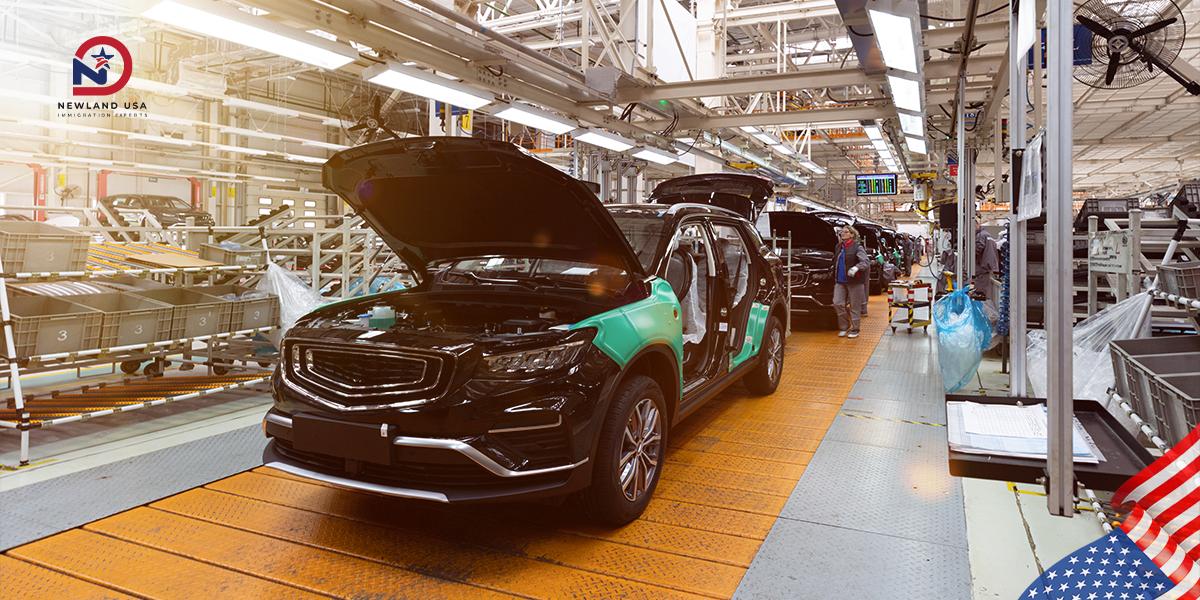
6. Preparation to Seize the U.S. Immigration Opportunity
6.1. Improve Skills and Experience
To increase the chances of being accepted into the U.S. EB3 immigration program, workers should accumulate more work experience at reputable auto repair shops, learn new techniques, and update knowledge about electric vehicles and hybrid vehicles. Participating in intensive training courses and obtaining technical certifications from recognized organizations will help make applications stand out.
6.2. Prepare Documents and Records
The U.S. EB3 immigration application needs to be prepared carefully and completely. This includes diplomas, certificates, work experience confirmation letters, pay stubs, employment contracts, and documents proving professional competence in the auto repair profession. Notarized translation of documents into English is also very important to ensure accuracy and validity.
6.3. Find Reputable Consulting Partners
Since the EB3 visa application process is quite complex and lengthy, working with experienced immigration consulting agencies will help workers save time and increase success rates. Professional companies will support everything from finding employers, preparing documents, to tracking progress and guiding interview steps.
7. Conclusion
The severe labor shortage in the auto repair industry in the U.S. is opening up golden opportunities for skilled Vietnamese workers. With the U.S. EB3 immigration program, experienced technicians can not only find stable employment with high income but also enjoy permanent resident rights and build a better future for their families in the U.S.
Newland USA, with a team of experienced experts and the motto “Secure settlement – Lifelong prosperity,” is ready to advise and support in preparing documents and accompanying customers throughout the U.S. EB3 immigration process. Contact Newland USA immediately via hotline 0785591988 or email: newsletter@newlandusa.asia for detailed and free consultation.
Learn more:
- Understanding ETA 9089 Form in the US EB3 Employment-Based Immigration Program
- EB3 Immigration Program – The Key to Unlocking a Bright Future for Young Vietnamese Generations
- EB3 Visa and 6 Other Legal Visa Types for Living and Working in the United States
- How EB3 Workers Are Contributing to Solving the Labor Crisis in America
News Categories



Related news
Who Is the ESTA Program For? How to Assess Your Fit Before Applying in 2026

Who Is the ESTA Program For? How to Assess Your Fit Before Applying in 2026

From Motorcycle Mechanic to Automotive Technician in the U.S.: Skills and Qualifications to Prepare in 2026
AI in Auto Repair in the U.S. 2026: How Artificial Intelligence Diagnoses Vehicle Problems Faster and More Accurately
7 Key Technologies Every Industrial Maintenance Technician in the U.S. Needs to Know in 2026
PLC & Automation Skills: A Launchpad for Maintenance Technicians in the United States in 2026
What Is the ASE Certification? Requirements, Exam Roadmap, and Its Importance for Auto Technicians in the U.S. in 2026

EB5 Capital Recovery Time: How Long It Takes and the Key Milestones
Electric Vehicle Technicians in the U.S.: The “Golden” Skills Helping Vietnamese Auto Mechanics Get Ahead of the 2026 EV Trend