What Is a Tax Refund? How to Receive a Tax Refund When Filing Taxes in the U.S.

For Vietnamese people settling in the U.S. through immigration programs like EB-3 or EB-5, understanding the tax filing process in the U.S. is absolutely essential. One of the most important concepts that anyone living and working in America needs to understand is the tax refund. This is the amount of money that the Internal Revenue Service (IRS) returns to taxpayers when they’ve paid more than their actual tax obligation for the fiscal year. So how does the refund process work? How can you maximize the amount you get back? This article from Newland USA will provide you with a detailed guide on how to receive a tax refund in the U.S., from eligibility requirements to the specific steps involved.
1. What Is a Tax Refund? Understanding the Concept Correctly
Before diving into the process, let’s clarify what a tax refund actually is. Simply put, a tax refund is the difference between the total amount of tax you’ve paid throughout the year and the actual amount of tax you owe under federal law. When the taxes withheld from your paycheck or paid through estimated payments exceed your real tax liability, the IRS will return the excess amount to you.
The most common situation leading to a refund is when your employer withholds too much federal income tax from your monthly wages through the W-4 form. Additionally, qualifying for refundable tax credits can also significantly increase the amount of your tax refund.
It’s worth noting that a tax refund is not a “bonus” from the government — it’s actually your own money being returned. That’s why understanding this process helps you take better control of your personal finances while living in the U.S.
2. Why Should Immigrants Care About Tax Refunds?
For newcomers to the U.S., especially those arriving through employment-based immigration programs like EB-3, the U.S. tax filing process may feel quite unfamiliar. In many countries, including Vietnam, income tax is usually deducted directly from wages and workers rarely have to file their own returns. However, the U.S. federal tax system works differently: every individual who earns income must file an annual tax return, regardless of whether you’re a citizen, a permanent resident, or in the process of adjusting your residency status.
According to IRS regulations, Green Card holders are considered tax residents of the U.S. and are required to report all income on a worldwide basis. This means you need to report not only income from your job in the U.S. but also income from foreign sources, such as rental income from real estate or savings interest earned in Vietnam.
Filing taxes fully and on time is not just a legal obligation — it also brings real practical benefits. First, you may receive a tax refund if you’ve overpaid. Second, a good tax compliance history plays an important role in the U.S. naturalization process, as it serves as evidence of “good moral character,” which USCIS requires in its evaluation.
3. How the Federal Income Tax System Works
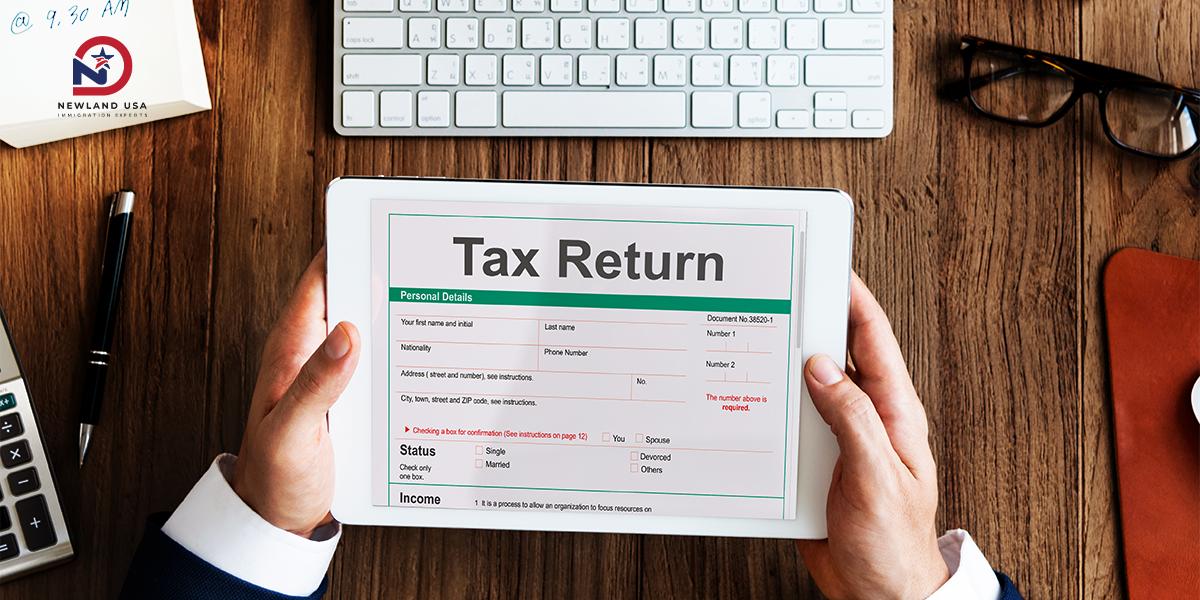
To fully understand how to receive a tax refund in the U.S., you need to know how the federal income tax system operates. The U.S. uses a progressive tax system with 7 tax brackets: 10%, 12%, 22%, 24%, 32%, 35%, and 37%. Your income is divided into brackets, and each bracket is taxed at the corresponding rate — not your entire income at a single rate.
Standard Deduction
Before your taxes are calculated, you’re allowed to subtract an amount called the standard deduction. This is the amount the government allows you to reduce directly from your total taxable income. For tax year 2025 (filed in 2026), the standard deduction amounts are as follows:
- Single or Married Filing Separately: $15,750
- Head of Household: $23,625
- Married Filing Jointly: $31,500
Notably, individuals aged 65 and older can receive an additional deduction of up to $6,000 thanks to new provisions from the One Big Beautiful Bill Act (OBBBA), which was passed in mid-2025.
If the total of your itemized deductions — including mortgage interest, state and local taxes, medical expenses, and charitable donations — exceeds the standard deduction, you can choose to itemize in order to further reduce your taxable income.
Tax Withholding from Wages
When you start working in the U.S., your employer will ask you to fill out Form W-4 to determine how much federal tax is withheld from your pay each month. Based on the information you provide — including your marital status, number of dependents, and other factors — your employer will deduct a portion of your wages to pay taxes on your behalf. This withholding amount is the key factor that determines whether you’ll receive a refund or owe additional taxes when you file at the end of the year.
4. Factors That Affect Your Tax Refund Amount
The amount of your tax refund depends on several different factors. Here are the main ones every U.S. taxpayer should be aware of:
Tax Credits
Tax credits are amounts that directly reduce the tax you owe, unlike deductions, which only reduce your taxable income. There are two main types of tax credits:
Nonrefundable tax credits can only reduce your tax liability down to a minimum of $0. Meanwhile, refundable tax credits allow you to receive the excess amount as a refund, even if you don’t owe any tax.
Some common tax credits that can increase your tax refund include:
Child Tax Credit (CTC): For tax year 2025, the maximum is $2,200 per qualifying child (under age 17). The refundable portion (Additional Child Tax Credit) is up to $1,700 per child. Important note: both parents and children must have valid Social Security Numbers (SSNs) to qualify for this credit.
Earned Income Tax Credit (EITC): This is a fully refundable credit for low- to moderate-income workers. For tax year 2025, the maximum EITC is up to $8,046 for families with three or more children. However, about one-fifth of eligible individuals miss out on this valuable credit.
Education Credits: These include the American Opportunity Tax Credit (up to $2,500) and the Lifetime Learning Credit, which help cover the cost of higher education.
Premium Tax Credit: For those who purchase health insurance through the Health Insurance Marketplace and meet income requirements.
Notable Changes for the 2026 Filing Season
The 2026 tax filing season (for 2025 income) brings several significant changes thanks to the OBBBA. Because the new law was enacted in mid-2025, the payroll withholding system hadn’t yet adjusted to the new tax rates. As a result, many workers had more tax withheld than necessary, leading to significantly larger refunds compared to previous years. According to IRS data, the average tax refund during the 2026 filing season has risen to approximately $3,739, about 10% higher than the same period the year before.

5. Step-by-Step Guide to Receiving a Tax Refund in the U.S.
Here is a step-by-step process to help you receive your tax refund in the U.S. as smoothly as possible:
Step 1: Prepare All Required Documents
Before you begin filing, gather all necessary documents: Form W-2 (reporting income and taxes withheld from your employer), Form 1099 (if you have income from self-employment, interest, or dividends), your Social Security Number (SSN) or Individual Taxpayer Identification Number (ITIN), along with any supporting documents related to the deductions and tax credits you plan to claim.
Step 2: Determine Your Filing Status
Your filing status directly affects your standard deduction amount, tax brackets, and the tax credits you’re eligible for. The five common filing statuses are: Single, Married Filing Jointly, Married Filing Separately, Head of Household, and Qualifying Surviving Spouse. Choosing the correct filing status can make a significant difference in the refund you receive.
Step 3: File Your Tax Return
For permanent residents and U.S. citizens, the main filing form is Form 1040. You can file in two ways: electronically (e-file) or by mailing a paper return. The IRS strongly encourages electronic filing because it’s processed much faster. The filing deadline is typically April 15 each year.
If you’re not confident about doing your taxes on your own, there are several options: online tax software (TurboTax, H&R Block, TaxSlayer), IRS Free File for low-income individuals, the VITA (Volunteer Income Tax Assistance) program that provides free tax preparation for eligible people, or hiring a tax professional (CPA, Enrolled Agent).
Step 4: Choose How to Receive Your Refund
This is a crucial step in receiving your tax refund in the U.S., and there are notable changes for 2026. The IRS has officially begun phasing out paper checks for tax refunds. This means most taxpayers need to provide their bank account information (routing number and account number) to receive their refund via direct deposit.
If you don’t yet have a U.S. bank account, the IRS allows you to request a paper check waiver through your IRS Online Account or by calling 800-829-1040. However, direct deposit remains the fastest way to receive your refund — most taxpayers will receive their money within 21 days of the IRS accepting their return.
Step 5: Track Your Refund Status
After filing your return, you can check the progress of your tax refund through the “Where’s My Refund?” tool on IRS.gov, the IRS2Go mobile app, or your personal IRS Online Account. This tool is updated once per day and allows you to track each stage: return received, being processed, and refund approved.
6. Situations That May Delay Your Refund
Not every case receives a refund within 21 days. Some common reasons for processing delays include:
Errors or missing information on your return — for example, forgetting to sign, miscalculations, or providing an incorrect SSN. These are common mistakes but can significantly extend processing time.
If you claim the EITC or Additional Child Tax Credit, by law the IRS must hold your refund until at least mid-February, no matter how early you file. This is a measure to prevent tax fraud.
Amended returns filed using Form 1040-X also take longer to process because the IRS must compare two returns. Additionally, if you have outstanding tax debt, unpaid child support, or other federal debts, your refund may be partially or fully offset through the Treasury Offset Program.
7. Tips to Maximize Your Tax Refund as an Immigrant
To get the most out of your tax refund, immigrants in the U.S. should keep the following in mind:
First, make sure your W-4 form is filled out accurately from the start of your job. If your family has dependents but you don’t report them on the W-4, your employer will withhold more tax than necessary. While this leads to a larger refund at the end of the year, it also means you’ve been lending the government your money interest-free all year long.
Second, don’t overlook the tax credits you’re eligible for, especially the EITC and Child Tax Credit. Many immigrant families, unfamiliar with the U.S. tax system, unintentionally miss out on thousands of dollars in refunds each year.
Third, weigh the standard deduction against itemized deductions. If you own a home, pay mortgage interest, or have significant medical expenses, itemizing could save you more. For 2025, the state and local tax (SALT) deduction cap has been raised to $40,000 — a major improvement from the previous $10,000 limit.
Fourth, always file electronically and choose direct deposit. This is the fastest way to receive a tax refund in the U.S. and the method the IRS recommends during the 2026 filing season.
Finally, carefully keep all records related to your income, deductions, and tax credits. The IRS recommends keeping tax documents for at least 3 years from the date you file, in case of an audit or the need to file an amended return.

8. Special Notes for New Permanent Residents
For those who have just received a Green Card through immigration programs, there are some specific points to pay close attention to when filing taxes in the U.S.:
Your residency starting date is typically the first day you are physically present in the U.S. as a lawful permanent resident. If you received your Green Card abroad, the start date is the first day you set foot in the U.S. after receiving it.
In addition to income tax obligations, you’re also required to report foreign financial accounts using the FBAR form (FinCEN Form 114) if the total value of your accounts outside the U.S. exceeds $10,000 at any point during the year. This is a mandatory requirement that many new immigrants are unaware of, and failure to comply can result in severe financial penalties.
If you use an Individual Taxpayer Identification Number (ITIN) instead of an SSN, you can still file a tax return and receive a refund if you qualify. However, certain tax credits — such as the EITC and CTC — require a valid SSN to claim.
9. Conclusion
Understanding tax refunds and how to receive a tax refund in the U.S. not only helps you take full advantage of your financial benefits but is also an important step in settling into your new life in America. From grasping the concept of a tax refund, understanding the tax withholding system, to making the most of tax credits — each step plays a key role in protecting and growing your income.
With the significant changes in U.S. tax policy for 2025–2026, now is the ideal time to proactively learn and prepare for tax season. Don’t hesitate to seek help from tax professionals or free IRS programs if you need additional guidance.
Newland USA, with its team of experienced professionals and the motto “Settle with confidence – Prosper for life,” is ready to advise and support you in preparing your documents and accompanying you throughout the EB-3 immigration process. Contact Newland USA today via hotline 0785591988 or email: newsletter@newlandusa.asia for free, detailed consultation.
Learn more:
News Categories



Related news

From Motorcycle Mechanic to Automotive Technician in the U.S.: Skills and Qualifications to Prepare in 2026

AI in Auto Repair in the U.S. 2026: How Artificial Intelligence Diagnoses Vehicle Problems Faster and More Accurately

7 Key Technologies Every Industrial Maintenance Technician in the U.S. Needs to Know in 2026

PLC & Automation Skills: A Launchpad for Maintenance Technicians in the United States in 2026

What Is the ASE Certification? Requirements, Exam Roadmap, and Its Importance for Auto Technicians in the U.S. in 2026
EB5 Capital Recovery Time: How Long It Takes and the Key Milestones

Electric Vehicle Technicians in the U.S.: The “Golden” Skills Helping Vietnamese Auto Mechanics Get Ahead of the 2026 EV Trend

US Engineering & Maintenance Labor Shortage 2026: The Driving Force Behind the EB3 Skilled Workers Visa Policy

Industrial Maintenance Technician: Job Duties, Requirements & U.S. Immigration Opportunities in 2026