FBAR and FATCA: What U.S. Immigrants Need to Know
When you begin your journey to settle in the United States, aside from preparing your visa application and planning for a stable life, there’s one area that many people overlook: the obligation to report foreign financial assets. The two most important rules that every U.S. resident needs to understand are FBAR and FATCA. In the article below, Newland USA will give you a complete picture of these two reporting obligations — from reporting thresholds and filing deadlines to the penalties for non-compliance — so you can take charge of managing your finances as a U.S. immigrant safely and legally.
1. Overview of Foreign Asset Reporting Requirements When Immigrating to the U.S.
The United States is one of the few countries in the world that taxes individuals based on citizenship and residency status, not just based on where income is earned. This means that whether you’re living in the U.S. or anywhere else in the world, once you’re considered a “U.S. person” — which includes U.S. citizens, permanent residents (green card holders), and individuals who meet the residency requirements under U.S. tax law — you’re required to report all of your worldwide income and financial assets to the U.S. government.
For those who are in the process of immigrating to the U.S. or have already completed their immigration procedures, understanding FBAR and FATCA isn’t just about avoiding hefty fines — it’s also an important foundation for building a sustainable, transparent financial life as a U.S. immigrant from your very first years in America.
In practice, many Vietnamese immigrants continue to maintain bank accounts, savings accounts, or investments in Vietnam after moving to the U.S. This is completely legal. However, you must comply with the obligation to report these accounts as required by federal law.
2. What Is FBAR? Who Has to File an FBAR Report?
FBAR stands for “Foreign Bank Account Report,” and its official name is FinCEN Form 114. This is not a tax return — it’s a disclosure requirement under the Bank Secrecy Act, managed by the Financial Crimes Enforcement Network (FinCEN), which falls under the U.S. Department of the Treasury.
The main purpose of FBAR is to help the U.S. government track and prevent money laundering, terrorism financing, and tax evasion through foreign accounts. Every “U.S. person” — including individuals, corporations, trusts, and entities formed under U.S. law — must file an FBAR if they meet certain conditions.
FBAR reporting threshold:
You are required to file an FBAR if the combined total value of all your foreign financial accounts — over which you have ownership or signatory authority — exceeds $10,000 at any point during the calendar year. Here’s what you need to keep in mind: the $10,000 threshold is calculated based on the total of all your foreign accounts, not each individual account. This means if you have one account worth $4,000 and another worth $7,000, the combined total is $11,000 — and you still have to file an FBAR.
Additionally, an important point that U.S. immigrants need to know: even if an account doesn’t generate any taxable income, you’re still required to report it. The FBAR filing obligation is based on account value, not on whether you owe taxes.
The types of accounts that must be reported on the FBAR include: bank accounts (savings and checking), securities accounts, mutual funds, certain life insurance policies with cash value, foreign pension funds, and even accounts where you only have signatory authority but don’t directly own (for example, a company account where you’re authorized to make transactions).
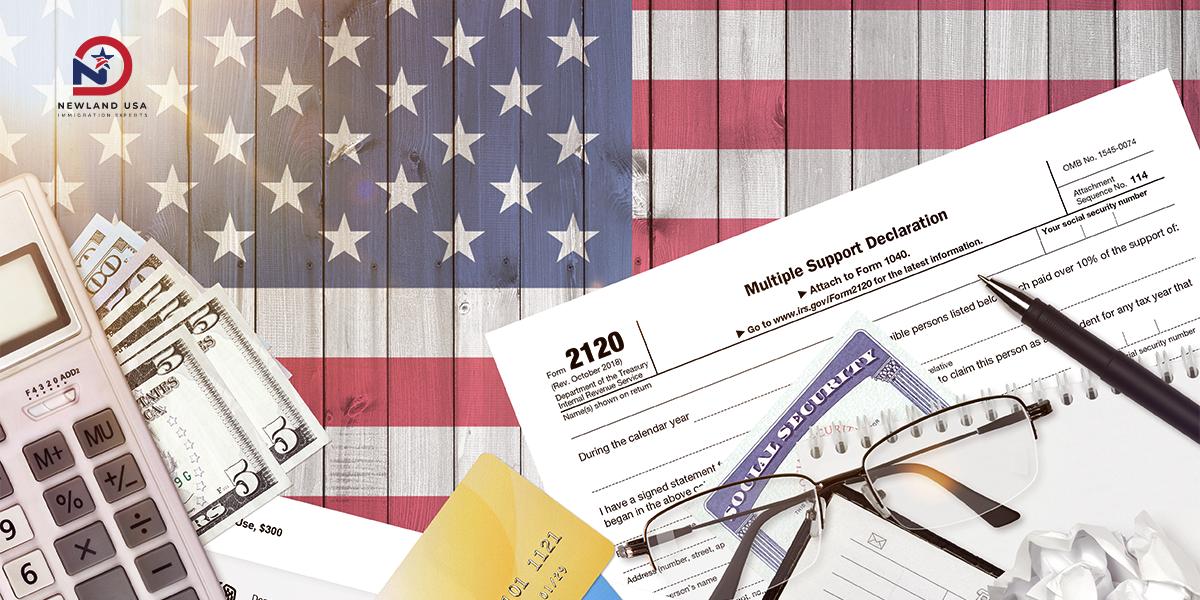
3. What Is FATCA? How Do FATCA Reporting Rules Work?
FATCA — short for “Foreign Account Tax Compliance Act” — was passed by the U.S. Congress in 2010 as part of the HIRE Act. Unlike FBAR, which focuses on account disclosure, FATCA has a much broader scope and works on two fronts at the same time.
On the taxpayer side, FATCA requires U.S. citizens and permanent residents to report foreign financial assets using Form 8938 (Statement of Specified Foreign Financial Assets), which is filed along with the annual federal income tax return. On the financial institution side, FATCA requires foreign banks and financial institutions to report information about accounts held by “U.S. persons” directly to the Internal Revenue Service (IRS). If they don’t comply, they face a withholding tax of up to 30% on U.S.-sourced payments.
3.1. FATCA Reporting Thresholds (Form 8938):
FATCA’s reporting thresholds are higher than FBAR’s and vary depending on the taxpayer’s marital status and place of residence:
For individuals living in the U.S.: single filers or those filing separately must submit Form 8938 when the total value of foreign financial assets exceeds $50,000 on the last day of the tax year or exceeds $75,000 at any point during the year. For married couples filing jointly, the thresholds increase to $100,000 (end of year) or $150,000 (at any time).
For U.S. citizens living abroad: the thresholds are raised to $200,000 (end of year) or $300,000 (at any time) for individuals; and $400,000 (end of year) or $600,000 (at any time) for married couples filing jointly.
The range of assets that must be reported under FATCA is also wider than FBAR. It’s not limited to bank accounts — it also includes directly held foreign stocks, interests in foreign companies or partnerships, financial instruments issued by foreign entities, and certain foreign insurance contracts and pension funds.
4. Detailed Comparison Between FBAR and FATCA: Key Differences
Although both relate to reporting foreign financial assets, FBAR and FATCA are two separate obligations with many important differences that U.S. immigrants need to clearly understand.
Receiving agency and filing method: FBAR is filed electronically with FinCEN through the BSA E-Filing system, completely separate from your tax return. Meanwhile, Form 8938 under FATCA is attached directly to your individual income tax return (Form 1040) and submitted to the IRS.
Reporting thresholds: As mentioned, FBAR has a much lower threshold — just $10,000 across all accounts combined — while FATCA starts at $50,000 or higher depending on your personal circumstances.
Scope of assets: FBAR focuses on foreign financial accounts, while FATCA covers a broader range, including financial assets that aren’t accounts, such as direct ownership stakes in foreign businesses.
Filing deadlines: Both have a deadline of April 15 each year. However, FBAR is automatically extended to October 15 without needing to file a request. For FATCA, you need to proactively request an extension if you need more time.
Relationship to each other: Filing Form 8938 does not exempt you from filing an FBAR, and vice versa. Many U.S. immigrants fall into the category of having to file both forms for the same account, since each form serves a different purpose and is sent to a different agency.

5. Penalties for Not Complying with FBAR and FATCA: How Serious Are They?
The penalty system for failing to meet reporting obligations is one of the main reasons U.S. immigrants need to pay close attention to both FBAR and FATCA.
For FBAR: Civil penalties for non-willful violations can reach up to $16,536 per violation (2025 amount, adjusted annually for inflation). If the violation is determined to be willful, the penalty jumps to the greater of $165,353 or 50% of the account balance at the time of the violation, whichever is higher. In the most serious cases, FBAR violations can lead to criminal prosecution with additional fines of up to $500,000 and prison sentences of up to 10 years.
For FATCA: The initial penalty for failing to file Form 8938 is $10,000. If the taxpayer still hasn’t complied within 90 days of receiving an IRS notice, an additional penalty of $10,000 applies for every 30 days of continued non-compliance, up to a maximum of $50,000. On top of that, there’s a 40% penalty on any tax underpayment resulting from unreported foreign assets.
These are alarming numbers, especially when many new U.S. immigrants are completely unaware of these obligations and unintentionally violate them during their first years of living in America.
6. How FATCA Affects U.S. Immigrants Who Still Have Accounts in Vietnam
One notable real-world consequence of FATCA is its impact on the ability of U.S. citizens or green card holders to open and maintain bank accounts abroad. Because the cost of complying with FATCA is quite significant — ranging from tens of thousands to hundreds of thousands of dollars for each financial institution — some banks around the world have chosen to refuse serving American clients or close existing accounts rather than deal with the complex reporting requirements.
Currently, Vietnam has signed an Intergovernmental Agreement (IGA) with the United States related to FATCA. This means Vietnamese banks are required to verify and report account information for clients identified as “U.S. persons.” So if you’ve immigrated to the U.S. and still hold accounts in Vietnam, the bank where you have your account may ask you to provide information about your U.S. tax status. That information is then shared with the IRS through government channels.
This is why proactively reporting FBAR and FATCA is so important: even if you don’t report on your own, banks may still provide your information to the U.S. side, and any inconsistency between the two data sources could trigger a compliance review from the IRS.
7. How to Fix Things If You’ve Already Missed FBAR or FATCA Filing
If you’ve been living in the U.S. for a few years but have never filed FBAR or FATCA, the most important thing is not to panic — but also not to go ahead and file overdue returns without a clear strategy. “Quietly” submitting late forms without going through an official compliance program can attract unwanted attention from the IRS and carry the risk of being penalized in full.
The IRS currently offers two main programs to help taxpayers:
The first is the Streamlined Filing Compliance Procedures — designed for individuals who can demonstrate that their non-compliance was not willful. This program allows you to file back tax returns and FBARs for prior years with significantly reduced penalties, or even with penalties fully waived for those living abroad.
The second is the IRS Criminal Investigation’s Voluntary Disclosure Program — suited for cases where the violation may be considered willful. This is a more complex process and requires the help of an experienced international tax attorney.
Which program to choose depends on each person’s specific situation, but the common takeaway is: acting sooner is always better than waiting. Every year that passes without compliance means more accumulated violations and higher risk.

8. Practical Tips for Managing Your Finances Properly as a U.S. Immigrant
Managing your finances as a U.S. immigrant goes beyond just filing returns on time — it’s an entire process that you need to maintain every year. Here are some practical tips for new immigrants:
Track your account values regularly: Since FBAR requires you to report the highest value during the year — not just the year-end balance — you need to review your account statements periodically to determine the peak value. Keep your bank statements for at least 5 years from the FBAR filing due date.
Convert foreign currency accurately: When calculating account values to determine reporting thresholds, you must use the official year-end exchange rate published by the U.S. Treasury Department — not the rate at the time the account reached its highest value, and not the average rate.
Don’t forget about “dormant” accounts: Many U.S. immigrants maintain accounts in Vietnam with small balances that they haven’t used in a long time. Even if the account is inactive, if the combined value still exceeds the threshold, you still need to report it.
Clearly distinguish the two obligations: As discussed, FBAR and FATCA are two parallel obligations filed with two different agencies through two different methods. Completing one does not mean you’re exempt from the other. Check whether you fall under the reporting threshold for both.
Seek professional advice: Given the complexity of international tax law — especially when you have assets in multiple countries — working with an experienced tax professional (CPA) or international tax attorney is a worthwhile investment to protect your financial well-being as a U.S. immigrant.
9. Conclusion
FBAR and FATCA are two pillars of the U.S. system for international financial transparency, and they directly affect every individual with U.S. residency status — especially those who still maintain financial assets in their home country. Fully understanding and complying with these two rules not only helps you avoid harsh penalties, but also shows that you’re being proactive and responsible in building your new life in America.
If you’re in the process of immigrating to the U.S. or already have a green card and are looking for effective ways to manage your finances as a U.S. immigrant, start by reviewing all foreign financial accounts you own or have signatory authority over, determine whether you need to file FBAR, FATCA, or both, and contact a tax professional if you need help.
Learn more:
- Impact of the 2025 U.S. Dual Citizenship Termination Bill on Immigrants
- What is Form I-829? Guide to Filing a Petition to Remove Conditions on 2-Year Green Card for EB5 Immigrant Investor Program
- US Tax Policy for New Immigrants
- How to Convert from Non-Immigrant Visa to US EB3 Visa Legally and Fastest
News Categories



Related news

Who Is the ESTA Program For? How to Assess Your Fit Before Applying in 2026

Who Is the ESTA Program For? How to Assess Your Fit Before Applying in 2026

From Motorcycle Mechanic to Automotive Technician in the U.S.: Skills and Qualifications to Prepare in 2026

AI in Auto Repair in the U.S. 2026: How Artificial Intelligence Diagnoses Vehicle Problems Faster and More Accurately

7 Key Technologies Every Industrial Maintenance Technician in the U.S. Needs to Know in 2026

PLC & Automation Skills: A Launchpad for Maintenance Technicians in the United States in 2026
What Is the ASE Certification? Requirements, Exam Roadmap, and Its Importance for Auto Technicians in the U.S. in 2026
EB5 Capital Recovery Time: How Long It Takes and the Key Milestones

Electric Vehicle Technicians in the U.S.: The “Golden” Skills Helping Vietnamese Auto Mechanics Get Ahead of the 2026 EV Trend