Is investing in EB-5 with cryptocurrency valid?

1. The EB-5 Program and the Trend of Using Digital Assets
The EB-5 investment program creates opportunities for foreign citizens and their families to obtain green cards through investing in projects in the US. To successfully invest in EB-5 for US residency, investors need to contribute a minimum capital of $800,000 (for TEA areas) to $1,050,000 USD (for non-TEA areas) and create at least 10 full-time jobs for US workers.
With the explosion of the digital asset market, many Vietnamese investors have accumulated significant wealth from cryptocurrency. The natural question arises: can this crypto capital be used to make EB-5 investments?
2. Legality of Using Cryptocurrency in EB-5 Investment
2.1. Current Legal Perspective
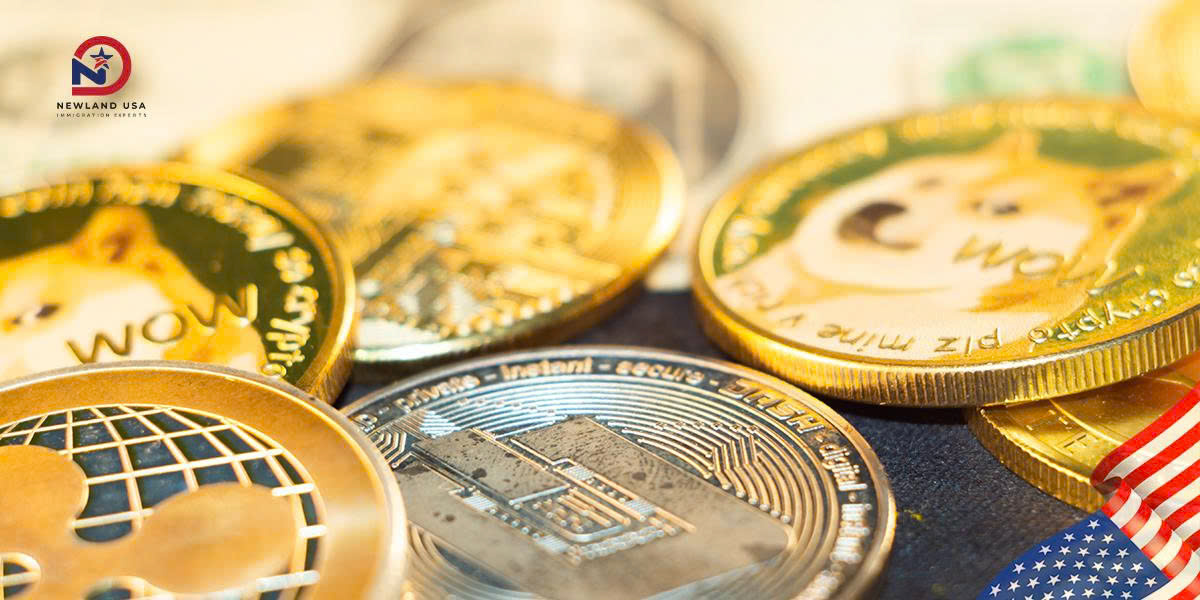
Under current US law, using cryptocurrency for EB-5 investment is completely legal. This was confirmed through the ruling in the Wang v. case in 2020, creating an important precedent for accepting crypto as a legitimate investment source. USCIS does not prohibit the use of digital assets, however, the agency strictly requires a “clear financial trail.” This means all transactions related to cryptocurrency must have evidence and prove their transparency.
2.2. Mandatory Conditions
For EB-5 investment using crypto to be approved, investors must meet the following requirements:
Proof of legal origin: Cryptocurrency assets must have clear origins, not related to illegal activities such as money laundering, fraud, or theft. The initial capital to buy crypto can come from employment income, business profits, other investments, etc.
Transparent conversion process: Converting cryptocurrency to fiat currency (USD or VND) must be done through licensed and reputable exchanges. All transactions need to be fully recorded with information about exchange rates, timing, and transaction fees.
Compliance with money transfer regulations: Money after conversion must be transferred abroad through the official banking system, fully complying with foreign exchange regulations of both Vietnam and the US.
Xem thêm: 5 lợi thế bổ sung vững chắc trong các dự án EB5

3. Legal Challenges in Vietnam for EB-5 Investment Using Crypto
3.1. Legal Framework for Cryptocurrency
In Vietnam, cryptocurrency is not recognized as a legal payment method under current regulations. However, the law does not prohibit owning and trading crypto as a digital asset. This creates a certain legal gap that EB-5 investors need to carefully consider.
3.2. Foreign Currency Transfer Regulations
The State Bank of Vietnam strictly controls foreign currency transfers abroad through Decree 31/2021/ND-CP and guidance documents. All money transfers for EB-5 investment for US residency must:
- Be conducted through licensed credit institutions
- Have documentation proving clear investment purposes
- Comply with reporting procedures as required
Therefore, investors need to complete all steps: convert crypto to VND/USD through licensed exchanges, transfer money to personal bank accounts, then apply for permission to transfer money abroad for EB-5 investment purposes.
4. Risks and Challenges When Using Cryptocurrency
4.1. Market Volatility
One of the biggest risks when investing in EB-5 using cryptocurrency is the high volatility of the crypto market. Asset values can change significantly in short periods, affecting the ability to meet the program’s minimum investment level. Investors need to carefully calculate conversion timing to avoid losses.
4.2. Technical Complexity
The decentralized and anonymous nature of cryptocurrency makes tracing money flows difficult. If assets are moved through multiple wallets, unlicensed exchanges, or P2P transactions, USCIS may request additional information or reject the EB-5 investment application.
4.3. Legal Risks
Failure to provide sufficient documentation may lead to Requests for Evidence (RFE) or Notice of Intent to Deny (NOID) from USCIS. Moreover, profits from crypto may be subject to personal income tax in both the US and Vietnam; incorrect reporting can cause serious legal consequences.

5. Required Documentation for EB-5 Investment Using Crypto
5.1. Basic Documents
To successfully invest in EB-5 using cryptocurrency, investors need to prepare a complete set of documents including:
Proof of origin: Documentation proving the source of initial money used to buy crypto, which can be salary statements, business contracts, inheritance papers, or gift documents.
Transaction history: Detailed statements of cryptocurrency transactions from digital wallets and exchanges, including wallet addresses, transaction hash codes, and execution times.
Conversion records: Receipts and confirmations from licensed exchanges regarding crypto to fiat currency conversion, along with exchange rate and transaction fee information.
5.2. Banking and Tax Documents
Bank statements: Documents from Vietnamese credit institutions proving legal money transfers to the US for EB-5 investment for US residency purposes.
Tax records: Tax returns in both the US and Vietnam regarding profits from cryptocurrency (if tax reporting obligations exist).
Translation and notarization: All non-English documents need to be translated and notarized according to USCIS requirements.
6. Recommendations for EB-5 Investors
6.1. Early Preparation
The process of EB-5 investment using crypto requires long preparation time and coordination of many experts. Investors should start collecting documents early, especially cryptocurrency transactions that may need time to trace and verify.
6.2. Seek Professional Support
EB-5 investment for US residency using crypto requires support from a team of experts including:
- Immigration lawyers experienced in EB-5 investment programs and knowledgeable about cryptocurrency
- Tax experts in both the US and Vietnam
- Financial advisors to ensure compliance with money transfer regulations
- Blockchain analysis experts if necessary
6.3. Choose Reputable Exchanges
To avoid risks, investors should only use licensed, reputable, and transparent crypto exchanges. Avoid uncontrolled P2P transactions or exchanges with unstable security history.
7. The Future of EB-5 Investment with Crypto
With the increasingly strong trend of asset digitization and widespread acceptance of cryptocurrency in financial sectors, using crypto for EB-5 investment may become more common and convenient in the future. However, this also requires investors to regularly update changes in legal regulations of both the US and Vietnam.
8. Conclusion
Using cryptocurrency to invest in EB-5 is completely legal and feasible under current US law. However, this process requires thorough preparation, strict compliance with legal regulations, and support from an experienced team of experts. With adequate preparation and proper process implementation, crypto can become an effective option to invest in EB-5 for US residency, helping investors maximize their digital assets for long-term residency goals in the US.
Newland USA, with a team of experienced experts and the motto “Stable Settlement – Lifelong Prosperity,” is ready to consult and support customers regarding information related to the EB-5 investment program. Please contact Newland USA immediately via hotline 0785591988 or email: newsletter@newlandusa.asia for detailed and free consultation.
News Categories


Related news

AI in Auto Repair in the U.S. 2026: How Artificial Intelligence Diagnoses Vehicle Problems Faster and More Accurately

7 Key Technologies Every Industrial Maintenance Technician in the U.S. Needs to Know in 2026

PLC & Automation Skills: A Launchpad for Maintenance Technicians in the United States in 2026

What Is the ASE Certification? Requirements, Exam Roadmap, and Its Importance for Auto Technicians in the U.S. in 2026
EB5 Capital Recovery Time: How Long It Takes and the Key Milestones

Electric Vehicle Technicians in the U.S.: The “Golden” Skills Helping Vietnamese Auto Mechanics Get Ahead of the 2026 EV Trend
US Engineering & Maintenance Labor Shortage 2026: The Driving Force Behind the EB3 Skilled Workers Visa Policy
Industrial Maintenance Technician: Job Duties, Requirements & U.S. Immigration Opportunities in 2026

Lương thợ sửa xe tại Mỹ: Cách tối ưu giờ công để nhân đôi thu nhập năm 2026