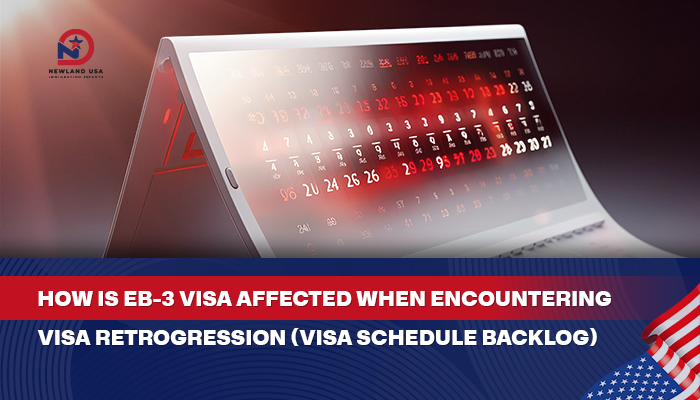
How EB3 Visa is Affected by Visa Retrogression (Visa Schedule Backlog)
The phenomenon of Visa Retrogression or visa schedule backlog is becoming a top concern for those pursuing EB3 visas for U.S. immigration. This situation not only disrupts immigration plans but also creates many complex challenges for applicants. How does the visa bulletin really affect your immigration journey?
1. Visa Retrogression – The phenomenon causing anxiety for many EB3 applicants
Visa Retrogression, also known as visa schedule backlog, represents one of the biggest challenges in the current U.S. immigration system. This is a phenomenon where the processing date (cut-off date) in the visa bulletin does not move forward as usual, but instead is pushed back to earlier dates.
To better understand Visa Retrogression, we need to grasp how the visa quota system works. U.S. law sets the number of visas issued annually for each type of immigration category, and each country has specific limits. For EB3 visas, a total of 42,900 visas are allocated each year, with the Other Workers category receiving a maximum of only 10,000 slots.
When visa applications from a specific country exceed the allocated number, the visa bulletin will show a regression. Instead of the cut-off date moving closer to the present time, it gets pulled back to earlier time periods, creating the visa schedule backlog phenomenon that many applicants face.
2. Root causes leading to visa schedule backlog
The EB3 visa category attracts three main groups: skilled workers, professionals, and other workers (unskilled workers). Among these, the other workers category typically creates the greatest pressure on the system due to the large number of interested applicants from many countries, especially Vietnam.
The imbalance between supply and demand is the main cause of Visa Retrogression. With only about 10,000 visas for other workers worldwide each year, this number becomes extremely small compared to actual demand. Additionally, per-country limits further increase the difficulty for countries with high demand.
The end of the fiscal year (September) is usually when the visa bulletin experiences the most fluctuations. When the allocated visa numbers near their limits, the U.S. government often applies control measures, leading to visa schedule backlog occurring more frequently.
Another factor to note is the backlog of applications from countries like India and China. Tens of thousands of EB3 visa applications from these countries are still waiting for processing from many years ago, creating pressure on the entire system and increasing the likelihood of Visa Retrogression occurring.

3. Serious impacts of Visa Retrogression on EB3 applications
3.1. Extended waiting time
The most obvious impact of Visa Retrogression is the extension of waiting time and the inability to know when one’s turn will come. Even when the I-140 petition has been approved, applicants still cannot proceed with the final steps until their priority date becomes “Current” according to the visa bulletin. The visa schedule backlog situation means this period will be much longer than initially expected.
3.2. Disruption of I-485 application process
For those living in the U.S. on temporary visas who wish to adjust their status, Visa Retrogression creates significant barriers. Filing an I-485 application is only possible when the priority date is earlier than the cut-off date in either the “Dates for Filing” or “Final Action Date” chart. When visa schedule backlog occurs, applicants may not be eligible to proceed with this step despite having an approved I-140 petition.
3.3. Impact on consular processing
Those waiting for interviews at U.S. consulates abroad also face disruptions when the visa bulletin encounters problems. The National Visa Center (NVC) will temporarily suspend processing applications and scheduling interviews for cases affected by Visa Retrogression until their priority dates return to current status.
3.4. Risk regarding legal residential status
One of the biggest concerns is maintaining legal residential status in the U.S. during extended visa schedule backlog periods. Those waiting to file I-485 applications or waiting for approval need to pay special attention to maintaining their current non-immigrant visas like F-1 or H-1B. Extended Visa Retrogression periods may increase the risk of current visas expiring before completing necessary procedures.
3.5. Impact on career plans
Visa Retrogression affects not only individual applicants but also employers’ staffing plans. Uncertain waiting times can create difficulties for companies in long-term planning, especially when business conditions or job requirements may change over time.
3.6. Risk of children “aging out”
One of the most serious impacts of visa schedule backlog is the risk of EB3 visa applicants’ children exceeding the age limit. According to regulations, unmarried children under 21 can be included in their parents’ applications. However, when Visa Retrogression is prolonged, some children may pass the 21-year mark before the application is completed.
Although the Child Status Protection Act (CSPA) may help “freeze” age in some specific cases, if the visa bulletin regresses for extended periods, this risk can still occur and cause unwanted consequences for families.

4. Effective strategies for dealing with visa bulletin regression
4.1. Regular monitoring and information updates
Following the monthly visa bulletin is essential for those waiting for EB3 visa processing. Applicants need to check the visa bulletin regularly to understand their application’s processing status and make appropriate preparations.
Understanding the difference between “Dates for Filing” and “Final Action Dates” in the bulletin is also extremely important. This helps applicants know when they can file different types of applications and avoid unnecessary confusion.
4.2. Maintaining legal residential status
For those living in the U.S., ensuring legal residential and work status throughout the EB3 visa waiting period is a top priority. Visa Retrogression can last for indefinite periods, so maintaining current visa status stably is extremely necessary.
In some cases, applicants may need to consider other options such as extending their current visa or switching to another visa type to ensure continuous legal status.
4.3. Psychological preparation and long-term planning
Applicants should develop long-term plans, including contingency options in case Visa Retrogression lasts longer than expected. This may include considering other immigration paths or preparing for the possibility of changing career plans.
4.4. Seeking professional support
Consulting with experienced immigration advisors or attorneys is extremely important when facing complex visa bulletin situations. These professionals can provide updated information, trend analysis, and offer advice appropriate for each specific case.
They can also help applicants understand their rights and obligations while ensuring all procedures are carried out correctly to optimize chances of success.

5. Frequently asked questions about Visa Retrogression
5.1. How long can Visa Retrogression last?
There is no fixed timeframe for Visa Retrogression. This situation can last from several months to many years, depending on various factors such as the number of visa applications, allocated quotas, and applicants’ countries of origin.
5.2. How can one predict when visa schedule backlog will occur?
Although exact prediction is impossible, monitoring trends in the visa bulletin over several months along with statistics from USCIS and NVC can help identify early warning signs of potential visa schedule backlog.
5.3. What happens to I-485 applications filed before Visa Retrogression?
I-485 applications will be held by USCIS but not processed further until the applicant’s priority date returns to current status. During this time, applicants can still maintain benefits like EAD if already issued.
6. Conclusion
Visa Retrogression is an unwanted reality that is unavoidable in the U.S. immigration system, particularly severely affecting those pursuing EB3 visas. The visa schedule backlog situation not only causes delays but also creates many legal, financial, and personal challenges.
Newland USA, with our team of experienced experts and the motto “Stable settlement – Lifelong prosperity,” is ready to consult and support in application preparation and accompany clients throughout the entire EB3 U.S. immigration process. Please contact Newland USA immediately at hotline 0785591988 or email: newsletter@newlandusa.asia for detailed and free consultation.
News Categories


Related news

AI in Auto Repair in the U.S. 2026: How Artificial Intelligence Diagnoses Vehicle Problems Faster and More Accurately

7 Key Technologies Every Industrial Maintenance Technician in the U.S. Needs to Know in 2026

PLC & Automation Skills: A Launchpad for Maintenance Technicians in the United States in 2026

What Is the ASE Certification? Requirements, Exam Roadmap, and Its Importance for Auto Technicians in the U.S. in 2026
EB5 Capital Recovery Time: How Long It Takes and the Key Milestones

Electric Vehicle Technicians in the U.S.: The “Golden” Skills Helping Vietnamese Auto Mechanics Get Ahead of the 2026 EV Trend
US Engineering & Maintenance Labor Shortage 2026: The Driving Force Behind the EB3 Skilled Workers Visa Policy
Industrial Maintenance Technician: Job Duties, Requirements & U.S. Immigration Opportunities in 2026

Lương thợ sửa xe tại Mỹ: Cách tối ưu giờ công để nhân đôi thu nhập năm 2026