What Is the ESL Program? Free English Language Support for Newly Arrived Students in the U.S.
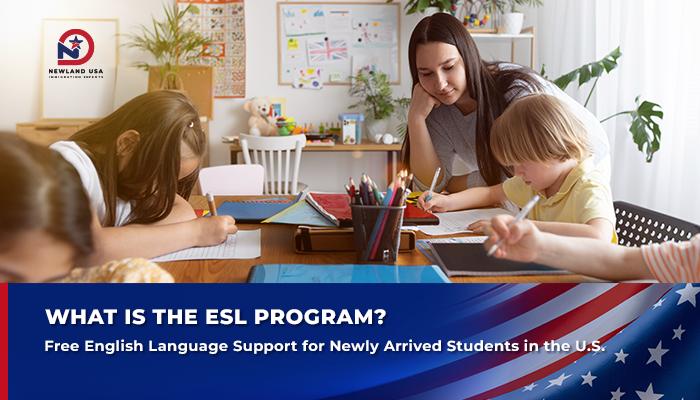
When Vietnamese families bring their children to the U.S. to settle down, the language barrier is always a top concern for parents. Will my child be able to keep up with local classmates? Will my child feel isolated in the classroom because they can’t speak English? In reality, the U.S. public school system has established the ESL program — a completely free English support system for immigrant students that helps them overcome the language barrier and smoothly adjust to their new school environment. In the article below, Newland USA will explain in detail what the ESL program is, how it works, what students are entitled to, and what Vietnamese parents need to know to support their children on their educational journey in the U.S.
1. Overview of the ESL Program
ESL stands for “English as a Second Language.” It is a teaching system widely used in public schools across the United States, designed to help students whose first language is not English. In other words, the ESL program is specifically built to help students who are learning English (often called English Language Learners, or ELLs) develop their listening, speaking, reading, and writing skills in English, while also keeping up with their core academic subjects.
So what exactly is the ESL program in the context of U.S. schools? It is a set of classes and supplementary language services that schools provide for students from kindergarten through 12th grade (K–12). Depending on the school district and state, the program may also go by other names such as ELD (English Language Development), ESOL (English for Speakers of Other Languages), or ELL Program. Regardless of the name, the core goal remains the same: to help students reach a level of English that allows them to fully participate in academic activities alongside their native English-speaking peers.
According to data from the National Center for Education Statistics, as of 2024, the U.S. has more than 5.3 million students receiving English language learning support, making up about 10% of all public school students. This number shows just how large-scale and essential the ESL English program is within the American education system. These students speak more than 400 different languages, reflecting the cultural diversity that defines American society.
2. Legal Basis: The Right to Language Support for Immigrant Students
One of the most important things Vietnamese parents need to understand is this: English support for immigrant students is not a “favor” or “charity” — it is a right protected by federal law.
The legal foundation for the ESL program dates back to 1974. During that time, the U.S. Supreme Court ruled unanimously that the San Francisco school system’s failure to provide supplementary language instruction to approximately 1,800 Chinese-origin students who could not speak English was a violation of the Civil Rights Act of 1964. The Court affirmed that providing the same curriculum, the same teachers, and the same facilities to all students — including those who did not understand English — was not equal treatment, because those students were effectively denied access to a quality education.
This ruling led to a series of changes in education policy, including the passage of the Equal Educational Opportunities Act of 1974 (EEOA). This law requires all school districts to take “appropriate action” to address language barriers that prevent students from participating equally. Additionally, the Every Student Succeeds Act (ESSA) of 2015 further strengthened standards for identifying, assessing, and supporting English learners, ensuring that the ESL English program is maintained and continuously improved nationwide.
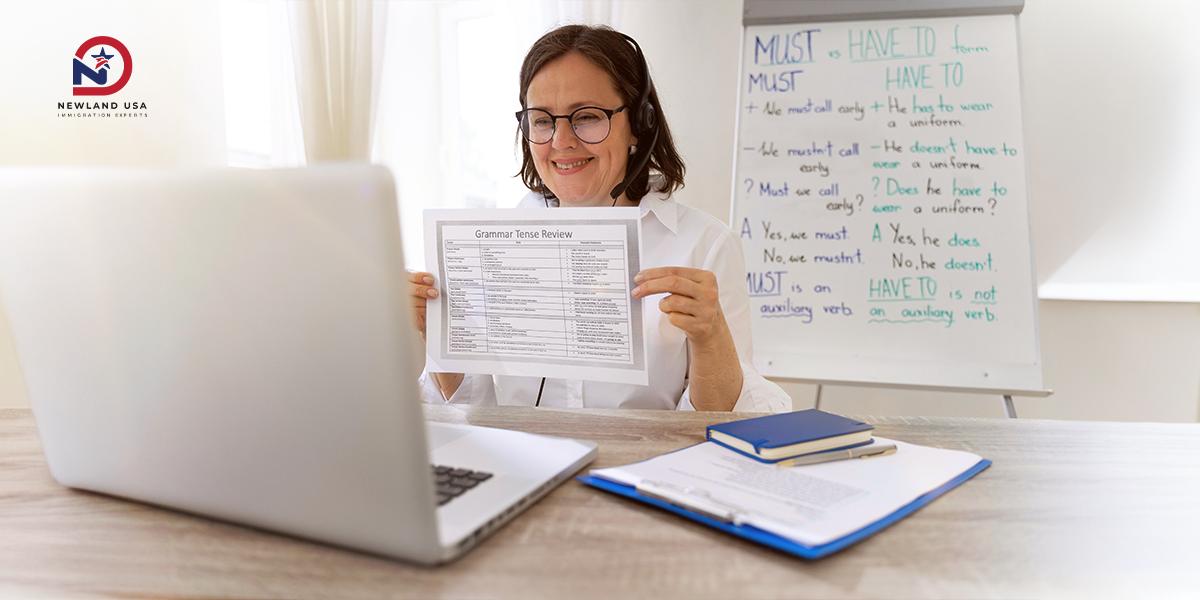
3. How the ESL Program Works in U.S. Public Schools
3.1. The Identification and Placement Process
When an immigrant family enrolls their child in a public school, the first step is to complete a Home Language Survey (HLS). This is a required form with questions such as: “What is the first language your child learned to speak?”, “What language is used most often at home?”, and “What language does your child usually speak?”. If the answers indicate that the student has been exposed to a language other than English, the school will proceed with an English proficiency assessment.
Most states in the U.S. use the WIDA Screener test to evaluate a student’s initial English ability. WIDA is a consortium of more than 40 states that provides a unified set of standards and assessment tools for English learners. The test evaluates four skills: Listening, Speaking, Reading, and Writing. Based on the results, the student will be placed in an ESL English program that matches their proficiency level.
Under federal regulations, the screening process and parent notification must be completed within 30 days from the start of the school year, or within two weeks from the date of enrollment if the student registers mid-year.
3.2. Language Proficiency Levels
The WIDA system divides students’ English ability into six clear levels, helping ESL program teachers build appropriate lesson plans:
- Level 1 – Entering: Students can only use a very limited vocabulary in social and academic situations, and need a lot of visual support.
- Level 2 – Emerging: Students begin to use some conversational English and basic academic language.
- Level 3 – Developing: Students can communicate in English in social situations and can handle some subject-specific academic language.
- Level 4 – Expanding: Language skills meet most daily communication needs, and students can handle some specialized terminology.
- Level 5 – Bridging: Students use both social and academic English at a high level and can work with materials at grade level.
- Level 6 – Reaching: This is the highest level, showing that the student has achieved full proficiency in both social and academic English.
Every year, students in the ESL program take the ACCESS for ELLs test to measure their progress. When they meet the exit criteria (usually somewhere between Level 5 and Level 6), they transition to learning entirely in the regular mainstream classroom.
3.3. Common Teaching Models
Depending on available resources, school districts across the U.S. use various models to support immigrant students with English:
Pull-Out Model (Out-of-Classroom Support): Students are taken out of their regular classroom for certain periods to attend a separate English class with a dedicated ESL teacher. This is the most common model at the elementary level.
Push-In Model (In-Classroom Support): An ESL teacher comes directly into the regular classroom to co-teach and support students during the lesson. This model helps students avoid being separated from their classmates.
Content-Based Model: English is taught through the content of subjects like Math, Science, and History. Instead of just learning grammar and vocabulary in isolation, students pick up English in the context of real-world knowledge.
Sheltered Instruction Model: Teachers of core subjects use special teaching strategies — such as visual aids, graphic organizers, and simplified language — to help ESL students access lesson content while developing their language skills at the same time.
Newcomer Program (For Newly Arrived Students): Some school districts have special programs for students who have just arrived in the U.S., especially those with very low English proficiency. The Newcomer ESL English program typically lasts from a few months to one year and focuses on social language, basic communication skills, and getting familiar with the U.S. school system before students move into a regular ESL class.
4. Practical Benefits of the ESL Program for Immigrant Students
Joining the ESL program gives immigrant students a wide range of benefits that go far beyond simply learning more English.
First, on the academic side, students receive systematic English support for immigrant students, making sure they don’t fall behind in their core subjects. ESL teachers are specially trained in second-language teaching methods, using strategies like simplifying materials, providing visual support, and adjusting assessments to match each student’s language level.
Second, the ESL program helps students develop both social language and academic language. According to education experts, immigrant students typically take about 1–2 years to become comfortable with everyday conversational English, but they need 5–7 years to master academic language — the more advanced type of English needed for classroom learning and future careers. The ESL English program effectively supports both types of language development.
Third, beyond the language aspect, many programs also focus on social-emotional support. Immigrant students often go through “culture shock” when they arrive in the U.S. — from differences in communication styles to school rules and social norms. Teachers in the ESL program are trained to recognize and help students get through this initial adjustment period, creating a safe and welcoming environment where students feel respected.
Finally, participating in the ESL program also indirectly supports the entire immigrant family. Many school districts provide information in parents’ native languages, organize meetings with interpreters, and guide parents on how to track their child’s learning progress. This is an important bridge that helps Vietnamese families better understand the U.S. education system and take an active role in their children’s education.

5. Program Duration and Exit Requirements
A common question from parents is: “How long does my child have to be in the ESL program?” The answer isn’t set in stone, because every student learns language at a different pace. However, the average timeframe estimated by most school districts is 3 to 5 years. Some students who have a strong language foundation or a supportive learning environment may finish the program sooner, while others may need more time.
Every year, students take the ACCESS for ELLs test to measure their progress. When they meet the state’s exit criteria — usually based on a composite score combining all four language skills — they officially leave the ESL English program. After exiting, students are still monitored for a period of time (usually two years) to make sure they continue to perform well academically without additional language support.
Parents should note that they have the right to opt their child out of the ESL program. However, even if parents choose to opt out, the child is still required to take the annual English proficiency assessment, and the school remains responsible for ensuring the student can access educational content as effectively as possible. Education experts generally recommend that parents keep their children in the program, because early and systematic English support for immigrant students lays a solid foundation for long-term success.
6. Tips for Vietnamese Parents When Their Child Joins the ESL Program
For Vietnamese families who are preparing to or have already brought their children to the U.S. to settle down — whether through the EB-3 Skilled Worker program, EB-5 Investment program, or any other visa category — understanding what the ESL program is and how to make the most of this benefit is extremely important.
Contact the school as soon as you enroll your child: Don’t hesitate to ask about the English support services for immigrant students available at the school. Many school districts have multilingual staff or interpreters who can help parents complete the paperwork.
Keep track of your child’s assessment results: Parents will receive written notification about their child’s English proficiency level and the type of services they will receive in the ESL English program. Read these documents carefully and ask questions if anything is unclear.
Create an English-learning environment at home: Alongside the support your child receives at school, parents can encourage their child to read English books, watch educational programs, or participate in extracurricular activities to increase their use of the new language.
Maintain Vietnamese at the same time: Education research shows that maintaining the home language does not hinder the process of learning English — in fact, it supports the development of cognitive skills and abstract thinking. Encouraging your child to use Vietnamese at home is a way to preserve cultural identity while still feeling confident about fitting in.
Attend parent meetings: Many schools hold orientation sessions specifically for immigrant families, where parents are given explanations about the education system, student rights, and ways to support their child’s learning at home. This is also a chance for parents to connect with other families in similar situations.

7. The ESL Program and the Long-Term Journey of Settling in the U.S.
The ESL program is not just a short-term fix to help immigrant children get past the language barrier — it is an important stepping stone for their entire long-term development in the U.S. When students receive proper and timely English support for immigrant students, they have a much better chance of completing high school, getting into college, and building a successful career in the future.
According to education research, English proficiency is directly linked to future income levels and career opportunities. Students who successfully complete the ESL English program tend to have a strong foundation for accessing college preparatory courses, which in turn opens the door to higher education and more advanced professional opportunities.
For Vietnamese families pursuing the path of settling in the U.S., understanding what the ESL program is and the free educational benefits available to their children is an essential part of the overall integration plan. Education is the key that helps the next generation of your family put down roots and thrive on American soil.
8. Conclusion
In summary, the ESL program is an important educational right that U.S. federal law guarantees for all students whose first language is not English, regardless of the family’s immigration status. From the initial screening process and proficiency-based placement to diverse teaching models and annual progress assessments, the ESL English program has been carefully designed to provide comprehensive and effective English support for immigrant students. For Vietnamese parents who are preparing to bring their family to the U.S., this is one of the foundational pieces of information that can give you peace of mind knowing your children will not be left behind on their journey of integration.
Learn more:
- How Much Does EB3 Skilled Worker Immigration to the US Cost? A Complete Financial Preparation Guide from A to Z
- Sending Your Children to School in America: What New Immigrant Parents Need to Know
- FBAR and FATCA: What U.S. Immigrants Need to Know
- How to Identify and Avoid Conflicts of Interest in EB-5 Investment Immigration
- Key Things to Know When Taking Out a Bank Loan for US Immigration
News Categories


Related news

From Motorcycle Mechanic to Automotive Technician in the U.S.: Skills and Qualifications to Prepare in 2026

AI in Auto Repair in the U.S. 2026: How Artificial Intelligence Diagnoses Vehicle Problems Faster and More Accurately

7 Key Technologies Every Industrial Maintenance Technician in the U.S. Needs to Know in 2026
PLC & Automation Skills: A Launchpad for Maintenance Technicians in the United States in 2026
What Is the ASE Certification? Requirements, Exam Roadmap, and Its Importance for Auto Technicians in the U.S. in 2026

EB5 Capital Recovery Time: How Long It Takes and the Key Milestones

Electric Vehicle Technicians in the U.S.: The “Golden” Skills Helping Vietnamese Auto Mechanics Get Ahead of the 2026 EV Trend
US Engineering & Maintenance Labor Shortage 2026: The Driving Force Behind the EB3 Skilled Workers Visa Policy
Industrial Maintenance Technician: Job Duties, Requirements & U.S. Immigration Opportunities in 2026