Losing Confidence When Starting Work in the U.S.: How to Overcome the “From Skilled Worker to Apprentice” Crisis?
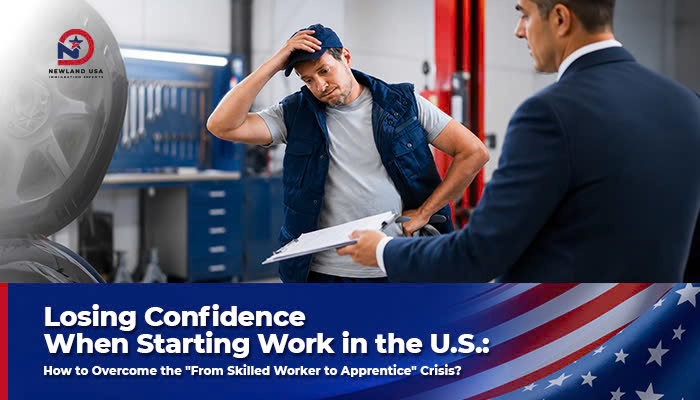
Arriving in the U.S. with a trade certificate in hand, years of experience, and confidence built up back home, many Vietnamese workers are caught off guard by a feeling of uncertainty in their very first weeks. From the position of a “skilled worker” respected by colleagues, they suddenly feel like they’ve gone back to square one as a fumbling “apprentice.” This is not a sign of weakness — it’s a completely normal transitional phase that nearly everyone goes through. This article from Newland USA will help you understand the root cause of this psychological crisis and find a sustainable way to regain confidence when working in the U.S.
1. The “Skilled Worker Turned Apprentice” Phenomenon: The Psychological Shock of Someone New to Working in the U.S.
The journey of working in the U.S. as an immigrant is rarely a straight line. Many skilled workers — even those with high-level expertise — have to start over from positions well below their actual abilities in the beginning. Researchers call this situation “underemployment” — working below your level — and it’s far more common than most people think. According to experts, over two million highly skilled immigrant workers in the U.S. are currently underemployed due to systemic barriers such as legal status issues and language differences.
The gap between “who I used to be” in Vietnam and “who I have to be right now” in the U.S. is the root cause of this shock. A mechanic with twenty years of experience might need to spend several months just getting familiar with the measurement system, workplace safety procedures, and how to communicate with supervisors the American way. The feeling of having to ask about things that seem basic makes many people start doubting themselves. Losing confidence when first starting to work in the U.S. doesn’t come from a lack of ability — it comes from the fact that existing skills haven’t had time to “translate” into the new context yet.
The important thing to remember is that this phase is only temporary. It’s like a talented athlete switching to a similar sport but with different rules: the core skills are still there — it just takes time to adapt to the new playing field.

2. Why Do So Many People Lose Confidence When They First Start Working in the U.S.?
To overcome a problem, you first need to identify its real causes. Losing confidence when first starting to work in the U.S. usually stems from several overlapping factors, not just a single reason.
The first factor is skill erosion and loss of social standing. Research compiled by experts shows that not being able to use your professional skills, combined with income worries, can lead to anxiety, depression, stress, and a feeling of falling behind. When someone is forced to take a job below their level to make ends meet, they’re not only facing financial pressure — they’re also losing the sense of recognition tied to their professional identity.
The second factor is the language barrier. Even for those with decent English skills, real-world work environments are very different from a classroom. A study published on PMC noted that self-consciousness about their accent, lack of confidence in their language ability, and fear of being looked down on make many immigrant workers hesitant to ask questions — even though asking questions is one of the most critical skills during the early days. When you’re afraid to ask, you’re more likely to make mistakes, and then you use those very mistakes as “proof” that you’re “not good enough.”
The third factor is comparison. Watching local colleagues work smoothly and chat casually during lunch breaks, newcomers easily put themselves in the “inferior” category. This is a common psychological trap: we compare our behind-the-scenes struggle with other people’s polished front stage.
The last factor is a sense of isolation. Not being fluent in the unspoken rules of workplace communication causes many people to withdraw, limit their interactions, and create a vicious cycle: the less they connect, the harder it is to fit in, and the easier it is to feel discouraged.
3. American Work Culture: Differences That Easily Catch Newcomers Off Guard
Understanding American work culture is the key that helps newcomers decode situations that seem confusing at first. Most of the feeling of being caught off guard doesn’t come from difficult colleagues — it comes from cultural differences.
The first characteristic is a direct communication style. In American workplaces, expressing opinions, asking questions, and giving feedback in a straightforward way is seen as professional and efficient. According to sources on American corporate culture, employees are expected to take ownership of their work, show initiative, and take personal responsibility. For people who are used to a more subtle, indirect style of communication, this directness can sometimes be mistaken for rudeness or harshness.
The second characteristic is a feedback culture. Americans exchange feedback quite frequently — both praise and criticism — through formal performance reviews as well as informal conversations. However, this is where misunderstandings easily happen: despite being direct communicators, Americans often deliver messages in an optimistic, solution-focused way, which means criticism can sometimes be wrapped up so neatly that you miss it. A newcomer might walk out of a review feeling great, without realizing that their manager just subtly pointed out areas for improvement. Learning how to “read between the lines” of praise is an important skill.
The third characteristic is that people respect each other based on work results, along with a less hierarchical and more equal work environment. Unlike many places where status is tightly linked to job titles, American workplaces tend to value individuals based on their actual contributions. This also brings along a cultural trait that can confuse East Asian workers: proactively “showcasing your achievements” is considered normal and even necessary, rather than being seen as bragging. People who are used to being modest may unintentionally downplay their own noteworthy contributions.
Once you understand the differences in American work culture, you’ll stop interpreting every signal negatively and start seeing them as rules to learn, rather than judgments about your personal worth.
4. Impostor Syndrome — The Silent Enemy in American Workplaces
One of the deepest psychological causes of losing confidence when first starting to work in the U.S. is impostor syndrome — the persistent feeling that you don’t deserve the position you hold and that sooner or later you’ll be “exposed.” This concept was first studied by psychologists Pauline Rose Clance and Suzanne Imes in the 1970s, and it tends to hit hardest when someone is starting something new, such as their first job.
This phenomenon is so common that nearly everyone experiences it at some point. Many statistics show that about 70% of professionals experience this feeling at some point in their career. In other words, feeling like “I’m a fraud” is not evidence of incompetence — quite the opposite, it often goes hand in hand with people who hold themselves to high standards.
This syndrome shows up in many forms: perfectionism that sets unrealistic expectations; the habit of crediting success to luck rather than ability; fear of failure to the point of avoiding opportunities; and the tendency to overwork to prove your worth. When you first start working in the U.S., these patterns become even more visible because of the new work environment.
It’s also important to set realistic expectations about how long it takes to adjust. Many people feel impatient and want to fit in right away, but the reality calls for more patience. Some analyses suggest it can take up to six months for someone to feel truly comfortable in a new job. Understanding this timeline helps newcomers go easier on themselves during the early phase.

5. How to Regain Confidence When Working in the U.S.: A Step-by-Step Roadmap
Now that you’ve identified the problem, here’s the most important part: how to rebuild solid confidence. Below is a roadmap for regaining confidence when working in the U.S., drawn from expert insights:
Step one: Separate your thoughts from reality. When a negative thought like “my coworkers probably think I’m useless” pops up, remind yourself that it’s just a thought — not a fact. A useful technique is to ask yourself: “Do I have any concrete evidence for this fear?” Learning to see anxious feelings as something that passes, rather than as a definitive statement, will significantly reduce psychological pressure.
Step two: Build a “success file.” Keep a list of all your achievements, big or small: completing a difficult task, receiving a compliment from your manager, or simply asking the right question at the right time. When self-doubt creeps in, this list becomes concrete evidence of your real abilities, countering those negative emotions. This is one of the most frequently mentioned methods when it comes to building confidence.
Step three: Don’t be afraid to ask questions and find a guide. In American work culture, it’s completely normal for a newcomer not to know everything; managers usually appreciate employees who are eager to learn and ask good questions. Instead of staying silent out of fear of judgment, take the initiative to ask when something isn’t clear. On top of that, finding a mentor will provide both practical knowledge and invaluable emotional support.
Step four: Break goals into smaller pieces and celebrate each small win. Perfectionism is fertile ground for losing confidence. Instead of expecting to master everything right away, break your work into small, achievable goals and give yourself credit every time you complete one, no matter how big or small. Focusing on growth rather than perfection turns “failures” into learning opportunities.
Step five: Normalize your emotions. Understand that self-doubt is common during any transitional period. Sharing your feelings with colleagues and friends doesn’t just relieve stress — it also shows you that many others have gone through the same thing. Equally important is treating yourself with kindness instead of being overly self-critical.
Step six: Invest in knowledge and mental health. The deeper your understanding of your job and industry, the more grounded you’ll feel. At the same time, maintaining good sleep, regular exercise, and emotional balance will help you face challenges with a calmer mindset. Confidence doesn’t come back overnight, but every time you push back against a negative thought, you’re strengthening that “confidence muscle” just a little bit more.
The journey of working in the U.S. should therefore be seen as an accumulation process, where every passing day is a small brick building a solid foundation.

6. Frequently Asked Questions About Adjusting to American Workplaces
Is losing confidence when first starting to work in the U.S. a sign of incompetence? No. This is a normal psychological reaction during a transitional period, commonly experienced even by highly skilled professionals. It reflects the fact that skills need time to adapt to a new environment — it doesn’t mean you lack ability.
How long does it take to get used to a new job in the U.S.? According to experts, it can take up to about six months to feel truly comfortable. So be patient and set reasonable expectations for yourself.
What’s the fastest way to regain confidence when working in the U.S.? There’s no “magic trick” for this, but the most effective steps include: keeping a record of your achievements as evidence of your ability, not being afraid to ask questions, finding a mentor, and breaking goals into smaller pieces so you can celebrate each bit of progress.
What’s the most shocking difference between American and Vietnamese work culture? The direct communication style, frequent feedback culture, and the practice of proactively showcasing personal achievements are the three differences that catch newcomers off guard the most during the early period.
7. Conclusion
The feeling of going from a “skilled worker” to an “apprentice” is one of the biggest mental challenges Vietnamese people face when they start working in the U.S. However, this is just a transitional chapter — not the end of your abilities or your worth as a person. When you understand that losing confidence when first starting to work in the U.S. comes from cultural differences and common psychological patterns, you’ll have the composure to get through this difficult phase. By patiently learning about American work culture, proactively seeking knowledge, and applying each step in the roadmap for regaining confidence when working in the U.S., that steadiness will gradually return. Most importantly, remember that the confident people you admire today once had the same shaky early days just like you.
Learn more:
- Newland USA Shares Costs and Roadmaps for U.S. Immigration via the EB-3 Visa
- EB-3 U.S. Immigration in 2026: The Alternative Solution to Family-Sponsored Visa Categories
- EB3 Immigration to the US: Can Your Spouse and Children Come Along?
- How Much Does EB3 Skilled Worker Immigration to the US Cost? A Complete Financial Preparation Guide from A to Z
News Categories



Related news

From Motorcycle Mechanic to Automotive Technician in the U.S.: Skills and Qualifications to Prepare in 2026
AI in Auto Repair in the U.S. 2026: How Artificial Intelligence Diagnoses Vehicle Problems Faster and More Accurately
7 Key Technologies Every Industrial Maintenance Technician in the U.S. Needs to Know in 2026
PLC & Automation Skills: A Launchpad for Maintenance Technicians in the United States in 2026
What Is the ASE Certification? Requirements, Exam Roadmap, and Its Importance for Auto Technicians in the U.S. in 2026
EB5 Capital Recovery Time: How Long It Takes and the Key Milestones
Electric Vehicle Technicians in the U.S.: The “Golden” Skills Helping Vietnamese Auto Mechanics Get Ahead of the 2026 EV Trend
US Engineering & Maintenance Labor Shortage 2026: The Driving Force Behind the EB3 Skilled Workers Visa Policy
Industrial Maintenance Technician: Job Duties, Requirements & U.S. Immigration Opportunities in 2026