Impact of the 2025 U.S. Dual Citizenship Termination Bill on Immigrants
The Exclusive Citizenship Act of 2025 is attracting significant attention from the Vietnamese community in the U.S. as it proposes to completely end dual citizenship in America. With over 2.3 million Vietnamese living in the U.S., most of whom maintain both citizenships, this bill could create fundamental changes to the rights and immigration pathways of hundreds of thousands of families. This article by Newland USA will provide a detailed analysis of the bill, its potential impacts, and recommendations for Vietnamese investors planning to immigrate and become U.S. citizens.
1. What is the Exclusive Citizenship Act of 2025?
The Exclusive Citizenship Act of 2025 is a new proposal introduced by Republican Senator Bernie Moreno from Ohio to the U.S. Senate in early 2025. The central goal of this bill is to establish the principle of “one U.S. citizen – one citizenship,” aiming to end the situation where Americans hold a second citizenship.
According to information from Senator Moreno’s office, the bill aims to completely eliminate U.S. dual citizenship, including cases where naturalization has been completed or individuals born in the U.S. who automatically carry two citizenships under the laws of another country.
The key difference compared to previous proposals is that this bill doesn’t just stop at tightening naturalization requirements, but also addresses three main policy areas:
First, regulations regarding the right to maintain U.S. citizenship when an individual is associated with a second citizenship. Second, the responsibility to renounce foreign citizenship within a specified timeframe if the law is approved by Congress. Third, a mechanism for checking, verifying, and updating records of the single citizenship of each U.S. citizen through federal agencies like the State Department and Department of Homeland Security.
The bill’s content reflects a trend in the U.S. to strengthen management of citizenship issues in the context of volatile global geopolitics. At the same time, the bill emphasizes consolidating national security and citizens’ commitment to America. Although it hasn’t become official law yet, due to its significant impact, this proposal is creating special attention from the immigrant community and families planning to obtain U.S. citizenship in the near future.
2. Context and Scope of Impact
According to data analysis from the Pew Research Center and reports from U.S. Citizenship and Immigration Services (USCIS), the U.S. currently has approximately 20-25 million people with dual citizenship. This figure shows the significant scale of the group that could be directly impacted by the bill.
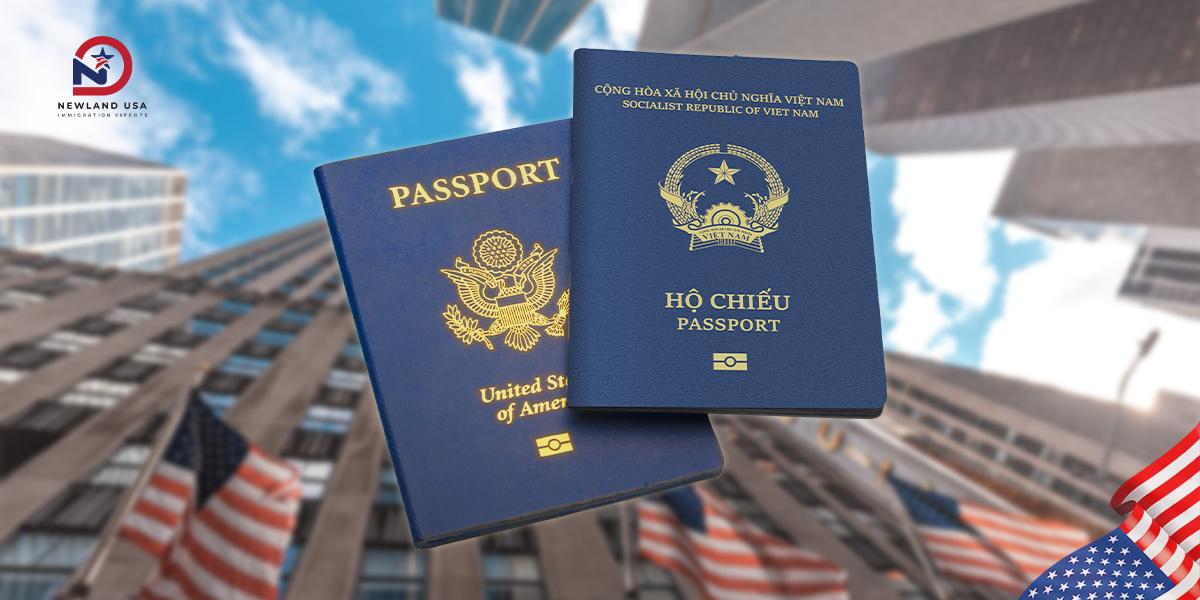
The Vietnamese community in the U.S. alone has about 2.3 million people, most of whom have completed naturalization procedures but still maintain Vietnamese citizenship. Keeping U.S. dual citizenship helps immigrants secure rights related to property, family relationships, business activities, and fulfilling obligations in their homeland. For this reason, the need to maintain a second citizenship remains very common in the Vietnamese community.
Therefore, the U.S. reconsidering its dual citizenship policy is creating particular concern among communities with families in their homeland and assets in both countries, with Vietnam being one of the most representative countries.
3. Key Changes in the Bill
The Exclusive Citizenship Act of 2025 proposes a series of fundamental adjustments in how the U.S. manages citizenship. The changes focus on establishing the principle of holding only one citizenship, while expanding the reporting responsibilities and controls for U.S. citizens.
3.1. Requirement to Hold Only One Citizenship
If the bill is passed by Congress, all U.S. citizens including naturalized citizens and those born in the U.S. will not be allowed to maintain a second citizenship. This regulation is a fundamental change from current practice, when U.S. law allows dual citizenship in most cases and doesn’t require people to renounce their original citizenship.
3.2. Deadline for Choice for Current Dual Citizens
The bill clearly states that people currently holding dual citizenship will be given a specified period of time to choose which citizenship they want to maintain. This will be a mandatory transition period, requiring each individual to make a decision and complete legal procedures related to renouncing foreign citizenship if they want to continue holding U.S. citizenship.
3.3. Mechanism to Terminate Citizenship When Acquiring Additional Citizenship
For future naturalization cases, if an individual after becoming a U.S. citizen continues to apply for another citizenship, their citizenship rights may become invalid when the new regulation is issued. This aims to prevent the deliberate creation of U.S. dual citizenship after the law takes effect.
3.4. Authority for Federal Agencies
The State Department and Department of Homeland Security are tasked with building a new system of standards to verify the single citizenship of U.S. citizens, establishing procedures for reporting foreign citizenship, and reviewing special cases where it’s not possible to renounce original citizenship due to legal or political restrictions. However, there is currently no detailed implementation framework, so the mechanism for checking, verifying, or handling violations remains open.
3.5. Principle of Exclusive Loyalty
One of the bill’s central messages is requiring U.S. citizens to demonstrate complete commitment to America. This reflects the proposer’s view that U.S. citizenship comes with responsibilities and loyalty to only one country.
4. Cases Where Giving Up Original Citizenship Is Difficult
Even when the U.S. wants to apply a “single citizenship” mechanism, practice shows there are many cases where it’s almost impossible to renounce original citizenship. This poses a major challenge in implementing the bill if it’s approved.
Some countries don’t allow citizens to renounce citizenship, such as Iran or Cuba. Many other countries don’t allow minors to renounce citizenship, except in special cases. Vietnam allows citizenship renunciation but the review process has strict conditions, and not all applications are approved.
Additionally, some individuals cannot renounce citizenship because they still have military obligations, financial obligations, or are prohibited from leaving the country. This raises an important question: if the U.S. requires renouncing dual citizenship, but the original country doesn’t allow it, will that person be considered in violation or exempted? The current bill doesn’t provide any specific guidance on this complex issue.
5. Who Will Be Affected if the Bill Passes?
The Exclusive Citizenship Act of 2025, if discussed more deeply in Congress and moving toward approval, will directly impact many groups of people. The level of impact varies depending on citizenship status, stage of settlement, and long-term plans of each family.
5.1. People Currently Holding U.S.-Vietnamese or U.S.-Other Country Dual Citizenship
The group most clearly impacted is those who have naturalized in the U.S. but still hold Vietnamese citizenship or another citizenship. If the law takes effect, they may have to make a choice within the specified deadline. This brings consequences related to rights in the second country such as residence, property ownership, inheritance, business, and maintaining family relationships.
5.2. Vietnamese People Preparing to Naturalize in the U.S.
Many parents with children studying in the U.S. or families waiting to reach the stage of being eligible for naturalization will need to reconsider their plans. Naturalizing in the U.S. in the future may mean not being able to keep Vietnamese citizenship, affecting any remaining work in the homeland, property, and opportunities to move between the two countries.
5.3. Children Born in the U.S. Who Automatically Have Dual Citizenship
Some children born in the U.S. have dual citizenship according to the citizenship regulations of their parents’ original country. If the bill is applied, this group may have to make a choice when they come of age or when the law takes effect. This is a factor that families with young children need to carefully consider when planning long-term pathways.
5.4. Investors and Entrepreneurs Owning Assets in Both Countries
People who have naturalized in the U.S. but still maintain property, land, businesses, or inheritance rights in Vietnam will be greatly affected. Being forced to renounce Vietnamese citizenship could make transactions, legal rights, or property ownership much more complicated.
5.5. Families Planning to Move to the U.S. Through Investment, Employment, or Study
This group is not immediately impacted, but needs to update early to adjust their immigration pathway. Programs like EB3, EB5, EB1, L1, or F1 visa conversion pathways may not be affected during the Visa stage, but the naturalization step later will become a major issue if they wish to maintain dual citizenship.
5.6. U.S. Citizens Considering Applying for Additional Citizenship
Americans planning to obtain additional citizenship to optimize taxes, facilitate travel, or conduct international business may face risks if the law passes.

6. What Should Vietnamese Workers and Investors Prepare?
Although the Exclusive Citizenship Act of 2025 is just a bill that hasn’t been voted on and still has to go through many rounds of discussion in both the Senate and House, its appearance in the U.S. Congress has already shown an important signal in the direction of U.S. immigration and citizenship policy.
Changes to citizenship don’t usually happen suddenly. They start with proposals like this, then are adjusted, amended, or even eliminated. However, the discussion process itself reflects very clearly the U.S.’s priorities and new perspectives in a volatile global context: security, transparency, and commitment of U.S. citizens.
6.1. Track Legislative Progress at Each Stage
Bills related to citizenship often go through lengthy discussion periods. Tracking changes at the right time helps families assess risks at each stage, proactively adjust green card or naturalization plans, and avoid making decisions based on rumors or unverified information.
6.2. Review Entire Asset Structure
Even though the bill isn’t effective yet, Vietnamese people in the U.S. should work early with legal advisors to determine which assets depend on citizenship. Additionally, they need to assess the scenario if they have to choose one citizenship and prepare inheritance plans, transfers, or business restructuring. This is a step that helps minimize risk in case there are major changes to dual citizenship laws.
6.3. Redefine Long-term Settlement Goals
The decision to naturalize in the U.S. is no longer “the final step in the pathway,” but becomes a strategic decision. Families should consider the following factors to clarify goals and avoid conflicts of interest in the future: long-term settlement in the U.S. or maintaining parallel connections between the two countries, impact on children and assets, business activities, as well as the appropriate time to file naturalization applications if that’s still the goal.
6.4. Standardize Settlement Records and Legal Obligations
In the context of U.S. policy tending to tighten, families need to ensure that tax records, assets, settlement documents, and international transactions are all transparent. Information declarations need to be consistent between Vietnam and the U.S., along with preparation to adjust quickly if regulations change.

7. Conclusion
The Exclusive Citizenship Act of 2025 regarding ending U.S. dual citizenship is an important proposal that could create very large changes for millions of people. Although there are still many steps in the legislative process, the appearance of this bill is a reminder that immigration and citizenship policies can change toward stricter directions.
For Vietnamese families planning to settle in the U.S. through programs like EB-3, closely monitoring the bill’s developments and preparing contingency plans is necessary. The decision about dual citizenship not only affects individuals but also impacts the entire financial and long-term settlement strategy of families.
At Newland USA, we not only provide U.S. immigration services but also support clients in their journey of cultural integration in this new country. If you need more information, please contact Newland USA immediately via hotline 0785591988 or email: newsletter@newlandusa.asia for detailed and free consultation.
Learn more:
- Common Mistakes That May Cause Your EB3 U.S. Immigration Application in the Medical Gloves Manufacturing Industry to Be Rejected
- Overview of Medical Glove Manufacturing Work in the US under the EB3 Immigration Program
- Important Immigration Terms in the EB3 US Immigration Application
- Does the automotive repair profession through EB3 U.S. immigration require English? Important notes when using English in this industry
News Categories


Related news

Who Is the ESTA Program For? How to Assess Your Fit Before Applying in 2026

Who Is the ESTA Program For? How to Assess Your Fit Before Applying in 2026

From Motorcycle Mechanic to Automotive Technician in the U.S.: Skills and Qualifications to Prepare in 2026

AI in Auto Repair in the U.S. 2026: How Artificial Intelligence Diagnoses Vehicle Problems Faster and More Accurately

7 Key Technologies Every Industrial Maintenance Technician in the U.S. Needs to Know in 2026

PLC & Automation Skills: A Launchpad for Maintenance Technicians in the United States in 2026
What Is the ASE Certification? Requirements, Exam Roadmap, and Its Importance for Auto Technicians in the U.S. in 2026
EB5 Capital Recovery Time: How Long It Takes and the Key Milestones

Electric Vehicle Technicians in the U.S.: The “Golden” Skills Helping Vietnamese Auto Mechanics Get Ahead of the 2026 EV Trend