The Biggest Changes to H1B Visa in 2025
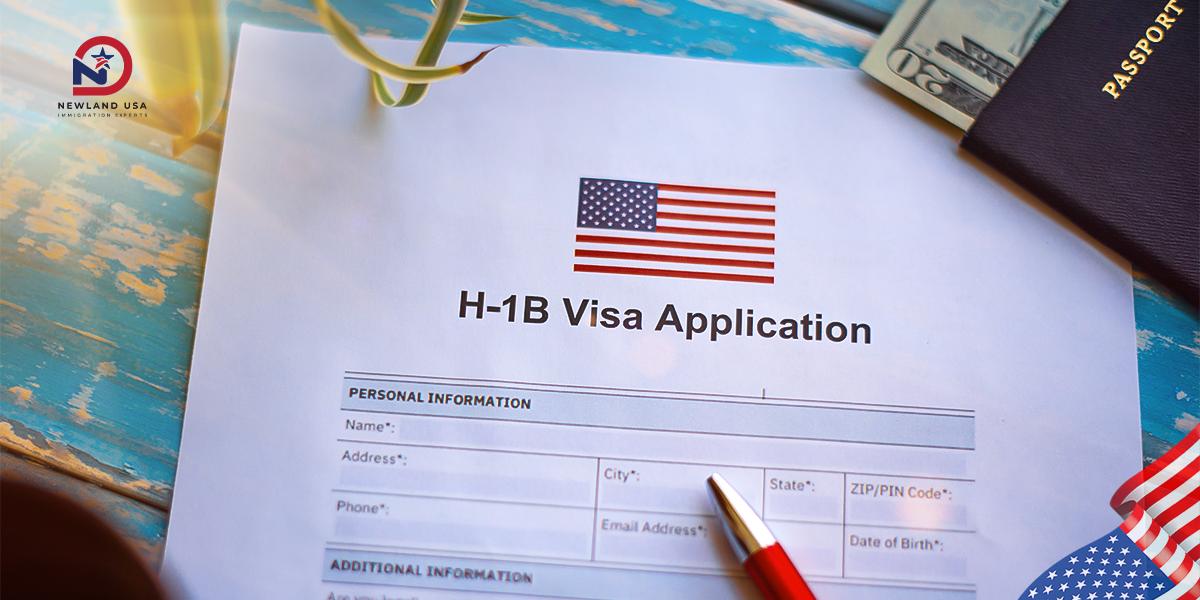
The H1B program is going through its most significant changes in history as the US shifts from a random lottery system to prioritizing high-salary applicants. The H1B Visa policy changes in 2025 don’t just affect the registration process—they also have far-reaching impacts on the opportunities of hundreds of thousands of foreign workers, especially Vietnamese people who want to work and settle in the US. This article from Newland USA will provide a comprehensive analysis of the latest updates, helping you understand the opportunities and challenges in this new landscape.
1. Overview of the H1B Visa and Its Importance to Vietnamese People
The H1B Visa is a non-immigrant visa designed for highly skilled workers who want to work in the US. This is the path chosen by many engineers, programmers, IT specialists, scientists, and doctors from Vietnam to build their careers in the world’s largest job market.
Each fiscal year, the US government issues a maximum of 85,000 H1B Visas, with 65,000 spots for the general category and 20,000 spots reserved for those with a master’s degree or higher from US universities. This limited quota always creates fierce competition among hundreds of thousands of applicants worldwide.
1.1. Key Benefits of the H1B Program
The H1B Visa offers many significant advantages for foreign workers. The initial stay period is 3 years and can be extended for another 3 years, allowing workers to legally work in the US for a total of 6 years. Spouses and children under 21 can accompany the visa holder under H-4 status, and in many cases, spouses can apply for work authorization.
Most importantly, the H1B Visa is considered an ideal stepping stone to transition to a US Green Card through programs like EB-2 or EB-3. However, for many years, the random lottery system has been a source of anxiety for countless applicants, as the number of registrations often far exceeds the available quota. This has forced many highly qualified Vietnamese people to rely on luck to get approved.
2. H1B Policy Changes: From Random Lottery to High-Salary Priority
2.1. The Beneficiary-Centric System Starting Fiscal Year 2025
The H1B Visa policy changes became clearly visible starting fiscal year 2025 when USCIS implemented the beneficiary-centric process. Under this system, selection is based on each unique individual rather than each registration as before.
This change aims to reduce fraud, where some companies filed multiple applications for the same person to increase their chances of being selected. Under the new rules, each applicant is only counted once regardless of how many employers sponsor them. A notable result is that the number of registrations dropped significantly from over 470,000 in fiscal year 2025 to about 344,000 in fiscal year 2026.
2.2. The Weighted Selection System – The Core Change Starting Fiscal Year 2027
The most important turning point in the history of the H1B program comes from the rule officially announced by USCIS at the end of 2025. Starting February 27, 2026, the completely random lottery system will be replaced by a weighted selection system, applying to the fiscal year 2027 registration period starting in March 2026.
Under the new H1B policy, all applications will be classified based on the salary offered as stated in the Labor Condition Application (LCA). There are four wage levels from Level 1 (lowest) to Level 4 (highest). Applicants in the Level 4 wage group will receive higher weighting, with selection chances potentially up to four times greater than Level 1.
The goal of this H1B Visa policy change is to prioritize highly skilled workers with good salaries while protecting job opportunities and income levels for American workers. The US government wants to attract truly outstanding talent rather than allowing the program to be abused for hiring cheap labor.
3. Other Important H1B Changes in 2025
3.1. Increased Lottery Registration Fees
One notable H1B Visa policy change is the increase in electronic registration fees. Starting with the fiscal year 2026 registration period (in March 2025), the registration cost per applicant jumped significantly from $10 to $215. This fee is non-refundable regardless of whether the application is selected.
This decision aims to prevent companies from mass-filing applications just to increase their chances, thereby helping the H1B system operate more transparently and efficiently.
3.2. Additional $100,000 Fee for New Applications
Starting September 21, 2025, a controversial H1B policy was enacted: new H1B Visa applications must pay an additional fee of up to $100,000. This rule specifically applies to applicants who are outside the US and have never held a valid H1B Visa before.
Fortunately, this fee does not apply to extensions, amendments, or applicants already present in the US with a current visa. Some rare exceptions may be considered if special national interest can be demonstrated. This is a strong measure to limit program abuse and prioritize American workers.
3.3. Stricter Social Media Checks
Starting December 15, 2025, all H1B applicants and H-4 dependents are required to set their social media profiles to public so US consular officials can review them. This H1B policy aims to identify national security risks, fraudulent behavior, or any unfavorable information.
Previously, this requirement mainly applied to student visas, but it has now been expanded to the entire H1B program to ensure transparency and security.
4. Impact of H1B Visa Policy Changes on Vietnamese People
4.1. Opportunities for Highly Qualified Individuals
For the Vietnamese community, the H1B Visa policy changes bring both opportunities and challenges. On the positive side, applicants with extensive experience, advanced degrees like master’s or doctoral degrees, and senior positions at major tech companies will benefit greatly.
Vietnamese international students who graduate with a master’s degree from US schools still maintain their advantage with the separate 20,000-spot master’s cap quota (prioritizing candidates with master’s degrees or higher). Furthermore, the overall reduction in fraud helps increase fairness, creating better conditions for truly qualified applicants.
4.2. Challenges for Recent Graduates
On the other hand, recent graduates or entry-level workers with Level 1 or Level 2 salaries will face greater difficulties. Due to lower weighting in the new system, this group’s chances of being selected have decreased significantly compared to before.
Competition pressure has also increased from major markets like India and China, where many applicants have high salaries in the IT field. The increased registration fee of $215 plus other costs also creates a significant financial burden.
4.3. Advice for Vietnamese Applicants
If you’re preparing to apply for an H1B Visa, the most important thing is to seek job offers with high salaries and positions requiring specialized skills. Building experience, advancing your education, and developing expertise in fields with talent shortages will give you an advantage in the context of the new H1B policy.

5. The Trend of Transitioning from H1B to the EB3 Program
In the context of an increasingly competitive H1B program with high costs and unpredictable outcomes, a clear shift is happening. More and more people are choosing EB-3—the US immigration program through employment sponsorship—as their main pathway instead of continuing to rely on the H1B visa.
This trend is particularly strong from major markets like India and China, the two countries that consistently have the highest percentage of H1B applications each year. In Vietnam, an increasing number of technical and professional workers are also starting to consider this option.
5.1. Why is EB-3 Becoming an Alternative Solution?
Instead of continuing to wait and depend on US employers to sponsor an H1B visa, with H1B policy changing constantly each year and a selection process that’s highly based on chance, many people are turning to EB3 as a more proactive solution for long-term US settlement.
The EB3 program offers many advantages over the H1B. First, EB3 leads directly to a permanent Green Card without needing to convert through multiple steps like the H1B. Second, EB3 doesn’t require very high educational qualifications—just a high school diploma or equivalent along with relevant work experience. This opens up opportunities for more types of workers compared to the strict requirements of H1B policy.
Additionally, EB3 is not limited by the very small quota of 85,000 H1B visas per year. Although there’s still waiting time depending on the country, once the application is submitted and approved, workers have a much clearer and more stable pathway. No more worrying about not winning the lottery or being affected by annual H1B Visa policy changes.
As a result, many EB3 programs are receiving great interest from Vietnamese workers, especially those working in industries like manufacturing, food processing, hospitality, and healthcare. So if you’re considering EB3 as an alternative or supplement to the H1B pathway, researching and taking action early is the key to success.
6. Conclusion
The H1B Visa policy changes in 2025 mark a major turning point in the history of America’s non-immigrant worker program. The shift from a random lottery system to prioritizing high-salary applicants clearly shows the US government’s direction: protecting the domestic labor market while attracting truly outstanding talent.
For Vietnamese people, this is both an opportunity and a challenge. Those with high professional qualifications, extensive experience, and positions with good salaries will benefit from the new H1B policy. On the other hand, those just starting their careers need to prepare better and may consider alternative pathways like EB-3 or EB-5.
Newland USA, with a team of experienced experts and the motto “Settle Securely—Prosper for Life,” is ready to provide consultation and support in preparing applications and accompanying customers throughout the EB3 US immigration process. Contact Newland USA immediately via hotline 0785591988 or email: newsletter@newlandusa.asia for detailed and free consultation.
Learn more:
News Categories

Related news
How Does the Investment Sustaining Period Affect EB-5 Investors’ Project Selection?

Financial Planning the Right Way When Settling in the U.S. Through the EB-3 Program
Why is the EB3 Visa waiting time for skilled workers faster than for other workers?
ROI Analysis When Settling in the US Through EB3 Skilled Workers
Health Insurance When Settling in the US in 2026: Comprehensive Financial Protection Solution

‘Only the wealthy can immigrate to America’ – True or false?
Key Participants in an EB-5 Transaction

Does the EB3 Skilled Worker Immigration to the U.S. Really Cost Billions of VND?
Form I-131A – How to Board a Flight Back to the U.S. When You Lose Your Green Card Abroad