What is the EB-3 Program? A Comprehensive Guide for Vietnamese Citizens 2026

The EB-3 program is currently one of the most popular and legal pathways to permanent residency in the United States for skilled workers, professionals, and even unskilled workers. With lower requirements compared to EB-1 and EB-2, the EB-3 visa opens golden opportunities for thousands of Vietnamese people who dream of building a stable future in America. This article provides detailed, updated information for 2026 about the EB-3 skilled worker program, helping you fully understand the process, requirements, costs, and pathway to US immigration under EB-3.
1. Overview of the EB-3 Program and Its Position in the US Immigration System
The EB-3 program (Employment-Based Third Preference) is an employment-based immigrant visa category in the third preference group of the US employment-focused immigration system. Each fiscal year, US Citizenship and Immigration Services (USCIS) allocates approximately 140,000 immigrant visas for all employment-based visa categories, of which the EB-3 program accounts for 28.6% of this number, plus any unused visas from the EB-1 and EB-2 categories.
The distinctive feature of the EB-3 visa is its significantly lower requirements compared to other immigration programs. While EB-1 is for individuals with extraordinary abilities, and EB-2 requires a master’s degree or proof of national interest, the EB-3 skilled worker program accepts positions that don’t require a college degree, only 2 years or more of work experience.
2. Three Main Categories in the EB-3 Program
The EB-3 program is divided into three separate groups, each with different standards and requirements:
2.1. EB-3 Skilled Workers
This is the most popular category in the EB-3 skilled worker program. Applicants in this group must meet the following criteria:
- Have at least 2 years of work experience or training in a related field
- The job is not temporary or seasonal in nature
- Meet all education, training, or experience requirements for the hired position
- In some cases, post-secondary education may count as part of the training requirement
Common occupations for EB-3 skilled workers include: carpenters, electricians, welders, medical technicians, auto mechanics, factory workers, long-haul truck drivers, professional construction workers, and many other trades.
2.2. EB-3 Professionals
The professional category in the EB-3 program requires:
- Possession of a US bachelor’s degree or foreign equivalent
- The job requires a minimum of a bachelor’s degree as a condition for entry
It’s important to note that unlike the EB-3 skilled worker visa, the professional category does not allow substituting a bachelor’s degree with work experience. Common positions include: engineers, teachers, accountants, scientists, architects, and medical professionals.
2.3. EB-3 Other Workers (Unskilled Workers)
This category is for workers with little or no specialized training. US immigration under EB-3 for unskilled workers requires:
- Ability to perform work that doesn’t require specialized skills
- The job requires less than 2 years of training or experience
- The position must be permanent, not temporary or seasonal
Typical jobs include: warehouse workers, cleaners, food processing workers, casino employees, restaurant servers, and general production workers. However, this category is allocated a maximum of 10,000 EB-3 visas per year, leading to much longer waiting times.
3. Basic Conditions and Requirements of the EB-3 Program
To be eligible for the EB-3 program, applicants must meet the following requirements:
3.1. Job Offer from a US Employer
Unlike EB-1A which allows self-petition, the EB-3 visa requires sponsorship from a US employer. The employer must:
- Provide a full-time, permanent job offer
- Demonstrate financial ability to pay the promised salary
- Commit to maintaining employment for the worker after they receive their green card
3.2. PERM Labor Certification
This is a very important requirement in the EB-3 skilled worker program. The PERM (Program Electronic Review Management) process includes:
Step 1: Request for Prevailing Wage Determination (PWD) The employer must submit an application to the US Department of Labor to determine the minimum wage for the position based on geographic area and job requirements. According to January 2026 data, this step takes approximately 4-6 months.
Step 2: Complete Recruitment Requirements The employer must demonstrate they’ve attempted to find qualified US workers through:
- Posting job advertisements in at least 2 local newspapers
- Posting the job with the state employment agency
- Advertisements must run continuously for at least 30 days
Step 3: Submit Labor Certification Application After completing recruitment, the employer submits Form ETA-9089 to the Department of Labor. As of January 2026, average PERM processing time is 16 months. In cases of audit, the time may extend an additional 6-12 months.
3.3. Meeting Education and Experience Requirements
Depending on which EB-3 program category you apply for, you must demonstrate:
- Skilled workers: Evidence of 2 years of experience or training through degrees, certificates, reference letters from previous employers
- Professionals: Recognized college degree and equivalency evaluation if foreign degree
- Other workers: Ability to perform the required work and good health
3.4. Medical Examination and Immigration Requirements
All applicants for US immigration under EB-3 must:
- Undergo comprehensive medical examination by a designated physician
- Not have dangerous communicable diseases
- Complete required US vaccinations
- Have no serious criminal record
- Not be involved in terrorist activities or human rights violations
4. Detailed Step-by-Step EB-3 Visa Application Process
The EB-3 program has a multi-stage complex process requiring thorough preparation:
Stage 1: PERM Labor Certification (16-24 months)
As mentioned, this is the first and most time-consuming step in the EB-3 visa. The PERM filing date will become your Priority Date – an extremely important number determining your case processing order.
Stage 2: File Form I-140 (6-14 months)
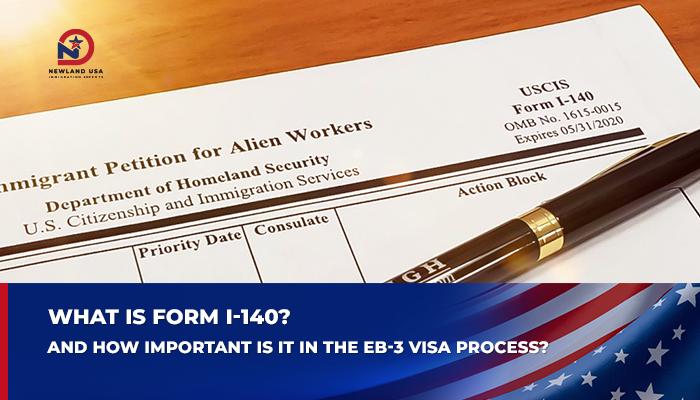
After PERM approval, the employer will file Form I-140 (Immigrant Petition for Alien Worker) with USCIS. The package must include:
- Approved PERM labor certification
- Evidence of employer’s financial ability (financial statements, tax returns)
- Evidence of worker’s qualifications and experience
- Filing fee of $715 (as of 2026)
Normal I-140 processing time is 6-14 months. However, the EB-3 skilled worker program allows Premium Processing service for $2,805, reducing the time to 15 business days.
Stage 3: Wait for Available Visa Number (Current) (Visa Bulletin)
This can be the longest stage in the EB-3 program, depending on country of origin:
According to the January 2026 Visa Bulletin:
- Vietnam and most countries: About 3-5 years
- Mainland China: About 5-7 years
- India: Over 10 years (due to extremely high demand)
The US Department of State publishes the Visa Bulletin monthly with two charts:
- Final Action Dates (Chart A): Dates visas can be issued
- Dates for Filing (Chart B): Dates adjustment of status applications can be filed
Stage 4: File Adjustment of Status or Consular Processing (6-24 months)
When your Priority Date becomes current, you have two options:
A. Adjustment of Status (I-485) – For those legally in the US
File Form I-485 with USCIS with a fee of $1,540 (including biometrics fee). The process includes:
- Fingerprint and biometric photo collection
- Comprehensive medical examination
- Interview at local USCIS office (if required)
- Processing time: 9-24 months depending on office
B. Consular Processing – For those outside the US
Process through US Embassy/Consulate in your country:
- File Form DS-260 with a $345 fee
- Medical examination at designated hospital
- Attend interview at Embassy
- Time: 3-6 months after Priority Date becomes available
For Vietnamese citizens, interviews will be conducted at the US Embassy in Hanoi or Consulate General in Ho Chi Minh City.
6. Overall EB-3 Program Processing Time in 2026
According to analysis from multiple reputable immigration sources, the total time to complete the EB-3 program from start to finish in 2026:
6.1. Timeline for Vietnamese Citizens
Estimated total time: 3-5 years
Detailed breakdown:
- PERM Labor Certification: 16-24 months
- I-140 Processing: 6-14 months (or 15 days with Premium Processing)
- Wait for Visa Bulletin: 24-30 months
- I-485/Consular Processing: 6-12 months
6.2. Factors Affecting Timeline
EB-3 skilled workers and professionals are typically processed faster than unskilled workers due to separate quotas. Some factors that slow the process:
- PERM audit: Additional 6-12 months
- Request for Evidence (RFE) from USCIS: Additional 2-6 months
- Retrogression in Visa Bulletin: Unpredictable
- Incomplete or insufficient documentation: Additional 3-9 months
7. Benefits and Advantages of the EB-3 Program
US immigration under EB-3 offers many significant benefits:
7.1. Permanent Green Card and Path to Citizenship
- Permanent residence rights in the US
- Can apply for US citizenship after 5 years as permanent resident
- Freedom to enter and exit the US
- No time limit on stay like temporary visas
7.2. Employment and Economic Rights
Green card holders through EB-3 visa can:
- Work for any US employer (after working for sponsor for a reasonable period)
- Freedom to change jobs and industries
- Receive US market wages, typically significantly higher than Vietnam
- Access financial assistance programs, home loans with favorable rates
- Be protected by US labor laws
7.3. Family Benefits
The EB-3 program allows bringing:
- Spouse and unmarried children under 21
- Spouse can apply for work permit (Employment Authorization Document – EAD)
- Children can attend US public schools with in-state tuition
- Entire family receives green cards with same rights
7.4. Access to Education and Healthcare
- Children can enroll in universities with in-state tuition (significantly cheaper)
- Eligible for scholarships and federal aid
- Access to US healthcare system
- Eligible for some social welfare programs
7.5. Lower Requirements Compared to Other Visas
Compared to EB-1 and EB-2, the EB-3 skilled worker program:
- Doesn’t require extraordinary ability
- Doesn’t need to prove national interest
- Accepts those with only 2 years of experience
- Doesn’t mandate a college degree (for skilled workers and other workers)

8. Challenges and Limitations of the EB-3 Visa
While the EB-3 visa has many advantages, applicants need to be aware of limitations:
8.1. Long Waiting Time
With a timeframe of 4-5 years for Vietnamese citizens, the EB-3 program requires patience from applicants. During this time:
- Personal circumstances may change
- Children may exceed age 21 (aging out)
- Employer may face financial difficulties
- Immigration policies may change
8.2. Employer Dependency
Unlike EB-1A, US immigration under EB-3 requires:
- Sponsorship by specific employer
- Cannot self-petition
- If employer withdraws petition, entire process may be canceled
- Must work for sponsor for reasonable period after receiving green card
8.3. Complex PERM Process
PERM labor certification in the EB-3 skilled worker program is very strict:
- Requires detailed and accurate documentation
- Easy to be audited if there are errors
- Employer must prove no qualified US workers found
- Significant costs and time
8.4. Quota and Backlog
- EB-3 visa limited to 10,000 visas/year
- Countries with high demand like India and China have severe backlogs
- Visa Bulletin may retrogress, increasing wait time
9. Comparing EB-3 with Other Immigration Programs
9.1. EB-3 and EB-2
EB-2 requires a master’s degree or proof of national interest, while the EB-3 program is more flexible. However:
- EB-2 has shorter wait time (about 1.5 years)
- EB-2 allows National Interest Waiver (no PERM needed)
- EB-3 visa is more suitable for those with only bachelor’s degree or experience
Many people file EB-2 then also file EB-3 skilled worker program to take advantage of earlier Priority Date when Visa Bulletin is favorable.
9.2. EB-3 and EB-5
EB-5 requires minimum investment of $800,000 – $1,050,000 in US business. US immigration under EB-3:
- Much lower cost
- Doesn’t require large investment capital
- But requires employment sponsorship and longer wait time
9.3. EB-3 and H-1B
H-1B is a temporary visa, while EB-3 visa receives permanent green card:
- H-1B: Maximum 6 years, must renew, dependent on employer
- EB-3 program: Permanent green card, freedom to change jobs
Many people in the US on H-1B convert to EB-3 skilled worker program to get green card.
10. Specific Guidance for Vietnamese Citizens
10.1. Finding a US Employer Sponsor
This is the most important step when starting US immigration under EB-3:
Ways to find an employer:
- Work with immigration consulting companies specializing in EB-3 program
- Contact US companies with hiring needs in your industry
- Use international job platforms: LinkedIn, Indeed, Glassdoor
- Attend international job fairs
- Connect with Vietnamese community in the US who successfully immigrated
Popular industries for Vietnamese:
- Information technology (programmers, software engineers)
- Healthcare and nursing
- Engineering and manufacturing
- Restaurant and food service
- Construction and technical trades
- Casino services
10.2. Prepare Documents and Papers
To apply for EB-3 visa, Vietnamese citizens need to prepare:
Personal documents:
- Valid passport for at least 6 months
- Birth certificate (original and notarized translation)
- Household registration book
- Marriage certificate (if applicable)
- Children’s birth certificates (if applicable)
Education and experience:
- Degrees, diplomas (original and notarized translation)
- Foreign credential evaluation by USCIS-recognized organization
- Reference letters from previous employers (with full information about job duties, work period)
- Training certificates, professional licenses (if any)
- Previous employment contracts
Financial documents:
- Bank statements
- Proof of income
- Tax returns (if any)
Other documents:
- Criminal record check from Vietnam
- Health certificate from designated hospital
- Vaccination record
- Photos according to US standards
10.3. Interview at US Embassy
Vietnamese citizens applying for the EB-3 skilled worker program will be interviewed at:
- US Embassy in Hanoi: 7 Lang Ha, Ba Dinh, Hanoi
- US Consulate General in HCMC: 4 Le Duan, District 1, HCMC
Common interview questions:
- What job will you do in the US?
- What experience do you have related to this job?
- How did you find this employer?
- Do you have relatives in the US?
- What are your plans after receiving the green card?
- Do you intend to return to Vietnam?
Important notes:
- Answer honestly and consistently
- Bring all original documents
- Dress formally and professionally
- Don’t provide false information
- Show sincere intention to work and contribute to the US
10.4. Living and Working in the US After Receiving Green Card
After successfully completing US immigration under EB-3, Vietnamese citizens need to:
Obligations to sponsor:
- Work for sponsoring employer for reasonable period (typically 1-2 years)
- Maintain initial intention to work long-term
- Don’t quit immediately after receiving green card (may be considered fraud)
Maintain permanent resident status:
- Reside in the US at least 6 months/year
- File federal and state income taxes
- Don’t commit serious crimes
- Renew green card when expired (every 10 years)
Community integration:
- Learn English to improve communication skills
- Join Vietnamese community organizations
- Understand American culture and laws
- Build new social network
11. Common Mistakes to Avoid
When applying for the EB-3 program, Vietnamese often make these mistakes:
11.1. Choosing Wrong Category
Many don’t understand the differences between skilled workers, professionals, and other workers in EB-3 visa, leading to:
- Filing applications not matching qualifications
- Application denial and wasted time
- Having to reapply from scratch with increased costs
Solution: Consult immigration attorney to accurately determine appropriate category.
11.2. Incomplete or Inaccurate Documents
This is the top reason the EB-3 skilled worker program gets delayed:
- Missing important documents
- Inaccurate translations
- Inconsistent information between forms
- Improper notarization
Solution: Create comprehensive checklist, use recognized professional translation services.
11.3. Not Tracking Progress
Many applicants for US immigration under EB-3 forget to track:
- Monthly Visa Bulletin
- Supplemental request letters from USCIS (RFE)
- Response deadlines
- Address changes not reported timely
Solution: Register for email notifications, check Visa Bulletin regularly, update address immediately (if moving).
11.4. Working with Unreliable Consulting Companies
Some EB-3 visa consulting companies promise:
- 100% success guarantee
- Unrealistically fast processing time
- Abnormally low costs
- Don’t clearly explain the process
Solution: Choose immigration companies with many years of experience, valid operating licenses in their country, check customer reviews first, avoid promises that are too good to be true.
11.5. Not Reporting Status Changes
While waiting for the EB-3 program, if there are changes:
- Marriage or divorce
- Birth of child
- Child turning 21 soon
- Employer changes address, company name
- Personal career change
Not reporting timely can lead to application denial or legal issues later.
Solution: Always inform attorney and USCIS of any important changes.

12. Trends and Policy Updates for EB-3 in 2026
12.1. Changes in Processing Time
According to latest data, the EB-3 skilled worker program in 2026 shows:
- PERM time increased to 16 months (compared to 10-12 months previously)
- USCIS is working to reduce I-140 time to 6-8 months
- Visa Bulletin for Vietnamese citizens relatively stable
12.2. Enhanced Security Checks
USCIS and Department of State are:
- Conducting more stringent background checks
- Requiring more interviews
- Using advanced biometric technology
- Verifying information through multiple databases
This may increase EB-3 visa processing time but also ensures higher accuracy.
12.3. Increased Labor Demand
The US is experiencing severe labor shortages in many industries:
- Healthcare and nursing
- Information technology
- Glove manufacturing
- Auto repair technicians
- Construction
- Care services
This creates good opportunities for the EB-3 program and Vietnamese with matching skills.
12.4. Technology and Digitization
USCIS is modernizing its system:
- Online filing for more forms
- Real-time status tracking
- Electronic fee payment
- Automatic notifications
This makes US immigration under EB-3 more transparent and convenient.
13. Frequently Asked Questions About the EB-3 Program
Q1: Can I self-petition for EB-3?
No. The EB-3 program requires US employer sponsorship. You cannot self-petition like EB-1.
Q2: My child is turning 21 soon, will they be affected?
Yes. Children over 21 don’t qualify under EB-3 visa. However, the Child Status Protection Act (CSPA) may help protect your child’s age in some cases. Consult an attorney immediately if your child is nearing 21.
Q3: Can I change employers during the waiting process?
After I-140 approval and waiting at least 180 days, you can change employers under AC21 provisions of the EB-3 skilled worker program, as long as the new job is “similar” to the original job.
Q4: What if PERM application is denied?
The employer can file a new application. However, this means:
- Losing old Priority Date
- Having to restart recruitment process
- Additional time and costs
Therefore, thorough PERM document preparation is extremely important for EB-3 visa.
Q5: Can I file both EB-2 and EB-3 simultaneously?
Yes. Many people file both in parallel to increase success chances. If you qualify for both, you can:
- File EB-2 and EB-3 program independently
- Choose whichever has more favorable timing
Q6: After getting green card, can I work anywhere?
Yes, but you need to work for the original sponsor for a reasonable period (typically 1-2 years) to prove work intention when applying for US immigration under EB-3. After that, you’re completely free to change jobs and locations.
Q7: Can costs be tax deductible?
Costs paid by employer may be deductible as business expenses. For workers, some moving and relocation costs may be deductible. Consult tax professional for details.
Q8: Do I need to know English?
There’s no mandatory English proficiency requirement for the EB-3 program, but you need sufficient communication ability to:
- Perform the hired job
- Answer Embassy interview
- Live and integrate in the US
Some positions in EB-3 visa may require specific English proficiency depending on job nature.
14. Useful Resources for EB-3 Applicants
14.1. Official Websites
- USCIS: www.uscis.gov – Official information about EB-3 program
- Department of State Visa Bulletin: travel.state.gov/content/travel/en/legal/Visa-law0/Visa-bulletin.html – Monthly updates
- Department of Labor – PERM: flag.dol.gov – Check PERM processing times
- US Embassy in Vietnam: vn.usembassy.gov
14.2. Search Tools
- USCIS Case Status: egov.uscis.gov/casestatus – Check case status
- USCIS Processing Times: egov.uscis.gov/processing-times – Processing times by application type
- Case completion estimate tool: https://newlandusa.asia/uoc-tinh-thoi-gian-hoan-thanh-ho-so/
14.3. Communities and Forums
- Facebook groups about US immigration for Vietnamese
- Immigration forums: Visajourney.com, Murthy.com
- Reddit: r/immigration, r/USCIS
- Vietnamese communities in the US on social media
15. Conclusion
The EB-3 program is a legal, transparent, and viable pathway for Vietnamese workers who wish to build a new life in the US. Although the US immigration under EB-3 process is complex, costly, and time-consuming, the end result – a permanent green card and opportunity to become a US citizen – is completely worth the effort.
With lower requirements compared to EB-1 and EB-2, the EB-3 visa opens doors not only for highly qualified professionals but also for skilled workers and unskilled laborers. The EB-3 skilled worker program is particularly suitable for Vietnamese citizens, as waiting times are relatively shorter compared to countries with severe backlogs like India or China.
The EB-3 visa is not just a visa – it’s the beginning of a new journey, opening countless opportunities for you and your family. From quality education for children, career development opportunities, to a stable and safe living environment, US immigration under EB-3 can completely transform your life.
Newland USA, with a team of experienced experts and the motto “Stable settlement – Lifelong prosperity,” is ready to consult and assist in document preparation and accompany you throughout the US immigration under EB-3 process. Contact Newland USA now at hotline 0785591988 or email: newsletter@newlandusa.asia for detailed and free consultation.
Learn more:
- What Factors Affect EB3 Immigration Processing Time to the United States?
- Why do many people give up on their EB3 application while it’s still being processed?
- 5 Common Misconceptions About the EB3 Program That Vietnamese People Often Make
- Long-Term Benefits of Settling in the US via EB3 Automotive Mechanic Visa
- Health Requirements for EB3 Immigration to the United States in the Medical Glove Manufacturing Industry
News Categories


Related news

Credit Score: Why It Matters and How to Build Credit in the United States

What Benefits Do Children Receive When Parents Immigrate Through EB-3?

U.S. Immigration Through Medical Glove Manufacturing Industry: Easy or Difficult?
How Important is Form I-140 in the EB3 Visa Process?

10 Most Common Misconceptions About the EB-3 Program That Vietnamese People Often Encounter

Martin Luther King Jr. Day in the United States: Significance and How Americans Celebrate

Why Choose EB3 U.S. Immigration Through the Medical Glove Manufacturing Industry in 2026?

U.S. Immigration Policy 2026: Important Changes You Need to Know
What is the EB-3 Program? A Comprehensive Guide for Vietnamese Citizens 2026