Important Immigration Terms in the EB3 US Immigration Application

In the journey of immigrating to the US through the EB3 program, mastering specialized immigration terminology is a key factor that helps applicants accurately track the processing progress of their EB3 US immigration application. Green Card, Priority Date, USCIS, NVC, or Adjustment of Status… are concepts that appear frequently, but not everyone understands their true meaning. The article below from Newland USA will explain in detail the important immigration terms, helping you equip yourself with complete knowledge so your family’s US immigration journey proceeds smoothly and minimizes legal risks.
When beginning the US immigration process, applicants need to clearly understand the roles of the relevant government agencies. Each organization takes on a separate function in the EB3 US immigration application review process, from receiving the initial application to interviewing and issuing visas.
1.1. USCIS – US Citizenship and Immigration Services
United States Citizenship and Immigration Services (USCIS) plays a central role in the US immigration system. This is the agency responsible for managing the entire immigration and naturalization process into the US. USCIS processes important application types such as Form I-140 for the EB3 program, Form I-526E for the EB5 investment category, issuing Green Cards, processing adjustment of status, naturalization, EAD work permits, and other related services.
When filing an EB3 US immigration application, USCIS is the first agency to which the employer must submit Form I-140 after receiving labor certification approval from the Department of Labor. Understanding USCIS’s role helps applicants know what stage their application is at in the review process.
1.2. NVC – National Visa Center
National Visa Center (NVC) is an important bridge between USCIS and the Consulate in the US immigration process. After USCIS approves Form I-140 for the EB3 program, the application is transferred to NVC for continued processing. NVC is responsible for collecting additional documents, receiving visa fees, and scheduling interviews at the US Consulate.
The stage of working with NVC usually lasts several months, during which applicants need to prepare complete documents such as birth certificates, financial records, medical examinations, and other legal documents. Understanding the NVC process helps speed up the processing of EB3 US immigration applications.
1.3. US Consulates and Embassies
US Consulate is where the final interview takes place and where US immigration visas are issued to applicants. Consulates are diplomatic representative offices in various countries, responsible for interviewing and making decisions on issuing both immigrant and non-immigrant visas.
US Embassy is the highest-level diplomatic agency representing the US government in a country. In some special cases or in countries without separate consulates, the Embassy may take on the role of reviewing and issuing visas.
1.4. High-Level Management Agencies
Department of State (DOS) – The US State Department manages the entire consulate and embassy system worldwide. DOS oversees immigration operations, publishes the monthly Visa Bulletin, and establishes policies related to US immigration.
Department of Homeland Security (DHS) – The Department of Homeland Security is the high-level agency overseeing USCIS along with other agencies regarding border security and immigration law enforcement. DHS ensures that immigration and naturalization policies are strictly complied with.
Department of Labor (DOL) – The US Department of Labor plays an especially important role for the EB3 program. DOL is responsible for processing and approving Labor Certification (LC), confirming that hiring foreign workers does not negatively impact the domestic labor market. This is the first and mandatory step in the EB3 US immigration application process.

2. Terms Related to Residence Status in the US
Clearly understanding different legal statuses helps applicants identify their rights and obligations at each stage of US immigration.
2.1. LPR – Lawful Permanent Resident
Lawful Permanent Resident (LPR) or Permanent Resident is a foreign national granted a Green Card, allowing them to legally live and work indefinitely in the US. However, LPRs are not yet US citizens and do not have certain rights such as voting rights.
Applicants under the EB3 program will receive LPR status when approved. Besides employment-based categories like EB1, EB2, EB3, EB5, there are other paths to obtaining a green card such as family sponsorship, the Visa lottery program, or refugee status.
2.2. Conditional Permanent Resident
Conditional Permanent Resident is a status for those who hold a green card valid for two years. This case typically applies to the EB5 investment category or marriage-based sponsorship within the first two years after marriage. Before the card expires, applicants must file to remove conditions to convert to permanent resident status.
2.3. US Citizenship and the Naturalization Process
Citizenship (US Citizen) is the highest legal status with full rights including applying for a US passport, participating in elections, and sponsoring relatives. After becoming an LPR through EB3 US immigration applications, applicants can apply for naturalization after five years (or three years if married to a US citizen) when meeting all residence and moral character requirements.
2.4. AOS – Adjustment of Status
Adjustment of Status (AOS) is a process that allows people legally residing in the US (typically with non-immigrant visas like H-1B, F-1) to convert to permanent resident status without leaving the US. While waiting for AOS approval, applicants can apply for temporary work permit EAD and Advance Parole travel document.
For the EB3 program, if workers are in the US with valid visas and their priority date is current, they can file Form I-485 to adjust status instead of having to return to their home country for a consulate interview.
2.5. Other Statuses
Non-immigrant refers to non-immigrant status, for people residing short-term such as tourism, study, or temporary work. Unlawful Presence is illegal residence status when a foreign national stays in the US beyond their visa expiration or enters without valid documents.
3. Important Terms in EB3 Immigration Applications
This section focuses on core immigration terminology concepts that applicants need to master to effectively track the progress of their EB3 US immigration applications.
3.1. Visa Bulletin
Visa Bulletin is a newsletter published monthly by the State Department, announcing the processing progress of applications by US immigration category including EB (Employment-based) categories and family sponsorship. This is an important tool for applicants to determine when their application will be processed and interviews scheduled.
In the Visa Bulletin there is the concept of Cut-off Date, typically fixed on the 1st, 8th, 15th, or 22nd of the month. If your Priority Date is earlier than or equal to the Cut-off Date, your application is eligible to proceed to the next step such as filing Form I-485 or interviewing. Otherwise, you must continue waiting until the Visa Bulletin updates the cut-off date past your priority date.
3.2. Priority Date
Priority Date is an important time marker indicating when immigration authorities officially received your US immigration application. How the priority date is determined depends on each category:
For the EB3 program, Priority Date is the date the Department of Labor (DOL) received the labor certification application LC, meaning the date Form ETA-9089 was filed. This is the first stage in the EB3 US immigration application process.
Other categories have different determination methods: EB1 and EB2 NIW are counted from when USCIS receives Form I-140; EB5 is counted from when Form I-526/I-526E is received; family sponsorship is counted from when Form I-130 is received.
Priority Date determines your position in the queue. Based on this date and the receipt number, you can compare with the Visa Bulletin to know how much longer you must wait before your application is reviewed.
3.3. Receipt Number
Receipt Number is a receipt code issued by USCIS, confirming that a US immigration application has been received and is being processed. The Receipt Number structure consists of three initial letters and ten digits, for example: WAC-23-123-45678.
The first three letters represent the processing center: EAC (Vermont Service Center), LIN (Nebraska Service Center), SRC (Texas Service Center), WAC (California Service Center), MSC (Missouri Service Center).
The next ten digits indicate the time and order of the application. For example, Receipt Number WAC-23-123-45678 means the application was received at California Service Center in fiscal year 2023, on the 123rd business day and was the 45,678th application received that day.
3.4. Approval Date
Approval Date is the date USCIS or the relevant agency officially approved the US immigration application, visa, or related documents. This is an important time marker indicating your application has been approved, from which you can proceed to next steps such as receiving a green card, interviewing, or entering the US.
For EB3 US immigration applications, the Approval Date of Form I-140 is an important time because afterward the application will be transferred to NVC for continued processing.
3.5. Case Number
Case Number is a unique code issued by NVC when an application is transferred from USCIS for continued processing. This code helps applicants track their application through the steps of submitting documents, paying fees, and scheduling interviews. Case Number consists of three letters (consulate code) and ten digits representing when the application was entered into the NVC system.
Note not to confuse this with PERM Case Number that appears in the labor permit LC application for the EB3 program. When Form ETA-9089 is successfully filed, the Department of Labor sends a confirmation email and issues a case number along with priority date to track the processing progress.
3.6. CSPA – Child Status Protection Act
Child Status Protection Act (CSPA) is a law protecting children under 21 years old, unmarried, from losing dependent status due to lengthy application processing. In the EB3 program, CSPA calculates age by subtracting the I-140 processing time from actual age when the Priority Date becomes current before the Cut-off Date.
If the CSPA age is under 21, the child still retains dependent status to accompany the EB3 US immigration application with parents. This is an important provision that helps protect children’s rights in families with long review waiting times.
3.7. Labor Certification
Labor Certification (LC) is a document issued by the Department of Labor, confirming that hiring a foreign worker for a job position in the US does not negatively impact the domestic labor market. LC is the first and mandatory step in EB3 US immigration applications.
The LC application process is processed through the PERM (Program Electronic Review Management) system, so LC and PERM are often used synonymously. Employers must prove they have made efforts to recruit US workers for the job position but could not find suitable candidates before being allowed to sponsor foreign workers.
3.8. EAD – Employment Authorization Document
Employment Authorization Document (EAD) is a permit issued by USCIS, allowing foreign nationals to work legally in the US for a certain period of time. EAD is typically issued as a card similar to an ID card.
People filing Form I-485 waiting for status adjustment in the US under the EB3 program, EB5, or family sponsorship often apply for EAD to work temporarily while waiting for green card approval. F-1 visa students wanting to participate in the OPT (Optional Practical Training) program are also required to apply for EAD.

4. Additional Immigration Terms
Besides the main immigration terms already presented, there are several other important concepts in the US immigration process:
Petition is an official document or application form filed with USCIS to request a visa or immigration status for an individual or group of people.
Petitioner is an individual, organization, or employer filing an immigration application on behalf of a foreign national. In the EB3 program, the US employer plays the role of Petitioner when filing Form I-140 for a foreign employee.
Principal Applicant is the main applicant applying for a visa or US immigration status, typically the sponsored worker in EB3 US immigration applications.
Beneficiary/Principal Beneficiary is the foreign national who benefits from the immigration application filed by the Petitioner. In practice, beneficiary and principal applicant are the same person because the immigration application is filed directly for the person meeting program requirements.
Derivative Beneficiary is a person accompanying the Principal Beneficiary, typically spouse and children under 21 years old, allowed to immigrate together with or follow the principal applicant.
Notice of Action is a receipt from USCIS (Form I-797) notifying about application status such as receipt, approval, denial, or request for additional documents.
Request for Evidence (RFE) is a request from USCIS requiring applicants to provide additional documents or supplementary information if the application lacks evidence or is unclear. Receiving an RFE does not mean the application is denied but only requires clarification of certain issues.
5. The Importance of Mastering Immigration Terminology
Understanding immigration terminology clearly not only helps applicants proactively track the progress of EB3 US immigration applications but also avoids unnecessary mistakes in the application preparation process. When mastering these concepts, you can:
Accurately track each stage of the application from filing LC, through I-140, to NVC and interviewing at the consulate. Understand the role of each agency and know who to contact when issues arise.
Compare Priority Date with the Visa Bulletin to estimate waiting time and prepare appropriate mindset and finances. This is especially important with the EB3 program which often has large backlogs.
Avoid legal pitfalls and not miss important deadlines. For example, clearly understanding CSPA helps families with children near 21 years old plan appropriately to not lose dependent status.
Prepare accurate documents for each stage, avoiding situations of receiving RFE due to missing documents or incomplete information.

6. Conclusion
The journey of US immigration through the EB3 program is a complex process requiring patience and deep understanding of the procedures. Mastering important immigration terms is the foundation for you to confidently track the progress of EB3 US immigration applications and make correct decisions at each stage.
From organizations like USCIS, NVC, DOL to concepts like Priority Date, Visa Bulletin, LC, CSPA – each immigration term has its own meaning and directly impacts the final result. Without knowledge of these things, applicants easily fall into a passive situation, not knowing where their application is and what to do next.
Newland USA, with a team of experienced experts and the motto “Stable settlement – Lifelong prosperity”, is ready to advise and support in preparing applications and accompany customers throughout the EB3 US immigration process. Please contact Newland USA immediately via hotline 0785591988 or email: newsletter@newlandusa.asia for detailed and free consultation.
Learn more:
- Going to the US under EB3 for Medical Glove Manufacturing: Attractive Job Opportunity for Vietnamese Workers
- Does the automotive repair profession through EB3 U.S. immigration require English? Important notes when using English in this industry
- Auto Repair Technician Shortage in the U.S.: A Golden Opportunity for EB3 Green Card Applicants
- Understanding ETA 9089 Form in the US EB3 Employment-Based Immigration Program
News Categories


Related news
Credit Score: Why It Matters and How to Build Credit in the United States
What Benefits Do Children Receive When Parents Immigrate Through EB-3?

U.S. Immigration Through Medical Glove Manufacturing Industry: Easy or Difficult?
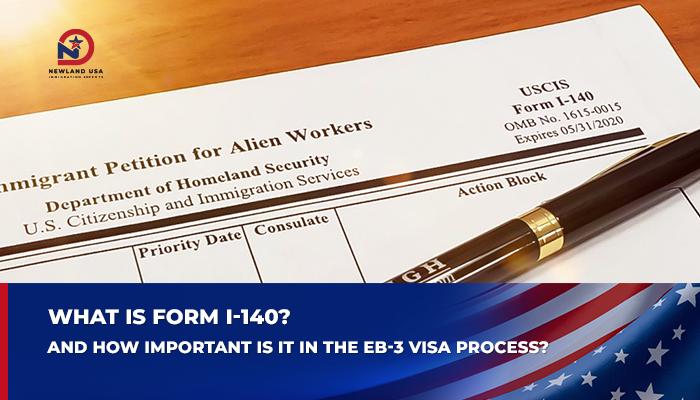
How Important is Form I-140 in the EB3 Visa Process?

10 Most Common Misconceptions About the EB-3 Program That Vietnamese People Often Encounter

Martin Luther King Jr. Day in the United States: Significance and How Americans Celebrate

Why Choose EB3 U.S. Immigration Through the Medical Glove Manufacturing Industry in 2026?

U.S. Immigration Policy 2026: Important Changes You Need to Know

What is the EB-3 Program? A Comprehensive Guide for Vietnamese Citizens 2026