U.S. Immigration Policy 2026: Important Changes You Need to Know
The year 2026 marks a period of strong transformation in the U.S. immigration system with a series of new U.S. immigration policies taking effect from the beginning of the year. From expanding the list of entry bans to fundamental changes in the work visa issuance process, from more difficult citizenship tests to increased application fees – all directly impact millions of people on their U.S. settlement journey. This article from Newland USA will comprehensively analyze the most important adjustments in immigration policy in early 2026, helping you understand how these changes affect your family’s immigration and U.S. settlement plans.
1. Expanded Entry Bans – Far-reaching Impact on U.S. Immigration
One of the most notable changes in the 2026 U.S. immigration policy is President Trump’s issuance of “Presidential Proclamation 10998” on December 16, 2025, effective from 00:01 on January 1, 2026. This new ban has significantly expanded the scope of entry restrictions, affecting citizens of 39 countries worldwide.
According to the new immigration policy, seven countries face a complete ban including Burkina Faso, Laos, Mali, Niger, Sierra Leone, South Sudan, and Syria. Citizens from these countries cannot enter the U.S. under any type of visa – whether tourist, student, business, or even immigrant visas. For those in the process of U.S. immigration from these countries, this ban essentially marks the end of the road to U.S. settlement at least as long as the Trump administration remains in office.
Additionally, 19 other countries are subject to a partial ban, including countries with significant U.S. immigrant populations such as Nigeria, Venezuela, Cuba, and Haiti. For these countries, the U.S. government has suspended the issuance of all tourist visas (B-1, B-2), student visas (F, M), and cultural exchange visas (J). This means Nigerian students cannot apply for new student visas, while families from Venezuela must postpone plans to visit relatives in the U.S.
The impact of this new U.S. immigration policy on the U.S. settlement process is enormous. According to estimates from the American Immigration Council, Nigeria is the most severely affected country with an average of 128,000 visas issued annually over the past decade. Currently, almost all types of visas from Africa’s most populous country have been suspended, leaving thousands of pending U.S. immigration applications in a deadlock.
More importantly, USCIS has announced the suspension of review for all visa, green card, citizenship, and asylum applications from citizens of these 20 additional countries. The agency also plans to re-examine applications approved since 2021 for people from “countries of high security concern.” This means that even those who have completed the U.S. settlement process may face additional checks.
2. Fundamental Changes in the H-1B Visa Program
The 2026 immigration policy also brings major changes to the H-1B visa program – one of the most popular U.S. immigration pathways for highly skilled workers. The Department of Homeland Security has completely changed how H-1B visas are allocated, shifting from a random lottery system to a selection method based on salary and skills.
According to new regulations effective February 27, 2026, candidates with higher salaries and higher professional skills will be prioritized in the selection process. This change aims to address the situation where some businesses exploit the program to recruit foreign workers at lower wages compared to American workers. USCIS spokesman Matthew Tragesser confirmed that the previous random lottery system was abused by companies wanting to import labor at low costs.
Additionally, a presidential proclamation has required employers to pay an additional $100,000 for each H-1B visa as a necessary condition to ensure application transparency. This additional fee makes the cost of U.S. immigration through the H-1B visa route significantly more expensive, potentially reducing the number of applications from small and medium-sized businesses.
Another important change in U.S. immigration policy related to H-1B is the expansion of “social media screening” requirements. Since December 2025, H-1B workers and H-4 dependents must disclose their social media accounts and ensure these accounts are in public mode throughout the visa review process. Previously, this requirement mainly applied to F, M, and J student visas. This adds to the administrative burden and privacy concerns for those wanting to settle in the U.S. through this non-immigrant work visa route.
3. Visa Bulletin and Changes in Employment-Based Green Cards
For those pursuing the path to U.S. settlement through employment-based visa programs like EB-2 and EB-3, the January 2026 Visa Bulletin brings both good news and some dead ends. While some categories have made significant progress in priority dates, the new immigration policy also creates other challenges.
In the January 2026 Visa Bulletin, the EB-3 category for countries other than China and India has moved to April 22, 2023, while China’s EB-3 advanced to May 1, 2021, and India’s EB-3 reached November 15, 2013. These advances show that the U.S. immigration system is gradually resolving the backlog, especially after the “retrogression” that occurred from May 2023.
However, the new U.S. immigration policy also introduces significant limitations. At the end of fiscal year 2025, the State Department announced that the annual limit for EB-3 and EW visas had reached maximum capacity. This means embassies and consulates cannot issue additional visas in these categories until the new fiscal year begins on October 1, 2025. For those waiting to complete the U.S. settlement process, this could cause delays from several months to over a year.
The Department of Homeland Security has also announced plans for major reforms to employment-based green card regulations, including EB-1, EB-2, and EB-3 categories. According to the federal regulatory schedule, DHS plans to publish a draft proposal in January 2026. The goal of this new immigration policy is to modernize how the government evaluates and reviews green card applications, clarifying documentation requirements for specific immigration classifications such as EB-1A, EB-1B, and EB-2 NIW.
While the stated goal is to create consistency and predictability in the U.S. immigration system, many experts worry that the new regulations may increase the burden of proof for applicants.
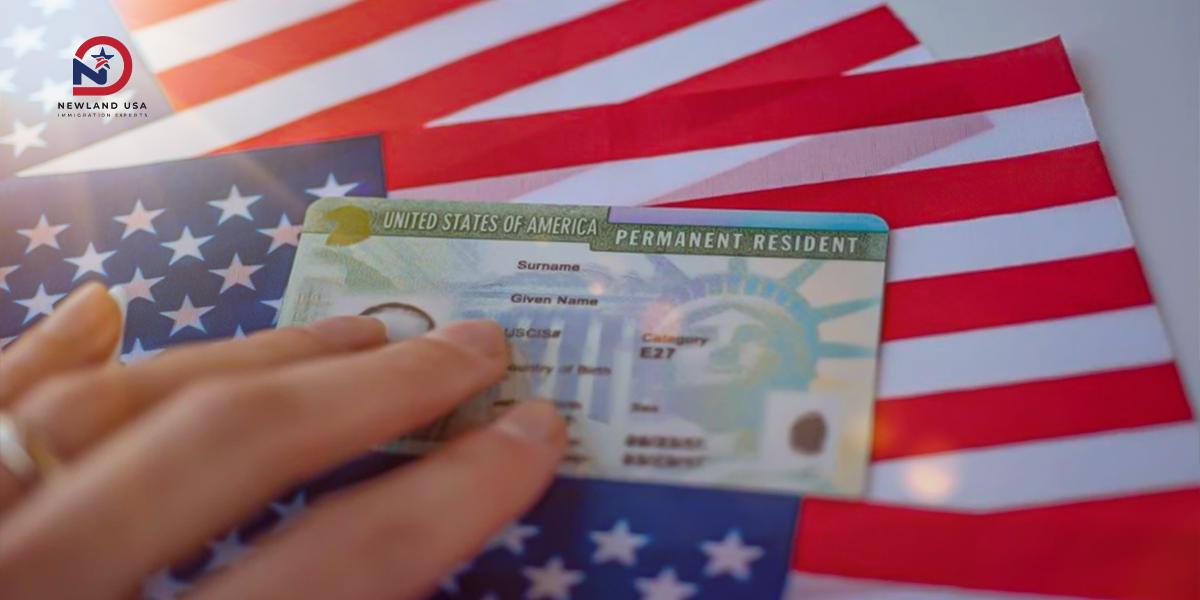
4. More Difficult Citizenship Test – New Barrier for U.S. Settlement
One of the important changes in the 2026 U.S. immigration policy is USCIS implementing a new citizenship test that is significantly more difficult. For those on the journey to U.S. settlement and hoping to become U.S. citizens, this is a considerable challenge that requires thorough preparation.
Starting October 20, 2025, anyone filing for citizenship (Form N-400) must take the 2025 citizenship test. The new test is based on the 2020 version with some adjustments to administration. Instead of studying 100 questions as before, citizenship applicants now must study 128 questions about U.S. history and government.
During the interview, USCIS officers will ask 20 questions instead of 10, and applicants must answer at least 12 correctly to pass – a stricter requirement compared to the 6/10 questions of the 2008 test. This means the minimum passing rate remains at 60%, but the difficulty increases significantly due to the larger number of questions and broader knowledge scope.
The new immigration policy also adjusts the focus of the test content. The 2025 test focuses more on U.S. history and government, while removing geography questions. Applicants now must demonstrate understanding of all three branches of government and show deeper understanding of constitutional principles and U.S. history.
USCIS spokesman Matthew Tragesser explained that “American citizenship is sacred citizenship and should only be for those who will fully embrace our values and principles as a nation.” The agency confirms that ensuring only those who meet all requirements for reading, writing, speaking English and understanding U.S. government and citizenship can naturalize.
For those in the process of U.S. settlement and planning to apply for citizenship, it’s important to understand the timing of filing. Those who filed Form N-400 before October 20, 2025, will still take the easier 2008 test. However, anyone filing from that date onward will face a much more difficult test.
5. More Thorough Screening and New Screening Center
The 2026 U.S. immigration policy introduces a more comprehensive and strict approach to immigration application screening. USCIS announced the establishment of a new Screening Center on December 5, 2025, to “centralize enhanced screening” of applicants. This center will be responsible for screening for terrorism, foreign criminals, and other foreign nationals who may pose a threat to public safety or have engaged in fraud or other criminal activity.
For those pursuing the path to U.S. settlement, this means application processing times will be significantly longer. The enhanced screening process will apply to many different types of applications, including visa, green card, and citizenship applications. Experts in U.S. immigration predict that these changes will lead to delays in visa processing, especially for applicants from countries or regions considered high risk.
USCIS has also restored neighborhood investigations under policy guidance issued in 2025. These checks may include contacting neighbors, employers, or colleagues to verify residence and qualifying factors. This is a new step from previous procedures and reflects the current administration’s commitment to increasing the integrity of the U.S. immigration program.
6. Mandatory Biometric Identification and Data Collection
Another important aspect of the 2026 U.S. immigration policy is the expansion of biometric data collection. Under rules effective December 26, 2025, U.S. Customs and Border Protection (CBP) can now collect facial recognition data from all foreign nationals entering and leaving the U.S., including green card holders at airports, land ports, and seaports.
Previously, biometric requirements mainly applied to certain types of visas or people from specific countries. However, the new immigration policy expands this scope to almost all foreign nationals, regardless of their immigration status. This means that even those who have completed the U.S. settlement process and have green cards must still undergo facial recognition scanning every time they enter or leave the country.
CBP also plans to require 5 years of social media history for applicants using the Electronic System for Travel Authorization (ESTA).
Additionally, some states like Texas are introducing new immigration policies at the local level. Under Senate Bill 8, prisons in Texas are now required to work with federal immigration agencies. This law requires sheriffs operating county jails to participate in 287(g) agreements, cooperating with ICE. This allows trained law enforcement to verify immigration status and perform limited federal enforcement duties within local jails.
7. Increased Application Fees and U.S. Settlement Costs
The 2026 U.S. immigration policy also brings a significantly heavier financial burden for those wanting to settle in the U.S. USCIS and DHS have confirmed that inflation-based cost adjustments will take effect January 1, 2026, increasing costs for some applications related to asylum and immigration.
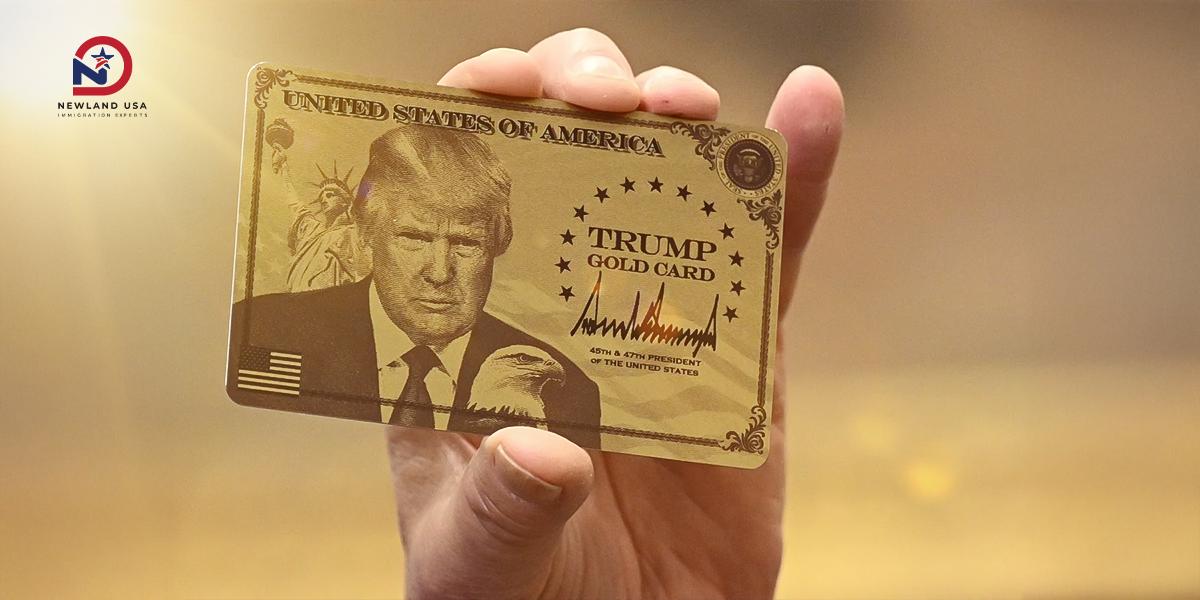
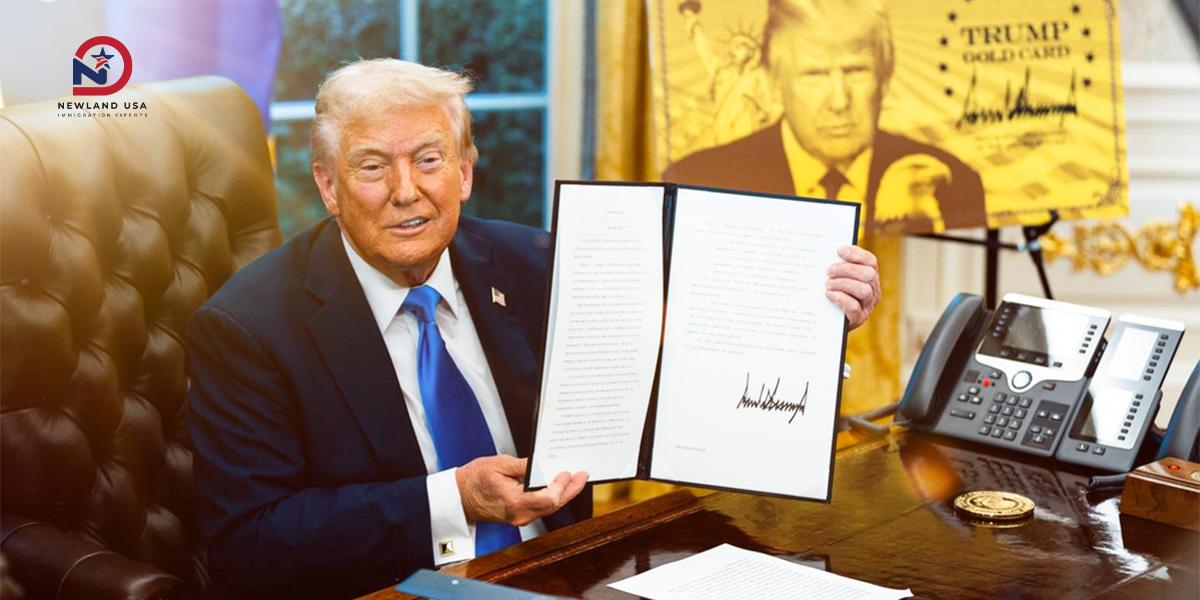
Beyond standard USCIS fees, the new immigration policy also introduces a high-value settlement option. President Donald Trump announced the “Trump Gold Card” – a $1 million program offering fast permanent legal residency under EB-1 or EB-2 status. Trump claims this initiative could generate over $100 billion for the U.S. While this program targets wealthy individuals, it reflects the overall trend of U.S. immigration policy toward generating higher income and attracting candidates capable of large economic contributions.
For H-1B workers, as mentioned earlier, the additional $100,000 fee per visa shows the burden of U.S. immigration costs through the work visa route. This may reshape foreign labor recruitment, potentially favoring larger companies with financial resources to pay these fees.
8. Work Permits and Reduced Validity Periods
Another important change in U.S. immigration policy is USCIS announcing on December 4, 2025, enhanced screening measures in several benefit categories and reducing the maximum validity period for Employment Authorization Documents (EAD) to 18 months.
This increases renewal frequency and the risk of gaps without authorization if filing is not timely. For those on the journey to U.S. settlement and dependent on EADs to work legally, this means increased administrative burden and the need to plan renewals earlier.
Employers will also face this issue. With shorter EAD validity periods, HR teams will need to perform I-9 form reverification more frequently. This increases administrative burden and the risk of interruptions in work authorization if not complied with on time.
9. Diversity Visa Lottery Program Suspended
On December 18, Kristi Noem, Secretary of the Department of Homeland Security, announced that the Department is suspending the DV1 portion of the Diversity Visa Lottery program. This program annually allocates a maximum of 55,000 visas to applicants from countries with low U.S. immigration rates.
This is a significant change in immigration policy because the Diversity Visa program has long been an important pathway for U.S. settlement for many people from countries without many other immigration opportunities. Suspending this program removes a U.S. immigration pathway not based on family or employment, narrowing the options available for many potential applicants.
10. Impact on Marriage and Family Sponsorship
The 2026 U.S. immigration policy also affects U.S. settlement pathways based on family sponsorship. USCIS has announced that although spousal sponsorship remains an important pathway to obtaining a green card, marriage will now not guarantee obtaining a green card. The agency is applying stricter monitoring measures and may deny cases if they suspect the authenticity of the relationship or if the applicant does not meet other requirements.
11. Notes for Those Wanting to Immigrate to the U.S. in 2026
With comprehensive changes in the 2026 U.S. immigration policy, it’s important to have a clear strategy and thorough preparation. Here are some important recommendations for those planning to settle in the U.S.:
First, verify your country status. Check the State Department list at travel.state.gov to confirm whether your country faces restrictions. If you’re from one of the 39 affected countries, consult with a professional U.S. immigration attorney to explore alternative options.
Second, after October 20, 2025, the U.S. citizenship test has become much more difficult than before. Make sure you’re ready for the potential answers before filing.
Third, prepare your social media information. If applying for H-1B or H-4 visas, ensure your social media accounts are set to public and list all identifiers. Carefully review content you’ve posted in the past five years as it will be part of the U.S. immigration screening process.
Fourth, documents must be carefully prepared. Ensure your passport photo meets requirements and all supporting documents are valid. With stricter screening requirements, having complete and accurate documentation is essential.
Fifth, file early. With expected longer processing times, submit applications before you need them. For employment-based green card applications, the sooner you file, the sooner you get your priority date and the sooner your application is processed.
Sixth, work with experienced U.S. immigration attorneys and immigration consulting agencies. With the increasing complexity of immigration policy, having professional legal support can make a significant difference in your application outcome. Attorneys can help you navigate new requirements, avoid common pitfalls, and respond to evidence requests effectively.
Finally, maintain financial stability and a “clean” record. With expanded “public charge” testing and stricter good moral character standards, it’s important to demonstrate financial self-sufficiency and a history free of legal violations. Avoid any behavior that could be considered illegal or lacking good moral character.
12. Conclusion
The year 2026 marks an important transitional period in the U.S. immigration system. With stricter new U.S. immigration policies, longer processing times, higher fees, and more comprehensive screening requirements, the path to U.S. settlement has become more challenging than ever. However, with thorough preparation, deep understanding of immigration policy changes, and appropriate professional support, the dream of U.S. immigration can still be achieved.
Newland USA, with a team of experienced experts and the motto “Stable Settlement – Lifelong Prosperity,” is ready to consult and support in preparing applications and accompany you throughout the EB3 U.S. settlement process. Contact Newland USA immediately via hotline 0785591988 or email: newsletter@newlandusa.asia for detailed and free consultation.
Learn more:
- Overview of US Immigration Programs 2026: Which Option is Right for You?
- What Factors Affect EB3 Immigration Processing Time to the United States?
- New Standards from USCIS in 2025 for US Immigration Record Photos
- Health Requirements for EB3 Immigration to the United States in the Medical Glove Manufacturing Industry
- Common Mistakes That May Cause Your EB3 U.S. Immigration Application in the Medical Gloves Manufacturing Industry to Be Rejected
News Categories



Related news

AI in Auto Repair in the U.S. 2026: How Artificial Intelligence Diagnoses Vehicle Problems Faster and More Accurately
7 Key Technologies Every Industrial Maintenance Technician in the U.S. Needs to Know in 2026
PLC & Automation Skills: A Launchpad for Maintenance Technicians in the United States in 2026

What Is the ASE Certification? Requirements, Exam Roadmap, and Its Importance for Auto Technicians in the U.S. in 2026

EB5 Capital Recovery Time: How Long It Takes and the Key Milestones

Electric Vehicle Technicians in the U.S.: The “Golden” Skills Helping Vietnamese Auto Mechanics Get Ahead of the 2026 EV Trend
US Engineering & Maintenance Labor Shortage 2026: The Driving Force Behind the EB3 Skilled Workers Visa Policy
Industrial Maintenance Technician: Job Duties, Requirements & U.S. Immigration Opportunities in 2026

Lương thợ sửa xe tại Mỹ: Cách tối ưu giờ công để nhân đôi thu nhập năm 2026