How Many States Does the United States Have?
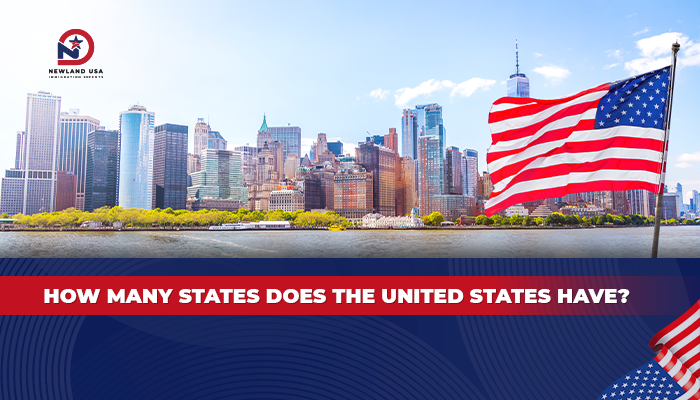
The United States currently has 50 official states as defined by the federal Constitution. Each state possesses its own distinct autonomy in many important areas such as education, transportation, local law, and tax policy. Join Newland USA in exploring details about the US state system, from administrative structure to essential information for settlers in the article below.
1. Overview of the US Administrative Structure
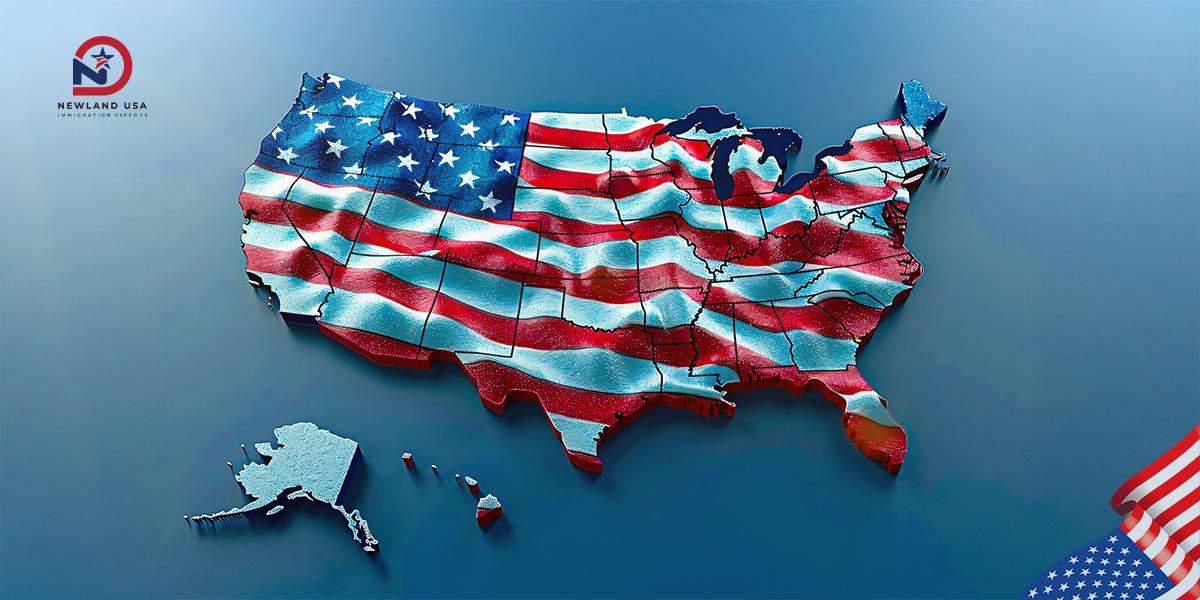
The US is organized under a federal model with 50 officially recognized states. This number has remained stable since 1959, when Hawaii officially became the 50th state to join the Union. Each state is symbolized by a star on the national flag, creating the distinctive 50-star emblem of the American flag.
This structure creates exceptional diversity in culture, economy, geography, and climate among different regions across the nation. From vast Alaska with its freezing climate in the far North to tropical Hawaii in the middle of the Pacific Ocean, from densely populated California with an economy ranking among the world’s top to sparsely populated Wyoming with pristine nature. This diversity is precisely the special attraction of the United States for immigrants worldwide.
1.1. Understanding the Correct Number of States
Some people often mistakenly believe that the US has 52 states by counting Washington D.C and Puerto Rico. However, this notion is incorrect because these two areas do not carry the legal status of a state.
Reasons for this confusion include:
- Puerto Rico is a territorial sea area under US sovereignty. Although not yet officially incorporated into the US mainland and existing as a commonwealth territory, residents still have the right to vote or run for US president in any state where they come to reside.
- Washington D.C appears frequently in political news and is regarded as the center of power.
- Residents in these areas enjoy many rights equivalent to citizens of the states.
- Popular culture often does not clearly distinguish between territories and US states.
Washington D.C is actually an independent federal district (District of Columbia), located between Maryland and Virginia. This area was established in 1790 as a neutral territory to serve as the federal capital, housing the White House, Congress, Supreme Court, and most federal government agencies.
2. Complete List of 50 US States
Below is a detailed summary table of the 50 US states with abbreviations and capitals:
| No. | State Name | Abbreviation | Capital |
|---|---|---|---|
| 1 | Alabama | AL | Montgomery |
| 2 | Alaska | AK | Juneau |
| 3 | Arizona | AZ | Phoenix |
| 4 | Arkansas | AR | Little Rock |
| 5 | California | CA | Sacramento |
| 6 | Colorado | CO | Denver |
| 7 | Connecticut | CT | Hartford |
| 8 | Delaware | DE | Dover |
| 9 | Florida | FL | Tallahassee |
| 10 | Georgia | GA | Atlanta |
| 11 | Hawaii | HI | Honolulu |
| 12 | Idaho | ID | Boise |
| 13 | Illinois | IL | Springfield |
| 14 | Indiana | IN | Indianapolis |
| 15 | Iowa | IA | Des Moines |
| 16 | Kansas | KS | Topeka |
| 17 | Kentucky | KY | Frankfort |
| 18 | Louisiana | LA | Baton Rouge |
| 19 | Maine | ME | Augusta |
| 20 | Maryland | MD | Annapolis |
| 21 | Massachusetts | MA | Boston |
| 22 | Michigan | MI | Lansing |
| 23 | Minnesota | MN | Saint Paul |
| 24 | Mississippi | MS | Jackson |
| 25 | Missouri | MO | Jefferson City |
| 26 | Montana | MT | Helena |
| 27 | Nebraska | NE | Lincoln |
| 28 | Nevada | NV | Carson City |
| 29 | New Hampshire | NH | Concord |
| 30 | New Jersey | NJ | Trenton |
| 31 | New Mexico | NM | Santa Fe |
| 32 | New York | NY | Albany |
| 33 | North Carolina | NC | Raleigh |
| 34 | North Dakota | ND | Bismarck |
| 35 | Ohio | OH | Columbus |
| 36 | Oklahoma | OK | Oklahoma City |
| 37 | Oregon | OR | Salem |
| 38 | Pennsylvania | PA | Harrisburg |
| 39 | Rhode Island | RI | Providence |
| 40 | South Carolina | SC | Columbia |
| 41 | South Dakota | SD | Pierre |
| 42 | Tennessee | TN | Nashville |
| 43 | Texas | TX | Austin |
| 44 | Utah | UT | Salt Lake City |
| 45 | Vermont | VT | Montpelier |
| 46 | Virginia | VA | Richmond |
| 47 | Washington | WA | Olympia |
| 48 | West Virginia | WV | Charleston |
| 49 | Wisconsin | WI | Madison |
| 50 | Wyoming | WY | Cheyenne |
3. Special US Territories
Besides the 50 official states, the US also manages several special territories distributed in the Caribbean and Pacific regions. These territories have different legal status compared to US states:
- Puerto Rico: With a population of about 3.2 million people, this is an autonomous region in the Caribbean
- Guam: Has 169,254 residents, located in a strategic position in the Western Pacific
- Virgin Islands: About 83,971 people live on the main islands in the Caribbean
- Northern Mariana Islands: 43,413 residents, operating under a commonwealth model
- American Samoa: Population of about 219,586 people
These territories do not have voting rights in US Presidential elections and do not have full representation in Congress, which is the fundamental difference compared to US states.
4. Top 5 States Attracting Vietnamese Settlers
The Vietnamese community in the US is currently estimated at about 2.2 million people, distributed mainly in the 5 states below:
1. California
California is the state with the largest Vietnamese community with nearly 900,000 people. The community is concentrated mainly in Orange County where the famous “Little Saigon” area is located, Los Angeles, San Jose, and San Francisco. This state attracts Vietnamese people thanks to its mild year-round climate, abundant job opportunities in many industries, and is considered the largest overseas Vietnamese cultural center.
2. Texas
Texas has a community of about 326,000 Vietnamese people, concentrated in Houston and the Dallas-Fort Worth area. This state is attractive thanks to much lower living costs compared to coastal states, no state income tax, and many business opportunities in energy and technology sectors. This is an ideal destination for those who want to start a business or expand their business.
3. Washington
Washington has a community of 100,000 to 150,000 Vietnamese people, mainly living in Seattle-Tacoma and Spokane. This state attracts people thanks to its developed technology economy with the presence of Microsoft, Amazon, and Boeing creating many high-income job opportunities. The temperate climate and beautiful natural scenery are also important factors attracting long-term settlers.
4. New York
The Vietnamese community in New York is concentrated mainly in New York City and surrounding areas. This state is favored because it is a leading economic and financial center in the world with countless opportunities in finance, international trade, and services. World-class education system and vibrant multicultural environment attract many Vietnamese families.
5. Florida
Florida has about 100,000-105,000 Vietnamese people, distributed mainly in Miami-Dade, Orlando, and Tampa Bay. This state attracts people thanks to its warm tropical climate year-round, no state income tax, and is an ideal destination for retirees. South Florida has a large Chinese-Vietnamese community with a diverse cultural environment and abundant business opportunities.
5. Important Questions About US States
5.1. Which State Should You Choose to Settle In?
Choosing a state to settle in depends on many personal factors such as budget, career opportunities, climate conditions, education quality, and the presence of the Vietnamese community. California and Texas are the two most popular choices due to having large Vietnamese communities and good career development opportunities.
States without income tax such as Texas, Florida, Washington, Nevada, and Wyoming are also very financially attractive for both individuals and businesses.
5.2. Which State is Safest for Families?
Maine is often ranked as the safest state in the US with the lowest crime rate in the country. Other states also rated highly for security include Vermont, New Hampshire, Utah, and Connecticut. These states have low violent crime rates, quality healthcare systems, and stable living environments, very suitable for families with young children.
5.3. Which State Has the Largest Population?
California is the most populous state with nearly 40 million residents. This state possesses a strong economy with Silicon Valley – global technology center, Hollywood – world film center, mild year-round climate, and is an attractive destination for immigrants from all over the world. This state also has high population density with many developed cities like Los Angeles, San Francisco, and San Diego.
5.4. Which States are Income Tax-Free?
Currently, there are 9 states that do not apply personal income tax including: Alaska, Florida, Nevada, New Hampshire, South Dakota, Tennessee, Texas, Washington, and Wyoming. Among these, New Hampshire and Tennessee only tax income from dividends and interest. These states attract many individuals and businesses wanting to optimize their tax plans.
Especially for those considering settling under EB3 status or other Visa programs, choosing a no-income-tax state can help save a significant amount in annual living budget.
5.5. Which State is Most Livable?
Each person will have different views about the ideal state to live in, as this depends on many personal factors such as career direction, budget, education quality, and weather preferences.
Massachusetts is frequently on the list of most livable states for healthcare and education. California stands out with its developed economy, strong Vietnamese community, and countless opportunities in the technology field. Texas attracts people thanks to reasonable living costs, favorable tax policies, and many job opportunities in the technology industry in cities like Austin.

6. Conclusion
The US with its 50 diverse states in geography, culture, and economy offers countless rich choices for those intending to settle. From vast Alaska to states with large Vietnamese communities like California and Texas, each place possesses unique advantages.
Understanding how many states the US has as well as the characteristics of each US state will help you make wise decisions when choosing a place to settle that suits your family’s circumstances and goals. For those in the process of applying for EB3 visa or other immigration programs, thoroughly researching US states is an important step to have a smooth start in this land of opportunity.
At Newland USA, we not only provide US immigration services but also support clients in their cultural integration journey in this new country. If you need more information, please contact Newland USA immediately via hotline 0785591988 or email: newsletter@newlandusa.asia for detailed and free consultation.
Learn more:
News Categories



Related news

What Is the IRS? Your Rights and Obligations with the U.S. Tax Agency
Retrogression: What It Is and How It Affects Your EB3 Case

How to Identify and Avoid Conflicts of Interest in EB-5 Investment Immigration

401(k): The Retirement Plan for Workers in the United States

Key Things to Know When Taking Out a Bank Loan for US Immigration

How Does the Investment Sustaining Period Affect EB-5 Investors’ Project Selection?

Financial Planning the Right Way When Settling in the U.S. Through the EB-3 Program

Why is the EB3 Visa waiting time for skilled workers faster than for other workers?

ROI Analysis When Settling in the US Through EB3 Skilled Workers